Vaccines in pregnancy: pertussis, influenza and covid



Table of contents
- Why vaccinating the pregnant woman protects the baby
- Pertussis: the vaccine in every pregnancy
- The window for giving the pertussis vaccine
- Influenza: protection for the mother and for the infant
- Covid: what the studies show
- Safety in pregnancy
- In practice: what to give and when
- How NEXO helps train this reasoning
- Frequently asked questions
- Take-home messages
- References
The first months of life are the period of greatest risk for pertussis, influenza and severe covid, and that is precisely when the baby cannot yet be vaccinated or has not completed the schedule. The strategy that covers this interval is vaccinating the pregnant woman: the antibodies the mother produces cross the placenta and protect the newborn in the first weeks (Havers, 2020).
Three vaccines do this routine work: dTpa (adult acellular pertussis combination vaccine, called Tdap in the United States), the inactivated influenza vaccine and the covid vaccine. Each has its own window and a different body of evidence. The vaccine against respiratory syncytial virus in pregnant women follows a similar logic and is covered in another text, about the pregnant woman and the baby.
This text goes through what studies show about infant protection, timing of administration and safety.
Key points
- dTpa is recommended in every pregnancy, between 27 and 36 weeks, preferably at the start of the window (Havers, 2020).
- Vaccinating before 31 weeks gave the highest antibody levels in the cord blood of full-term babies (Gomme, 2022).
- The influenza vaccine can be given in any trimester (Grohskopf, 2024), and the effect on the infant did not vary with gestational age in a trial in Nepal (Katz, 2018).
- The covid vaccine during pregnancy was associated with fewer infant hospitalizations for covid (Halasa, 2022).
- Large cohorts found similar risks of preterm birth and other outcomes between vaccinated and unvaccinated women (Fell, 2022; Greenberg, 2023).
Summary
- Why vaccinating the pregnant woman protects the baby
- Pertussis: the vaccine in every pregnancy
- The window for administering the pertussis vaccine
- Influenza: protection for the mother and the infant
- Covid: what studies show
- Safety in pregnancy
- In practice: what to give and when
- How NEXO helps train this reasoning
- Frequently asked questions
- Take-home messages
Why vaccinating the pregnant woman protects the baby
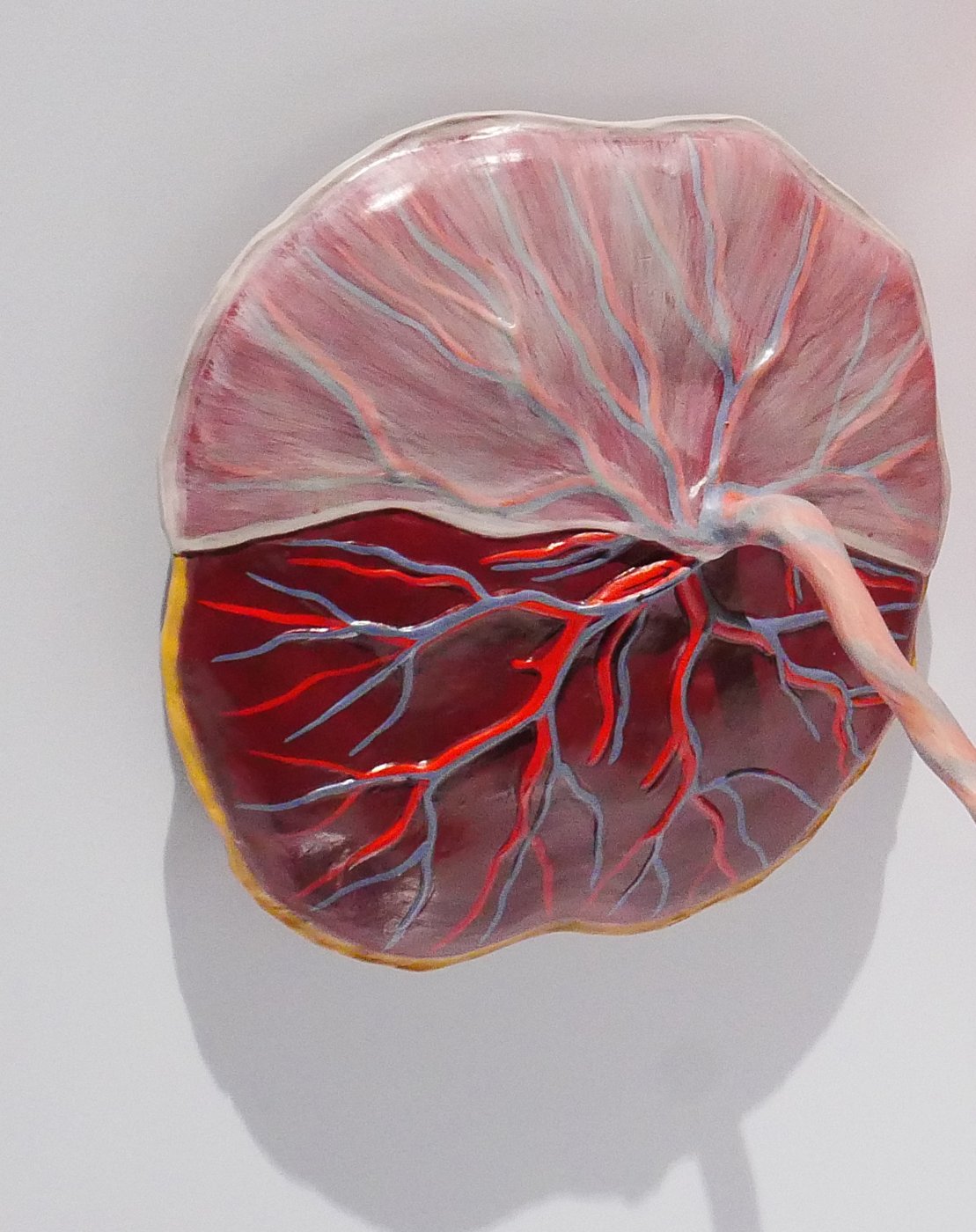
The newborn comes into the world with a little-experienced immune system and responds poorly to vaccines in the first weeks. During pregnancy, however, the baby receives IgG antibodies from the mother, actively transported across the placenta. This passive immunity is temporary, but it covers exactly the months when the baby is most vulnerable.
The logic of maternal vaccination is to increase the amount of these antibodies at the end of pregnancy. A vaccine given to the mother raises maternal titers, and part of them reaches the fetus. Transfer across the placenta begins in the second trimester and intensifies in the third (Katz, 2018). That is why timing matters: the mother needs a few weeks to produce antibodies, and the fetus needs time to receive them.
Who benefits
The benefit is twofold. The pregnant woman is also protected, which matters especially for influenza and covid, where pregnancy increases the risk of severe disease. In the United States, pregnant women accounted for 24 to 34 of every 100 influenza hospitalizations among women aged 15 to 44 in each season from 2010 to 2018 (Lindley, 2019). With covid, infected pregnant and postpartum women were more likely to be admitted to the ICU and to receive invasive ventilation than non-pregnant women of the same age (Allotey, 2020).
Pertussis: the vaccine in every pregnancy
Pertussis kills mainly young infants. In the United States, between 2010 and 2017, there were 3,928 hospitalizations for pertussis in babies under 2 months, from 262 to 743 per year (Lindley, 2019). In Brazil, between 2010 and 2015, the incidence in children under 1 year was 175.20 per 100,000, and 405 of the 415 deaths from pertussis occurred in this age group (De Barros, 2020).
The disease has risen again. In 2024, Brazil recorded 7,438 notifications, 34.4 times the number in 2023, with 30 deaths and hospitalizations that went from 236 to 739 (Sansone, 2025). The context recalls another preventable disease that reappeared when coverage fell, diphtheria.
The recommendation
The American committee recommends one dose of Tdap in every pregnancy, regardless of previous vaccination, between 27 and 36 weeks, preferably early in that period, although the vaccine can be given at any time during pregnancy. If the pregnant woman needs tetanus prophylaxis for a wound, the choice is Tdap (Havers, 2020). Repeating it in every pregnancy has a biological reason: antibodies against pertussis fall quickly after the first year.
Brazil included dTpa for pregnant women in the national schedule in 2014 (De Barros, 2020). How each country adapts the same evidence is in why the same evidence leads to different schedules.
What effectiveness studies show
A meta-analysis of randomized trials of maternal vaccines found clinical efficacy data for influenza, but none for the pertussis vaccine (de Bruin, 2023). The proof of protection comes from observational studies in national programs.
In the Valencian Community, a case-control study compared 22 infants with confirmed pertussis, all under 3 months, with 66 controls. The adjusted effectiveness of maternal vaccination was 90.9 out of 100, with a confidence interval of 56.6 to 98.1. Breastfeeding was the only other variable that remained in the final model, also with a protective effect (Bellido-Blasco, 2017).
In Australia, a cohort of 279,418 mother-baby pairs linked vaccination and notification records. The vaccine was given in 51.7 out of 100 pregnancies, almost always between 28 and 31 weeks. Effectiveness was 70.4 out of 100 in babies under 2 months and fell to 43.3 at 7 to 8 months, with no significance after 8 months (Regan, 2023). Protection is greatest when the baby needs it most and disappears when the infant schedule is already under way.
The question of attenuation
Maternal antibodies can reduce the baby's response to the infant schedule vaccines, a phenomenon called attenuation or blunting. In the Australian cohort, the effectiveness of the third infant dose was lower in children of vaccinated mothers, 76.5 versus 92.9 out of 100, but this did not translate into more pertussis (Regan, 2023).
A meta-analysis of four studies, with up to 6 years of follow-up, estimated a relative risk of 0.71 for pertussis after the infant schedule in children of vaccinated mothers, with a wide interval, from 0.38 to 1.32. The authors' mathematical model suggests that a modest reduction may stay hidden for a decade, but that maternal vaccination remains advantageous for protecting the newborn (Briga, 2024). The correct reading is of uncertainty to be monitored, not a reason to suspend the strategy.
The window for giving the pertussis vaccine
The 27 to 36 week window came from a compromise: give it late enough for antibodies to be high at delivery, and early enough for there to be time for transfer. An analysis of four studies in several countries, with 698 mother-baby pairs vaccinated between 19.6 and 37.1 weeks, modeled the effect of timing on antibodies in cord blood (Gomme, 2022).
Term babies had, on average, the highest levels when the mother was vaccinated before 31 weeks. Considering premature births as well, an interval of at least 7.5 weeks between the vaccine and delivery was needed to reach the highest levels. Vaccinating earlier than these limits gave equally high levels (Gomme, 2022).
The premature infant
The message for prenatal care is clear. Giving it early in the window also protects the baby who is born early, who is precisely the one at greatest risk. Leaving it for the last weeks can mean a delivery before the transfer is complete, and this matches the American recommendation to prefer the start of the period (Havers, 2020).
When the window has passed
If a pregnant woman arrives late for prenatal care, the vaccine should still be given, because it can be administered at any point in pregnancy (Havers, 2020). In the Australian cohort, infants were considered protected when the maternal vaccine was given at least 14 days before delivery (Regan, 2023). A late dose protects the baby less, but it still protects the mother, who stops being a source of transmission.
Influenza: protection for the mother and for the infant
The inactivated influenza vaccine is recommended for pregnant women in any trimester, before and during the season. The live attenuated vaccine is not used in pregnancy, but it can be used in the postpartum period (Grohskopf, 2024).
The randomized trials
In Mali, a trial randomized 4,193 pregnant women at 28 weeks or more to influenza vaccine or meningococcal vaccine as a control. Up to 6 months, efficacy against confirmed influenza in the infant was 33.1 per 100 in the intention-to-treat analysis and 37.3 per protocol. In the first 4 months, it reached 67.9 per 100, and then fell as antibodies declined. The trial also found that the vaccine left the frequency of low birth weight unchanged (Tapia, 2016).
Pooling the maternal influenza trials, a meta-analysis estimated a relative risk of 0.66 for laboratory-confirmed influenza in the infant, with two trials and 5,883 babies (de Bruin, 2023). For influenza diagnosed by clinical criteria alone, the relative risk was 0.99, which is a reminder that the chosen outcome changes how the effect is read.
The timing of the dose
In Nepal, a trial with 3,693 pregnant women stratified randomization by gestational age, from 17 to 25 or from 26 to 34 weeks. Cord titers tended to be higher with later vaccination, without significance, and efficacy did not vary with timing (Katz, 2018). This makes life easier for programs in which the pregnant woman arrives late for prenatal care.
With influenza, what defines the timing is the season. The American committee allows giving the vaccine at the start of the offer, in the months before circulation, to those who will be in the third trimester, because this can protect the baby in the first months of life (Grohskopf, 2024). In the first and second trimesters, very early administration is avoided to reduce the loss of protection over the season.
Covid: what the studies show
Pregnancy increases the risk of severe covid. In a living systematic review, pregnant and postpartum women with covid had 2.61 times the chance of ICU admission and 2.41 times the chance of invasive ventilation compared with non-pregnant women of reproductive age. Older maternal age, obesity, prior comorbidities, gestational diabetes and pre-eclampsia were associated with severe complications (Allotey, 2020).
Protection of the infant
A test-negative case-control study in 30 American hospitals compared 537 infants admitted for covid with 512 babies admitted for other causes. The effectiveness of two mRNA vaccine doses in pregnancy against infant hospitalization was 52 per 100 overall, 80 during the delta variant period and 38 during the omicron period. It was 69 when the vaccine was given after 20 weeks and 38 in the first 20 weeks. The two babies who died had mothers who were not vaccinated during pregnancy (Halasa, 2022).
With omicron predominant, between 2022 and 2023, the effectiveness of at least one dose in pregnancy against infant hospitalization was 35 per 100 below 6 months and 54 below 3 months (Simeone, 2023). The effect is smaller than against delta and is concentrated in the first months, the same pattern of decline seen with pertussis and influenza.
How to read these numbers
Test-negative studies compare babies with the same type of hospitalization, which reduces some biases, but they depend on who comes to the hospital and who is tested. Effectiveness also depends on the variant, the time since vaccination and the population's prior immunity. To understand why the same relative effect produces different absolute benefits depending on baseline risk, it is worth reviewing the concept of base rate.
Safety in pregnancy
The most common concern of those who hesitate is the baby. In the 2019 American survey, 15.9 per 100 unvaccinated pregnant women against influenza and 17.1 of those unvaccinated with Tdap cited the baby's safety as a reason (Lindley, 2019). Data from large cohorts help with this conversation.
Pertussis and chorioamnionitis
A previous study had raised an association between Tdap in pregnancy and chorioamnionitis. In the Vaccine Safety Datalink, a cohort of 118,211 pregnant women, 87 of every 100 vaccinated, found an adjusted risk ratio of 0.96, with an interval of 0.90 to 1.03. Preterm birth and neonatal outcomes linked to chorioamnionitis were also similar (Greenberg, 2023). The chart review showed that the diagnostic code has limited predictive value, a warning for studies based only on codes.
Influenza in consecutive pregnancies
A cohort of 82,055 people with two consecutive pregnancies compared those who were vaccinated against influenza in both, 44,879, with those who were not vaccinated in either. Repeated vaccination was associated with similar risks of preeclampsia, placental abruption, fever, preterm birth, premature rupture of membranes, chorioamnionitis and small for gestational age, regardless of the interval between pregnancies (Getahun, 2024).
Covid and birth outcomes
In Ontario, among 85,162 births, 43,099 were to mothers vaccinated against covid during pregnancy. The risk of preterm birth was the same, with an adjusted risk ratio of 1.02; that of small for gestational age, 0.98; and that of stillbirth was lower in the vaccinated, 0.65. Results were similar by trimester, by product and by number of doses (Fell, 2022). The lower stillbirth may reflect differences between the groups, and not a protective effect of the vaccine.
Separating coincidence from effect
Pregnancy has frequent events on its own: spontaneous abortion in the first trimester, prematurity, preeclampsia. Any vaccine given to many pregnant women will coincide with some of them. The reasoning that separates temporal sequence from cause is in why sequence in time deceives, and the designs that compare the observed with the expected are in observed versus expected. Severe reactions are rare, as the text on anaphylaxis after vaccine shows.
In practice: what to give and when
The table summarizes the recommendations of the sources read. National schedules may differ in details, and prenatal care should follow the local schedule.
| Vaccine | Timing | Repeat? | Note | Source |
|---|---|---|---|---|
| dTpa (Tdap) | 27 to 36 weeks, preferably early | In each pregnancy | Can be given at any time if the window has passed | Havers, 2020 |
| Inactivated influenza | Any trimester, according to the season | In each season | Attenuated vaccine contraindicated in pregnancy | Grohskopf, 2024 |
| mRNA covid | In pregnancy; greater effect in the baby after 20 weeks | According to the current schedule | Infant protection greater in the first 3 months | Halasa, 2022; Simeone, 2023 |
| Tetanus prophylaxis for injury | When indicated | Assess the history | Use Tdap in the pregnant woman | Havers, 2020 |
The professional's recommendation
Coverage remains low. In 2022 and 2023, in the United States, 47.2 of every 100 women received influenza vaccine, 55.4 received Tdap in pregnancy and 27.3 received the bivalent covid booster. Those who received a professional's recommendation had less hesitancy (Razzaghi, 2023). In 2019, among women to whom the vaccine was offered or indicated, coverage rose to 65.7 of every 100 for influenza and 70.5 for Tdap; and 37.9 of those not vaccinated with Tdap said they did not know about the need in each pregnancy (Lindley, 2019).
In Brazil, dTpa coverage in pregnant women was 9.2 of every 100 in 2014, 40.4 in 2015 and 33.8 in 2016 (De Barros, 2020). The way the recommendation is made matters: the text on presumptive or participatory recommendation shows how to start the conversation.
Organizing prenatal care
A simple way is to tie the vaccines to fixed appointments: influenza at the first visit of the season, dTpa around 27 to 28 weeks and covid according to the schedule in force. Explaining that the vaccine protects the mother and, through her, the baby gives meaning to repeating it in each pregnancy. In shared decision making, it helps to present benefit and risk on the same scale, as in benefits and harms.
Recording also matters. Writing down the date and gestational age of each vaccine in the pregnant woman's booklet lets you check at delivery whether dTpa was given in time, and guides the maternity team and the pediatrician at the baby's first visit. When the pregnant woman missed the influenza vaccine, the postpartum period is another opportunity, since the inactivated vaccine can be given after delivery (Grohskopf, 2024). The same visit serves to remind her that the baby's schedule starts in the first months and that the protection received from the mother is temporary.
How NEXO helps train this reasoning
In NEXO, the case of the day is fictional, with a real clinical presentation and up to six progressive clues, and you propose the diagnosis by searching for the ICD-10 code. Recognizing an infant with paroxysmal cough and apnea, or a pregnant woman with severe respiratory illness, exercises the same risk reading that guides vaccination in prenatal care.
The limits on using the game are described on the NEXO Economy page. If you research the teaching of clinical reasoning, the Researcher page explains how to get in touch. Professionals who write or review cases find information on the Curator and Creators pages, and institutions can learn about the proposal on the partnerships page. To practice finding the code, see how the ICD-10 code is built.
Frequently asked questions
Why does dTpa need to be repeated in every pregnancy?
Because antibodies against pertussis fall quickly after the first year, and the goal is to have high titers at the end of each pregnancy to transfer to the baby (Havers, 2020).
What is the best time for dTpa?
The start of the 27 to 36 week window. Vaccinating before 31 weeks gave the highest levels in the cord blood of term babies, and an interval of at least 7.5 weeks until delivery also covers preterm infants (Gomme, 2022).
Can the influenza vaccine be given in the first trimester?
It can. The inactivated vaccine is recommended in any trimester (Grohskopf, 2024), and a cohort with two consecutive pregnancies found similar risks of adverse outcomes between vaccinated and unvaccinated women (Getahun, 2024).
How long is the baby protected?
A few months. For pertussis, effectiveness fell from 70.4 per 100 before 2 months to 43.3 at 7 to 8 months (Regan, 2023); for influenza, it was higher in the first 4 months (Tapia, 2016). The childhood schedule must be followed on time.
Does the mother's vaccine interfere with the baby's vaccines?
It may slightly reduce the response to some infant doses, but the available studies showed that this did not increase pertussis in babies (Regan, 2023; Briga, 2024).
Does the covid vaccine in pregnancy cause preterm birth?
In Ontario, the risk of preterm birth was the same between vaccinated and unvaccinated women, and the results were similar in all trimesters (Fell, 2022).
What if the pregnant woman started prenatal care late?
Vaccinate anyway. dTpa can be given at any point in pregnancy (Havers, 2020), and the effectiveness of the influenza vaccine in the infant was similar with administration in the second or third trimester (Katz, 2018).
Take-home messages
- Vaccinating the pregnant woman protects the baby in the months when the baby is still vulnerable, through the passage of IgG antibodies across the placenta.
- dTpa is given in every pregnancy, at the start of the 27 to 36 week window, to cover the preterm infant as well.
- Effectiveness against pertussis in the infant was 70 to 90 per 100 in the first months in studies of national programs.
- The inactivated influenza vaccine can be given in any trimester; the timing is set by the season.
- The covid vaccine in pregnancy reduced infant hospitalizations, with a greater effect when given after 20 weeks.
- Large cohorts found similar risks of adverse outcomes in pregnancy between vaccinated and unvaccinated women.
- A clear recommendation from the professional is associated with more coverage and less hesitancy.
Play the case of the day on NEXO.
References
- Havers FP, Moro PL, Hunter P, Hariri S, et al. Use of Tetanus Toxoid, Reduced Diphtheria Toxoid, and Acellular Pertussis Vaccines: Updated Recommendations of the Advisory Committee on Immunization Practices – United States, 2019. MMWR Morb Mortal Wkly Rep. 2020;69(3):77-83. PMID 31971933. DOI 10.15585/mmwr.mm6903a5. Original title with a long dash, replaced by an en dash.
- Lindley MC, Kahn KE, Bardenheier BH, D'Angelo DV, et al. Vital Signs: Burden and Prevention of Influenza and Pertussis Among Pregnant Women and Infants – United States. MMWR Morb Mortal Wkly Rep. 2019;68(40):885-892. PMID 31600186. DOI 10.15585/mmwr.mm6840e1. Original title with an em dash, replaced by an en dash.
- Razzaghi H, Kahn KE, Calhoun K, Garacci E, et al. Influenza, Tdap, and COVID-19 Vaccination Coverage and Hesitancy Among Pregnant Women – United States, April 2023. MMWR Morb Mortal Wkly Rep. 2023;72(39):1065-1071. PMID 37768879. DOI 10.15585/mmwr.mm7239a4. Original title with an em dash, replaced by an en dash.
- De Barros ENC, Nunes AA, Abreu AJL, Furtado BE, et al. Pertussis epidemiological pattern and disease burden in Brazil: an analysis of national public health surveillance data. Hum Vaccin Immunother. 2020;16(1):61-69. PMID 31242082. DOI 10.1080/21645515.2019.1634991.
- Sansone NMS, Boschiero MN, Marson FAL. The 2024 resurgence of Bordetella pertussis in Brazil and a decade-long epidemiological overview. Front Public Health. 2025;13:1549735. PMID 40496447. DOI 10.3389/fpubh.2025.1549735.
- Bellido-Blasco J, Guiral-Rodrigo S, Míguez-Santiyán A, Salazar-Cifre A, et al. A case-control study to assess the effectiveness of pertussis vaccination during pregnancy on newborns, Valencian community, Spain, 1 March 2015 to 29 February 2016. Euro Surveill. 2017;22(22):30545. PMID 28598324. DOI 10.2807/1560-7917.ES.2017.22.22.30545.
- Regan AK, Moore HC, Binks MJ, McHugh L, et al. Maternal Pertussis Vaccination, Infant Immunization, and Risk of Pertussis. Pediatrics. 2023;152(5):e2023062664. PMID 37807881. DOI 10.1542/peds.2023-062664.
- Gomme J, Wanlapakorn N, Ha HTT, Leuridan E, et al. The Impact of Timing of Pertussis Vaccination During Pregnancy on Infant Antibody Levels at Birth: A Multi-Country Analysis. Front Immunol. 2022;13:913922. PMID 35837400. DOI 10.3389/fimmu.2022.913922.
- Briga M, Goult E, Brett TS, Rohani P, et al. Maternal pertussis immunization and the blunting of routine vaccine effectiveness: a meta-analysis and modeling study. Nat Commun. 2024;15(1):921. PMID 38297003. DOI 10.1038/s41467-024-44943-7.
- de Bruin O, Phijffer E, Ahmadizar F, van der Maas N, et al. Are maternal vaccines effective and safe for mothers and infants? A systematic review and meta-analysis of randomised controlled trials. BMJ Glob Health. 2023;8(10):e012376. PMID 37899087. DOI 10.1136/bmjgh-2023-012376.
- Tapia MD, Sow SO, Tamboura B, Tégueté I, et al. Maternal immunisation with trivalent inactivated influenza vaccine for prevention of influenza in infants in Mali: a prospective, active-controlled, observer-blind, randomised phase 4 trial. Lancet Infect Dis. 2016;16(9):1026-1035. PMID 27261067. DOI 10.1016/S1473-3099(16)30054-8.
- Katz J, Englund JA, Steinhoff MC, Khatry SK, et al. Impact of Timing of Influenza Vaccination in Pregnancy on Transplacental Antibody Transfer, Influenza Incidence, and Birth Outcomes: A Randomized Trial in Rural Nepal. Clin Infect Dis. 2018;67(3):334-340. PMID 29452372. DOI 10.1093/cid/ciy090.
- Grohskopf LA, Ferdinands JM, Blanton LH, Broder KR, et al. Prevention and Control of Seasonal Influenza with Vaccines: Recommendations of the Advisory Committee on Immunization Practices – United States, 2024–25 Influenza Season. MMWR Recomm Rep. 2024;73(5):1-25. PMID 39197095. DOI 10.15585/mmwr.rr7305a1. Original title with an em dash, replaced by an en dash.
- Allotey J, Stallings E, Bonet M, Yap M, et al. Clinical manifestations, risk factors, and maternal and perinatal outcomes of coronavirus disease 2019 in pregnancy: living systematic review and meta-analysis. BMJ. 2020;370:m3320. PMID 32873575. DOI 10.1136/bmj.m3320.
- Halasa NB, Olson SM, Staat MA, Newhams MM, et al. Maternal Vaccination and Risk of Hospitalization for Covid-19 among Infants. N Engl J Med. 2022;387(2):109-119. PMID 35731908. DOI 10.1056/NEJMoa2204399.
- Simeone RM, Zambrano LD, Halasa NB, Fleming-Dutra KE, et al. Effectiveness of Maternal mRNA COVID-19 Vaccination During Pregnancy Against COVID-19–Associated Hospitalizations in Infants Aged <6 Months During SARS-CoV-2 Omicron Predominance – 20 States, March 9, 2022–May 31, 2023. MMWR Morb Mortal Wkly Rep. 2023;72(39):1057-1064. PMID 37874864. DOI 10.15585/mmwr.mm7239a3. Original title with an em dash, replaced by an en dash.
- Greenberg V, Vazquez-Benitez G, Kharbanda EO, Daley MF, et al. Tdap vaccination during pregnancy and risk of chorioamnionitis and related infant outcomes. Vaccine. 2023;41(22):3429-3435. PMID 37117057. DOI 10.1016/j.vaccine.2023.04.043.
- Getahun D, Liu IA, Sy LS, Glanz JM, et al. Safety of the Seasonal Influenza Vaccine in 2 Successive Pregnancies. JAMA Netw Open. 2024;7(9):e2434857. PMID 39298167. DOI 10.1001/jamanetworkopen.2024.34857.
- Fell DB, Dimanlig-Cruz S, Regan AK, Håberg SE, et al. Risk of preterm birth, small for gestational age at birth, and stillbirth after covid-19 vaccination during pregnancy: population based retrospective cohort study. BMJ. 2022;378:e071416. PMID 35977737. DOI 10.1136/bmj-2022-071416.