Nursing and patient safetyPrimary careCommunication and ethics
Office safety: everyday environment and objects
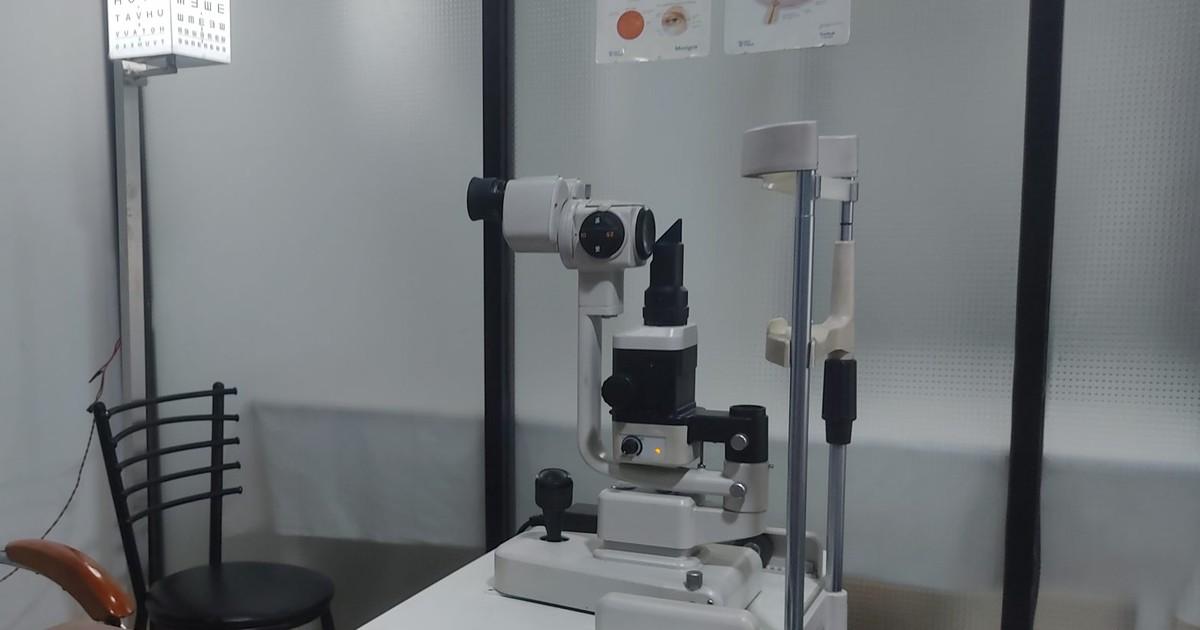


Table of contents
- Environmental preparation, not surveillance of people
- Movement and exits need to work in practice
- Support: matching the call and checking the response
- Everyday objects: clinical function and a defined place
- Privacy and accessibility are part of safety
- From inspection to correction: record, resolve and check
- How NEXO fits into this training
- Frequently asked questions
- Take-home messages
- References
Fictional scene. Before the first appointment, a professional enters the room and finds a chair in front of the door, boxes under the counter and a phone whose support extension nobody confirmed on that shift. The stethoscope is available, but procedure materials are mixed in with personal items. There is no threatening patient in that scene. There is an environment that needs review before it is used.
Office safety also begins at that moment, outside the clinical conversation. Organizing movement, storing materials and agreeing on how to ask for help are tasks for the service, not tests of courage for the person providing care. The proposal is not to turn every appointment into a suspicion of aggression. It is to preserve conditions for care and options for response when a situation changes.
This text examines environmental preparation in outpatient services. It does not teach restraint techniques, confrontation or the use of objects as weapons. Nor does it present an organized room as a guarantee against violence: planning must consider local risks, available resources and the institution's responsibilities.
Key points
- The physical layout must allow movement and access to the exit without creating unnecessary barriers for patients or staff.
- A communication resource is part of the safety plan only when it is known who receives the call and what happens next.
- Clinical materials must have a defined place, with access compatible with their function and with the service's protocols.
- Accessibility, privacy, infection prevention and occupational safety must be assessed together.
- Environmental recommendations do not, on their own, show that a given change reduces aggression in any office.
- Identifying a flaw does not transfer responsibility for violence to the person exposed to it.
Summary
- Environmental preparation, not surveillance of people
- Movement and exits
- Access to support
- Materials and everyday objects
- Reception, privacy and accessibility
- Inspection and correction of flaws
- How NEXO fits into this training
- Frequently asked questions
- Take-home messages
Environmental preparation, not surveillance of people
An environmental assessment asks how the space works: who moves through it, which tasks take place there, where materials are kept and how someone can ask for help. It does not need to start by trying to classify a patient as dangerous. The same blocked corridor can hinder the movement of a person with reduced mobility, the passage of staff and the response to a clinical emergency.
The Occupational Safety and Health Administration, the United States occupational safety agency, includes workplace analysis and engineering and organizational measures in its guidance for preventing violence in hospitals. These guidelines help formulate questions for the service, but applying them to an office requires local assessment and compliance with each country's safety, accessibility, fire and data protection rules. A hospital solution should not be imported without examining the context of use (OSHA, n.d.).
This distinction avoids automatically importing solutions from an inpatient unit into a small office. A physical barrier, a change of access or a monitoring system can affect reception, confidentiality and evacuation. The decision must involve the technical managers and the people who work in the space. Installing a device without assessing its consequences is not the same as solving the problem.
It is also necessary to separate plausibility from demonstrated effectiveness. The Cochrane review by Spelten and colleagues, published in 2020 with a search up to May 2019, found evidence of low or very low certainty, with inconsistent results for organizational interventions made up of several measures. The included studies took place mainly in long-term care institutions and psychiatric units, as well as one emergency service. These results do not allow a specific reduction in aggression to be attributed to the position of a desk in outpatient offices (Spelten et al., 2020).
Uncertainty does not make an obstructed exit an irrelevant problem. It changes how the recommendation is presented: organizing the room provides more suitable conditions for movement and response, but it does not authorize promising that the environment will be free of violence. The assessment should record what is meant to be corrected and check whether the change actually resolved that operational failure.
The broader picture is in violence against health professionals: anticipating and responding. Here, the question is more limited: does the office allow care to be delivered and the safety plan to be activated without relying on physical improvisation?
Movement and exits need to work in practice
A floor plan can show a clear passage while the room used daily holds bags, boxes, carts and extra chairs. The review should therefore consider the real setup during care, including the patient, companion, professional and necessary equipment. The presence of more people is not in itself a sign of risk; it is a condition that changes movement and needs to be planned.
Keeping an accessible exit does not mean positioning the patient as an obstacle to be controlled. The Project BETA consensus on de-escalation recommends personal space and the possibility of exit for both patient and professional. This is a clinical consensus, not a trial proving the superiority of a particular chair arrangement. Its useful principle is to avoid situations in which any participant feels cornered (Richmond et al., 2012).
In the routine review, the team can walk the route between reception, room and exit, check how the door opens and confirm whether the furniture interferes with the path. The purpose is not to teach evasion or confrontation moves. It is to recognize incompatibilities in the space and refer them to those who can correct them, before an incident occurs.
- Look at the room in its usual setup, not only when it is empty and freshly organized.
- Confirm that mobile equipment and belongings do not occupy the intended passage.
- Consider the movement of people who use a wheelchair, walker or other mobility aid.
- Refer structural changes to technical assessment, without improvising locks or modifying emergency doors.
Having a second exit can be a design consideration when that is feasible and technically indicated. It is not a universal requirement that can be deduced from a foreign recommendation, nor something to be improvised by those providing care. When the structure has limitations, the service needs to assess which measures are possible and when a space is not suitable for a given type of care (NIOSH, 2026).
In another fictional example, a companion chair is placed in front of the door to fit in the room. The useful response is not to ban companions across the board or to hold reception responsible. It is to review the room's capacity, the furniture arrangement and the alternatives for providing care with support when it is needed. The problem is one of organization and needs someone responsible for solving it.
If the room layout changes after maintenance or installation of equipment, the check needs to be redone. What worked before may stop working. This concrete review is different from requiring the team to remain permanently alert: it aims to reduce foreseeable obstacles, not to produce a routine of hypervigilance.
Support: matching the call and checking the response
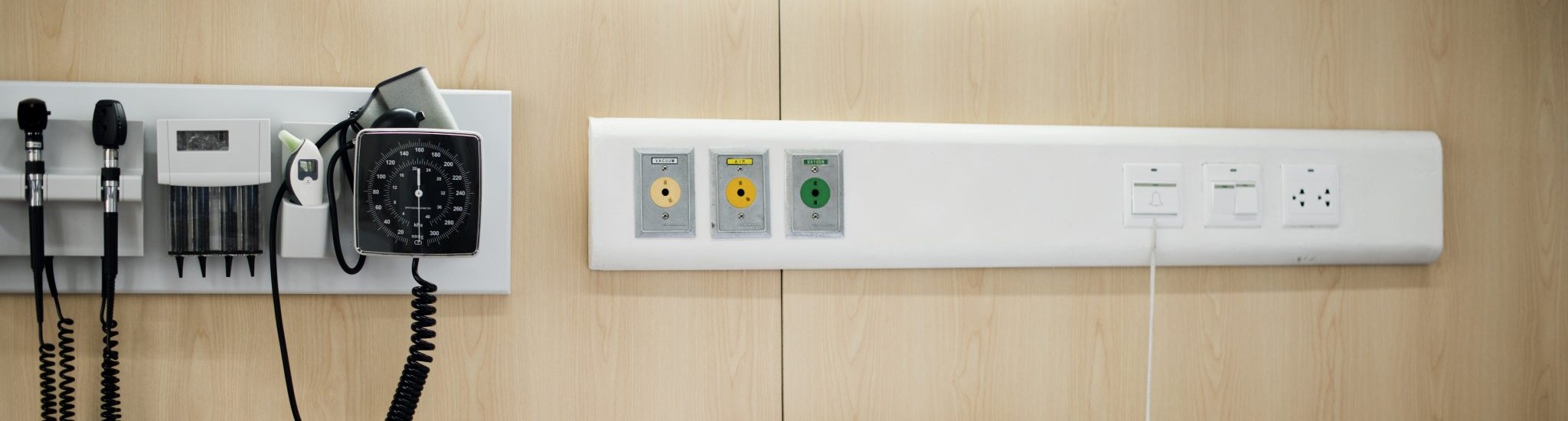
A phone, a button or an app are not the whole plan. The resource needs to work in that space and during that work period. It is necessary to know who receives the call, who can respond and what alternative is planned if communication fails. The NIOSH environmental and organizational recommendations include signaling systems and work arrangements that consider solo care. They are occupational prevention guidance, not guarantees of response in all contexts (NIOSH, 2002).
The combination must distinguish requests of different natures. A clinical emergency may require a specific team and equipment; a threat may call for the security protocol and, depending on the context, local emergency services. The definition belongs to the service. A newly arrived professional should not have to figure out the flow during a critical situation or rely exclusively on a personal phone.
To review the availability of support, these questions help:
- Is the means of communication accessible during usual tasks, without obstructing movement?
- Does the destination of the call match the team present at that time?
- Who takes on the response and how do they identify the location that needs help?
- Is there a previously defined alternative when the main resource is unavailable?
- Do the people who work in the space know the flow, including at shift change?
A scheduled test must be arranged with the teams involved. It is not appropriate to trigger an alarm without warning to see whether anyone reacts: this can mobilize resources needed for another case. The purpose of the check is to confirm how the process works, record failures and correct them, respecting institutional rules.
The same applies to reception, cleaning, maintenance and administrative support. These people take part in the use of the environment and need to know how to report a problem, without being given the responsibility to intervene physically. The World Health Organization and International Labour Organization guide places worker protection in sustainable programs, with management responsibilities, resources, monitoring and collaboration (WHO and ILO, 2022).
The discussion on clinical leadership for interns and recent graduates helps to think about roles and requesting support. The simulation of a consultation to assess the patient has another focus: the delivery of care. In this environmental review, it is enough to check whether resources and communication paths are available. An in-depth assessment of how the service works deserves its own planning.
If the planned support is not available, this must be reported to management so that care conditions can be reassessed. An institutional deficiency is not solved by telling someone to tolerate greater exposure or to show more emotional control. Noticing a limitation is relevant information for safety, not a character flaw.
Everyday objects: clinical function and a defined place
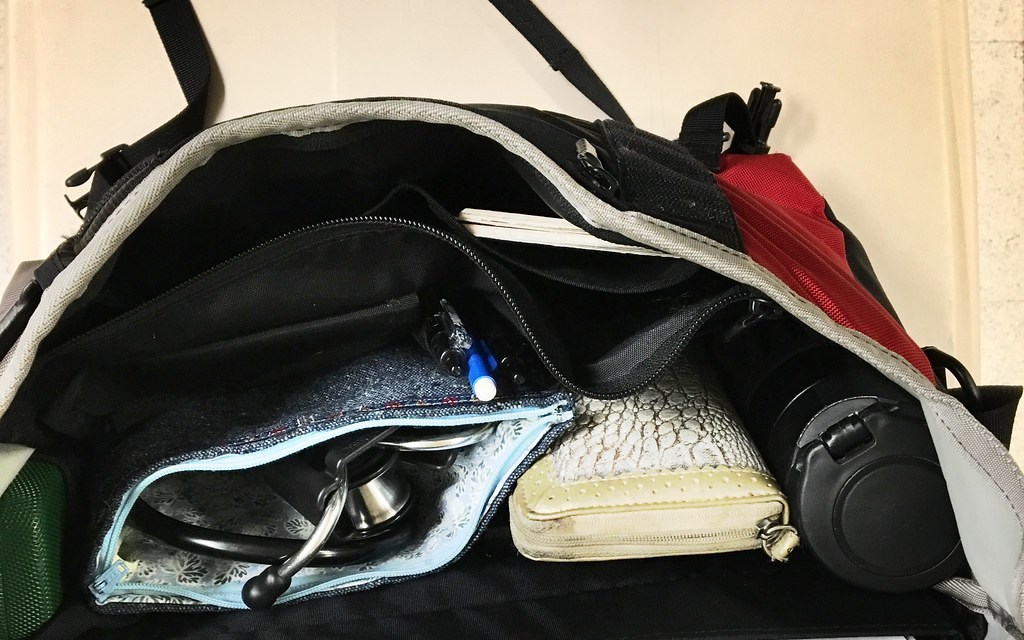
Stethoscopes, pens and utensils are part of real work environments. Mentioning them does not mean teaching how they could cause injury. The useful question is another one: which item needs to be available for the task, in what location and under what precautions? The Project BETA consensus addresses agitated patients, especially in urgent situations; NICE addresses violence and aggression in mental health, health and community settings. Their recommendations on environment and objects should be understood within these scopes, not turned into a list of prohibitions for every consultation. For the general review of the workplace, the OSHA and NIOSH occupational guidance also applies (Richmond et al., 2012; NICE NG10, 2015).
A room needs to contain what allows the planned care to be provided. Removing necessary instruments indiscriminately can create another safety problem. The organization must distinguish frequently used material, supplies that will only be used in specific procedures, personal belongings and waste. The place of each category must be understandable to those who work there.
The stethoscope is an assessment device, not a defense device. Its storage must consider availability, cleaning and the manufacturer's instructions. Reusable equipment must be processed according to its purpose and before use on another patient, when indicated by the applicable recommendations. Clean and dirty materials must not share an arrangement that favors cross-contamination (CDC, 2024).
Pens, clipboards and administrative objects can have a defined place, without unnecessary accumulation over the care area. This does not require patrolling the patient's belongings or associating the possession of a pen with a violent intention. If a specific object raises concern in a concrete situation, the approach must follow the clinical assessment and the institutional protocol, without an improvised confrontation.
Cutlery and other food-related utensils must follow the service's organization and rules when their use is part of care. This text does not recommend removing food, support objects or accessibility resources as a punitive measure. A need for adaptation must be assessed in a proportional, respectful way that is consistent with care. The use of these utensils must be discussed with those responsible for care and for organizing the space.
- Keep the material needed for the planned activity in the care area.
- Define storage, restocking and return locations that the team can recognize.
- Separate clean equipment, already used items, personal belongings and waste.
- Store procedure materials and medicines according to protocols and the appropriate access conditions.
- Do not use clinical instruments for confrontation, and do not instruct patients or professionals to do so.
Sharps require specific care to prevent accidents and infections. CDC guidance calls for puncture-resistant containers at the point of use and disposal according to the applicable rules. This recommendation has its own occupational safety basis; it does not depend on imagining an aggressive patient. Installing, replacing and handling these containers must be part of the work process (CDC, 2003).
There is also a communication problem: calling a person dangerous because they observe the room or ask about a material turns an interpretation into a label. The team must describe relevant facts and preserve the context. The article on stigma and language in clinical conduct explores this difference in depth. Organizing the environment is not permission for discrimination.
Privacy and accessibility are part of safety
The environment must allow the patient to be heard and cared for with dignity. A reception area with unclear information, a room with too many stimuli and a passage that is hard to use are concrete problems, but they do not justify concluding that a given person will behave violently. NIOSH recommends considering comfort, waiting and the physical characteristics of the service within a broader program (NIOSH, 2002).
Noise, lighting and circulation must be assessed according to the activities carried out and people's needs. The idea is not to promise that a quiet environment eliminates agitation. It is to avoid unnecessary difficulties for communication and care. The Project BETA consensus mentions attention to environmental stimuli, with decisions adapted to the clinical situation (Richmond et al., 2012).
Privacy also requires planning. Leaving a door open may make communication with the team easier in one situation and expose sensitive information in another. Installing monitoring may create obligations for data protection and consent or information, according to local legislation. There is no automatic answer: decisions of this kind must go through the technical, safety and privacy officers, and must not be improvised during a consultation.
The arrangement of chairs must consider communication, not only the point of view of those providing care. People with hearing disabilities may need to see the other person's face; people with mobility limitations may need extra space; companions may be needed for support. Adaptations must be discussed without presuming incapacity or removing the patient's participation.
Explaining a room change or an organizational pause helps maintain the care relationship. This is different from using an automatic empathy phrase while ignoring what the person asks. The discussion on empathy and clinical reasoning and on listening to the patient's agenda offers the communication complement. Here, the focus remains on the material conditions that make this communication possible.
The professional's emotional state can be included in the review of the environment as information: difficulty hearing the call, a sense of isolation or uncertainty about the exit deserve to be examined. This is not the same as treating perception as proof of threat or attributing an incident to a lack of self-control. The text on affective bias in diagnosis discusses how emotion and interpretation can relate.
From inspection to correction: record, resolve and check
A checklist is useful when it leads to decisions. If the form merely circulates without anyone being able to fix the door, replace equipment or reorganize the space, the failure remains. The script below is a proposal for organizing the work, not a validated scale for predicting violence nor an instrument for classifying patients.
| Area | What to check | How to follow up |
|---|---|---|
| Circulation | Passages and access to the door in the actual care configuration. | Remove obstacles when this is safe and request a technical assessment for structural problems. |
| Support | Whether the communication resource works, where the call goes and the planned alternative. | Arrange a scheduled test, record the failure and confirm the correction with those responsible. |
| Materials | Need for the items, storage, restocking and separation between clean and used. | Review the flow with the care team and those responsible for cleaning and supplies. |
| Waste | Availability and condition of the containers suited to the work process. | Correct according to the waste protocol, accident prevention and local rules. |
| Reception | Privacy, accessibility and communication conditions. | Discuss adaptations with the competent areas and listen to the people who use the space. |
| Review | Person responsible, deadline, interim measure and evidence that the problem was resolved. | Review the environment after the change and inform the team of the new configuration. |
Documentation must be specific. "Unsafe room" communicates less than "the cart parked there prevents the door from opening as usual". The second description allows an action to be identified and its result checked. There is no need to record the patient's personal data to explain a problem with the furniture or the communication resource.
A simple review cycle can follow these steps:
- Describe the observable failure and the task it hinders.
- Identify who has responsibility and resources to assess the correction.
- Define the appropriate interim measure while the definitive solution is not implemented.
- Check whether the change resolved the problem without creating another risk.
- Communicate the change and keep monitoring according to the service's process.
A small failure and a design problem do not call for the same response
Fictional example. Two rooms use the same resource to call for support. The team finds that the call reaches reception, but the alert does not identify which room it came from. The equipment emits the expected signal; even so, the flow is incomplete. The service needs to define how to locate the request, assess the solution with those responsible and check the operation again. Merely marking "alarm works" would hide the problem.
In another fictional situation, a new piece of equipment starts to occupy part of the circulation. Moving it may seem simple, but it is necessary to check the power supply, conditions of use, cleaning and access for those who need it. A person may notice the obstacle without having the authority to choose the definitive installation. The record must refer the assessment onward, not turn an improvised adaptation into a permanent solution.
These examples show why the review needs to describe tasks and observable consequences. What is no longer possible? Who can assess the change? How will the result be checked? The questions guide a concrete conversation between care, maintenance and management, instead of a generic judgment about who left the room in a certain way.
The 2022 joint WHO and ILO guide recommends policies adapted to the size and type of service, drawn up with worker participation. In risk assessment, it proposes identifying hazards, prioritizing problems, defining actions and those responsible, and monitoring whether the changes create other risks. This sequence supports an institutional review of the environment, not a requirement that each professional single-handedly compensate for the limitations of the space (WHO and ILO, 2022).
Training can support this process, but it does not replace repairs, resources and defined responsibilities. The Cochrane review by Geoffrion and colleagues, published in 2020, found uncertainty about the effect of education and training on reducing aggression, despite possible improvements in knowledge and attitudes. It is not correct to treat participation in a course as a guarantee of protection or as an argument to blame someone who has suffered violence (Geoffrion et al., 2020).
An occurrence also does not prove, by itself, that the team stopped checking the environment. The analysis needs to consider the context, the real working conditions and the possibilities for intervention. The purpose of recording and correcting failures is to produce learning and institutional accountability, not to construct individual blame retrospectively.
How NEXO fits into this training
In NEXO, the case of the day is fictional, with a real clinical presentation and up to six progressive clues, and you propose the diagnosis by finding the ICD-10 code.
The link to this topic lies in keeping the question of each activity clear. In the clinical case, the focus is the diagnostic hypothesis. In the environmental review, the focus is the condition of the space and the resources to provide care. These are different objectives, which can be discussed in training without confusing a diagnostic activity with safety preparation.
This separation also helps keep an environmental concern from replacing attention to clinical needs. The text on diagnostic overshadowing explores the risk of a label hiding other problems. Acute stress and clinical reasoning deals with limits on performance under pressure. Preparing the office remains a concrete responsibility of the service, with resources, local assessment and support for the team.
Frequently asked questions
Do I need to remove all objects from the room?
No. The office needs to contain the resources required for care. The review should identify excesses, inadequate storage and incompatibilities with circulation or with protocols, without indiscriminately removing essential instruments. The decision should consider the function of each item and the work process.
Does every office need two doors?
It is not possible to establish this universal obligation from this text. Technical guidelines mention a second exit when feasible, but design decisions depend on professional assessment, the characteristics of the service and local rules. Do not improvise structural changes or closing mechanisms; refer the limitation for analysis and definition of appropriate measures.
Does an organized room prevent aggression?
No. The evidence and its limits were presented in the opening section. In practice, assess the problem the change is meant to correct: freeing a passage, ensuring communication or organizing materials. Achieving this operational result does not allow the measure, on its own, to be credited with a proven effect on aggression (Spelten et al., 2020).
Is an open door always safer?
No. The decision involves circulation, the possibility of support, privacy and clinical needs. The service should define a contextual solution, with technical assessment and protection of patient information. The same measure may be appropriate in one situation and inappropriate in another; safety should not be used as a generic justification for eliminating confidentiality.
If I notice a failure, should I fix everything alone?
No. You can report the failure and take only the measures compatible with your role, the protocol and the safety of the situation. Structural, staffing, equipment or institutional response problems require the participation of those with the competence and resources to resolve them. One person should not be given the responsibility of individually compensating for a deficiency in the service.
Take-home messages
- Prepare the environment before attributing safety to the individual skill of the person providing care.
- Check circulation and exits in the real layout of the office.
- Define how to ask for support, who responds and what to do if communication fails.
- Organize objects by function, clinical need and storage conditions, without teaching aggression.
- Preserve accessibility, privacy and care without stigmatizing patients.
- Record the failures, forward the correction and check the result, with institutional responsibility.
References
- Occupational Safety and Health Administration. Hospitals eTool: Patient Care Unit, Workplace Violence. Institutional roadmap of hazards, controls and work practices. Accessed on November 7, 2026.
- Spelten E et al. Organisational interventions for preventing and minimising aggression directed towards healthcare workers by patients and patient advocates. Cochrane Database Syst Rev. 2020; CD012662. DOI: 10.1002/14651858.CD012662.pub2.
- Richmond JS et al. Verbal De-escalation of the Agitated Patient: Consensus Statement of the American Association for Emergency Psychiatry Project BETA De-escalation Workgroup. West J Emerg Med. 2012. DOI: 10.5811/westjem.2011.9.6864.
- National Institute for Occupational Safety and Health. Workplace Violence Prevention for Nurses. Unit 5: Hazard Prevention and Control. Page reviewed on July 14, 2026. Examples of environmental controls and work organization.
- National Institute for Occupational Safety and Health. Violence: Occupational Hazards in Hospitals. DHHS (NIOSH) Publication 2002-101; 2002.
- World Health Organization; International Labour Organization. Caring for those who care: guide for the development and implementation of occupational health and safety programmes for health workers. 2022. Sections 3.1 and 3.5, p. 38 and 47 to 48.
- National Institute for Health and Care Excellence. Violence and aggression: short-term management in mental health, health and community settings. NG10: Recommendations. 2015.
- Centers for Disease Control and Prevention. CDC’s Core Infection Prevention and Control Practices for Safe Healthcare Delivery in All Settings. Page from 12 April 2024.
- Centers for Disease Control and Prevention. I. Regulated Medical Waste. Guidelines for Environmental Infection Control in Health-Care Facilities; 2003. Section on packaging and disposal of sharps.
- Geoffrion S et al. Education and training for preventing and minimizing workplace aggression directed toward healthcare workers. Cochrane Database Syst Rev. 2020; CD011860. DOI: 10.1002/14651858.CD011860.pub2.