Empathy and clinical reasoning in medical visits



 Alexei Peter dos Santos, Thiago Longo Moraes, and Caroline Wilhelmsen Martins
Table of contents
- What clinical empathy is
- Why empathy enters the reasoning
- Cues the patient offers
- What the studies show
- Empathy throughout training
- How to train empathy in the consultation
- What gets in the way of listening
- How NEXO helps train reading of the story
- Frequently asked questions
- Empathy checklist for the consultation
- References
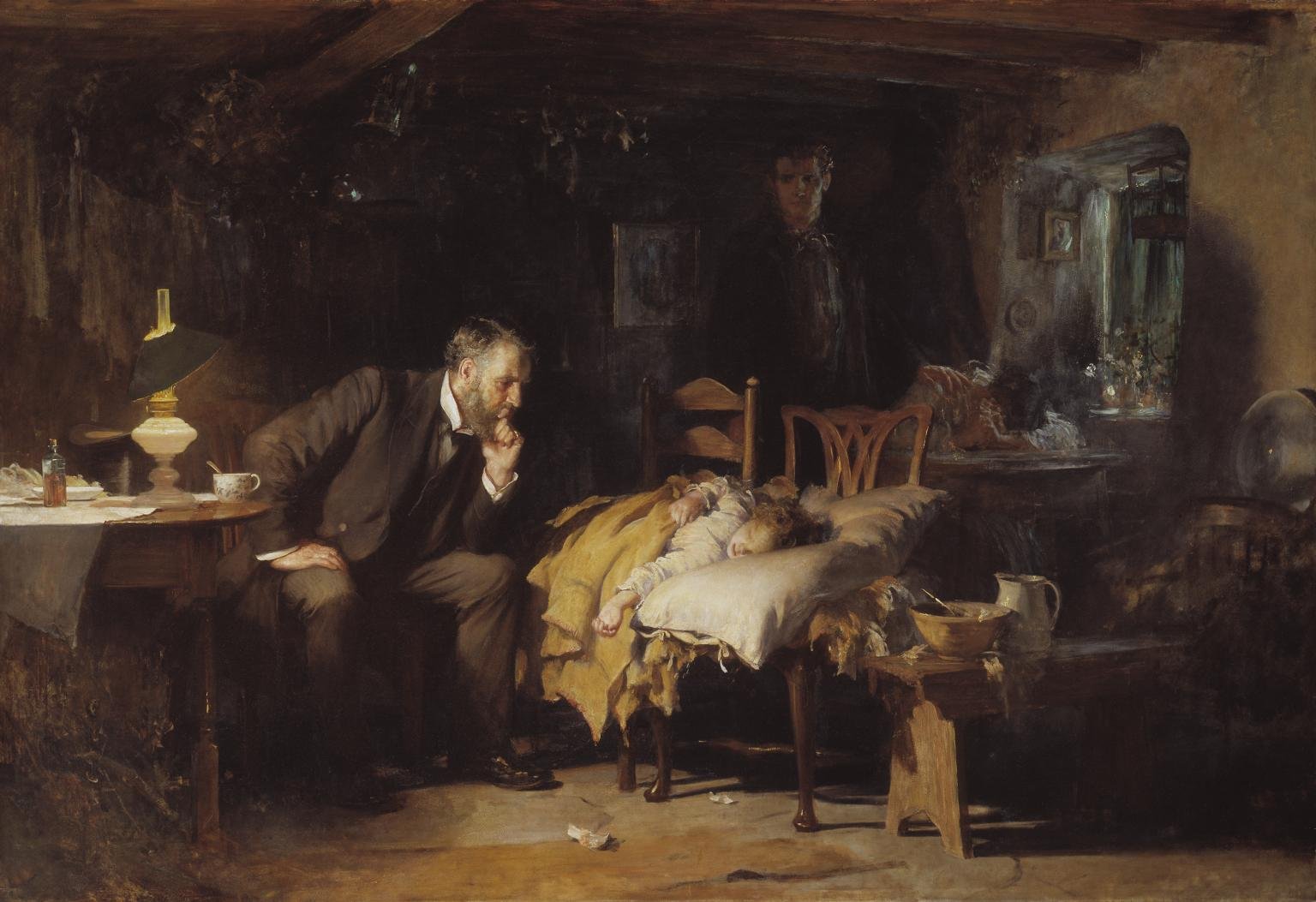
The patient arrives at the clinic with a vague complaint of fatigue. The resident asks the scripted questions, notes the answers and is already thinking about tests. Near the end, almost at the door, she comments: "since my husband died I haven't been sleeping well". The resident smiles, says he is sorry and returns to the request for tests. At the next appointment, another doctor pauses when she hears the same sentence, asks how things have been, and within a few minutes out come loss of appetite, frequent crying, low mood and a new medication the patient started on her own. The diagnosis changes place.
The difference between the two consultations was not technical knowledge. It was the way of listening. Clinical empathy is often treated as a moral quality, almost decorative, but it has a concrete role in reasoning: it decides which information reaches the doctor and with what quality. This guide explains what clinical empathy is, why it enters diagnostic reasoning, what studies show about its effects, what happens to it during training and how to train it in a practical way in the consultation.
Key points
- Clinical empathy is understanding the patient's situation and feelings, communicating that understanding and acting on it in a useful way.
- It improves the exchange of information, and better information feeds better diagnostic reasoning.
- Studies associate the doctor's empathy with satisfaction, adherence and, in some work, better clinical outcomes.
- Patients offer emotional cues frequently, and a good part of them goes unnoticed.
- Empathy tends to fall during training, especially in the clinical phase.
- It can be trained, and there are randomized trials showing gains assessed by the patients themselves.
Summary
- What clinical empathy is
- Why empathy enters reasoning
- Cues the patient offers
- What the studies show
- Empathy throughout training
- How to train empathy in the consultation
- What gets in the way of listening
- How NEXO helps train reading of the history
- Frequently asked questions
- Checklist for empathy in the consultation
What clinical empathy is
Empathy is a word used in many ways. In the clinic, the most useful definition has three parts. First, understanding the patient's situation, perspective and feelings, including the meaning he gives to what he is experiencing. Second, communicating that understanding and checking whether it is correct. Third, acting on that understanding in a way that helps. This formulation, proposed for primary care, describes empathy as something that has moral, cognitive, emotional and behavioral components, and not just a feeling.
Empathy is not sympathy
Sympathy is feeling together, sometimes suffering together. Clinical empathy is understanding and responding while keeping the ability to think. A doctor can be very sympathetic and not very empathetic, when he comforts without understanding. And he can be empathetic without becoming excessively emotionally involved, when he perceives what is at stake for the patient and uses that in care.
Cognitive, affective or both?
The literature has discussed for years whether clinical empathy should be mainly cognitive, centered on understanding, or also affective, centered on feeling. A philosophical review on the topic criticizes this division and proposes a broader notion of empathic concern, which values genuine interest in welcoming, recognizing and responding to the emotions of those who suffer. For practice, the message is simple: understanding and caring go together, and one without the other is incomplete.
Empathy as a professional skill
Treating empathy as a skill, and not only as a personality trait, has a practical advantage: skills can be described, observed, trained and assessed. Just as no one is born knowing how to auscultate, no one is born knowing how to conduct a difficult conversation or notice the worry hidden behind a repeated question. When empathy becomes something concrete, such as letting the patient finish the first speech, summarizing what was understood and asking what else worries him, it stops depending on the mood of the day and becomes part of the clinical method.
| Component | What it means | How it appears in the consultation |
|---|---|---|
| Understand | Perceive the patient's situation, perspective and feelings | Ask what he thinks is happening and what worries him most |
| Communicate | Show that you understood and check | Summarize aloud: "from what I understood, what weighs most is..." |
| Act | Use the understanding in the care plan | Tailor the explanation, tests and follow-up to what matters to them |
| Taking care of yourself | Keeping the ability to think without burning out | Breaks, team support, clear limits |
Why empathy enters the reasoning
Diagnostic reasoning depends on the quality of the data. An incomplete or distorted history leads to wrong hypotheses, even in the hands of a very competent doctor. Empathy acts at exactly this point: it increases the chance that the patient will tell what matters, including what they are ashamed to say.
Trust and information exchange
A study with hundreds of outpatients in Korea tested a model of how the physician's perceived empathy relates to satisfaction and adherence. The effect of empathy appeared through intermediate factors, among them information exchange, perceived competence, interpersonal trust and the feeling of partnership. That is, the patient who feels understood talks more, and the doctor who receives more information reasons better.
Empathy and diagnosis
A systematic review on empathy in family medicine listed, among the effects studied, diagnosis linked to information exchange, alongside satisfaction, adherence, anxiety and clinical outcomes. The conclusion was that empathy is associated with less anxiety and distress and better clinical outcomes, although few studies entered the final analysis. The link with diagnosis is intuitive: without the full history, the differential starts off skewed.
History, context and hypothesis
Many decisive data appear as context: a recent loss, a specific fear, a hidden habit, an over-the-counter medication. They rarely come up when the question script is followed mechanically. Careful listening lets these data enter the reasoning early, when they can still change the list of hypotheses. The text on how to interpret what the patient brings goes deeper into this reading of the history.

Cues the patient offers
Patients often leave cues about emotions and personal concerns during the consultation, frequently in an indirect way. These cues are opportunities to show understanding and, at the same time, sources of clinical data.
What a classic study found
In a study that recorded routine consultations with primary care physicians and surgeons in the United States, about half of the consultations had at least one patient cue. Most of the patient-initiated cues were emotional in nature. Physicians responded positively in 38% of cases in surgery and 21% in primary care, and most of the time they missed the opportunity. One detail stands out: consultations with missed opportunities tended to be longer than those with a positive response.
Types of cue
- Comments about emotions: "I've been very nervous", "this scares me".
- Comments about personal life: work, family, losses, recent changes.
- Repeated questions about the same point, which indicate unresolved concern.
- Sentences said at the end of the consultation, already at the door, which often carry the real reason for the visit.
- Nonverbal signs, such as silence, held-back crying or a change in tone of voice.
Responding without losing the thread
Responding to a cue does not mean abandoning the reasoning. Often it is enough to name what was noticed, open space with a question and then return to the script with the new information: "you said you haven't slept since your husband died; can you tell me how it has been?". That question takes seconds and can bring the datum that reorganizes the differential.
What the studies show
Research on empathy has important limitations, such as self-reported measures and observational studies. Even so, there is a consistent set of findings worth knowing.
Outcomes in patients with diabetes
A study in the United States compared outcomes of patients with diabetes seen by family physicians with different scores on the Jefferson Scale of Empathy. Patients of physicians with high scores had good glycemic control more often, 56% versus 40% for physicians with low scores, and the same pattern appeared in LDL cholesterol control. In Italy, a larger study found, among patients of physicians with high scores, fewer hospitalizations for acute metabolic complications. These are association studies, which do not prove cause, but they reinforce the hypothesis that empathy and clinical competence go together.
Trials that manipulated the relationship
A meta-analysis gathered randomized trials in which the relationship between patient and professional was changed systematically, with objective or validated outcomes, such as blood pressure or pain. The overall effect was small but statistically significant, and the authors called for more studies designed specifically for this question. Another systematic review found that empathic consultations improved pain, anxiety and satisfaction to a small degree.
How to read these numbers
Small effects can matter greatly when they repeat across millions of consultations. At the same time, they show that empathy does not replace correct treatment. The central point is that empathy does not compete with technique: it improves information, adherence and the experience, and that adds to care.

Empathy throughout training
One of the most repeated findings in medical education is that empathy measured by questionnaires tends to fall during the course. Understanding when and why this happens helps protect yours.
The third year
A longitudinal study at Jefferson Medical College followed two classes from the first day of class to graduation. Empathy scores did not change in the first two years, but fell significantly at the end of the third year and remained low until graduation. The third year is precisely when the student begins to spend more time with patients.
Reviews and national studies
A systematic review of studies with students and residents found a drop in empathy in most of the longitudinal and cross-sectional works. The authors pointed to the clinical practice phase and the distress produced by aspects of the hidden, formal and informal curricula as the main reasons. A national study with more than ten thousand students at osteopathic medical schools in the United States also found a drop between the preclinical and clinical phases, but with negligible magnitude, smaller than that observed in traditional schools. The authors suggest that the emphasis on patient-centered care may explain the difference.
Why the drop happens
- Overload and sleep deprivation during the internship.
- Exposure to suffering without space to process what was seen.
- Behavioral models that value technique and devalue conversation.
- Pressure for productivity and short consultations.
- Fear of making mistakes, which narrows attention to the script.
How to train empathy in the consultation
The good news is that empathy can be taught and learned. Research on interventions has limitations, but the most rigorous studies point in the same direction.
What the reviews found
A systematic review of interventions with medical students found that most studies reported an increase in empathy, with a medium effect size of 0.23. The interventions included patient narratives, arts, writing, theater, communication training and interviews with patients. Another review, which also included residents and physicians, found generally weak study designs, but 8 of 10 studies with rigorous design showed an increase in empathy after targeted interventions.
A randomized trial
In a trial with residents and fellows from various specialties, one group received three short modules of empathy training based on neuroscience. The patients, without knowing who had been trained, rated the physicians before and after. The trained group had a greater improvement in empathy as rated by patients than the control group, along with gains in reading facial expressions.
Practices for presence
A study that combined a literature review, observation of consultations and interviews with doctors, patients and professionals from other fields arrived at a set of practices to encourage the doctor's presence in the consultation. Among them are preparing with intention, listening attentively, agreeing on what matters, connecting with the story and exploring emotional cues. They can be trained one at a time.
Training with simulated patients and recordings
Consultations with simulated patients allow you to repeat the same situation, receive feedback from the person being seen and watch your own recording. Seeing yourself interrupt the patient or look at the screen at the moment they talk about something important usually teaches more than any class. If your medical school offers this kind of activity, ask to receive feedback from the simulated patient about how heard they felt, and not only about the technical script. Case discussion groups focused on the relationship, in which each participant recounts a consultation that marked them, also help maintain sensitivity throughout the internship.
Exercises for the clerkship
- Before entering the room, read the chart and choose one personal question to ask.
- In the first minutes, let the patient speak without interrupting.
- Ask what they think is happening and what worries them most.
- When you hear an emotional cue, name it and open space before moving on.
- Summarize aloud what you understood and ask for correction.
- After the consultation, note which new piece of information came from listening and how it changed your hypotheses.

What gets in the way of listening
Knowing that empathy matters is not enough. In daily routine, several factors push the doctor away from listening, and recognizing them is the first step to working around them. They act at the same time on the relationship and on reasoning, because narrow attention loses data and also loses people.
Hurry and interruption
Short consultations and long queues create the feeling that listening is a luxury. The effect is usually the opposite of what is expected: the doctor interrupts early, the main complaint is poorly understood and the consultation drags on with questions that lead nowhere, or the patient comes back a few days later with the same problem. Letting the patient finish the first account rarely takes as long as it seems and usually brings most of the relevant information at once.
Screen and chart
The electronic health record made documentation more complete, but it also placed a screen between the doctor and the patient. Writing while the patient speaks reduces eye contact and causes nonverbal cues to go unnoticed. A simple strategy is to listen first, with your body turned toward the patient, and record afterward, saying: "now I will write down what you told me, and if I forget something you correct me".
Labels and first impressions
When a patient arrives with a reputation for being difficult, with many return visits or with a previous psychiatric diagnosis, listening often decreases. The risk is twofold: the relationship worsens and new symptoms start to be attributed to the old label. Empathy works here as protection against closing off early, because it forces you to listen again, as if for the first time. The text on affective bias in diagnosis discusses how emotions, positive or negative, enter reasoning.
The doctor's own fatigue
No one listens well at the limit of fatigue. Long shifts, delayed sleep and an accumulation of difficult cases reduce the ability to notice the other person. Caring for yourself is not selfishness, it is a condition for caring well. Small breaks between consultations, rotating tasks and talking with colleagues about cases that weighed on you make a difference. The drop in empathy observed during training is linked precisely to this wear, and not to a lack of character in students.
What to do when the conversation gets difficult
Some consultations bring anger, crying or silence. At those times, the temptation is to speed up or hide behind the script. An alternative is to name the emotion without judgment ("I notice you are very irritated by this delay"), validate what is legitimate and only then return to the plan. This short sequence usually calms the conversation and opens space for information the patient would not give to someone who seems not to care.
How NEXO helps train reading of the story
In NEXO, the case of the day is presented in up to six clues, and many of them come from the clinical history: complaint, context, past history, habits. Training with cases like this helps you see how much of the reasoning depends on data that only appear when someone asks and listens. With each guess, the ICD-10 proximity in five levels shows how far your hypothesis was from the diagnosis.
The cases are fictional with a realistic clinical presentation. A useful exercise is, at the end of each round, to identify which history clue would have appeared earlier in a well-conducted consultation and how it would have shortened the path. The guide what NEXO is explains the round, and the text on feedback in clinical cases shows how to make use of the explanation after the case. The limits of use are on the NEXO economy page.
Coordinators of leagues, courses and residency programs who want to discuss cases in groups can learn about NEXO Closer. Researchers can propose studies through NEXO Researcher, physician reviewers take part through NEXO Curator, and health content creators through NEXO Creators.
Frequently asked questions
Is empathy something you have or something you learn?
Both. There are personal differences, but reviews and randomized trials show that targeted interventions increase empathy, including when it is assessed by patients.
Does being empathetic take too much time?
Not always. In a classic study, consultations with missed emotional opportunities tended to be longer than those in which the physician responded to the patient's clue.
Does empathy improve diagnosis?
It improves the exchange of information, and information is the basis of diagnosis. Studies on outcomes show positive associations, but there is still no direct proof that empathy alone increases diagnostic accuracy.
Why does empathy decline during internship?
Studies point to overload, exposure to suffering without room to process it, behavior models and aspects of the hidden curriculum. Knowing this helps you seek support and protect your own way of caring.
How can I protect myself from burnout without losing empathy?
Breaks, conversation with colleagues and preceptors, reflection groups and clear limits help. If the strain is great, seek the help you need at your school's or hospital's support service.
Does teleconsultation harm empathy?
It changes the channel, but it does not eliminate empathy. Without the physical examination and with fewer nonverbal signals, attentive listening and summarizing aloud become even more important so that nothing relevant is left out.
Is empathy the same as agreeing with everything the patient asks for?
No. Understanding the patient's perspective does not mean accepting every request. On the contrary, when the patient feels understood, it becomes easier to explain why a test or medicine is not the best choice and to agree on a plan together.
Empathy checklist for the consultation
- Read the chart beforehand and arrive with a personal question.
- Let the patient speak without interrupting at the start.
- Ask what they think they have and what worries them most.
- Notice and name the emotional clues.
- Summarize what you understood and check it.
- Use what you heard to adjust hypotheses, tests and explanation.
- Afterwards, record which piece of data came from listening and how it changed the reasoning.
Want to train reading the history clue by clue? Play the case of the day on NEXO.
References
- Kim SS, Kaplowitz S, Johnston MV. The effects of physician empathy on patient satisfaction and compliance. Eval Health Prof. 2004. PubMed 15312283
- Hojat M, Louis DZ, Markham FW, Wender R, Rabinowitz C, Gonnella JS. Physicians' empathy and clinical outcomes for diabetic patients. Acad Med. 2011. PubMed 21248604
- Neumann M, Edelhäuser F, Tauschel D, Fischer MR, Wirtz M, Woopen C, et al. Empathy decline and its reasons: a systematic review of studies with medical students and residents. Acad Med. 2011. PubMed 21670661
- Del Canale S, Louis DZ, Maio V, Wang X, Rossi G, Hojat M, et al. The relationship between physician empathy and disease complications: an empirical study of primary care physicians and their diabetic patients in Parma, Italy. Acad Med. 2012. PubMed 22836852
- Derksen F, Bensing J, Lagro-Janssen A. Effectiveness of empathy in general practice: a systematic review. Br J Gen Pract. 2013. PubMed 23336477
- Hojat M, Shannon SC, DeSantis J, Speicher MR, Bragan L, Calabrese LH. Does Empathy Decline in the Clinical Phase of Medical Education? A Nationwide, Multi-Institutional, Cross-Sectional Study of Students at DO-Granting Medical Schools. Acad Med. 2020. PubMed 31977341
- Guidi C, Traversa C. Empathy in patient care: from 'Clinical Empathy' to 'Empathic Concern'. Med Health Care Philos. 2021. PubMed 34196934
- Kelley JM, Kraft-Todd G, Schapira L, Kossowsky J, Riess H. The influence of the patient-clinician relationship on healthcare outcomes: a systematic review and meta-analysis of randomized controlled trials. PLoS One. 2014. PubMed 24718585
- Kelm Z, Womer J, Walter JK, Feudtner C. Interventions to cultivate physician empathy: a systematic review. BMC Med Educ. 2014. PubMed 25315848
- Riess H, Kelley JM, Bailey RW, Dunn EJ, Phillips M. Empathy training for resident physicians: a randomized controlled trial of a neuroscience-informed curriculum. J Gen Intern Med. 2012. PubMed 22549298
- Batt-Rawden SA, Chisolm MS, Anton B, Flickinger TE. Teaching empathy to medical students: an updated, systematic review. Acad Med. 2013. PubMed 23807099
- Levinson W, Gorawara-Bhat R, Lamb J. A study of patient clues and physician responses in primary care and surgical settings. JAMA. 2000. PubMed 10944650
- Zulman DM et al. JAMA. 2020;323(1):70-81. PubMed 31910284
- Howick J, Moscrop A, Mebius A, Fanshawe TR, Lewith G, Bishop FL, et al. Effects of empathic and positive communication in healthcare consultations: a systematic review and meta-analysis. J R Soc Med. 2018. PubMed 29672201
- Mercer SW, Reynolds WJ. Empathy and quality of care. Br J Gen Pract. 2002. PubMed 12389763