Clinical leadership for interns and new doctors



 Alexei Peter dos Santos, Thiago Longo Moraes, and Caroline Wilhelmsen Martins
Table of contents
Three in the morning, first month of residency. The patient in bed twelve suddenly gets worse: blood pressure drops, oxygen saturation falls, the nurse calls out. The technician, the on-call physiotherapist and an intern arrive. Everyone looks at you. No one said you would be the leader, but in that room you are the most experienced doctor present. In the next two minutes, what will make a difference is not only what you know about shock. It is whether someone will take charge, say out loud what is happening, divide tasks and listen to whoever noticed something you did not see.
Clinical leadership is this: the ability to coordinate people around a patient, often without a formal title and under pressure. For the intern and the recent graduate, it arrives before any management course. This guide explains what clinical leadership is, what studies show about teaching it, why knowing how to follow is also leading, how clinical reasoning supports leadership, how the shift can be a laboratory and what you can train right now.
Key points
- Clinical leadership is coordinating the team around the patient: setting priorities, distributing tasks, communicating the plan and making room for everyone to speak.
- It does not depend on a title; the intern and the recent graduate lead in concrete moments, such as an acute event or a shift handover.
- Leadership teaching programs in undergraduate education show positive results mainly in student perception; there is little objective evidence on behavior and outcomes.
- In resuscitation, leadership failures and delays in forming the team are associated with worse performance, and team training improves performance.
- Following well is as important as leading: the active, critical follower is the one who brings the data that changes the approach.
- Simple tools, such as checklists and structured shift handovers, distribute leadership and reduce errors.
Contents
- What clinical leadership is
- Leading without a title
- What studies show
- Knowing how to follow is also leading
- Tools that distribute leadership
- Communication under pressure
- The shift as a laboratory
- How NEXO trains the reasoning that supports leadership
- Frequently asked questions
- Shift checklist
What clinical leadership is
When people talk about leadership in medicine, many think of a hospital director, a department head or a residency coordinator. That is organizational leadership, and it matters. But there is another kind, closer to the daily life of those who are starting out: clinical leadership, exercised at the bedside, around a concrete patient. It involves deciding what to do first, making sure each person knows what is theirs to do, communicating the plan clearly, checking whether tasks were done and adjusting course when new data appear.
The scoping review by Alhadithi and Almansour on leadership and management competencies in undergraduate education organized the content into three levels: intrapersonal (self-awareness, emotional regulation), interpersonal (communication, teamwork) and organizational (systems thinking, planning). The curricula analyzed covered the first two well and left the third underdeveloped. For the intern, the intrapersonal and interpersonal levels are precisely the ones that show up on the shift.
Leadership and clinical reasoning
Leading a team around a patient requires, above all, a clinical reading of the situation. Someone who does not know what is happening may even give orders, but does not coordinate. That is why clinical leadership and clinical reasoning go together: the leader needs to formulate hypotheses, define what is most urgent and explain the plan in a way the team understands. At the same time, the leader needs to be willing to change their mind when someone brings new data.
What students think
The systematic review by Abbas and colleagues gathered studies on medical students' attitudes toward leadership and management. In general, students recognize the importance of these topics, but often see them as something for later, after technical training. The scene in bed twelve shows that this "later" arrives well before expected.


Leading without a title
The intern has no leadership position. The first-year resident rarely does. Even so, both lead all the time, in small and large situations.
Moments when you lead
- Emergencies: a patient's sudden deterioration before the more experienced doctor arrives.
- Shift handover: when you decide what needs to be said, what remains pending and who checks what.
- Rounds: when you present the case and propose the plan to the team.
- Conversation with the family: when you organize the information and agree on the next steps.
- Coordination with other teams: when you request a consultation, a bed or a test and need to explain why.
- Guiding those who are arriving: when you teach the newest student to do something you learned recently.
What characterizes a good novice clinical leader
In residents' accounts, some attitudes recur: saying out loud what is happening, asking for help early, assigning tasks to specific people by name, confirming that the task was done, summarizing the plan from time to time and asking "does anyone see something I am not seeing?". None of these attitudes depends on a position. All of them can be trained.
Some typical mistakes of those starting to lead also recur. The first is trying to do everything alone, placing the line, adjusting the oxygen and prescribing at the same time, while the rest of the team waits for instructions. The second is giving vague orders to no one in particular, such as "someone get an ECG", which usually end up with no owner. The third is closing yourself off in your own hypothesis and not listening to whoever brings a different piece of data. The fourth is taking too long to call for help for fear of bothering others. Recognizing these patterns in yourself is the first step to correcting them, and an honest debriefing after the shift usually reveals at least one of them.
Hierarchy and identity
In the qualitative study by Gordon and colleagues, doctors in training in the United Kingdom told 171 stories about leadership and followership in health work. Most were narrated from the position of the follower, and the stories showed that traditional medical and interprofessional hierarchies persist and that many factors make it easier or harder to build a leader identity. For those who are starting out, this means that leadership is learned in concrete environments, with good and bad role models, and that it is worth observing how the more experienced ones lead.
What the studies show
Leadership teaching has grown a lot in medical curricula. Research on it is still heterogeneous and, for the most part, based on questionnaires before and after.
| Study | What it assessed | Main finding | Limitation |
|---|---|---|---|
| Lyons and colleagues, 2018 | Leadership curricula in undergraduate education | Largely positive results, including in short interventions | Little objective evidence; few studies on the system and the patient |
| Hemmati and Harris, 2023 | Leadership teaching in undergraduate education in the United Kingdom | Students gained understanding of leadership | Very different formats and assessments |
| Rosenman and colleagues, 2014 | Leadership training in action teams | Few programs define the leadership behaviors trained | Varied definitions and weak assessments |
| Hunziker and colleagues, 2011 | Team and leadership in resuscitation | Weak leadership and delay in forming the team worsen performance | Narrative review, much data from simulation |
| Iyasere and colleagues, 2022 | Familiarity between residents and nursing staff | Better perception of team relationships and better performance in simulation | Single center; differences decreased over time |
| Weaver and colleagues, 2013 | Interventions for safety culture | Improvement in the perception of safety culture | Low-strength evidence |
Leadership in undergraduate education
The systematic review by Lyons and colleagues included eleven studies on leadership curricula for medical students. The programs were very different from one another, most used questionnaires before and after, only two were randomized trials with objective measures, and the results were largely positive. The authors point out that there is little objective evidence and that few studies measured the effect on the system and on patients. In the United Kingdom, the review by Hemmati and Harris found varied approaches and reports that students gained understanding of leadership and of how to apply it.
Leadership in action teams
Action teams are those that coordinate tasks under time pressure, as in resuscitation, trauma and the operating room. The review by Rosenman and colleagues showed that only 29% of studies specified the leadership behaviors trained and that few used a theoretical model of team leadership. On resuscitation, Hunziker and colleagues reviewed studies that link delay in forming the team and weak leadership behavior to major failures in care, and showed that team and leadership training improves later performance.
A team that knows each other works better
In the clinical trial by Iyasere and colleagues, first-year residents who spent the entire ward rotation on a single floor, working alongside the same nursing team, had team relationships perceived as better by the nurses (74% versus 40% rated as excellent) and, over time, better performance on complex cognitive tasks in simulation. Clinical leadership, therefore, is also built before the crisis, in day-to-day contact. The text on interprofessional clinical reasoning goes deeper into this point.
Team, well-being and safety
The review by Welp and Manser found associations between teamwork, staff well-being and patient safety and proposed a model that links the three. The review by Weaver and colleagues on interventions to promote a safety culture, many of them team training and communication, found improvement in the perception of safety culture, with low-strength evidence.

Knowing how to follow is also leading
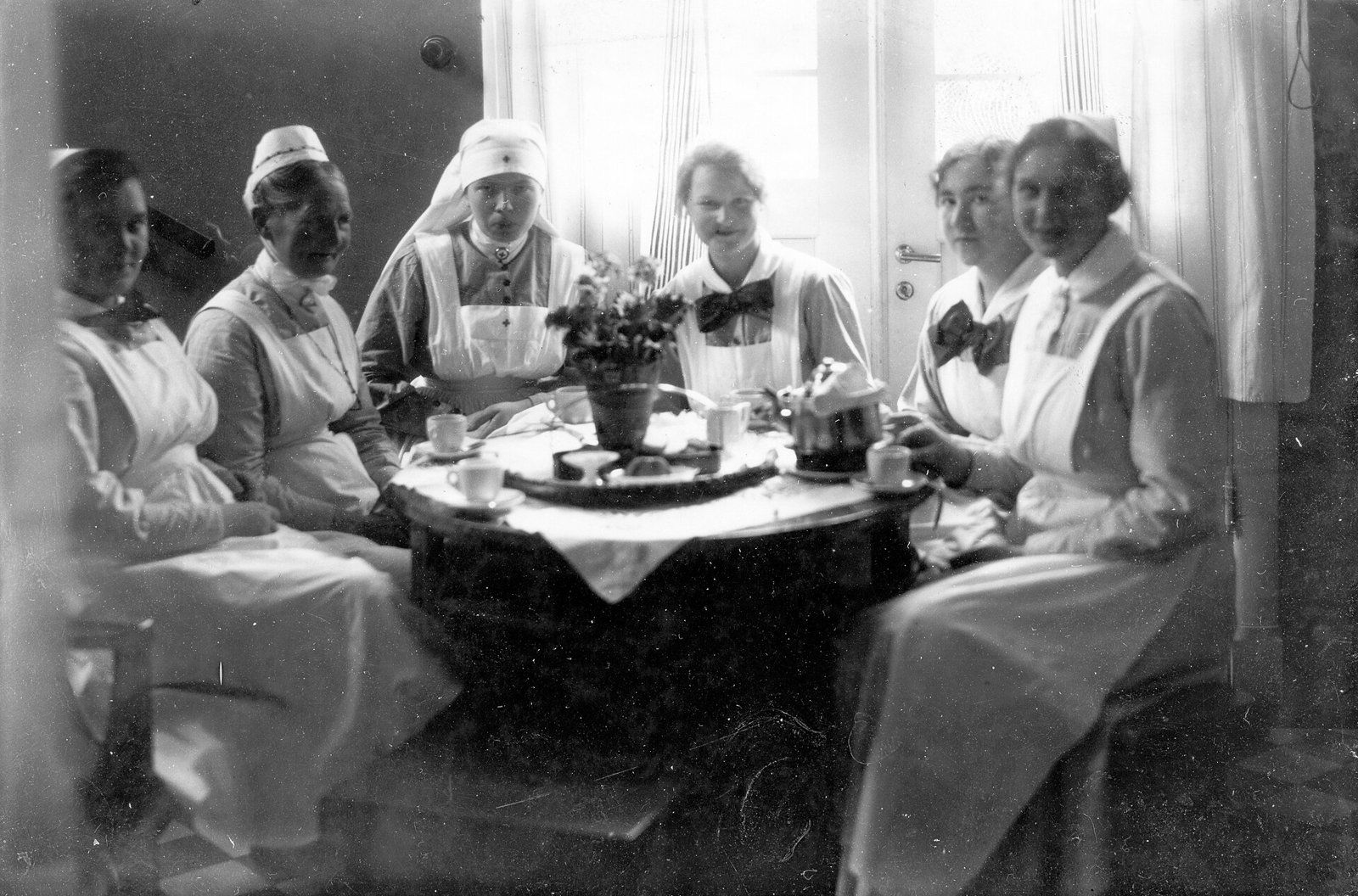
The literature on leadership usually forgets the other side: those who follow. In the review by Leung and colleagues, there was one article on followership for every sixty articles on leadership in the medical literature. Even so, a team's performance depends heavily on how followers take part.
The active, critical follower
Leung's review starts from the description of five followership styles based on two characteristics: active engagement and independent critical thinking. The ideal follower is not the one who obeys in silence, nor the one who disagrees with everything. It is the one who gets involved, thinks for themselves and speaks up when they see something wrong, in a respectful and clear way. In practice, the intern who says "the blood pressure dropped again while you were talking to the family" or "the patient is allergic to this antibiotic" is exercising a kind of leadership as important as that of the person coordinating.
Switching roles
Over the course of a single shift, you will lead and follow several times. You lead the emergency until the resident arrives, then you follow. You follow on rounds, then you lead the handover. Knowing how to switch roles without dispute and without embarrassment is a mark of clinical maturity, and it is something that can be discussed openly with the team.
Speaking up when something does not fit
The follower who notices an odd piece of data and does not speak up for fear of seeming insecure leaves the team without information. Agreeing in advance that anyone can ask for a pause to review the reasoning helps a lot. The guide on diagnostic pause describes how to do this in a structured way.
Tools that distribute leadership
Part of good leadership is creating structures that work even when the leader is tired, distracted or absent. Checklists and structured handovers do exactly this: they distribute the responsibility of remembering what matters.
Checklists
The best-known example is the surgical safety checklist. In the study by Haynes and colleagues, carried out in eight hospitals in eight cities in different countries, the death rate fell from 1.5% to 0.8% and the complication rate from 11.0% to 7.0% after the checklist was introduced. The checklist does not replace the leader, but it gives any team member a script to stop and confirm what is essential.
Structured handover
The shift handover is one of the moments when the newly graduated doctor leads the most. In the multicenter study by Starmer and colleagues, the implementation of a structured handover program was associated with fewer medical errors and fewer preventable adverse events, with better communication and no increase in handover duration or impact on residents' workflow. A well-done handover is an act of leadership: it organizes information so that the next shift starts knowing what matters.
What a good handover includes
Patient severity, case summary, list of pending actions, warning signs and a plan for each one, and a final moment in which the receiver summarizes what they understood. This last step, simple as it is, is what most reveals gaps and is often forgotten in the rush. It is also worth agreeing on how the next shift should contact whoever left if an important question arises, and writing down what has already been discussed with the family, so that no one repeats or contradicts information given hours earlier.
Communication under pressure
In almost every account of a complication that went wrong, some communication failure appears: an order no one confirmed, two people doing the same task while another was left without an owner, an important piece of data said too quietly to be heard. The good news is that communication under pressure follows simple patterns, which can be trained in simulation and in daily practice.
Closed-loop communication
In closed-loop communication, the person asking says the person's name and the task, the receiver repeats what they understood, and reports back when finished. "Ana, can you get a large-bore access in the left arm?" "Getting access in the left arm." Shortly after: "Access obtained." It seems too formal for daily practice, but it is exactly this format that prevents an order from getting lost in the noise. It is worth starting to use it in calm situations, so that it comes out naturally when the case gets tight.
Summaries out loud
From time to time, the leader stops and summarizes: what has already been done, what is pending, what the main hypothesis is and what could change the plan. This summary serves three purposes. It aligns the team, gives those who arrived later a chance to get oriented and opens a window for someone to correct or add something. It is a quick, collective version of the hypothesis review, done without interrupting care.
Tone of voice and posture
A calm leader calms the team. Speaking lower and slower than you feel like, keeping a position where everyone can see you and avoiding leaving the room without handing coordination to someone are details that make a difference. When you do not know what to do, saying "I am not sure, let's call for help and meanwhile we do X" is much better than pretending to be sure. The team notices the difference and trusts more those who are honest about what they know.

The shift as a laboratory
The shift is where clinical leadership is truly learned. The difference between just getting through the shift and learning from it lies in observing, experimenting and reflecting on purpose.
- Observe one leader per shift. Choose someone and note what that person does when the case gets tight: how they speak, how they distribute tasks, how they ask for help.
- Practice in small situations. Lead the handover, the organization of the rounds, the conversation with the family, with supervision.
- Say the plan out loud. Even when you are alone with the nurse, summarize what you are thinking and what you are going to do.
- Ask for help early. Asking for help at the right moment is a leadership decision, not a sign of weakness.
- Do a short debriefing. After a complication, ask the team what worked and what can improve.
- Reflect on what you felt. Tiredness, fear and irritation change the way you lead; recognizing them helps you lead better next time.
In the shift handover, leadership shows in the details. The person handing over summarizes each patient in the same order, highlights what is unstable and says what is pending. The person receiving repeats the essentials in their own words and asks about what was not clear. This small ritual, always done the same way, protects the patient at the change of shift and shows the team that you take continuity of care seriously.
Learning from what went wrong
Adverse event discussion sessions are an excellent school of leadership, as long as they are run without blame hunting. They show how team decisions, communication and hierarchy contributed to the outcome. The text on morbidity and mortality sessions explains how to make the most of them.
Caring for those who lead
Leading from an early stage is tiring. Long shifts, difficult decisions and the feeling of not being ready weigh heavily. Recognizing your own limits, agreeing on breaks and talking with colleagues and preceptors about the experience are part of leading in a sustainable way. If the weight becomes too great, seek the help you need.
How NEXO trains the reasoning that underpins leadership
Leading through an emergency starts with a fast, organized clinical reading. In NEXO, the case of the day arrives in up to six clues, and with each guess the proximity in ICD-10 across five levels shows how far the hypothesis was from the diagnosis. The cases are fictional with a real clinical presentation. Practicing hypothesis formulation with each clue is a way to arrive at the shift with sharper reasoning, which frees up attention to coordinate the team.
The guide what NEXO is explains the whole game. How the modes are unlocked is on the NEXO Economy page.
If you coordinate a medical school, a student league or a residency program and want to use NEXO with a class, learn about NEXO Closer. Researchers in medical education can propose studies through NEXO Researcher. Physicians who review cases take part through NEXO Curator, and those who create health content on social media can take part through NEXO Creators.
Frequently asked questions
What is clinical leadership?
It is the ability to coordinate the team around a patient: set priorities, assign tasks, communicate the plan, check execution and adjust course with new data.
Can an intern lead?
They can, and they often do, in emergencies, shift handovers, rounds and conversations with families. Clinical leadership does not depend on a job title.
Does leadership training work?
Studies show positive results mainly in students' perception and knowledge. There is less objective evidence of behavior change and of effect on patients, although team training improves performance in resuscitation.
What does it mean to be a good follower?
It means participating actively, thinking critically and speaking up when something does not fit, clearly and respectfully. The active follower brings information the leader may not have.
Which tools help with leading?
Checklists, structured shift handovers, boards with the plan visible to everyone and short debriefings after emergencies.
How to learn leadership on the shift?
By observing leaders, practicing in small situations with supervision, saying the plan out loud, asking for help early and reflecting after each emergency.
Shift checklist
- Say out loud what is happening and what the plan is.
- Assign tasks to specific people, by name.
- Confirm that each task was done.
- Ask for help early, without waiting for the situation to worsen.
- Ask whether anyone sees something you are not seeing.
- Do a structured shift handover and ask the person receiving it to summarize.
- After an emergency, hold a short debriefing with the team.
Want to arrive at the shift with sharper reasoning? Play the case of the day on NEXO.
References
- Alhadithi A, Almansour M. Leadership and management competency frameworks in undergraduate medical education: a scoping review. BMC Med Educ. 2025. PubMed 41457205
- Abbas MR, Quince TA, Wood DF, Benson JA. Attitudes of medical students to medical leadership and management: a systematic review to inform curriculum development. BMC Med Educ. 2011. PubMed 22082174
- Lyons O, Su'a B, Locke M, Hill A. A systematic review of leadership training for medical students. N Z Med J. 2018. PubMed 29346359
- Hemmati Z, Harris S. Integrating leadership into the undergraduate medical curriculum in the UK: a systematic review. BMJ Lead. 2023. PubMed 37192125
- Leung C, Lucas A, Brindley P, Anderson S, Park J, Vergis A, et al. Followership: A review of the literature in healthcare and beyond. J Crit Care. 2018. PubMed 29779828
- Gordon LJ, Rees CE, Ker JS, Cleland J. Leadership and followership in the healthcare workplace: exploring medical trainees' experiences through narrative inquiry. BMJ Open. 2015. PubMed 26628525
- Iyasere CA, Wing J, Martel JN, Healy MG, Park YS, Finn KM. Effect of Increased Interprofessional Familiarity on Team Performance, Communication, and Psychological Safety on Inpatient Medical Teams: A Randomized Clinical Trial. JAMA Intern Med. 2022. PubMed 36215043
- Rosenman ED, Shandro JR, Ilgen JS, Harper AL, Fernandez R. Leadership training in health care action teams: a systematic review. Acad Med. 2014. PubMed 25006708
- Welp A, Manser T. Integrating teamwork, clinician occupational well-being and patient safety - development of a conceptual framework based on a systematic review. BMC Health Serv Res. 2016. PubMed 27430287
- Weaver SJ, Lubomksi LH, Wilson RF, Pfoh ER, Martinez KA, Dy SM. Promoting a culture of safety as a patient safety strategy: a systematic review. Ann Intern Med. 2013. PubMed 23460092
- Hunziker S, Johansson AC, Tschan F, Semmer NK, Rock L, Howell MD, et al. Teamwork and leadership in cardiopulmonary resuscitation. J Am Coll Cardiol. 2011. PubMed 21658557
- Starmer AJ, Spector ND, Srivastava R, West DC, Rosenbluth G, Allen AD, et al. Changes in medical errors after implementation of a handoff program. N Engl J Med. 2014. PubMed 25372088
- Haynes AB, Weiser TG, Berry WR, Lipsitz SR, Breizat AH, Dellinger EP, et al. A surgical safety checklist to reduce morbidity and mortality in a global population. N Engl J Med. 2009. PubMed 19144931