Emergency medicineNursing and patient safetyCommunication and ethics
Violence risk: reassess during the visit
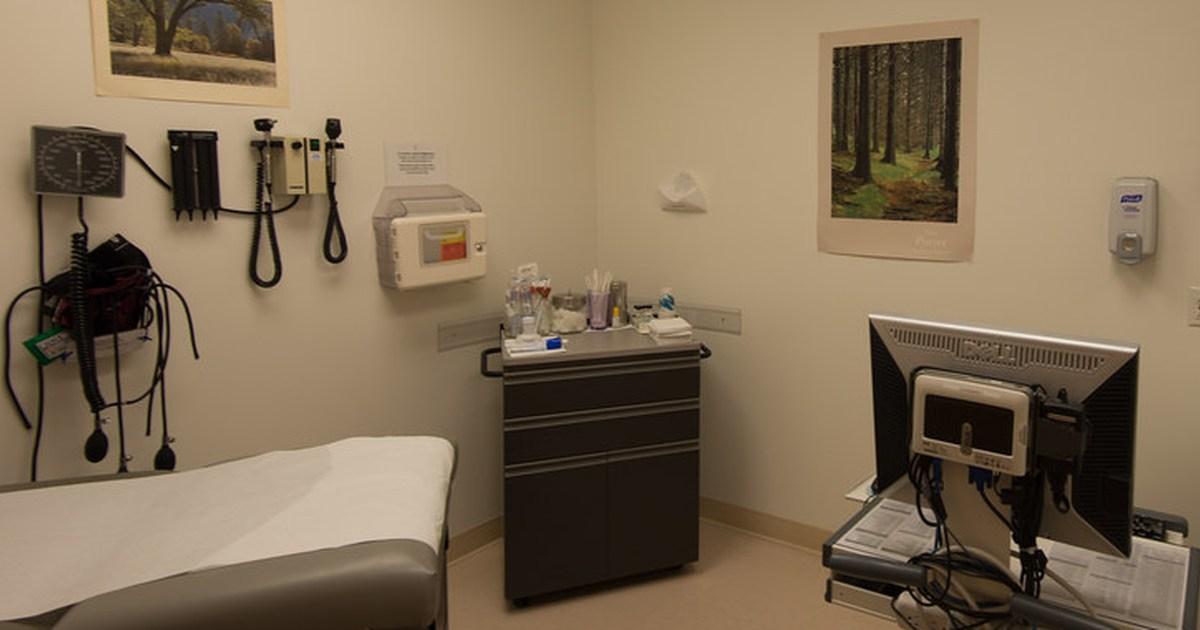


Table of contents
- Observe changes without turning signs into labels
- Reopening the clinical assessment when something changes
- The environment also changes during the consultation
- The professional's perception is part of the situation
- Rework the plan and check the response
- Record what changed and share what is necessary
- How NEXO fits into the study of reassessment
- Frequently asked questions
- Take-home messages
- References
Fictional scene. A person arrives upset about the wait and agrees to talk. At first, they can explain their concern. During the appointment, other people enter the room, the noise increases and the information about the next step changes. The professional notices that the conversation has lost clarity and that the support promised is not as accessible as they imagined. The decision made on arrival needs to be reviewed.
Reassessing the risk of violence means following a situation, not discovering a fixed characteristic of someone. What the person does and says, the conditions of the environment and the real possibility of getting help can change during the consultation. The professional's perception is also part of this analysis, without working as a diagnosis of the patient or as a reason to blame the person who suffers an assault.
The NICE NG10 guideline recommends reviewing risk assessments and management plans, with attention to the person and environment domains, at a frequency compatible with the risk. Its scope is the management of violence and aggression in people with mental health problems, with specific recommendations for different services. Here, its principles are discussed within that limit, not presented as a validated rule for any clinic (NICE NG10, 2015).
Key points
- Notice what has changed since the previous assessment, instead of automatically keeping the first impression.
- Describe behaviors and context, without inferring risk from appearance, origin or diagnosis.
- Reconsider clinical needs when recent changes in behavior or attention appear.
- Include changes in environment, communication, the presence of other people and the availability of support.
- Recognize professional fear and discomfort as relevant information for seeking safety, not as individual blame.
- Review the plan proportionally and ask for support when the conditions for safe care are lost.
Summary
- Observe changes without turning signs into labels
- Reopen the clinical assessment when something changes
- The environment also changes during the consultation
- The professional's perception is part of the situation
- Rework the plan and check the response
- Record what changed and share what is necessary
- How NEXO fits into the study of reassessment
- Frequently asked questions
- Take-home messages
Observe changes without turning signs into labels
A dynamic assessment starts with a comparison: how was the interaction and how is it now? A person previously able to follow the conversation no longer understands explanations. A disagreement becomes more specific and manageable after someone clarifies a piece of information. A remark becomes an explicit threat. These situations call for different responses, even if all of them began with the vague description of "nervousness".
The Project BETA consensus on de-escalation describes agitation as a behavioral syndrome and stresses that its association with aggression is not clearly established. Restlessness, irritation or repeating a question should not be automatically converted into a prediction of violence. The value of observation lies in the contextualized change and in the needs it reveals (Richmond et al., 2012).
A specific verbal threat must be taken seriously. Interpreting an isolated gesture, however, requires care: voice volume, eye contact and interpersonal distance have different meanings across people and contexts. NICE advises avoiding negative assumptions based on culture, religion or ethnicity and considering how far the perceived risk can be verified. This does not require ignoring discomfort or waiting for an assault to ask for help (NICE NG10, 2015).
You can seek a description that lets the team understand what happened: did the person say they would hurt someone? Was there an approach that blocked movement? Did someone repeatedly interfere in the conversation? The question identifies facts useful for deciding, without attributing intent where it is still unknown. The same precision discussed in stigma and clinical language keeps vague terms from becoming a permanent identity.
- Compare current behaviors and conditions with the previous moment.
- Distinguish direct observation, the person's speech and the team's interpretation.
- Consider concrete threats without using appearance or diagnosis as a shortcut.
- Also reassess when the situation improves and new information becomes available.
That last point matters. If the distress decreases after an explanation and the person returns to taking part, the plan may need another revision. Keeping the person under a risk label without considering the change harms the understanding of the consultation. At the same time, a brief improvement does not erase a recent threat or, on its own, resolve the absence of support. The analysis considers the whole picture, not only the impression of the last minute.
The text on violence against health professionals addresses prevention and response more broadly. The focus of this article is the decision during the encounter: what changed, what need arose and whether the current plan remains compatible with present conditions.
Reopening the clinical assessment when something changes
A change in behavior can accompany a clinical problem that requires care. The Project BETA consensus on medical assessment recommends attention to history, vital signs, examination and the circumstances in which agitation began, with investigation guided by the clinical picture. When new changes appear, a hypothesis previously considered sufficient must be reconsidered (Nordstrom et al., 2012).
This does not mean treating every conflict as illness. It means preventing a behavioral description from ending the assessment before the team understands what is happening. Pain, difficulty communicating, altered attention and other needs can coexist with disagreement, fear or a threat. Clinical care and safety are not mutually exclusive questions.
The NICE guideline on delirium recommends watching for recent or fluctuating changes in cognition, perception, physical function and social behavior in people who are hospitalized or in long-term care. That is its context of application. The lesson relevant to reassessment is to value the change relative to the usual state; not to diagnose delirium from isolated irritation in any consultation (NICE CG103, 2023).
Fictional example. A person keeps repeating that they want to leave and seems not to understand where they are. A companion reports that this difficulty began that day. The new information calls for a clinical and safety review. It does not allow concluding, without assessment, that the person is violent, has a specific disorder or is merely refusing to cooperate.
The participation of the person themselves and, when appropriate and authorized, of someone who knows them can clarify what changed. Ask about immediate needs and about ways of communicating that work better. The NICE guideline on adults' experience of NHS services recommends adapted communication, understandable information and attention to individual needs. These are guidance on participation in care, not a tool for predicting aggression (NICE CG138, 2012).
Language barriers deserve attention of their own. A lack of understanding can increase the difficulty of the interaction without representing a threat. The article on consultation with a professional interpreter goes deeper into organizing this communication. During reassessment, it is worth checking whether the information was understood, and not merely repeated more loudly.
The details of the initial investigation belong to the clinical picture and to the team's skills. This is not a script for tests, sedation or restraint. The operational question is narrower: did something arise that changes the priority of care or makes the plan in use insufficient? The analysis of diagnostic overshadowing helps to recognize why an earlier label can block this revision.
The environment also changes during the consultation
A room can be organized before the appointment and become hard to use afterward. Other people entering, an interruption, a piece of equipment being moved or a colleague being temporarily unavailable change the conditions of the encounter. Reassessment does not examine only the patient; it checks whether the service still offers the means to continue safely.
The WHO and ILO guide on health and safety of health workers places risk assessment, worker participation and monitoring within an institutional program. Working conditions do not become an individual responsibility just because the change was noticed during a consultation. The team needs channels and resources to respond (WHO and ILO, 2022).
The NIOSH module on hazard prevention and control distinguishes environmental controls from administrative and work organization measures. Its examples include space conditions, staffing availability and communication. In the ongoing encounter, the question is which of these conditions have changed and need to be corrected or compensated by the service, without improvising a physical intervention or teaching the use of objects as weapons (NIOSH, 2026).
One alternative may be to reduce interruptions or reorganize who takes part in the conversation, respecting the person's support needs and preferences. Another may be to call on a colleague through the established flow. The choice depends on safety, privacy and real resources. Taking someone to a quieter area is not an adequate solution if it isolates the professional or removes access to support; NICE warns against this isolation during de-escalation (NICE NG10, 2015).
- Check whether communication remains possible with the current noise and movement.
- Observe whether people can move around without obstructions.
- Verify whether the planned support is in fact accessible at that moment.
- Reconsider who needs to be present for care and for safety.
- Use the service's procedures to correct conditions the team cannot resolve alone.
The OSHA hospital eTool recommends job analysis and prevention measures combined with worker participation. Its hospital scope does not make every recommendation a universal office standard. It does hold, however, that observing the environment and organizing support are institutional tasks, not a demand that the victim anticipate any possible aggression (OSHA, n.d.).
If the change is a communication failure, clinical leadership analysis helps distinguish defined responsibility from a vague expectation that someone will sort it out. When no one knows who received a request, the team has not yet confirmed that it has the support it needs.

The professional's perception is part of the situation
Noticing fear, tension or difficulty following the conversation is information about the conditions of the encounter. This may justify seeking support and reconsidering whether to continue. It is not proof that the person being seen will commit violence, but it also does not need to be ignored until there is a full explanation for the discomfort.
Project BETA recommends that the professional observe their own emotional and physiological response during the interaction. This guidance is part of a de-escalation consensus, not a rule that anyone who feels fear is incapable of providing care. Its pertinent use is to recognize when the situation exceeds the available resources and when another person or another organization of the encounter can help (Richmond et al., 2012).
A perception may combine observable signs, previous experience and elements that are still hard to name. To reassess, it is worth asking yourself what changed: did a specific threat appear, did the distance become uncomfortable, did support stop responding, or did the information become hard to understand? This description favors a shared decision. It does not require turning every fear into certainty or resolving the doubt alone.
The opposite movement also deserves attention. Familiarity with the patient, the wish to finish the encounter or confidence in one's own experience can lead to minimizing a relevant change. The point is to compare the plan with current conditions, instead of trying to preserve the impression that the situation remains under control. Experience is a resource, not an absolute protection.
- Identify what you noticed in your body, in the conversation and in the environment.
- Try to describe concrete changes without needing to explain the other person's entire intention.
- Use team support to broaden the assessment and share responsibilities.
- Review whether the consultation should continue if the safety conditions are lost.
Feeling afraid does not transfer responsibility for an assault to the professional. The institutional obligation to organize prevention and response remains. The discussion of acute stress and clinical reasoning deals with attention and performance; here, the focus is on using that perception as part of a safety assessment, without diagnosing anyone's emotional state from a distance.
Support can also help identify missing information. A colleague may know about a recent change in the workflow, while the person being seen clarifies a need they have not yet been able to express. The team needs to listen without automatically dismissing either the patient or the worker. Sharing the assessment broadens the possibilities for response; it should not work as pressure to remain in an unsafe situation.
Empathy in the consultation is compatible with setting limits. Understanding suffering, fear or frustration does not mean accepting threats, exposing other people or insisting on the conversation when the priority has become protection and support. Respectful care includes the limits needed for it to continue.
Rework the plan and check the response
Reassessing must produce a decision, even when that decision is to keep the plan with an updated justification. The team can clarify a piece of information, organize who leads the conversation, review the presence of companions, call for support or end the meeting. The choice must respond to what changed and to the real conditions of the service, not to a single script applied to anyone.
When it is safe to talk, NICE recommends that one person take the lead role in communication and seek to clarify the situation in a non-confrontational way. This does not mean staying alone with all the responsibility. Other people can offer support without multiplying orders or turning the room into a set of contradictory messages (NICE NG10, 2015).
Fictional example. After conflicting information about the appointment, the professional identifies the main doubt and checks the next step with the team. The person being seen is able to explain what they understood. The professional checks whether support is still available and whether the conversation can continue. The outcome is not assumed: if the situation worsens, the decision must change again.
The table brings together questions to organize this review. They are fictional examples of operational reasoning, not a scale, a validated instrument or a classification that authorizes the team to ignore its context.
| What changed | What to clarify | What to review |
|---|---|---|
| The person stopped following the conversation. | Was there a clinical change, a communication barrier or contradictory information? | Care priorities and how to communicate. |
| A statement began to include a concrete threat. | Who is exposed and what protective conditions exist? | Continuity of the meeting and calling for support. |
| The movement compromised circulation. | Is it possible to reorganize the space safely? | Environmental conditions and who is present. |
| The planned support does not respond. | What alternative was defined by the service? | Whether the plan can still be carried out safely. |
| Understanding improved after a clarification. | Does the improvement hold and are the other conditions adequate? | Proportionality of the measures in place. |
The plan may require ending the consultation and seeking the planned support. In the face of an immediate threat, an interview should not be prolonged to complete a list of questions. NICE, in its guidance for community mental health teams, recommends that the team withdraw from high-risk situations and call the police if there is an immediate risk to life. Concrete application depends on the service's procedures, resources and responsibilities (NICE NG10, 2015).
Reorganizing the meeting also does not mean promising what the team cannot deliver. Offering an alternative is only useful when it exists and can be explained. The text on the patient's agenda helps distinguish listening from a vague promise. Acknowledging the concern can improve understanding of the problem without guaranteeing that every request will be met.
There are limits to attributing effectiveness to each measure. The Cochrane review by Spelten and colleagues found evidence of low or very low certainty for organizational interventions to prevent aggression, in heterogeneous settings. This prevents stating that a given reorganization during the consultation produces a quantified reduction in violence. Recommendations need to be used with context and follow-up (Spelten et al., 2020).
The Cochrane review on education and training also found uncertainty about the effect on aggression against workers. Knowing principles or taking part in a training activity does not eliminate risk nor make the professional responsible for another person's behavior. Individual preparation and service organization should be analyzed together, without replacing one with the other (Geoffrion et al., 2020).
Record what changed and share what is necessary
A useful record lets the next person understand why the plan was revised. It describes the new information, the conditions observed, the decision taken and what remains pending. A phrase such as "difficult patient" leaves almost everything unexplained. A contextualized description reports what happened without turning a momentary assessment into a permanent identity.
When there is a statement relevant to safety, separate what was said from what the team interpreted. Also record the source of an information: direct observation, report from the patient, companion or another professional. The goal is not to produce a full transcript of the consultation, but to preserve the elements that supported the decision and that the next team needs to know.
NICE recommends sharing the risk assessment in transfers and changes of care setting and, in community care, recognizing professional responsibilities related to confidentiality and risk communication. Legal rules vary. Sharing what is necessary for care and protection requires following the applicable rules, without indiscriminately disclosing personal details (NICE NG10, 2015).
The participation of the person receiving care can help make the plan more understandable, when conditions allow. Ask whether the information is correct and which previous strategies made the consultation easier. The guideline on adults' experience in NHS services emphasizes participation in care and information accessible to the person. Their participation does not mean requiring them to agree with every interpretation for the team to adopt a necessary safety measure (NICE CG138, 2012).
- Describe the change and the context, avoiding labels about personality or origin.
- Explain why the plan was kept, modified or interrupted.
- Record the support called upon, the response received and the relevant pending items.
- Share information proportional to the need, according to local confidentiality rules.
- Make clear who takes on continuity and what needs to be reassessed.
This last point brings dynamic assessment closer to continuity in care transitions. Referring a person or asking another colleague to take over does not by itself prove that the information arrived. The handover needs to be understood by the person receiving it and compatible with current needs.
Finally, if the assessment revealed an institutional failure, such as no response to a request for support, it deserves referral through the service's pathway. The WHO/ILO guide proposes monitoring risks and the execution of actions in the health and safety program. The consultation record and the monitoring of working conditions have different purposes, but they can complement each other without unnecessarily exposing the patient or blaming the worker (WHO and ILO, 2022).
How NEXO fits into the study of reassessment
In NEXO, the case of the day is fictional, with a real clinical presentation and up to six progressive clues, and you propose the diagnosis by searching for the ICD-10 code. The connection with this article's theme lies in studying how new information changes the interpretation of a case. The game's diagnostic content and a service's safety decisions have different goals and conditions.
After studying a case, you can note which piece of information changed your hypothesis and which initial impression had to be revised. This reflection concerns your reasoning about the diagnosis. To discuss safety during a consultation, the activity needs another context: local procedures, team responsibilities, environmental conditions and appropriate supervision.
A teaching discussion can use the fictional opening scene and ask participants to identify the moment of change, without guessing the outcome. Compare which information each person considered and which was still missing. The goal is to make the reasoning explicit, not to classify who would have been able to prevent an assault. You find the daily case in NEXO.
Frequently asked questions
Is there a fixed interval for reassessing during the consultation?
In the sources discussed, there is no universal validated interval for any office. NICE NG10 recommends regular review according to the level of risk in your care context. During the encounter, changes in communication, in the clinical condition or in safety resources justify reconsidering the plan, without waiting for a predetermined time (NICE NG10, 2015).
Does speaking loudly mean there will be violence?
An isolated behavior does not allow that conclusion. It is necessary to understand what happened, what the person expressed and how the context changed. NICE recommends avoiding negative cultural assumptions and checking the perceived risk. A concrete threat deserves a proportional response, without turning unease, disagreement or difficulty communicating into the identity of a violent person (NICE NG10, 2015).
Should the professional's fear be part of the assessment?
Yes, as information about the situation and the need for support, not as a diagnosis of the patient. The Project BETA consensus recommends observing your own emotional and physiological response. Describing what changed helps to share the assessment; feeling fear does not make the worker responsible for the aggression nor oblige them to continue alone (Richmond et al., 2012).
Do you have to finish the interview before asking for help?
Gathering information must respect safety conditions. If there is an immediate threat, completing questions is no longer the priority. NICE guides community mental health teams to withdraw from high-risk situations and call the police if there is an immediate risk to life. Follow the service's flows and resources (NICE NG10, 2015).
Should the record keep a risk label forever?
The record should preserve relevant facts, their context and the decisions taken. This is different from fixing an identity. New information can change the assessment; a previous threat also should not disappear just because the last interaction was calm. Communication between teams must allow this evolution to be understood, with confidentiality and review of the plan (NICE NG10, 2015).
Take-home messages
- Reassess the current situation, instead of automatically keeping the impression from arrival.
- Describe observable changes and clinical needs, without turning agitation or cultural difference into a prediction of violence.
- Include the environment, communication and the real availability of support in the decision.
- Acknowledge the professional's perception without individual blame or pressure to remain at risk.
- Review, share and record the plan; in the face of an immediate threat, prioritize protection and support.
Play the case of the day and observe how new clues change your diagnostic hypothesis.
References
- National Institute for Health and Care Excellence. Violence and aggression: short-term management in mental health, health and community settings. NG10: Recommendations. 2015.
- Richmond JS et al. Verbal De-escalation of the Agitated Patient: Consensus Statement of the American Association for Emergency Psychiatry Project BETA De-escalation Workgroup. West J Emerg Med. 2012. DOI: 10.5811/westjem.2011.9.6864.
- Nordstrom K et al. Medical Evaluation and Triage of the Agitated Patient: Consensus Statement of the American Association for Emergency Psychiatry Project BETA Medical Evaluation Workgroup. West J Emerg Med. 2012. DOI: 10.5811/westjem.2011.9.6863.
- National Institute for Health and Care Excellence. Delirium: prevention, diagnosis and management in hospital and long-term care. CG103: Recommendations. 2010, updated in 2023.
- National Institute for Health and Care Excellence. Patient experience in adult NHS services: improving the experience of care for people using adult NHS services. CG138: Recommendations. 2012.
- World Health Organization; International Labour Organization. Caring for those who care: guide for the development and implementation of occupational health and safety programmes for health workers. 2022. Sections 3.1 and 3.5, p. 38 and 47 to 48.
- National Institute for Occupational Safety and Health. Workplace Violence Prevention for Nurses. Unit 5: Hazard Prevention and Control. Page reviewed on July 14, 2026.
- Occupational Safety and Health Administration. Hospitals eTool: Patient Care Unit, Workplace Violence. Accessed on November 7, 2026.
- Spelten E et al. Organisational interventions for preventing and minimising aggression directed towards healthcare workers by patients and patient advocates. Cochrane Database Syst Rev. 2020; CD012662. DOI: 10.1002/14651858.CD012662.pub2.
- Geoffrion S et al. Education and training for preventing and minimizing workplace aggression directed toward healthcare workers. Cochrane Database Syst Rev. 2020; CD011860. DOI: 10.1002/14651858.CD011860.pub2.