Dirty bomb: victim triage and decontamination
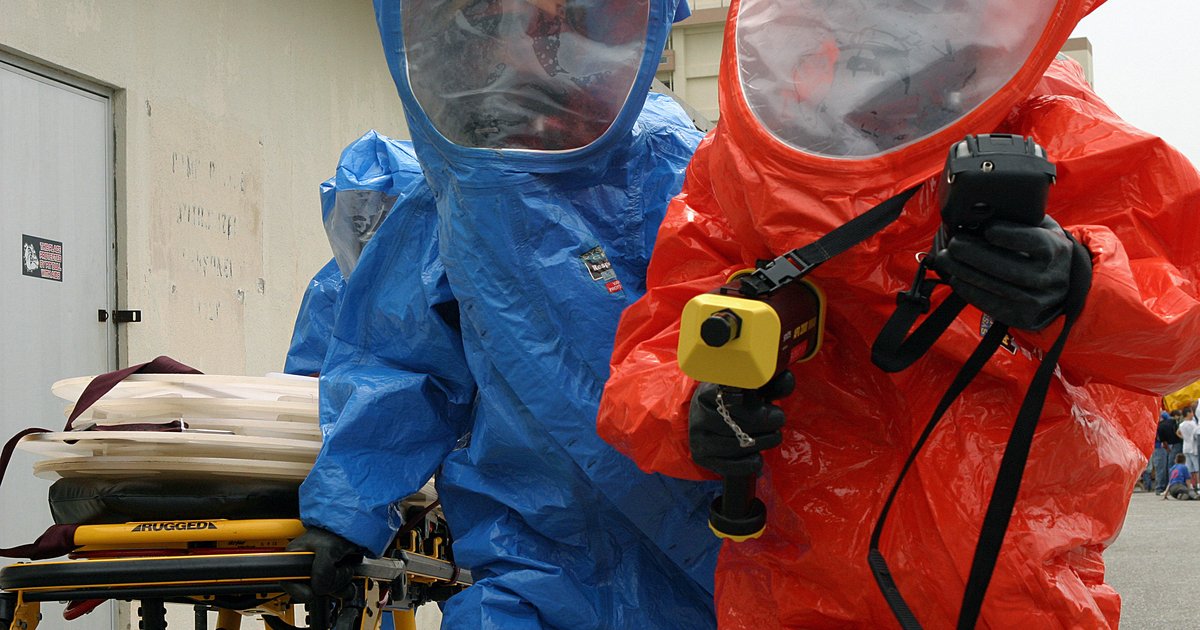
Table of contents
On a Saturday afternoon, an explosion in a square in the center of a medium-sized city scatters shrapnel and dust. Half an hour later, the police report that the device contained a stolen cesium-137 source. The nearest emergency department receives, within 90 minutes, a 34-year-old woman with a penetrating chest wound and shortness of breath, a 58-year-old man with an open leg fracture, a teenage girl with cuts on her arm, and more than 80 people walking around with no visible injuries who want to know whether they are contaminated. The scene is fictional and was written for teaching.
This text uses the scenario as a setting for clinical reasoning for students and health professionals. The topic is the dirty bomb, an ordinary explosive with radioactive material, and the triage of many victims with decontamination. The focus is the order of decisions in the first hour and the separation between those who need surgery, those who need a shower and those who need information. Detailed treatment of internal cesium contamination is in the post on internal contamination by cesium-137, and combined injury with a high dose is in the post on combined radiation injury and trauma. If you play the case of the day in NEXO, you will recognize the challenge: the word radioactive frightens more than the chest wound, and it is the wound that kills.
Key points
- In a dirty bomb, almost all deaths and injuries come from the explosion, not from radiation.
- Initial triage follows the general rules of trauma; radiation-specific triage comes later.
- Removing clothing and shoes can reduce external contamination by up to 90 percent.
- The goal of external decontamination is to reach at most 2 times background radiation, stopping after 2 cycles if there is no further gain.
- Clear communication and respect for privacy speed up decontamination and reduce anxiety.
Why this is a reasoning scenario
The scene has two crowds: three seriously injured patients and dozens of frightened people with no visible injury. The temptation is to organize the service around the detector and decontamination. The German review on managing dirty bomb victims states the opposite: initial triage should follow the general rules of trauma, and triage systems specific to radiological accidents make no sense at that moment and should be left for a new triage later (Rump et al., 2018). The post on diagnostic pause helps you stop for a second before letting fear of radiation run the queue.
The woman with the chest wound may have a tension pneumothorax. A modeling study on a dirty bomb with cesium notes that mechanical trauma can cause an immediately life-threatening situation, such as tension pneumothorax, while acute radiation syndrome appears with a latency of days to weeks (Rump et al., 2021). The post on clinical deterioration helps you recognize who is getting worse as the queue grows.
What the scene teaches
The scene trains six habits. The first is to remember that the explosion kills more than radiation. The second is to triage by trauma. The third is to set up zones and protect the team without halting care. The fourth is to decontaminate in the right order and know when to stop. The fifth is to look for internal contamination in those at risk. The sixth is to communicate honestly with those who are not injured.
What is not at stake
The text does not discuss antidote doses, which depend on the radionuclide and the package insert, nor nuclear detonation, which is another scenario. The post on diagnostic uncertainty helps you act before knowing exactly which material was dispersed.
What a dirty bomb is
An ordinary explosive with radioactive material
REMM, the radiological emergency management portal of the United States government, describes the dirty bomb as an explosive dispersal method: the explosion produces radioactive and non-radioactive shrapnel and radioactive dust, causes contamination, physical injury, burns, panic and fear, and only in certain circumstances causes significant radiation exposure (REMM, radiological dispersal devices). The page insists that this is not a nuclear detonation (REMM, radiological dispersal devices). Inhalation and skin contamination are handled by removing clothing, washing the skin and, if necessary, using antidotes specific to the isotope (REMM, radiological dispersal devices).
The same text sums up the central clinical point: all or nearly all deaths and injuries will probably come from the explosion (REMM, radiological dispersal devices). Many people in a dense area may become contaminated and need decontamination, but few or none will have contamination that requires medical treatment (REMM, radiological dispersal devices). The German review adds that most hypothetical dirty bomb scenarios carry no risk of acute radiation syndrome, unlike radioactive fallout after a nuclear detonation (Rump and colleagues, 2018).
The weight of fear
The same review notes that the psychological impact may be greater in an explosion in a dense urban area (Rump and colleagues, 2018). A review of psychosocial aspects points out that chemical, biological, radiological and nuclear agents are invisible, often have unknown consequences and may have delayed effects, which creates the so-called dreaded risk and increases anxiety (Carter and Amlôt, 2016). The 80 people at the scene are part of the event and need a plan. The post on signs, symptoms and history helps separate symptoms of anxiety from symptoms of injury.
The lesson of Goiânia
A review on managing patients with internal contamination in the emergency department describes the Goiânia accident in 1987: an abandoned teletherapy source, with about 100 g of cesium-137 chloride, was stolen and opened (Kazzi and colleagues, 2015). In total, 249 people were contaminated and 4 died, including a 6-year-old girl who handled the material while eating (Kazzi and colleagues, 2015). The German review cites the episode as the best known involving cesium dispersal (Rump and colleagues, 2018). The same emergency department review reports that the patients contaminated in Goiânia were treated by professionals using standard precautions for several weeks (Kazzi and colleagues, 2015).
Triage: trauma decides first
Triage by trauma
According to the German review, victims without serious injuries and without an indication for urgent medical measures should first be fully decontaminated by removing clothing and rinsing the body (Rump and colleagues, 2018). In a patient with a vital indication for surgery, such as massive abdominal hemorrhage, at least provisional decontamination should be done by removing clothing before transport (Rump and colleagues, 2018). A radiation protection guideline cited by the principles of mass decontamination says the danger of radioactive contamination is not significant enough to delay life-saving treatment (Cibulsky and colleagues, 2015).
At the scene, the woman with a chest wound goes straight to the emergency room, with her clothing cut and removed at the entrance, and receives chest decompression. The man with an open fracture has his clothing removed, the wound covered and joins the queue for the operating room. The teenager with cuts and the people who are walking go to the decontamination area. The post on clinical decision-making helps justify this order to the team.
How long each step takes
A review of chemical, biological, radiological and nuclear events estimates that decontamination takes 10 to 20 minutes per person and recalls that, in most of these situations, delaying treatment or stabilization in order to decontaminate should not put the patient at additional risk (Ramesh and Kumar, 2010). The sentence must be read the other way round for radiation: since the risk of contamination is small, whoever is unstable does not wait (Cibulsky et al., 2015). Trained staff should set the priority for treatment and decontamination (Ramesh and Kumar, 2010).
The new triage
Once the trauma is under control comes the new radiological triage: who was closest, who has shrapnel, who has contaminated wounds and who may have inhaled dust. The German review suggests measuring the dose rate as a precaution, because shrapnel of highly radioactive material is possible (Rump et al., 2018). The post on differential diagnosis helps to think of each person as a case, even in the middle of the crowd.


Zones, protection and the team's fear
Hot, warm and cold zones
The review of chemical, biological, radiological and nuclear events describes the division into a hot zone, where the contaminant is, a warm zone, where decontamination takes place, and a cold zone, the clean treatment area (Ramesh and Kumar, 2010). Entry into the clean area should be only through the decontamination stations (Ramesh and Kumar, 2010). In the hospital at the scene, this means a decontamination entrance on the outside, separate from the usual emergency department door.
Protection without paralysis
The German review states that light equipment is enough to protect against radioactive contamination and allows good patient care (Rump et al., 2018). Experience from accidents shows that the dose rate emitted by contaminated victims is low and that the team is generally not at risk from external irradiation (Rump et al., 2018). The review on managing victims of radiological events adds that, for a patient with little contamination, a surgical mask or N95 may be enough, along with contact precautions (Dent, 2023).
The REMM recommends that whoever removes possibly radioactive shrapnel wear a ring dosimeter on the dominant hand or on both hands, in addition to the trunk dosimeter (REMM, decontamination procedures). The review on the emergency department recalls that every effort should be made to keep the dose to the public and to professionals as low as possible (Kazzi et al., 2015). The post on interprofessional clinical reasoning recalls that medical physics and radiological protection are part of the team that day.
Decontaminate without delaying care
The order of decontamination
The REMM recalls that removing clothing and shoes can reduce contamination by up to 90 percent (REMM, decontamination procedures). The page sets out the order of decontamination and the criteria for stopping, summarized in the table.
| Step or criterion | What to do | Source |
|---|---|---|
| First step | Remove clothing and shoes, which can carry up to 90 percent of the contamination | (REMM, decontamination procedures) |
| Order | Whole body, radioactive shrapnel, open wounds, facial orifices and then skin with localized contamination, starting with the most contaminated area | (REMM, decontamination procedures) |
| Goal | External contamination of at most 2 times the background radiation | (REMM, decontamination procedures) |
| How to wash | Water with mild soap to emulsify and dissolve the contamination | (REMM, decontamination procedures) |
| When to stop | After 2 cycles, if the contamination remains above 2 times the background or if further cycles do not reduce it by more than 10 percent | (REMM, decontamination procedures) |
| If it remains high | Consider internal contamination, retained shrapnel, contaminated wound or contaminated orifice | (REMM, decontamination procedures) |
Mass decontamination principles recall simple measures that already reduce exposure: moving away from the release point and staying upwind, removing at least the outer layers of clothing, cleaning visible contamination and rinsing the skin with clean water (Cibulsky et al., 2015). They also warn about hypothermia and about the lack of data on the best way to decontaminate children, pregnant women and older adults (Cibulsky et al., 2015).
Wounds and shrapnel
REMM recommends treating every open wound as contaminated until proven otherwise (REMM, decontamination procedures). The surrounding skin should be covered with waterproof drapes to limit spread by irrigation water, the wound irrigated gently with plenty of water or saline, and, if contamination remains high, conventional surgical debridement may be considered (REMM, decontamination procedures). Afterwards, the decontaminated wound is covered with a waterproof dressing (REMM, decontamination procedures).
The emergency department review adds an important limit: if a new measurement of the wound shows no further decrease, decontamination should stop and the wound should be repaired as medically indicated, without fixating on contamination (Kazzi et al., 2015). The teenager in the scene has her cuts irrigated, measured again and sutured.
Communication and privacy
A review of complementary mass decontamination principles states that communicating well is essential: communication failures reduce cooperation, increase confusion and can lead a person to challenge the authority of those providing care (Carter et al., 2016). In a field experiment with decontamination showers, the effective strategy included open and honest information about the incident, health-focused explanations of why to decontaminate and enough practical information (Carter et al., 2016). Besides improving psychological outcomes, this strategy increased the speed and efficiency of decontamination on objective measures (Carter et al., 2016).
The original study of that experiment recalls that, in small incidents, failure to communicate and to respect privacy led to non-adherence and more anxiety (Carter et al., 2014). The psychosocial review adds that more than 50 years of research show that crowds in emergencies behave cooperatively and that panic is rare (Carter and Amlôt, 2016). It lists respect for privacy and modesty among the factors that increase adherence and make decontamination easier (Carter and Amlôt, 2016).
In the hospital in the scene, a nurse with a megaphone explains in short sentences what happened, why to undress and shower, how long it takes and what happens next. There are screens, clean clothes and labeled bags for belongings. The post about simulation of care helps train these lines before the day they are needed.


Internal contamination and who needs medicine
How the material enters the body
The emergency department review explains that radioactive material can deposit on the body surface or enter through the gastrointestinal tract, the respiratory tract, open wounds or, more rarely, intact skin; skin is a good barrier, except when burned or open (Kazzi et al., 2015). Cesium-137 behaves like potassium and distributes evenly in muscles (Kazzi et al., 2015). The German review recalls that external irradiation ends when the victim leaves the site, but internal irradiation continues while the radionuclide remains in the tissues (Rump et al., 2021).
How to suspect
Detecting radioactive material on 2 swabs from both nostrils can indicate internal contamination by inhalation, but the size of the cavity, the delay until assessment and the natural cleaning of the nose make the method less useful in a public event than in the workplace (Kazzi et al., 2015). The incorporated amount can be measured indirectly by urine or stool analysis (Kazzi et al., 2015). The REMM notes that external contamination that persists after adequate decontamination can indicate internal contamination (REMM, decontamination procedures).
Who needs an antidote
The German review lists the medicines in stock for radiological emergencies: granulocyte colony-stimulating factor, potassium iodide, the chelators Ca-DTPA and Zn-DTPA and Prussian blue (Rump et al., 2018). Prussian blue, given by mouth, binds cesium-137 secreted by the bile in the intestine, prevents its reabsorption and increases elimination in the stool (Rump et al., 2018). For plutonium, the same review shows that Ca-DTPA must start within the first 10 days to be very effective (Rump et al., 2018).
The proposed thresholds of committed effective dose to indicate removal of the radionuclide range from 20 to 200 mSv, depending on the author and the guideline (Rump et al., 2021b). The modeling study states that, if the estimated dose is high, treatment should start as soon as possible, provided the radionuclide responds to it (Rump et al., 2021). A study on the ideal stock notes that treating every contaminated victim for 90 days would require millions of daily doses, and proposes combining stock size with measurement triage units (Rump et al., 2021b). Doses and treatment duration are in the package inserts and in the post about Prussian blue.
The long-term risk
The modeling study notes that radiation increases the lifetime risk of death from cancer according to the absorbed dose, and that this effect is considered to have no threshold (Rump et al., 2021). Averaged across sex and age, an effective dose of 1 mSv corresponds to a statistical loss of 0.4 days of life (Rump et al., 2021). This number helps give proportion to the risk in conversations with the people in the square.
The outcome of the scene
The woman with pneumothorax is drained and operated on. The man with the open fracture has the wound irrigated, measured and debrided in the operating room, and the removed fragment is kept in a shielded container. The teenager is decontaminated and sutured. Of the 80 people who walk, most have readings below 2 times background after taking off their clothes and showering; those who were closest have a nasal swab and urine collection and receive written guidance.
How NEXO helps train this reasoning
In NEXO, the case of the day is fictional, with a real clinical presentation and up to six progressive clues, and you propose the diagnosis by searching for the ICD-10 code. The dirty bomb is a good exercise because it forces you to order priorities when fear of radiation competes with physiology. The post about case-based learning explains why this format fixes knowledge.
Three exercises with cases
Change the weather. Say how you would adapt decontamination if the explosion happened on a cold winter night.
Change the reading. Say what you would think if, after 2 cycles, a person without wounds still had a reading of 3 times background.
Change the material. Say what would change if the source were americium instead of cesium.
The post about acute radiation syndrome helps in the rare case where someone stayed near the source for a long time.
The limits on using the game are described on the NEXO economy page. If you research the teaching of clinical reasoning, the page for researchers explains how to get in touch. Professionals who write or review cases find information in curation and in creators, and institutions can learn about the proposal on the for partnerships page.
Frequently asked questions
Is a dirty bomb a nuclear explosion?
No. It is a conventional explosive that scatters radioactive material; almost all injuries come from the explosion (REMM, radiological dispersal devices).
Should I decontaminate before stabilizing?
No. The treatment that saves a life comes first; removing clothing already provides provisional decontamination (Rump et al., 2018) (Cibulsky et al., 2015).
When should washing stop?
When reaching 2 times the background or after 2 cycles without a gain of more than 10 percent (REMM, decontamination procedures).
Is the team at risk when treating contaminated patients?
In general the dose is low and light equipment is enough; highly radioactive shrapnel is the exception (Rump et al., 2018).
Does every contaminated patient need an antidote?
No. Few will have contamination that requires treatment, and the indication depends on the estimated committed dose (REMM, radiological dispersal devices) (Rump et al., 2021b).
Final checklist
- I treated first those at risk of death from trauma.
- I removed clothing and shoes right at the entrance.
- I set up zones and a separate entrance for decontamination.
- I protected the team without halting care.
- I decontaminated in the right order and knew when to stop.
- I covered and irrigated wounds, measuring again before closing.
- I looked for internal contamination in those who were closest.
- I communicated clearly and ensured privacy.
- I planned follow-up for people without injury.
Want to practice your reasoning with progressive clues? Play the case of the day.
References
- Carter H, Amlôt R, Williams R, et al. Mass Casualty Decontamination in a Chemical or Radiological/ Nuclear Incident: Further Guiding Principles. PLoS Curr. 2016. PMID 27790381.
- Carter H, Amlôt R. Mass Casualty Decontamination Guidance and Psychosocial Aspects of CBRN Incident Management: A Review and Synthesis. PLoS Curr. 2016. PMID 27790383.
- Carter H, Drury J, Amlôt R, et al. Effective responder communication improves efficiency and psychological outcomes in a mass decontamination field experiment: implications for public behaviour in the event of a chemical incident. PLoS One. 2014. PMID 24595097.
- Cibulsky SM, Sokolowski D, Lafontaine M, et al. Mass Casualty Decontamination in a Chemical or Radiological/Nuclear Incident with External Contamination: Guiding Principles and Research Needs. PLoS Curr. 2015. PMID 26635995.
- Dent RA. Management of Casualties from Radiation Events. Eur Burn J. 2023. PMID 39600027.
- Kazzi Z, Buzzell J, Bertelli L, et al. Emergency department management of patients internally contaminated with radioactive material. Emerg Med Clin North Am. 2015. PMID 25455668.
- Radiation Emergency Medical Management. Procedures for Radiation Decontamination. Accessed on 24/10/2026. Official source.
- Radiation Emergency Medical Management. Radiological Dispersal Devices (RDDs). Accessed on 24/10/2026. Official source.
- Ramesh AC, Kumar S. Triage, monitoring, and treatment of mass casualty events involving chemical, biological, radiological, or nuclear agents. J Pharm Bioallied Sci. 2010. PMID 21829319.
- Rump A, Becker B, Eder S, et al. Medical management of victims contaminated with radionuclides after a "dirty bomb" attack. Mil Med Res. 2018. PMID 30086798.
- Rump A, Eder S, Hermann C, et al. Estimation of radiation-induced health hazards from a "dirty bomb" attack with radiocesium under different assault and rescue conditions. Mil Med Res. 2021. PMID 34879871.
- Rump A, Ostheim P, Eder S, et al. Preparing for a "dirty bomb" attack: the optimum mix of medical countermeasure resources. Mil Med Res. 2021. PMID 33455578.