Armed conflict and humanitarian crisesDisaster medicine
In a fictional case, a 28-year-old resident arrives at the emergency department with his eyes shut from pain, a dry cough and the skin of his face burning. He was about twenty meters from a launcher when the cloud hit him. He says it is "just protest gas" and asks to leave after washing his face. The clinical question is different: what does this agent do to the eye, the skin and the lung, who actually gets worse and what does the care need to do now?
Tear gas and pepper spray belong to the family of crowd-control agents. They are sensory irritants, not nerve agents. Most exposures resolve with decontamination and support, but there are reports of severe injury, permanent disability and death, especially when the agent is concentrated in an enclosed space, the exposure is prolonged or the projectile hits the head or the eye. This text gathers what reviews and full-text studies show about the injury, the risk and immediate care. The focus is the clinical decision: recognize the expected pattern, find the patient who departs from that pattern and decontaminate without contaminating the department.
Key points
CS, CN and OC activate transient receptor potential ion channels in pain nerve endings. OC acts mainly on TRPV1; CS, CN and the agent CR act on TRPA1 (Rothenberg et al., 2016; Quiroga-Garza et al., 2023). The clinical result is intense pain, tearing, blepharospasm, cough, chest tightness and skin irritation, usually seconds after contact (Schep et al., 2015).
This is different from the cholinergic syndrome of nerve agents and organophosphates, in which atropine and pralidoxime enter the reasoning. The text on chemical agents and organophosphates covers that scenario. Here the problem is sensory irritation and neurogenic inflammation, with a different management.
The review by Schep ranks the irritation typically as greater for CN, then CS and then OC, and describes ocular and respiratory effects within 20 to 60 seconds (Schep et al., 2015). CS is the protest gas most cited in contemporary series; OC appears mainly as a spray and accounts for most calls to poison centers in the United States (Nogee et al., 2023). CN has a history of more severe skin injuries, with blisters, in some older series cited by the reviews (Schep et al., 2015; Quiroga-Garza et al., 2023).
The ocular surface concentrates the complaint and the risk of sequelae. Blepharospasm, photophobia, conjunctivitis and periocular edema are expected; corneal abrasion, necrosis and pseudopterygium appear in more severe or short-range exposures (Quiroga-Garza et al., 2023). In the Chilean series of 112 people exposed to CS and OC in 2019 and 2020, eye pain or burning appeared in 62.5 percent, impaired vision in 51.7 percent, conjunctival injection in 25.8 percent and corneal abrasion in 9.8 percent (Jara Bravo et al., 2025).
Quiroga-Garza and colleagues stress that specific therapies are lacking and that current management is limited to decontamination and support directed at symptoms (Quiroga-Garza et al., 2023). Delayed irrigation was associated, in a report they cite, with permanent worsening of acuity due to irregular astigmatism and opacification (Quiroga-Garza et al., 2023). The review's recommendation is to irrigate early, for 15 to 20 minutes, with water or saline (Quiroga-Garza et al., 2023); homemade alkaline solutions, such as milk or antacid, are not part of that recommendation.
Skin pain or burning occurred in 52.6 percent and erythema in 37.5 percent in the Chilean series; throat irritation in 56.2 percent and respiratory discomfort in 54.4 percent (Jara Bravo et al., 2025). Schep describes nasal irritation, chest tightness, sore throat, cough and difficulty breathing after inhalation (Schep et al., 2015). In an enclosed space or with a large amount of agent, the narrative review from the emergency department in civil disturbances warns of more severe injury, especially in infants, older adults and people with asthma (Carenzo et al., 2026).
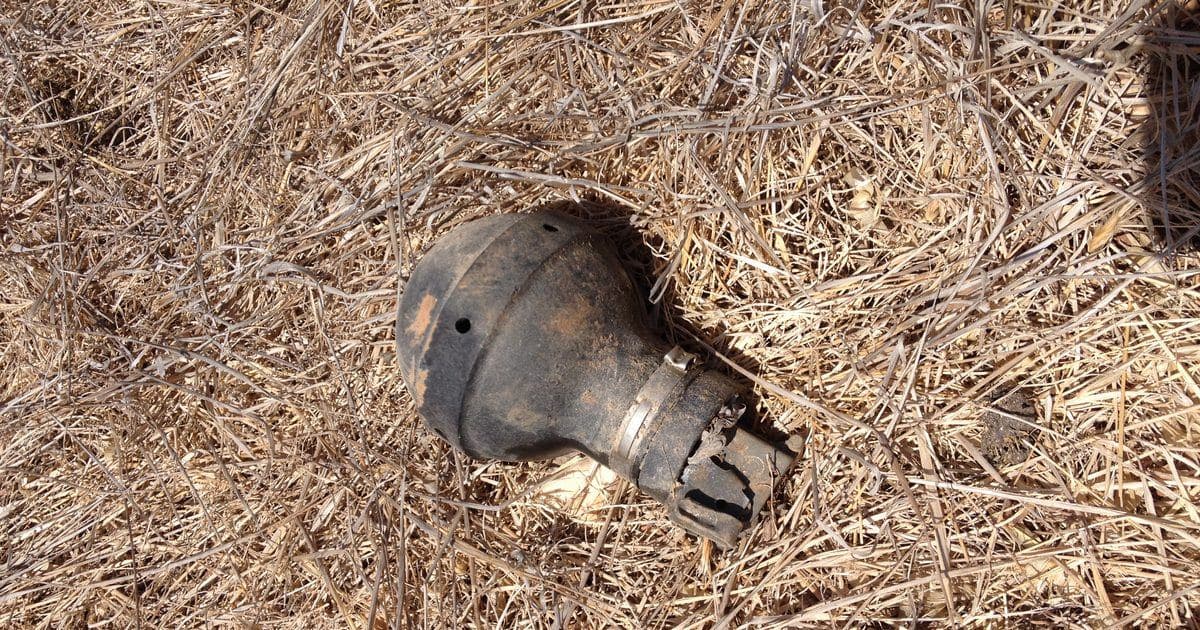
Haar and colleagues separated trauma from the cartridge or projectile from the chemical effect. Among 231 projectile injuries, 63 were severe, 27 percent, with major head trauma and vision loss (Haar et al., 2017). In the emergency department, a wound to the face or eye after a cartridge impact should not be read only as "gas irritation"; the mechanism is mixed, and triage needs the same rigor used in other multiple-victim scenarios, as in the text on disaster triage.
The common perception that tear gas causes only passing pain does not hold up against Haar's systematic review. In 31 studies from 11 countries, 5131 people had documented injuries; there were 2 deaths and 58 permanent disabilities (Haar et al., 2017). Of the 9261 injuries counted, 8.7 percent were severe and required professional medical management, 17 percent were moderate and 74.3 percent were mild (Haar et al., 2017). Skin and eyes accounted for most of the severe injuries.
The authors point to prolonged exposure time, a larger amount of agent and enclosed spaces as aggravating factors, as well as heat, humidity and wind that spread the agent to people who were not the target (Haar et al., 2017). Rothenberg and colleagues reinforce the risk in people who already have chronic disease and call for reassessment of the health risk in light of the TRPV1 and TRPA1 mechanisms (Rothenberg et al., 2016).
Haar expected heterogeneity and quality limits that would prevent pooled meta-analysis or direct comparison between agents; the synthesis is descriptive (Haar et al., 2017). The severity numbers describe what was published in selected studies, not the risk of every field exposure. The review also does not allow saying which agent is "safer" in absolute terms, because contexts, concentrations and the mode of dispersion vary between countries and manufacturers (Haar et al., 2017).
Carenzo and colleagues highlight infants, older adults and people with asthma among the groups in which injury from crowd-control agents may be more severe (Carenzo et al., 2026). Small children have narrower airways and less reserve; the reasoning is close to that of other trauma in conflict, covered in the text on the injured child in war. Anyone already living with asthma or bronchial hyperresponsiveness deserves longer respiratory observation, in the same spirit as the alert about who decompensates first in fire smoke and bad air.
In Portland, in 2020, a web questionnaire with a convenience sample of 2257 adults who reported recent exposure to tear gas found a physical or psychological complaint in 93.8 percent, with 93.3 percent immediately after exposure and 86.1 percent in the following days (Torgrimson-Ojerio et al., 2021). There was a positive trend between the number of days of exposure and most late complaints (Torgrimson-Ojerio et al., 2021). The authors list as limitations the convenience sample, exposure to other means of force at the same time and the absence of correction for multiple comparisons.
Arbak and colleagues compared 93 men with frequent exposure to tear gas and 55 controls. Cough with phlegm for more than three months was reported more often in the exposed group, 24.7 percent versus 11.3 percent, but without statistical significance (P greater than 0.05), which makes this difference inconclusive (Arbak et al., 2014). In the subgroup of smokers, the mean FEV1/FVC was 81.7 percent in the exposed versus 84.1 percent in the smoking controls, and the mean predicted expiratory flow was also lower in exposed smokers, both with statistical significance (Arbak et al., 2014). The design does not establish causality, and the authors speak of increased risk of chronic bronchitis.
Nogee and colleagues analyzed 107149 tear gas calls to the National Poison Data System between 2000 and 2021. OC accounted for 76.5 percent; people aged 19 or younger accounted for 62 percent of calls; adults aged 20 or older were more likely to have a major clinical effect (odds ratio 3.03; 95 percent confidence interval 1.91 to 4.81, adults versus people aged 19 or younger) (Nogee et al., 2023). School exposures and children's access to poorly stored sprays appear among the scenarios. This changes the history taking. Useful questions, our synthesis from Nogee, Carenzo and Haar:
Carenzo sums up the care of chemical irritants in the emergency department as decontamination and support (Carenzo et al., 2026). Quiroga-Garza details the start: protect the team with goggles, mask and apron; move the patient off the ground; treat in a well-ventilated area, because the particles accumulate (Quiroga-Garza et al., 2023). Schep places leaving the contaminated area and fresh air as the priority and states that there is no antidote (Schep et al., 2015).
The logic of removing clothing and washing before the agent spreads through the department resembles the decontamination described in the text on the dirty bomb, although the contaminant is different. The airway concern in burns and smoke also enters the differential when there is persistent cough, hypoxemia or a history of an enclosed space.
The sequence below is our synthesis, based on the sources above, and requires the local protocol:

Street events can bring many patients at once, with demand for outside space for decontamination, clothing changes and staff protection. This fits into planning for hospital surge capacity in disasters. Ultrasound and bedside examination help with associated trauma, the topic of the text on diagnosis with few resources.
Chakhunashvili and colleagues did an observational case-control study after protests in Georgia in late 2024, with tear gas and pepper spray mixed with water. Among 69 exposed participants assessed clinically and 31 controls, electrocardiographic changes in the P wave, the QRS complex and the T wave were more frequent in the exposed group (Chakhunashvili et al., 2025). Capillaroscopy changes were more common in the exposed group, without reaching statistical significance (Chakhunashvili et al., 2025). The type of mask was not associated with the incidence of symptoms. The authors describe two respiratory pictures clinically linked to exposure and call for more long-term study.
The reading below is our synthesis: an admission ECG makes sense when there is chest pain, palpitations or intense and prolonged exposure, but the study does not validate universal electrocardiographic screening. The observational design and the selected clinical sample limit extrapolation.
In care, the irritant cloud coexists with blunt trauma, kinetic impact projectiles, sound devices and, sometimes, fire. Carenzo organizes the emergency department in civil disturbances precisely because each crowd-control weapon produces its own pattern, and the chemical irritant is only one piece (Carenzo et al., 2026). Chest pain after running and panic can be anxiety, bronchospasm or, less often, the type of electrocardiographic change described in the Georgian study (Chakhunashvili et al., 2025).
The reading below is our synthesis. If the history is only distant aerosol, with no impact, the path is decontamination and respiratory and eye observation. If there was a bang nearby, a fall or a cartridge on the ground near the face, add the logic of trauma and request imaging according to the mechanism, even if the skin looks little changed. This discipline of putting clue next to clue is the same as in the text on signs, symptoms and history.
Rothenberg notes that people with chronic conditions are at greater risk of complication (Rothenberg et al., 2016). Carenzo names asthma explicitly among vulnerable groups (Carenzo et al., 2026). A patient who arrives talking and wants to leave can worsen when bronchospasm sets in minutes later, especially if the exposure was in a corridor, a vehicle or an environment with no easy exit, a scenario Haar associates with more injury (Haar et al., 2017). The parallel with thunderstorm asthma is that of recognizing who decompensates from hyperreactivity when the air changes suddenly.
Quiroga-Garza describes the patient lifted off the ground and treated in a ventilated space, because particles accumulate (Quiroga-Garza et al., 2023). Schep puts fresh air and removal from the area as the first step (Schep et al., 2015). On the skin, removing clothing reduces the load that keeps releasing agent; in the eye, early irrigation seeks to limit abrasion and scarring. The eye review warns that delayed irrigation featured in the history of at least one case with permanent loss of visual acuity (Quiroga-Garza et al., 2023).
By our synthesis, aligned with the principle of removing what retains the agent: contact lenses come out before or during irrigation, and clothing goes into a closed bag away from the clean area. The team changes gloves after handling contaminated belongings. These details rarely appear as an outcome in studies, but they are what prevents re-exposure of the next patient and of the professional.
Jara Bravo documented corneal abrasion in 9.8 percent of the sample and impaired vision in more than half (Jara Bravo et al., 2025). Haar showed that eye and skin concentrate severe injuries (Haar et al., 2017). The indication for specialized evaluation, by our synthesis, applies when there is extensive abrasion, hypopyon or microhyphema, pain out of proportion after irrigation, reduced visual acuity, or wheezing and hypoxemia that do not respond to a bronchodilator. In the Portland questionnaire with 2257 adults (Torgrimson-Ojerio 2021), 54.6 percent sought or intended to seek medical or mental health care (Torgrimson-Ojerio et al., 2021), which is a reminder that the impact does not end at the emergency department door.
| Study | Design | Population | Main finding |
|---|---|---|---|
| Haar, 2017 | PRISMA systematic review | 31 studies, 11 countries | Severe injuries, deaths and permanent disabilities documented (Haar et al., 2017) |
| Quiroga-Garza, 2023 | Review of the ocular surface | Literature on CS, CN and OC in the eye | Current management: decontamination and support; no specific therapy (Quiroga-Garza et al., 2023) |
| Torgrimson-Ojerio, 2021 | Cross-sectional questionnaire | 2257 adults in Portland | Immediate physical and psychological complaints and in the following days (Torgrimson-Ojerio et al., 2021) |
| Jara Bravo, 2025 | Retrospective cross-sectional | 112 exposed in Santiago | Eye, throat, breathing and skin lead the short-term effects (Jara Bravo et al., 2025) |
| Nogee, 2023 | Poison center analysis | 107149 calls in the US | OC predominant; many young people; major effects more in adults (Nogee et al., 2023) |
| Carenzo, 2026 | Narrative review | Emergency department in civil disturbances | Decontamination and support; attention to asthma, infants and older adults (Carenzo et al., 2026) |
Sources: data from Haar et al., 2017, Quiroga-Garza et al., 2023, Torgrimson-Ojerio et al., 2021, Jara Bravo et al., 2025, Nogee et al., 2023 and Carenzo et al., 2026.
In NEXO, the case of the day is fictional, with a real clinical presentation and up to six progressive clues, and you propose the diagnosis by searching for the ICD-10 code. Telling passing irritation apart from eye or respiratory injury that calls for observation is the same exercise of putting together signs, symptoms and history that appears in the text on Signs, symptoms and history: how to interpret what the patient brings.
The limits of using the game are described on the NEXO Economy page. If you research the teaching of clinical reasoning, the page for Researchers explains how to get in touch. Professionals who write or review cases find information under Curator and Creators, and institutions can learn about the proposal on the partnerships page.
CS is a synthetic agent typically dispersed as a cloud; OC is pepper extract, common in sprays. Both irritate the eye, skin and airways through different TRP channels (Quiroga-Garza et al., 2023; Rothenberg et al., 2016).
The reviewed sources describe the absence of a specific antidote; care consists of decontamination and support (Schep et al., 2015; Quiroga-Garza et al., 2023).
The ocular review recommends irrigation with water or saline for 15 to 20 minutes (Quiroga-Garza et al., 2023), and the emergency department review mentions abundant irrigation with water (Carenzo et al., 2026). A series cited in the ocular review treated patients with milk and antacid, but that is not the recommendation: homemade alkaline solutions do not replace water or saline.
By our synthesis, aligned with Carenzo and Haar: those who were in an enclosed space, small children, people with asthma, those hit by a cartridge on the head or eye, and those who keep eye pain, blurred vision, wheezing or hypoxemia after irrigation (Carenzo et al., 2026; Haar et al., 2017).
Arbak found more respiratory symptoms and a reduction in some indices among exposed smokers, and interpreted a risk of chronic bronchitis, with a design that does not prove causality; the difference in chronic cough did not reach significance (Arbak et al., 2014). Portland showed complaints lasting days after exposure, in a convenience sample (Torgrimson-Ojerio et al., 2021).
Play the case of the day on NEXO and train your reasoning with progressive clues.


