Armed conflict and humanitarian crisesPediatricsAccessibility
Landmines: injuries, amputation and rehabilitation



Table of contents
- The injury that outlives the war
- Why so many victims are children
- What surveillance leaves out
- From the explosion to amputation
- The child who grows inside the prosthesis
- From the socket to rehabilitation
- When the prosthesis stays in the closet
- How NEXO helps train this reasoning
- Frequently asked questions
- Take-home messages
- References
In a fictional case, an 11-year-old boy and two friends find a rusty metal object at the edge of a rice field, in a region where the war ended before their parents were born. The object explodes when one of them hits it against a stone. The boy loses his right leg below the knee. Three years later, he returns to the rehabilitation center limping: the prosthesis has become too short, the socket is tight and the tip of the stump hurts with every step.
The war that injured this boy ended decades earlier. The mine, grenade or submunition left in the ground is still active, and the typical victim is a civilian, poor and often a child. This text gathers what surveillance, clinical series and studies of prosthetic services show about who gets injured, why so many victims are children and what happens between amputation and the return to daily life.
Key points
- In a systematic review cited in the Lancet, 22 to 55 percent of mine victims were under 18, with a median of 38 percent (Bendavid et al., 2021).
- Official health records underestimate these deaths: in 2008, global estimates recorded zero deaths in Laos and Vietnam, while mine action authorities counted 99 and 36 (Durham et al., 2013).
- In an amputated child, the stump grows unevenly, and the prosthesis needs frequent adjustments and replacements throughout childhood (Ghidini et al., 2025).
- The prosthesis delivered also has to be used: in a fitting campaign in Cambodia, 81 percent of clients said they used the new device little or not at all (Heang et al., 2026).
- The injury that outlives the war
- Why so many victims are children
- What surveillance fails to count
- From explosion to amputation
- The child who grows inside the prosthesis
- From socket to rehabilitation
- When the prosthesis stays in the closet
- How NEXO helps train this reasoning
- Frequently asked questions
- Take-home messages
The injury that outlives the war
Landmines are devices made to explode on the presence, proximity or contact of a person or vehicle. Explosive remnants of war are munitions that failed to explode or were abandoned: grenades, mortars, rockets, cluster bomb submunitions. The two groups share something that sets them apart from almost every other weapon: they keep injuring people after the combatants leave.
A weapon that waits
A buried mine does not distinguish soldier from farmer, nor war from peace. In Cambodia, mine action authorities have recorded 63,815 victims of mines and explosive remnants since 1979 (Durham et al., 2013). In Vietnam, the national authority counted 104,701 victims between 1975 and 2007, of whom 65,852 were injured and 38,849 killed (Durham et al., 2013). According to Durham and colleagues, most deaths and disabilities from mines and explosive remnants in Laos, Cambodia and Vietnam fit ICD-10 code Y36.8, the one for war operations occurring after the cessation of hostilities (Durham et al., 2013).
Who steps on the device
The systematic review cited by Bendavid and colleagues in the Lancet concluded that most injuries from war remnants happen during everyday economic tasks, such as commuting to work and household chores (Bendavid et al., 2021). The victim, therefore, is rarely a combatant. It is a civilian who needs to return to the fields, and who often lives far from the nearest hospital.
The type of device changes the injury
In the analysis by Pizzino and colleagues, all other types of device (antitank mine, unexploded ordnance, other explosive remnants and improvised device) had a higher chance of death than the antipersonnel mine (Pizzino et al., 2026).
The physics of the shock wave and the acute hospital phase are described in the text on blast trauma and injuries that do not appear right away. Here the interest is what comes next.
Why so many victims are children
Children appear in high proportion in almost every series of civilian victims. The reasons combine curiosity, household chores and the fact that children are rarely alone.
What the series show
- In the systematic review cited by Bendavid, children under 18 made up 22 to 55 percent of mine victims, with a median of 38 percent (Bendavid et al., 2021).
- In the study table of the Milwood Hargrave review, a retrospective community surveillance series in Bosnia and Herzegovina, from 1991 to 2000, with 4064 civilian mine victims, appears with 14 percent children (Milwood Hargrave et al., 2019).
Variation between countries is large, and depends on the type of device, the phase of the conflict and who works in the field.
What the victims were doing
In the analysis by Pizzino and colleagues, which gathered victims of all ages, the activity at the time of the incident was recorded for most of them (Pizzino et al., 2026). The most frequent activity was active conflict (24 812 victims), followed by displacement (15 330), agriculture (14 319), being present as a spectator (9880), collecting food, water or firewood (6999), handling the device (5026) and playing (4867); in 21 197 victims the activity was not specified (Pizzino et al., 2026).
A colorful metal object sparks curiosity, and whoever picks it up to play with or sell also exposes those nearby. That is why education about the risk of handling suspicious objects is part of mine action.
Groups of children
Pizzino and colleagues note that explosive events involving children are often mass casualty events, because children play together (Pizzino et al., 2026). A single detonation can injure three or four siblings and neighbors at once, which overwhelms the local health post and the family.
Dying less overall, more in certain situations
In the largest available analysis, with 105 913 victims of mines and other explosive devices in 17 databases, each from one country or territory, lethality was 31.4 percent in children and 42.0 percent in adults (Pizzino et al., 2026). In three situations, however, children had a higher chance of death than adults: during the active conflict phase (OR 2.72; 95 CI 2.38 to 3.11), while playing (OR 1.83; 95 CI 1.47 to 2.29) and as a spectator (OR 1.69; 95 CI 1.48 to 1.94) (Pizzino et al., 2026).
The data show that the child who survives is very common, and that child is the one who will need rehabilitation for decades. The resuscitation of this child on arrival at the hospital is described in the text about the child injured in war.
What surveillance leaves out
To organize prosthetic and rehabilitation services, it is necessary to know how many people were injured, where they live and how old they are. The data exist, but they are scattered across sectors that rarely talk to each other.
Two systems that do not talk to each other
Mine action programs use their own database, the Information Management System for Mine Action (IMSMA), which records dangerous areas, cleared areas and victims (Durham et al., 2013). The health information system, in turn, records hospital data and uses ICD-10. Victims who die on site or do not reach the hospital stay out of health statistics.
The numbers that do not match
Durham and colleagues compared deaths recorded by mine action authorities with estimates from the Global Burden of Disease study, which use ICD-10 code Y36 (injuries due to war operations) (Durham et al., 2013).
| Country | Deaths in 2004, mine action | Deaths in 2004, GBD (Durham et al., 2013) | Deaths in 2008, mine action | Deaths in 2008, GBD (Durham et al., 2013) |
|---|---|---|---|---|
| Cambodia | 171 | 127 | 47 | 67 |
| Laos | 117 | 60 | 99 | 0 |
| Vietnam | 89 | 30 | 36 | 0 |
Sources: Durham et al., 2013, table 1. Absolute counts of deaths from mines and explosive remnants recorded by national mine action authorities and of deaths coded as Y36 in the Global Burden of Disease estimates (Durham et al., 2013).
In 2008, GBD recorded zero deaths in Laos and Vietnam, while local authorities counted 99 and 36. In Cambodia, the relationship reversed that year, which shows that the two systems measure different things in different ways.
Codes that hide the cause
IMSMA itself has classification flaws. In Laos, in 2004, 294 incidents were recorded; in 47 of them, the heat of a campfire detonated a buried device, and the cause was recorded as fire (Durham et al., 2013). The authors' literature search, from 1990 to 2011, found only six studies on the frequency of these injuries in the three countries.
For those who work with choosing the ICD-10 code, it is worth remembering that ICD-10 has its own code for injuries from war operations occurring after the end of hostilities, Y36.8, within category Y36 (Durham et al., 2013). Using the right code in the medical record is the first step for the victim to appear in the statistics.
Linking mine action to health
Durham and colleagues recommended integrating IMSMA data into health information systems (Durham et al., 2013). A more recent scoping review, with 138 reports of interventions in 47 countries, proposed a chain of care for the injured civilian in which mine action programs, which already have medical teams on the ground, support local emergency care (Wild et al., 2024). Only 39 of these reports measured differences in mortality (Wild et al., 2024).
Bleeding control on site, which is the most immediate link in this chain, is described in the text on field hemorrhage control, tourniquet and MARCH.
From the explosion to amputation
Traumatic amputation from a mine is rarely a clean cut. The limb arrives with destroyed tissue, contaminated by dirt and fragments, and with a zone of injury that extends above the visible point.
How many lose a limb
In the systematic review cited by Bendavid, amputation was the most common injury, reported in 20 to 83 percent of mine victims of all ages (Bendavid et al., 2021). The range is wide because studies differ in the type of device and in who ends up being recorded.
A stump designed for the prosthesis
The first surgery is often performed under emergency conditions, by overburdened teams with few resources. In a cohort from Aleppo, Syria, the authors attributed stump complications to amputations performed under these conditions (Razzouk et al., 2026). They argued for structured amputation protocols, preservation of adequate stump length and careful nerve management.
For a child, the choice of level carries extra weight: preserving the growth cartilage and the knee can mean a whole life with a below-knee prosthesis; in Cambodian adults, use of an above-knee prosthesis was associated with worse mobility (Ramstrand et al., 2025).
When the stump needs new surgery
Between 2016 and 2020, 1450 lower-limb amputees sought the Red Crescent orthopedic clinic in Aleppo (Razzouk et al., 2026). Of these, 110 patients, with 120 transtibial stumps, could not use a prosthesis due to stump complications and underwent surgery again. The main indications for revision were bone spurs (45.8 percent) and symptomatic neuromas (22.5 percent) (Razzouk et al., 2026).
Stump length predicted the type of problem: neuromas were more frequent in very short and short stumps, and excessive bone growth in long stumps and at the Syme level. After revision, all were able to adapt the prosthesis, and functional reintegration took on average 95 to 140 days (Razzouk et al., 2026).
The child who grows inside the prosthesis
The adult amputee receives a prosthesis that, with adjustments, can last a few years. The child amputee grows, and the stump grows differently from the limb on the other side.
The stump that grows slowly
In a study of 19 Cambodian children with unilateral traumatic transtibial amputation, the proximal epiphysis of the amputated limb grew 33.3 percent more slowly than expected for an uninjured epiphysis (Ghidini et al., 2026). The authors attributed the delay to injury of the growth cartilage and to the altered mechanics of the limb. Stump growth could be predicted from the growth of the limb on the other side.
The practical result is a difference in length between the legs that increases with age, and that the prosthesis needs to compensate for at each stage.
Volume that changes between replacements
In the same study, the variation in stump volume between one prosthesis and the next exceeded the 10 percent threshold, used to indicate replacement in adults, in more than 60 percent of replacements (Ghidini et al., 2026). The socket that fit well in January may be tight or loose at the end of the year.
The bone that grows outward
Excess bone growth is the abnormal formation of new bone at the tip of the stump. It can cause intense pain and prevent use of the prosthesis (Ghidini et al., 2025). The prosthetists interviewed in Cambodia described extra space at the tip of the socket and removable pads as features for dealing with growth and with this problem.
A viewpoint published in 2026 recalled that growth plate injuries, limb length discrepancy and abnormal bone growth can require repeated surgical revisions, and each revision restarts the rehabilitation cycle (Ghidini et al., 2026).
Adjustments and replacements at the pace of growth
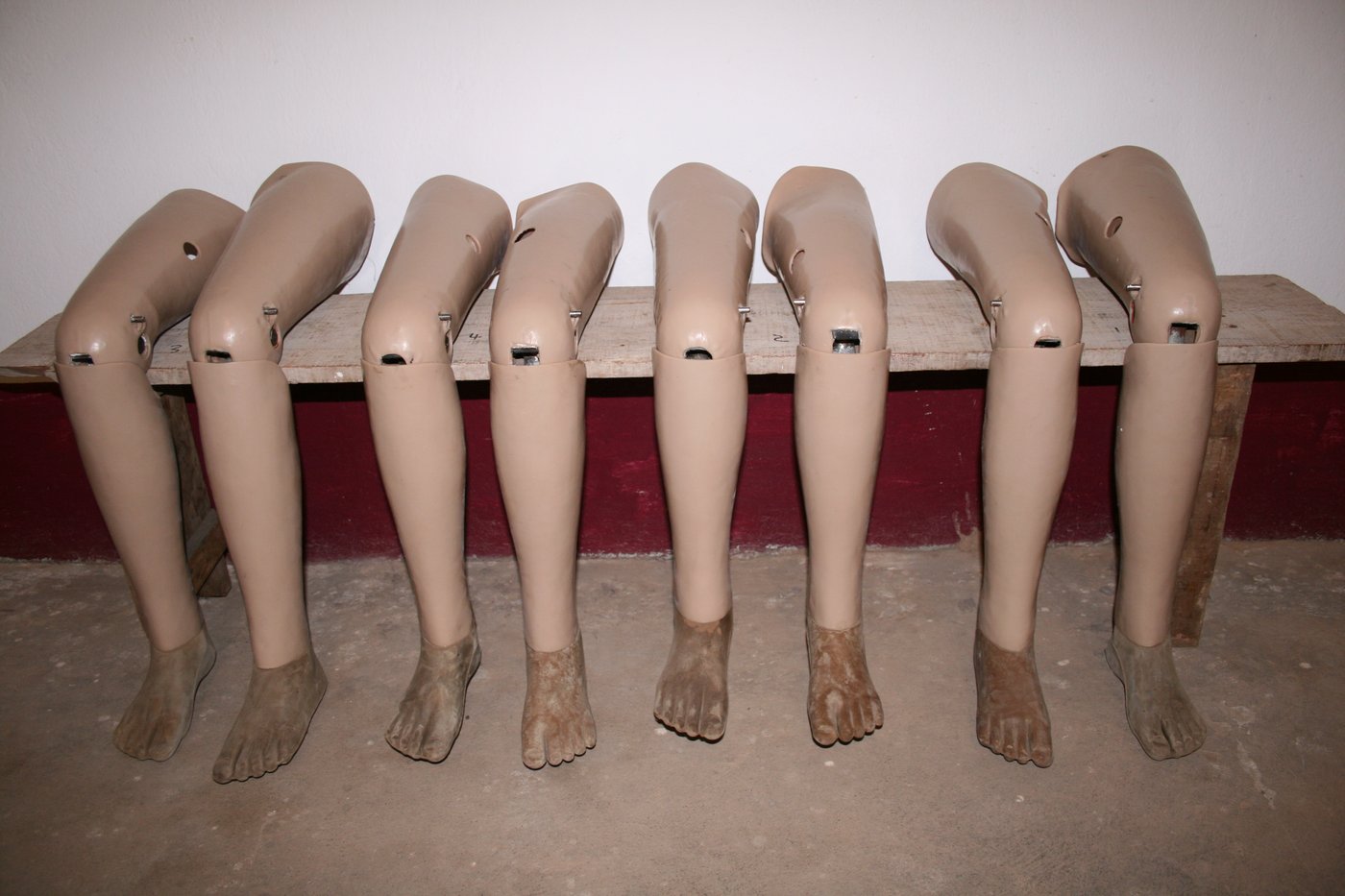
The analysis of 62 records of children with lower limb prostheses in Cambodia, carried out with prosthetist interviews, measured the actual intervals: socket or length adjustments occurred on average every 8.3 months (standard deviation of 6.6), and complete replacements for growth, every 16.4 months (standard deviation of 9.9) (Ghidini et al., 2025). The literature cited by the authors recommends adjustments every 3 to 6 months and replacements every 12 to 18 months.
The devices studied used the polypropylene technology developed by the International Committee of the Red Cross, the most available in low-resource settings and conflict zones (Ghidini et al., 2025). In the same series, the mean age at acquired amputation was 10.1 years, with a standard deviation of 4.5 (Ghidini et al., 2025).
From the socket to rehabilitation
The prosthesis is one part of the process. Rehabilitation begins before it, with stump care, muscle strength and balance, and continues afterward, with gait training, return to school or work and mental health follow-up.
The steps along the way
The sources gathered here describe a sequence that repeats in many services: amputation with attention to stump length and nerves, healing and stump preparation, casting and fitting of the socket, gait training, return visits for adjustment, repair and replacement, more frequent in children, and surgical revision when the stump prevents use of the prosthesis.
A gap in care for children
One in six children in the world lives in an area affected by conflict, according to the viewpoint by Ghidini and colleagues (Ghidini et al., 2026). The authors state that almost none of the elements needed for a professional pediatric rehabilitation response in crises is in operation. They argue for rehabilitation goals that consider age, sex, gender and psychosocial development.
Comparison between the sources
| Source and design | Who was studied | Outcome | Result as reported |
|---|---|---|---|
| Pizzino 2026, analysis of 17 databases of countries or territories | 105,913 victims of all ages | Case fatality by age | 31.4 in children and 42.0 in adults (Pizzino et al., 2026) |
| Ghidini 2026, retrospective cohort, Cambodia | 19 children with traumatic transtibial amputation | Growth of the proximal epiphysis of the stump | 33.3 slower than expected (Ghidini et al., 2026) |
| Ghidini 2025, records and interviews, Cambodia | 62 records of children with prostheses | Interval between adjustments and between replacements | 8.3 and 16.4 months on average (Ghidini et al., 2025) |
| Razzouk 2026, cohort, Aleppo | 110 patients, 120 transtibial stumps revised | Indication for revision | Bone spur 45.8; neuroma 22.5 (Razzouk et al., 2026) |
| Heang 2026, observational cohort, Cambodia | Clients of a fitting drive | Use of the new device at 3 months | 81 used it little or never (253 of 313) |
| Dickinson 2025, retrospective study, Cambodia | 14,822 deliveries to 6,986 clients | Time to repair and time to replacement | Medians of 237 and 727 days |
Sources: Pizzino et al., 2026; Ghidini et al., 2026; Ghidini et al., 2025; Razzouk et al., 2026; Heang et al., 2026; Dickinson et al., 2025. Table proportions in percent, except counts, months and days (Heang et al., 2026; Dickinson et al., 2025).
Back to the case
The boy in the fictional case had gone three years with the same prosthesis, more than the median interval of 16.4 months between replacements observed in Cambodian children (Ghidini et al., 2025). The artificial leg became short because the limb on the other side grew, and the socket tightened because the volume of the stump changed. The pain at the tip led to an X-ray, which showed excessive bone growth. The team indicated surgical revision of the stump, a new socket with room at the tip and shorter follow-up intervals, arranged with the school so that he would miss as few classes as possible.
When the prosthesis stays in the closet
Delivering a prosthesis is different from restoring mobility. Studies of services in Cambodia, one of the countries most contaminated by landmines, show where the path breaks down.
A mass fitting event that did not convince
In an intensive mass fitting event run by an international organization in Cambodia, many prostheses did not meet the standards of the International Society for Prosthetics and Orthotics (Heang et al., 2026). At discharge, clients reported dissatisfaction with the quality of the work (33 percent; 175 of 525), with the fit (57 percent; 297 of 525) and with function (26 percent; 139 of 525) (Heang et al., 2026).
In the telephone contact after 3 months:
- 36 percent (115 of 321) reported discomfort or pain (Heang et al., 2026);
- 78 percent (238 of 305) would prefer, in the future, a device produced in their own country (Heang et al., 2026);
- 81 percent (253 of 313) used the new device little, rarely or never (Heang et al., 2026);
- at least 29 percent (93 of 321) continued to use an old device that they themselves had described as broken, painful or poorly fitted (Heang et al., 2026).
Repairs, replacements and who comes back earlier
A study of three decades of routine data in Cambodia gathered 14,822 device deliveries for 6,986 clients and 22,878 repairs (Dickinson et al., 2025). The median time to the first repair was 237 days, and to replacement, 727 days. Devices used by children and by people with more active occupations were replaced earlier, and replacements due to changes in stump volume occurred before replacements due to wear (Dickinson et al., 2025).
The authors note that a quick replacement may indicate poor quality or, on the contrary, a device so well fitted that it was used a great deal. The routine data serve, above all, to show which groups are being poorly served.
Mobility and mental health
In a survey of 347 adult lower-limb prosthesis users in three urban and rural centers in Cambodia, mobility was worse among women, among amputees due to vascular disease, among above-knee prosthesis users and among those reporting more psychological distress (Ramstrand et al., 2025). The authors suggested interventions aimed at women and mental health care for those with anxiety and depression.
Durham and colleagues also describe, among survivors, chronic pain, social exclusion, psychological distress and health expenses that can impoverish the family (Durham et al., 2013).
The prosthesis through history
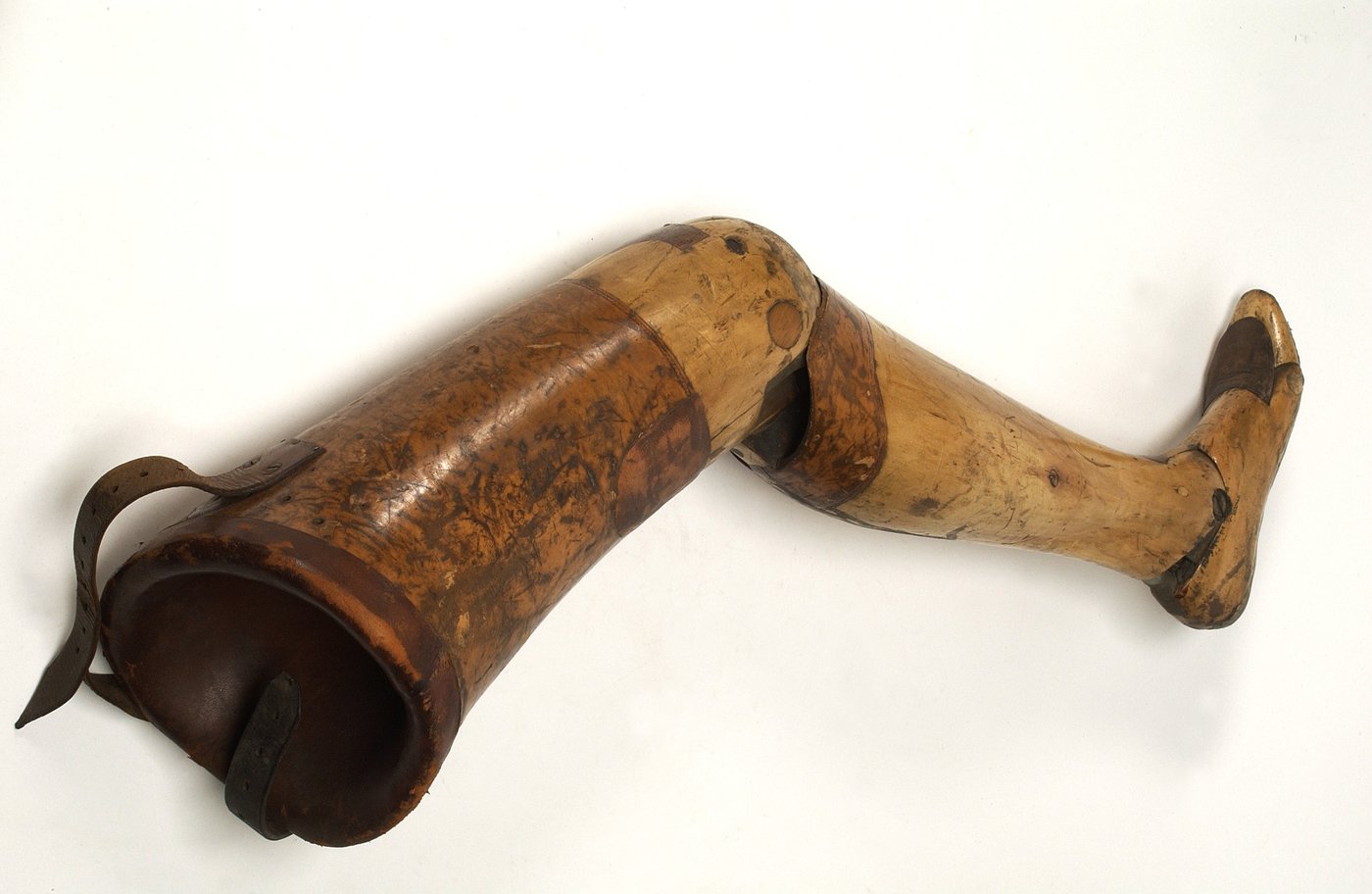
The lower-limb prosthesis is an old technology. Assistive technology, in a broad sense, also includes the resources that allow professionals with disabilities to keep working, as described in the text on assistive technology for physicians with visual impairment.
Other threats in the same territory
Regions contaminated by landmines are often the same ones that lost hospitals, vaccination and sanitation. Attacks on health facilities and wartime epidemics are described in the texts on attacks on health services in armed conflicts and on cholera, measles and malnutrition in armed conflicts. For radiological contamination, there is the text on dirty bomb, triage and decontamination.
How NEXO helps train this reasoning
In NEXO, the case of the day is fictional, with a real clinical presentation and up to six progressive clues, and you propose the diagnosis by looking for the code in ICD-10. Recognizing that pain in the stump of an amputated child can come from bone growth, and not only from a tight fit, is the same exercise of putting clues together and reviewing the hypothesis that appears in the text about the child who gets worse and pediatric warning scores.
The limits of using the game are described on the NEXO economy page. If you research the teaching of clinical reasoning, the page for researchers explains how to get in touch. Professionals who write or review cases find information under curation and under creators, and institutions can learn about the proposal on the partnerships page.
Frequently asked questions
Why do mines keep injuring people after the war ends?
Because they stay buried and active for decades. In Cambodia, mine action authorities recorded 63,815 casualties since 1979, many of them after the end of hostilities (Durham et al., 2013).
Why are children so affected?
They play together, pick up objects and help in the fields and at home. In a systematic review cited in the Lancet, 22 to 55 percent of mine casualties were under 18 years old (Bendavid et al., 2021). Events involving children often have several casualties at the same time (Pizzino et al., 2026).
Do children die more often than adults after a mine explosion?
Overall, they die less often: lethality was 31.4 percent in children and 42.0 percent in adults (Pizzino et al., 2026). During active conflict, however, whether playing or as a bystander, the child's chance of death was higher.
How often does a child's prosthesis need to be replaced?
In Cambodia, replacements for growth occurred on average every 16.4 months, and adjustments every 8.3 months (Ghidini et al., 2025). Each child has their own pace, and follow-up needs to track growth.
Take-home messages
- Mines and explosive remnants injure civilians decades after the end of the conflict, especially during livelihood activities and play.
- Children make up a large share of casualties and, in certain situations, have a higher chance of death than adults.
- Health systems and mine action systems count casualties in different ways, and integrating them is necessary to organize rehabilitation.
- In an amputated child, the stump grows unevenly, and the prosthesis requires adjustments, replacements and sometimes new surgery throughout childhood.
- Delivering the prosthesis is only one step: quality, fit, pain and mental health decide whether it will be used.
Play the case of the day in NEXO and train your reasoning with progressive clues.
References
- Durham J, Hill PS, Hoy D. The underreporting of landmine and explosive remnants of war injuries in Cambodia, the Lao People's Democratic Republic and Viet Nam. Bull World Health Organ. 2013;91(3):234-236. [PubMed](https://pubmed.ncbi.nlm.nih.gov/23476096/).
- Milwood Hargrave J, Pearce P, Mayhew ER, et al. Blast injuries in children: a mixed-methods narrative review. BMJ Paediatr Open. 2019;3(1):e000452. [PubMed](https://pubmed.ncbi.nlm.nih.gov/31548997/).
- Bendavid E, Boerma T, Akseer N, et al. The effects of armed conflict on the health of women and children. Lancet. 2021;397(10273):522-532. [PubMed](https://pubmed.ncbi.nlm.nih.gov/33503456/).
- Pizzino S, Durham J, Wild HB, et al. A multi-country epidemiological analysis of mortality from landmines and other explosive ordnance. Commun Med (Lond). 2026;6(1). [PubMed](https://pubmed.ncbi.nlm.nih.gov/41708927/).
- Wild H, LeBoa C, Markou-Pappas N, et al. Synthesizing the evidence base to enhance coordination between humanitarian mine action and emergency care for casualties of explosive ordnance and explosive weapons: a scoping review. Prehosp Disaster Med. 2024;39(6):421-435. [PubMed](https://pubmed.ncbi.nlm.nih.gov/39851170/).
- Razzouk Q, Chachati S, Alloush H, et al. Surgical revision for transtibial stump problems following war traumatic amputations: a 2016-2020 cohort from Aleppo, Syria. BMC Surg. 2026;26(1):215. [PubMed](https://pubmed.ncbi.nlm.nih.gov/41699577/).
- Ghidini C, Edgar CE, Heang T, et al. Growth patterns of lower limbs in children with a traumatic transtibial amputation: a retrospective observational cohort study of anthropometric data from Cambodia. Prosthet Orthot Int. 2026;50(5):542-549. [PubMed](https://pubmed.ncbi.nlm.nih.gov/41084106/).
- Ghidini C, Edgar CE, Harte C, et al. Impact of physical growth and development on paediatric lower-limb prosthetic provision: prosthetist perspectives and clinical casefile analysis from Cambodia. Adv Rehabil Sci Pract. 2025;14:27536351251384354. [PubMed](https://pubmed.ncbi.nlm.nih.gov/41179576/).
- Ghidini C, Edgar CE, Basaran S, et al. Children affected by armed conflict: rehabilitation as a global health responsibility. BMJ Paediatr Open. 2026;10(1):e004547. [PubMed](https://pubmed.ncbi.nlm.nih.gov/41997598/).
- Heang T, Kheng S, Donovan-Hall M, et al. Quality and user satisfaction scores for prosthetic limbs provided in a fitting camp, Cambodia. Bull World Health Organ. 2026;104(4):213-222. [PubMed](https://pubmed.ncbi.nlm.nih.gov/41924345/).
- Dickinson A, Gates L, Metcalf C, et al. Understanding maintenance, repair, and replacement of prosthetic limbs using routinely-collected data: a retrospective study over three decades in Cambodia. J Glob Health. 2025;15:04135. [PubMed](https://pubmed.ncbi.nlm.nih.gov/40277286/).
- Ramstrand N, Maddock A, Heang T, et al. Levels and determinants of ambulatory mobility in lower-limb prosthesis users from urban and rural Cambodia: a cross-sectional survey study. BMJ Open. 2025;15(7):e101187. [PubMed](https://pubmed.ncbi.nlm.nih.gov/40713036/).