



Radiation exposureBurnout and well-beingOncology
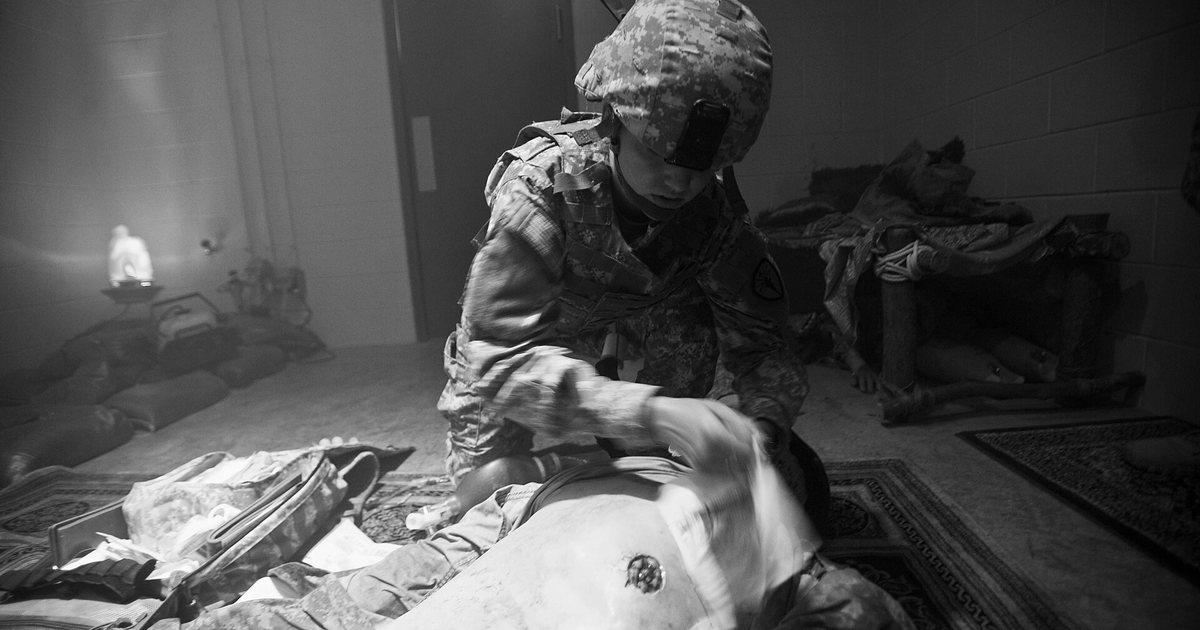
Fictional scene. During a shift, a companion advances toward a resident, shouting. She does not move and cannot respond for a few seconds. A colleague steps between the two and calls security. Later, the resident says she "froze" and wonders what that reveals about her. A nurse says that, in the same situation, he would have left the room. Another colleague thinks she would have reacted with anger.
The three descriptions correspond to defense responses studied for more than a century: fight, flight and freezing, plus more extreme forms of immobility. They are automatic, involve the whole body and appear in many species. They are also surrounded by simplifications. This article presents what the models describe, how studies distinguish freezing from tonic immobility and why none of these responses allows judging courage or competence.
The text is not a guide to performance under stress. That topic appears in the article on acute stress and clinical reasoning. Here, the focus is on the defense responses themselves, the limits of the models and the care needed when interpreting them in yourself, in colleagues and in patients.
Key points
Summary
The expression "fight or flight" is associated with the physiologist Walter Cannon. In a book he published in 1915 on bodily changes in pain, hunger, fear and anger, he described the visceral changes that accompany emergencies and argued that they prepare the organism for exertion. When addressing respiration, Cannon wrote that the urgent need in fight or flight is a generous supply of oxygen (Cannon, 1915).
Later models expanded this idea. The review by Kozlowska and colleagues describes a defense cascade: a continuum of innate responses activated automatically. Activation is the first step; fight or flight are active defenses; freezing is a fight or flight response "on hold"; tonic immobility and collapsed immobility are last-resort responses to an inescapable threat; and quiescent immobility is a resting state that favors recovery (Kozlowska et al., 2015).
Another set of models organizes responses by proximity of the threat. Mobbs and colleagues take up Fanselow and Lester's continuum of threat imminence, which distinguishes phases according to whether danger is absent, has been detected or is attacking. In the system they propose, when a potential threat is encountered, orientation defines whether the stimulus is ignored or assessed; in assessment, the organism monitors the stimulus, estimates the risk and seeks safety; under imminent attack, fast, reflex defenses such as fight or flight come into play (Mobbs et al., 2015).
These models are not identical. Kozlowska and colleagues explain that they present fight or flight before freezing because they understand freezing as an inhibited fight or flight response, while models based on predator distance usually discuss freezing first (Kozlowska et al., 2015). The difference is useful to remember that "cascade" is a way of organizing observations, not a mandatory sequence that every person follows in the same order.
A common point across the models is that defense responses are automatic and involve the whole body: heart, breathing, muscle tone, attention and perception. Kozlowska and colleagues add an important clinical observation: unlike many animals, which return to usual functioning once the danger passes, human beings can get stuck in the same response pattern tied to the original danger or to a trauma (Kozlowska et al., 2015).
In Roelofs's review, freezing is described as a state of attentive immobility, activated at intermediate levels of threat, which helps avoid detection and improves perception. A central feature is the parasympathetically driven slowing of heart rate, called bradycardia. Fight or flight, activated in the face of imminent threat, are dominated by the sympathetic system and associated with heart rate acceleration (Roelofs, 2017).
The author sums up the idea in the title and abstract of the paper: freezing is not a passive state, but a parasympathetic "brake" on the motor system, relevant to perception and to preparing action. One sign of this is that, during freezing, the startle response increases rather than decreases (Roelofs, 2017).
In humans, freezing is studied in the laboratory with indirect measures. One of them is body sway recorded on a force platform: in the presence of threatening images, such as angry faces, sway decreases along with heart rate. Roelofs also distinguishes freezing from orienting. Both involve attentive immobility, but orienting undergoes habituation and freezing does not (Roelofs, 2017).
Recent studies have tested the relationship between freezing and action. Hashemi and colleagues applied a shoot decision task under threat of electric shock in two studies, one with 22 civilians and another with 54 police recruits. Preparation for the decision was associated with postural freezing, bradycardia and activity in the midbrain, including the periaqueductal gray; more intense activity in this region during preparation predicted faster correct shots. The transition to action was associated with tachycardia (Hashemi et al., 2019).
Koppold and colleagues studied 235 participants and observed that, under threat, they responded faster and with less accuracy than in a safety condition. Threat was associated at the same time with postural freezing of parasympathetic origin and with increased skin conductance of sympathetic origin. The temporal unpredictability of the threat did not change these responses (Koppold et al., 2026).
This result helps correct another simplification. The popular idea of "fight or flight" suggests that fear is always acceleration, adrenaline and movement. Roelofs describes a more complex picture: in the face of threat, the sympathetic and parasympathetic branches of the autonomic nervous system are activated at the same time, and freezing appears when the parasympathetic branch predominates (Roelofs, 2017). A person can therefore be motionless with sweaty hands, or appear calm while preparing to act. External appearance does not reliably reveal what is happening inside.
These findings dismantle a common reading: that "freezing up" is always failing. In the laboratory, a brief immobility can accompany the preparation of a response. This does not mean that every instance of freezing is useful in a real situation, nor that there is a known ideal duration. It means that immobility, by itself, does not tell you whether the person is unprepared.
Tonic immobility is also an absence of movement in the face of serious threat, but Roelofs insists that it must be distinguished from freezing. While freezing can occur early in the cascade, tonic immobility appears later, for example on physical contact during an attack, when fight, flight and freezing are no longer useful options. The physical features of tonic immobility are unclear and sometimes contradictory: some studies report an increase and others a drop in heart rate. Hypotension and lack of response help to differentiate it from freezing (Roelofs, 2017).
Kozlowska and colleagues describe how tonic immobility seems to present in humans, based on individual accounts: loss of the ability to move or scream, in a situation of great and imminent danger, when escaping or winning a fight is not possible, or is not perceived as possible. People report fear, immobility, cold, numbness and analgesia, uncontrollable trembling, closed eyes and dissociation, as well as a sense of being trapped and hopelessness. The authors note that the response has been described mainly in the literature on sexual violence and also in accounts from soldiers, accident victims and survivors of assault (Kozlowska et al., 2015).
The same authors include collapsed immobility in the cascade, a variant in which muscle tone is lost and consciousness is impaired by cerebral hypoxia secondary to bradycardia. They note that the phenomenon goes by other names, such as fear-induced fainting and vasovagal syncope (Kozlowska et al., 2015). In clinical practice, fainting in the face of threat does not rule out the assessment of other causes; the article on syncope in the emergency department addresses this differentiation.
Schalinski, Schauer and Elbert use another nomenclature, derived from the Schauer and Elbert model: the "fright, flag, faint" phases. In the authors' description, the final stages have dissociative properties, with parasympathetic predominance, bradycardia, a drop in blood pressure and vasodilation, and become adaptive when there is no perceived possibility of fight or flight. From this model, they built a brief interview, the Shut-D, to assess vulnerability to dissociation after traumatic events (Schalinski et al., 2015).
At the other end of the cascade, Kozlowska and colleagues describe quiescent immobility, a state of rest that favors recovery after the danger has passed (Kozlowska et al., 2015). Intense tiredness, a wish to withdraw or a need for silence after an episode of threat do not need to be read as indifference. They can be part of the return to usual functioning, which is not always immediate.
| Response | What is observed | Physiology described | Point in the model |
|---|---|---|---|
| Fight or flight | Active action: confront or move away | Sympathetic predominance, heart rate acceleration | Imminent threat, with the possibility to act |
| Freezing | Attentive immobility, vigilance | Bradycardia, lower body sway, increased startle | Threat detected, preparation for action |
| Tonic immobility | Inability to move or scream, little response | Contradictory cardiac findings; hypotension described | Contact with the threat, escape seems impossible |
| Collapsed immobility | Loss of tone and consciousness | Bradycardia with cerebral hypoxia | Inescapable threat, high activation |
The table summarizes sources with different bases, such as animal models, laboratory work and accounts from people exposed to trauma. It is for study, not for classifying someone's reaction from a short description (Kozlowska et al., 2015; Roelofs, 2017).
One of the most delicate consequences of immobility is the meaning the person assigns to it afterward. In the narrative study by Gbahabo and Duma, fourteen women who identified as rape survivors described experiences suggestive of tonic immobility. Among the themes found were the sensation of physical and mental paralysis, the painful loss of self-defense and constant self-blame: the participants interpreted the inability to defend themselves as something shameful. The authors warn that limited knowledge about the phenomenon can contribute to inadequate management and to revictimization (Gbahabo and Duma, 2021).
Lloyd and colleagues developed STOP, a self-report scale for tonic immobility that persists after trauma, applied to 462 participants with a history of the response. Among the factors identified are sensorimotor and perceptual alterations, dissociative experiences and the negative affect that follows the response, including guilt and shame (Lloyd et al., 2019).
Tonic immobility at the time of trauma has also been associated with post-traumatic stress symptoms. In an online survey of 1001 health professionals exposed to traumatic events linked to the COVID-19 pandemic, Gama and colleagues found tonic immobility in all types of event reported and an association with greater symptom severity. The authors recommend screening for the response and offering psychoeducation about its reflex and biological nature, to reduce the guilt and shame that can accompany it. The study is cross-sectional and retrospective, with a convenience sample, which limits conclusions about cause (Gama et al., 2022).
In the laboratory, Norte and colleagues studied 17 patients with post-traumatic stress disorder. Those who reported more signs of immobility while listening to the script of their own traumatic experience had stronger and more prolonged heart rate accelerations after a loud, unexpected noise. The authors suggest that some patients may have repeated re-experiences of immobility, but the sample is small (Norte et al., 2019).
For those who provide care, this information changes the way of listening. A person who says "I didn't react" may be describing an involuntary response, not a choice. Questions such as "why didn't you scream?" can sound like an accusation. The article on care for sexual violence in the first 72 hours covers clinical care in these cases, and the text on stigma and clinical language discusses how the words in the record influence future care.
Roelofs opens her review with an episode that occurred in 2007 in Amsterdam: a policewoman attacked with a knife inside a police station froze for a moment and then fired. Later analyses discussed that, if she had frozen for longer, more people could have been injured; if she had fired immediately, perhaps she would not have been so seriously injured. The author notes that police officers are trained to deal with acute threat and inhibit automatic tendencies, but that, in stressful situations, most people tend to return to the primary responses of freeze, fight or flight (Roelofs, 2017).
The example is useful for two reasons. First, it shows that training does not eliminate the automatic response. Second, it shows how difficult it is to judge, afterward, what the "right" duration of immobility would have been. The same holds for health professionals facing an assault, an unexpected cardiac arrest or serious news. The resident in the opening scene did not reveal a lack of preparation by freezing; she had a response that trained people also have.
Kozlowska and colleagues also note that a relationship with another person can help regulate physiological activation. When discussing the treatment of traumatized patients, they describe how engagement, even through simple means such as gaze, tone of voice and pace of speech, can favor a shift to a state of greater connection and calm (Kozlowska et al., 2015). The context of the work is therapeutic, not that of a team on shift, but the observation helps to understand why the presence of a colleague who speaks calmly can make a difference for someone who has just frozen. In the opening scene, the colleague who placed himself between the resident and the companion and called security acted as a team, and it is this kind of collective response that procedures and simulations help to organize. The text on simulation of care discusses how to train as a group without exposing patients.
Responses also vary between people. Roelofs reports studies in which more intense freezing reactions were associated with anxiety and a history of adverse events, and Kozlowska and colleagues record that people with a history of aversive life events show greater bodily immobilization in the face of aversive stimuli (Roelofs, 2017; Kozlowska et al., 2015). These associations come from group studies. They do not authorize deducing a colleague's or patient's history from the way he or she reacted.
This caution also applies to students. Someone who describes themselves as a person who “always freezes” in exams, presentations or first consultations may be generalizing different experiences. The article on test anxiety in medical students deals with one of these situations, with a different evidence base. A real physical threat and an academic assessment are not equivalent, even if the bodily sensations seem similar.
Nor do they authorize the opposite: turning the response into a diagnosis. An intense, isolated reaction to a real threat is not, in itself, a sign of a disorder. When the response persists, returns with memories of the event or interferes with life and work, the assessment must be made by professionals in an appropriate context, and not by inference from whoever witnessed the episode.
After a difficult episode, support counts for more than analyzing the individual reaction. The text on the second victim addresses the suffering of professionals after adverse events, and the article on moral injury discusses the impact of situations in which the professional feels they could not act as they would have liked. For prevention and the institutional response to aggression, the article on violence against health professionals is the starting point.
Much of what is known comes from animals. The transposition to humans is plausible on several points, but not automatic. Roelofs observes that the phenomenology and neurobiological bases of freezing in humans were still little explored and proposes a translational research agenda (Roelofs, 2017). Kozlowska and colleagues record the scarcity of studies on tonic immobility in humans, which makes it difficult to clarify whether the variants described share the same mechanisms (Kozlowska et al., 2015).
Studies in humans use laboratory situations, such as images, the threat of a mild shock and noises, very different from a real assault. They measure indirect responses, such as body sway and heart rate. Studies on tonic immobility depend largely on retrospective self-report, subject to memory bias, as Gama and colleagues acknowledge (Gama et al., 2022). Several samples are small, such as that of Norte and colleagues (Norte et al., 2019).
The terms also vary. "Freezing" can mean the attentive immobility seen in the laboratory or, in everyday language, any paralysis. "Tonic immobility", "paralysis", "fright" and "shutdown" appear in different models with partial overlaps. The order of the cascade itself changes depending on the model (Kozlowska et al., 2015; Schalinski et al., 2015). When reading a study, it is worth checking how the response was defined and measured before comparing results.
Finally, none of these models allows classifying someone's reaction from a distance. A report of "I froze" may correspond to orienting, freezing, tonic immobility, fainting or something else. Abnormal movements or loss of consciousness may have causes that require investigation; the text on functional seizures shows how clinical differentiation depends on careful assessment.
In NEXO, the case of the day is fictional, with a real clinical presentation and up to six progressive clues, and you propose the diagnosis by searching for the ICD-10 code. The game does not measure stress reactions or simulate threatening situations. The link to this article is indirect: understanding that the same observation, such as "stood still", can have different explanations depending on the information that appears.
After playing, you can note which clue changed your guess and whether any initial interpretation was hasty. This habit of separating observation from interpretation also helps you read accounts of threat reactions without rushing to judgment. You can find the daily case on NEXO.
No. In laboratory studies, freezing is an attentive immobility, with bradycardia, that accompanies preparation for action. Panic is a different clinical term. A person may freeze for a few seconds and act afterward, as described in Roelofs's review (Roelofs, 2017).
Freezing arises earlier, when a threat is detected, and keeps the person alert and ready to act. Tonic immobility appears later, usually when flight or fight seem impossible, and involves an inability to move or scream, with little response to the environment (Roelofs, 2017; Kozlowska et al., 2015).
The sources do not support that promise. Roelofs notes that trained police officers also tend to return to primary responses in stressful situations. Training can help prepare procedures and team roles, but there is no evidence that it eliminates automatic responses (Roelofs, 2017).
No. Tonic immobility is described as an involuntary response to an intense and inescapable threat. Survivors often report guilt and shame for not having reacted, and the authors recommend psychoeducation about the reflex nature of the response (Gbahabo and Duma, 2021; Gama et al., 2022).
There is no basis for that individual prediction. Group studies associate more intense responses with anxiety and previous adverse events, and some patients with post-traumatic stress appear to re-experience immobility, but this does not determine how a specific person will react (Roelofs, 2017; Norte et al., 2019).
Play the case of the day and notice how each clue changes the interpretation of the same observation.