Hospital surge capacity in disasters
Table of contents
- What surge capacity is
- Reverse triage: freeing beds for those who can go home
- Spaces that were not made for care
- Conventional, contingency and crisis
- Supertriage: when the door decides the outcome
- What the numbers and the exercises show
- Management and training: who holds the plan
- Frequently asked questions
- Take-home messages
- References
It is three in the afternoon when the emergency department radio announces that a bus has fallen from an overpass twenty minutes away. The shift has four doctors, the emergency room has two beds occupied and the ward has spent the whole morning with a queue for admission. The resident looks around and does the math everyone does at that moment: where will we put these people, who will treat them and with what. The answer does not depend on individual heroism. It depends on a concept that sounds administrative but decides who survives: the hospital's surge capacity.
Surge capacity is the ability to expand, in a short time, care beyond what the hospital does on an ordinary day. It has three classic ingredients, which the literature summarizes as staff, space and supplies (Kearns et al., 2014). This text explains how each one expands, what reverse triage is, how the conventional, contingency and crisis levels change the standard of care, what simulated exercises reveal and where clinical reasoning comes in when resources are not enough.
Key points
- Surge capacity combines staff, space and supplies, and the weakest link defines the real limit.
- Early discharge of stable patients, called reverse triage, frees beds within a few hours.
- The conventional, contingency and crisis levels describe how far the standard of care moves from the usual.
- Simulated exercises show bottlenecks that the written plan does not show, often at the door and in the surgical team.
- Supertriage consumes resources and is associated with higher mortality among critically ill patients.
What surge capacity is
The idea that a hospital needs to grow suddenly is old. Kearns et al. recall that accounts of disasters with many dead and injured, and of people trying to rescue them, run through all recorded history (Kearns et al., 2014). What has changed in recent decades is the attempt to make this response something planned, measurable and trained (Kearns et al., 2014).
The central question is simple to state and hard to answer. How much does the disaster affect the staff, and are there enough people? Where will care be provided inside the facility? Are there enough supplies, medicines and equipment for the volume of patients (Kearns et al., 2014)? These three questions organize all planning and also serve the clinician on shift, because they show that an empty bed with no one to care for it expands nothing.
In practice, many plans add a fourth ingredient, systems: command, communication and rules for making decisions. Without it, loose resources do not become a response. Roccaforte and Cushman describe what happens when this fourth element fails: radiology becomes a bottleneck, laboratory results are lost or delayed, phone lines get congested, medicines are not dispensed correctly, records are incomplete and the team becomes exhausted (Roccaforte and Cushman, 2007). Those who are working may have the impression that they are providing adequate care, while these small failures add up and increase mortality (Roccaforte and Cushman, 2007).
A useful summary to remember in the corridor:
- Staff: who arrives, who stays, who supervises and who rests.
- Space: where the patient stays, from the emergency department to adapted areas.
- Supplies: materials, medicines, oxygen, blood and equipment.
- Systems: command, communication, records and criteria for deciding.
This logic connects with that of caring for patients with chronic disease in a disaster. An oxygen concentrator plugged into the outlet becomes a problem when power fails, as discussed in the text about oxygen that depends on the outlet, and these patients arrive at the hospital along with the injured.
Shen and colleagues analyzed the medical response to recent large disasters and proposed a precision expansion of surge capacity (Shen and colleagues, 2020). It can be achieved through four paths: releasing internal capacity by activating or raising the response level; receiving targeted external support; centralizing the response; and changing care standards (Shen and colleagues, 2020). The authors argue that the strategy should be chosen according to the concrete situation, and not applied automatically (Shen and colleagues, 2020).
The first path is the fastest, because it uses what the hospital already has. Suspending elective surgeries, calling in the on-call team, opening recovery rooms and speeding up discharges are measures that depend on an internal decision. The second brings in teams, supplies or field hospitals from outside, and takes longer. The third concentrates severe patients in centers with more resources, which requires transport and regional communication. The fourth, changing the care standard, is the last resort and the most delicate, because it means accepting that not everyone will receive what they would receive on an ordinary day.
These paths are not mutually exclusive. In a large disaster, the hospital usually uses all four in sequence, and the most frequent mistake is skipping steps: asking for external help before releasing internal capacity, or changing the care standard without that being declared and recorded.
Reverse triage: freeing beds for those who can go home
The cheapest way to create beds is to empty the ones that already exist. Reverse triage identifies inpatients who can safely be discharged early, or transferred, to make room for the victims. The name comes from inverting the usual logic: instead of choosing who comes in, you choose who can leave.
Esmailian and colleagues tested this strategy in a university hospital in Iran, with a protocol approved by specialists and applied in 41 units on a day with no prior notice (Esmailian and colleagues, 2018). Usual occupancy was about 80 out of every 100 beds, which left close to 140 of the 700 beds vacant (Esmailian and colleagues, 2018). Reverse triage identified 108 patients who could be discharged, which, added to the vacant beds, would allow 248 beds to be offered (Esmailian and colleagues, 2018).
The number is impressive, but the decision is clinical. Discharging someone early requires thinking about what could go wrong at home, who will provide care, whether there will be access to medicines and whether the patient can return if they worsen. A patient who seems stable may be exactly the one who deteriorates on the ward, and the early warning criteria, discussed in the text on how to escalate and communicate worsening, still apply to those who stay and those who leave.
The term reverse triage also appears in another context, in lightning injuries, where priority goes to those who appear dead, and not to those who are moaning, as explained in the text on inverted triage. Both uses share the idea that everyday intuition can mislead when the scenario changes.


Spaces that were not made for care
When beds run out, the hospital looks for space where care is not normally provided. Shirani and colleagues calculated, with standardized formulas, how much an Iranian university hospital could expand using non-clinical areas (Shirani and colleagues, 2016). The result showed potential to admit 240 patients in the stadium next to the hospital, 100 in the outpatient clinics, 1000 in the covered parking lot and 3 to 4 thousand in an open area (Shirani and colleagues, 2016). The conclusion was that current capacity could increase significantly with instructions and plans prepared in advance (Shirani and colleagues, 2016).
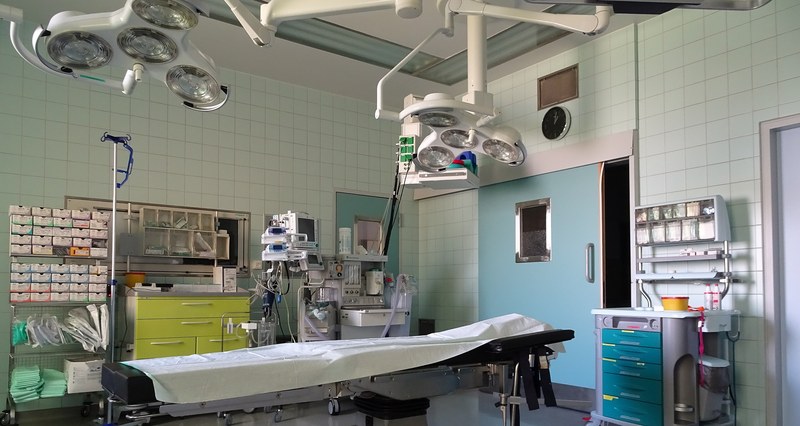
Space, however, is the easiest ingredient to expand and the one that solves the least on its own. A parking lot with stretchers has no piped oxygen, monitor, bathroom or sink, and the patient who stays there needs someone to reassess them. That is why planning usually starts with the spaces that already have infrastructure, such as the post-anesthesia recovery room, procedure areas and step-down units, before moving on to tents and gymnasiums (Hick and colleagues, 2010).
The space also needs to be safe for those who work there. In contamination incidents, zoning and staff protection determine where each patient can be treated, as discussed in the text on zones, protection and staff fear. In epidemics, empirical isolation areas serve the same function, a topic covered in empirical isolation.
Conventional, contingency and crisis
The concept that most helps clinicians understand what they are doing is the division of surge capacity into three levels. Hick and colleagues, gathering recommendations for intensive care units in mass casualty events, describe the three functional components (Hick and colleagues, 2010). At the conventional level, the usual spaces, resources and practices are used (Hick and colleagues, 2010). At the contingency level, adapted hospital areas start receiving intensive care patients, such as procedure rooms, post-anesthesia recovery, the operating room and step-down units, with adaptations of staff and resources that keep care functionally equivalent and with minimal increase in risk to the patient (Hick and colleagues, 2010).
At the crisis level, care remains sufficient for the circumstances, but with major changes in the standard of staff and resources (Hick and colleagues, 2010). The examples given by the authors help to picture it: using a pulse oximeter with alarms instead of the usual cardiac monitoring, or organizing the team in layers, with an intensive care professional supervising several less trained colleagues who provide care at the bedside (Hick and colleagues, 2010). These changes can have a major impact on morbidity and mortality (Hick and colleagues, 2010).
| Level | Space | Staff and resources | Risk to the patient |
|---|---|---|---|
| Conventional | Usual care areas | Usual practices and staffing (Hick and colleagues, 2010) | That of an ordinary day |
| Contingency | Adapted areas, such as post-anesthesia recovery and step-down units | Adaptations that keep care equivalent (Hick and colleagues, 2010) | Minimal increase (Hick and colleagues, 2010) |
| Crisis | Any available space | Layered staffing and simplified monitoring (Hick and colleagues, 2010) | Can affect morbidity and mortality (Hick and colleagues, 2010) |
The shift to the crisis level should not happen by drift. Hick and colleagues point out that crisis standards of care are formally declared by government authorities, which gives professionals legal powers and protections in the task of allocating scarce resources (Hick and colleagues, 2010). Among the recommendations are expanding intensive care beds to the maximum, having beds and monitors for expansion areas, preparing contingency plans for additional ventilators and keeping a phased staffing plan for physicians and nurses (Hick and colleagues, 2010).
For the clinician, knowing which level the hospital is at changes the reasoning. At the conventional level, the question is what this patient needs. In a crisis, the question becomes what this patient needs given what exists for everyone. It is the same tension that appears in disaster triage, especially in the expectant category and its moral weight, and in dialysis rationing after earthquakes, discussed in scarce dialysis and decisions under pressure.
Supertriage: when the door decides the outcome
One of the harshest lessons about surge capacity came from Beirut. Roccaforte and Cushman recall the 1983 bombing of the US Marines barracks, which produced 346 casualties, of whom 234 died immediately (Roccaforte and Cushman, 2007). The surgeon in charge of the response, with limited resources and staff, cared for the 112 survivors, and only 19 of them were critical (Roccaforte and Cushman, 2007). Analysis of this and other events showed a relationship between overtriage and mortality among critical patients (Roccaforte and Cushman, 2007).
The mechanism is intuitive. When less severely ill patients occupy the emergency room, the operating room and the CT scanner, the truly critical patient waits. The same authors show that in the attacks of September 11, 2001, no hospital was overwhelmed by critical patients, but the hospital closest to the site received people who arrived on their own, without going through prehospital triage, and the resulting overtriage created excessive demands (Roccaforte and Cushman, 2007). At the same time, that hospital suffered an internal disaster, with impaired access, power loss and poor-quality air (Roccaforte and Cushman, 2007).
The lesson for the shift is that surge capacity is not measured in beds alone. Good triage at the door is itself a way to expand capacity, because it protects scarce resources for those who need them. The text on overtriage and undertriage discusses both errors, and the text on the abdomen that gets worse afterwards reminds us that undertriaging those who look well also has a cost. In conflicts and epidemics, where trauma, dehydration and malnutrition arrive together, the challenge is similar, as triage when everything arrives at once shows.

What the numbers and the exercises show
A country can estimate how much it can grow. Blimark and colleagues sent a questionnaire to 54 emergency hospitals in Sweden and received responses from 53 (Blimark and colleagues, 2020). Within 8 hours, surgical capacity could rise from 105 to 399 surgical trauma teams, with 433 operating rooms and 480 intensive care beds available (Blimark and colleagues, 2020). Capacity varied between university and regional hospitals, and there were differences between regions in the availability of rooms and beds, which led the authors to argue for a national strategy (Blimark and colleagues, 2020).
Questionnaires, however, measure what the hospital believes it has. Exercises measure what it can do. The same group tested a hybrid exercise, combining tabletop simulation and full-scale simulation, in which the emergency department of a trauma center received 103 casualties over 4 hours (Blimark and colleagues, 2023). The hospital handled the flow without collapse, and operating rooms, intensive care beds and ward beds were still available at the end (Blimark and colleagues, 2023). The most interesting part was another finding: several details of the response only appeared in this format and had not been noticed in earlier tabletop exercises (Blimark and colleagues, 2023).
Small hospitals face another kind of limit. Ugelvik and colleagues applied a simulation system in a rural hospital in Norway, with a tunnel accident scenario and 98 people from 16 organizations (Ugelvik and colleagues, 2025). In the initial phase, access to the scene and transport were the bottlenecks (Ugelvik and colleagues, 2025). Inside the hospital, the emergency department and the lack of surgeons and anesthesiologists on the trauma team were the first and most important limiting factors (Ugelvik and colleagues, 2025). The operating room reached its limit but did not exceed it (Ugelvik and colleagues, 2025).
The pandemic brought a prolonged surge, unlike the peak of an accident. Nocci and colleagues analyzed the surge capacity of intensive care units in a large Italian hospital network (Nocci and colleagues, 2023). Surge capacity had a positive correlation with the occupancy of intensive care beds and other beds and with admissions coming from the emergency department, and a negative correlation with the number of emergency department admissions and elective surgeries (Nocci and colleagues, 2023). Mathematical models tried to anticipate this demand. Klein and colleagues identified 690 articles and selected 6 planning models for detailed analysis (Klein and colleagues, 2022). Half did not stratify the parameters by age, only one could represent a second wave, and patient flow in the hospital was simplified in all of them (Klein and colleagues, 2022).
Together these studies teach that planning without testing gives a false sense of security. They also teach humility about projections: they help to prepare, but real demand must be reassessed continuously, as in any decision under uncertainty. The text on strategies for deciding without certainty brings tools that are worth as much for one patient as for a hospital.
Management and training: who holds the plan
Resources do not organize themselves. Shabanikiya and colleagues interviewed 28 hospital managers with experience in surge situations during disasters (Shabanikiya and colleagues, 2016). The analysis identified 3 themes and 12 subthemes on the characteristics of a good manager: crisis management characteristics, personal characteristics and specific requirements (Shabanikiya and colleagues, 2016).
Training seems to make a difference. Shafiei and colleagues trained 20 nursing managers in hospital capacity fluctuations, with an action research approach (Shafiei and colleagues, 2024). The hospital's overall disaster preparedness score went from 184, a medium level, to 216, a high level (Shafiei and colleagues, 2024). There was improvement in command and control, triage, human resources, communication, surge capacity, logistics, safety and recovery, but little impact on the continuity of essential services (Shafiei and colleagues, 2024).
This last point deserves attention. During the surge, the hospital still has patients with myocardial infarction, in labor and with sepsis that are unrelated to the disaster. When all the focus goes to the victims, these patients may be left without care, and the harm shows up later, less visible than that of the main event.
Management also involves caring for those who work. Long shifts, allocation decisions and the feeling of not having done enough leave marks, and the text on the work environment and institutional culture shows how the institution can reduce or worsen this suffering. Teamwork, discussed in diagnosis as teamwork, is the foundation that allows the layered team to work.

The resident in the opening scene will not decide alone whether the hospital enters contingency or crisis. But their decisions, multiplied by all their colleagues, determine whether surge capacity exists in practice. Some attitudes help:
- Know who coordinates the response and through which channel decisions arrive.
- Review your own inpatients and point out who can be discharged or transferred safely.
- Do an honest triage at the door, without overtriaging out of anxiety or undertriaging those who look well.
- Frequently reassess those in adapted areas, where monitoring is lower.
- Record what was done, even briefly, so the next professional knows.
- Warn early when a resource is running out, instead of waiting for it to run out.
- Remember the patients who are unrelated to the disaster and keep arriving.
These attitudes seem simple, but they require clinical reasoning to extend beyond the patient in front of you. The question is no longer just what the diagnosis is and now includes where this patient should be, who will reassess them and what happens to the others if they stay here. It is system-level reasoning, which is better learned before a disaster than during one.
Frequently asked questions
What is surge capacity?
It is the ability to rapidly expand care beyond the usual, combining staff, space and supplies (Kearns et al., 2014).
What is reverse triage?
It is the early discharge or transfer of stable inpatients to free up beds. In an Iranian hospital, it identified 108 patients who could leave (Esmailian et al., 2018).
What is the difference between contingency and crisis?
In contingency, care remains functionally equivalent with minimal risk; in crisis, there are major changes in staff and resources that can affect mortality (Hick et al., 2010).
Who declares crisis standards of care?
Government authorities, formally, which gives legal protection to professionals who allocate scarce resources (Hick et al., 2010).
Why is overtriage dangerous?
Because it consumes resources that critically ill patients need, and the analysis of real events showed a relationship between overtriage and mortality among the critically ill (Roccaforte and Cushman, 2007).
Are simulation exercises worth it?
Yes. A hybrid exercise revealed details of the response that earlier tabletop exercises had not shown (Blimark et al., 2023).
Take-home messages
- Surge capacity depends on staff, space and supplies, and the weakest link defines the limit.
- Reverse triage is the fastest way to free up beds.
- Contingency maintains equivalent care; crisis changes the standard and must be formally declared.
- Overtriage consumes resources and is associated with higher mortality among the critically ill.
- Full-scale exercises show bottlenecks that the written plan hides.
- Patients unrelated to the disaster still need care.
References
- Blimark M, Robinson Y, Jacobson C, et al. Determining surgical surge capacity with a hybrid simulation exercise. Front Public Health. 2023. PMID 37915823.
- Blimark M, Örtenwall P, Lönroth H, et al. Swedish emergency hospital surgical surge capacity to mass casualty incidents. Scand J Trauma Resusc Emerg Med. 2020. PMID 32093761.
- Esmailian M, Salehnia MH, Shirani M, et al. Reverse Triage to Increase the Hospital Surge Capacity in Disaster Response. Adv J Emerg Med. 2018. PMID 31172080.
- Hick JL, Christian MD, Sprung CL, et al. Chapter 2. Surge capacity and infrastructure considerations for mass critical care. Recommendations and standard operating procedures for intensive care unit and hospital preparations for an influenza epidemic or mass disaster. Intensive Care Med. 2010. PMID 20213417.
- Kearns RD, Cairns BA, Cairns CB. Surge Capacity and Capability. A Review of the History and Where the Science is Today Regarding Surge Capacity during a Mass Casualty Disaster. Front Public Health. 2014. PMID 24795873.
- Klein MG, Cheng CJ, Lii E, et al. COVID-19 Models for Hospital Surge Capacity Planning: A Systematic Review. Disaster Med Public Health Prep. 2022. PMID 32907668.
- Nocci M, Villa G, Ragazzoni L, et al. Relationship between intensive care surge capacity and hospital factors: an extensive experience. Intern Emerg Med. 2023. PMID 36859647.
- Roccaforte JD, Cushman JG. Disaster preparedness, triage, and surge capacity for hospital definitive care areas: optimizing outcomes when demands exceed resources. Anesthesiol Clin. 2007. PMID 17400163.
- Shabanikiya H, Gorgi HA, Seyedin H, et al. Assessment of Hospital Management and Surge Capacity in Disasters. Trauma Mon. 2016. PMID 27626015.
- Shafiei A, Arsalani N, Beyrami Jam M, et al. The impact of surge capacity enhancement training for nursing managers on hospital disaster preparedness and response: an action research study. BMC Emerg Med. 2024. PMID 39183329.
- Shen W, Jiang L, He X. Precision Augmentation of Medical Surge Capacity for Disaster Response. Emerg Med Int. 2020. PMID 32257446.
- Shirani M, Salehnia MH, Esmailian M. Nontherapeutic areas and their role in hospital surge capacity in facing disasters. Adv Biomed Res. 2016. PMID 27169105.
- Ugelvik KS, Montán KL, Thomassen Ø, et al. A full response chain surge capacity test of a small rural hospital, prehospital resources and collaborating organisations. Scand J Trauma Resusc Emerg Med. 2025. PMID 40156026.