Blast trauma: injuries that do not show up at once
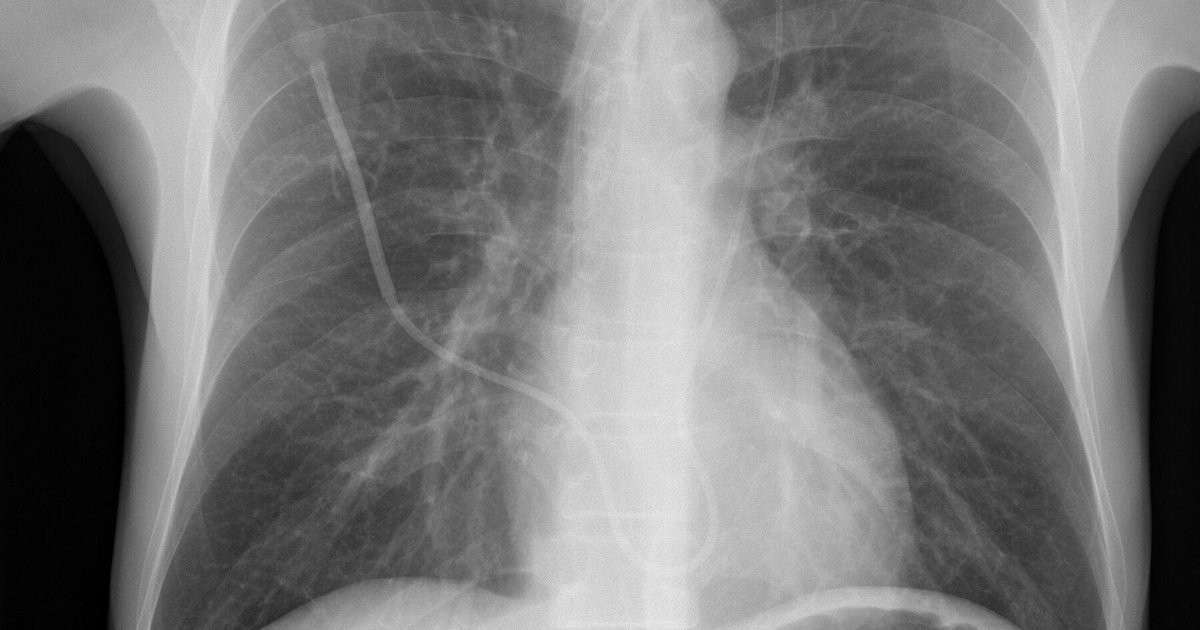
Table of contents
- Why the explosion is a reasoning scenario
- The physics that explains the injuries
- The four injury mechanisms
- Blast lung
- The eardrum: a misleading marker
- The abdomen that gets worse later
- The head without signs
- Those who seem fine: observe with judgment
- How NEXO helps train this reasoning
- Frequently asked questions
- Final checklist
- References
A doctor on duty receives, almost at the same time, five people who were in a closed warehouse when an explosion occurred. Two arrive with visible injuries to their arms and legs and take up the team's attention. A forty-two-year-old man arrives walking, says he only hears a ringing and asks if he can leave. He has no apparent injury, talks well and has saturation slightly below expected. The scene is fictional and was written for teaching. This text uses that moment as a clinical reasoning scenario: why the explosion produces injuries that do not show in the first hour, which clues help look for them and why someone who seems fine deserves a second look.
NEXO is a daily medical diagnosis game: one clinical case a day, up to six progressive clues, and ICD-10 proximity feedback across five levels.
The text is not a protocol for responding to multiple victims. Conduct in each service follows local disaster protocols, trauma guidelines and the judgment of whoever is treating. The interest here is reasoning: how the mechanism of injury changes the list of hypotheses and the observation time. If you play the case of the day in NEXO, you will recognize the logic: a discreet clue can be worth more than the most conspicuous one.
Key points
- Blast injuries are usually described in four mechanisms, from primary to quaternary, and the same person can have several of them.
- Blast lung is the most common fatal injury among those who survive the initial moment, and signs can appear hours later.
- Tympanic membrane perforation is not a reliable marker of internal injury: its absence does not exclude it and its isolated presence does not require admission.
- Bowel injury can manifest days after the event.
- Mild traumatic brain injury can pass without signs and overlaps with symptoms of post-traumatic stress.
Why the explosion is a reasoning scenario
In almost all trauma, what you see guides the search. In an explosion, this rule often fails. Wightman and Gladish note that some blast injuries are hidden and that the doctor needs to actively look for internal injuries (Wightman and Gladish, 2001). Wolf and colleagues describe primary injuries as subtle or late-appearing, with a real risk of missed diagnosis (Wolf and colleagues, 2009).
What the scene teaches
In the opening scene, the visible injuries draw attention to those who are bleeding. The man who arrives walking has a discreet complaint, the ringing, and a datum that does not match his appearance, the low saturation. Reasoning begins when the doctor asks what the mechanism could have done on the inside, and not only what is in view. The post on differential diagnosis shows how a clue that does not fit calls for a new hypothesis.
Head-to-tail triage
The Centers for Disease Control and Prevention (CDC) guidance manual on explosions describes a common pattern in these events: about half of the victims seek care in the first hour, and the less severely injured usually arrive before the more severely injured (CDC, Explosions and Blast Injuries, 2003). The same document calls this head-to-tail triage, because the first to arrive occupy the service before those who need more care.
The physics that explains the injuries
The explosion generates a pressure wave that propagates from the point of origin. Wolf and colleagues explain that this wave causes injury mainly at the interfaces between air and tissue, which makes the lung, the gastrointestinal tract and the ear the most vulnerable organs (Wolf and colleagues, 2009). Champion and colleagues reviewed the physics and biophysics of explosions and report that, among survivors, penetrating injuries from fragments predominate (Champion and colleagues, 2009).
Closed environment and open environment
The place of the explosion changes the injury pattern. The CDC manual reports that explosions in enclosed spaces and those that cause collapse produce more deaths and more severe injuries (CDC, Explosions and Blast Injuries, 2003). Scott and colleagues report that primary blast lung injury appears in 6 to 11 out of every 100 casualties in military series, but exceeds 90 out of every 100 in some series of explosions in enclosed spaces (Scott and colleagues, 2017).
The mechanism as a clue
Knowing where the person was, at what distance and whether there were walls around is part of the history. This information changes the probability of primary injury before any examination. The post on pretest probability explains how context changes the value of each finding.
The four injury mechanisms
The most widely used classification divides blast injuries into four mechanisms. Mathews and Koyfman describe primary injury as the direct effect of the pressure wave, secondary as the effect of launched fragments, tertiary as the effect of the body being displaced against objects and quaternary as all the others, including burns, inhalation and worsening of prior diseases (Mathews and Koyfman, 2015). DePalma and colleagues use the same division in their review of blast injuries (DePalma and colleagues, 2005).
The table below summarizes, in a teaching format, each mechanism and the question it suggests. It does not replace trauma guidelines.
| Mechanism | What causes it | Examples of injury | Question that helps |
|---|---|---|---|
| Primary | Pressure wave on organs containing air | Blast lung, ruptured eardrum, intestinal injury | Was there an enclosed space or great proximity? |
| Secondary | Fragments and launched objects | Penetrating wounds in any region | Where are all the entry wounds? |
| Tertiary | Body thrown against surfaces | Fractures, head trauma, blunt trauma | Was the person thrown or did they fall? |
| Quaternary | Everything else | Burns, smoke inhalation, crush injury, worsening of a prior disease | What else was in the environment? |
Several mechanisms in the same person
The most useful point of the table is to remember that the mechanisms add up. Someone with fragment wounds may also have primary lung injury, and someone who was thrown may have head trauma without external signs. The CDC manual notes that penetrating injuries and blunt trauma predominate among victims, which makes it easy to forget primary injury (CDC, Explosions and Blast Injuries, 2003).
The risk of closing the case too early
When the first finding explains the main complaint, the temptation is to stop. The post on diagnostic pause describes how a short moment of checking protects against premature closure. In blast trauma, the pause can be a simple question: have I looked for injury from each of the four mechanisms? This check takes less than a minute and fits even in a busy shift.
Blast lung
The CDC manual describes blast lung as the most common fatal injury among victims who survive the initial moment (CDC, Explosions and Blast Injuries, 2003). The same document reports that signs may be present on arrival or appear up to 48 hours later, and cites the triad of apnea, bradycardia and hypotension.
What a case series shows
Avidan and colleagues described 29 patients admitted to intensive care with blast lung injury. The presentation was marked by hypoxemia and infiltrates on chest radiography, 76 out of every 100 patients needed mechanical ventilation and all of these were intubated within the first 2 hours (Avidan and colleagues, 2005). In the same study, one patient died, and the authors report that late worsening was rare.
The signs that call for attention
The triad described by the CDC, with apnea, bradycardia and hypotension, appears in the most severe cases (CDC, Explosions and Blast Injuries, 2003). In less severe cases, the signs may be subtler: mild shortness of breath, cough, chest pain or a saturation that falls gradually. Avidan and colleagues report that hypoxemia was a central finding at presentation in the patients they studied (Avidan and colleagues, 2005). For this reason, repeated measurement of saturation and respiratory rate is more valuable than a single measurement on arrival.
Supportive treatment
Scott and colleagues report that treatment of primary blast lung injury is supportive, with care in ventilation and fluid management (Scott and colleagues, 2017). Wolf and colleagues note that arterial gas embolism is a possible complication of primary injury (Wolf and colleagues, 2009).
The saturation that does not add up
In the opening scene, the slightly low oxygen saturation in a man who looks well is the most important clue. It does not confirm blast lung, but it changes the probability enough to call for tests, a chest X-ray and observation. The post about diagnostic uncertainty shows how to act proportionally when the information is still incomplete.
The eardrum: a misleading marker
For years, eardrum rupture was treated as a sign that the person had received a pressure wave strong enough to injure other organs. Mathews and Koyfman report that eardrum perforation is a poor predictor of primary injury to other organs (Mathews and Koyfman, 2015).


Isolated presence
Leibovici and colleagues studied 647 blast survivors and found 142 with isolated eardrum perforation. None of these patients later developed blast lung or bowel injury (Leibovici and colleagues, 1999). The authors conclude that these people can be discharged after a chest X-ray and a short period of observation.
The absence
The CDC manual sums up the point another way: isolated eardrum rupture is not a marker of severity (CDC, Explosions and Blast Injuries, 2003). A poor predictor fails in both directions, and so an intact eardrum is no reason for reassurance either. In the opening scene, an intact eardrum would not take blast lung off the list, because the low oxygen saturation still calls for an explanation.
The eardrum as a sign of exposure
Examining the ear remains useful. The CDC manual includes the middle ear among the organs most affected by primary injury (CDC, Explosions and Blast Injuries, 2003). Perforation shows that there was exposure to the pressure wave, and that information goes into the reasoning along with the setting, the distance and the vital signs. The mistake is using it alone to decide who stays and who goes home.


The abdomen that gets worse later
The gastrointestinal tract is the other air-filled organ exposed to the pressure wave. Owers and colleagues reviewed primary abdominal blast injury and found primary abdominal injury in 31 of 1040 hospitalized patients, with frequent involvement of the terminal ileum and the cecum (Owers and colleagues, 2011). The authors report that the injury can appear several days after the event and that it is more common in explosions in enclosed spaces or underwater.
Why the delay matters
An injury that appears days later can show up when the person has already gone home. That changes what is said at discharge. The instructions need to include abdominal pain, vomiting, blood in the stool or fever as reasons to come back, even if the first examination was normal.
The repeated examination
The best tool for an injury that evolves is the examination that is repeated. Wightman and Gladish note that the physician needs to actively look for internal injuries in anyone exposed to an explosion (Wightman and Gladish, 2001). An abdomen without pain in the first hour is a finding for that moment, not a guarantee for the days that follow.
The head without signs
Mild traumatic brain injury is another injury that often goes unnoticed. The CDC manual reports that concussion can occur without physical signs of head trauma (CDC, Explosions and Blast Injuries, 2003). Rosenfeld and colleagues report that mild blast traumatic brain injury overlaps with symptoms of post-traumatic stress, and describe a triad of post-concussive symptoms, post-traumatic stress and chronic pain (Rosenfeld and colleagues, 2013).


Questions that help
In the opening scene, the man who arrives walking may have hit his head when he was thrown. Asking whether there was loss of consciousness, whether he remembers everything, whether he has a headache, dizziness or difficulty concentrating helps identify who needs a more detailed assessment. These questions take only a few minutes and are rarely asked when attention is elsewhere.
What comes next
The symptoms of concussion and those of post-traumatic stress can be confused in the following weeks. Rosenfeld and colleagues report this overlap and the difficulty of separating the two causes (Rosenfeld and colleagues, 2013). For those who provide care later, the question about exposure to a blast is part of the history of anyone who arrives with headache, insomnia or difficulty with memory.
Those who seem fine: observe with judgment
The practical question in the scene is how long to observe a person with no apparent injury. The CDC manual reports that the signs of blast lung are usually present at the first assessment, but have been reported up to 48 hours after the blast (CDC, Explosions and Blast Injuries, 2003). At the same time, Avidan and colleagues report that, in the series they studied, late worsening was rare and severe cases appeared early (Avidan and colleagues, 2005).
Balancing two risks
The two findings do not contradict each other. Most severe injuries appear in the first hours, and some appear later. The decision to discharge or observe lies between the risk of occupying beds at a time of overload and the risk of sending home someone with an evolving injury. The post on clinical decision-making shows how to weigh the benefits and risks of each approach.
What goes into the decision
Some elements help organize this choice:
- The environment of the blast, enclosed or open, and the distance from the point of origin.
- The presence of respiratory complaints, chest pain or abdominal pain.
- Vital signs, with attention to oxygen saturation and respiratory rate.
- The result of the chest X-ray when there is any respiratory doubt.
- The possibility of returning quickly to the service if symptoms change.
What to say at discharge
When someone exposed to a blast is discharged, the guidance is part of the reasoning, not an administrative detail. It makes observation at home a continuation of observation in the service. Good guidance says which signs justify returning, for how long to watch for them and where to seek care. It is also worth explaining that tinnitus and difficulty hearing are usually assessed later, in a specific appointment, and that headache, insomnia or difficulty concentrating in the following weeks deserve attention.
Calibrating confidence
The feeling that the person is fine is a piece of data, but it can be misleading. The post on calibrating confidence in diagnosis explains how to compare the certainty we feel with the frequency with which we are right. In blast trauma, confidence must take into account that some injuries have not yet had time to appear.
Heuristics in a mass casualty event
In a mass casualty event, the team decides quickly and with little information. Mental shortcuts help organize the arrival of several patients, but some of them fail in predictable ways in this scenario.
The most visible injury tends to take all the attention. This is a form of salience bias: the striking finding seems more important than the discreet one. In a blast, the discreet finding, such as low oxygen saturation or tinnitus, may be the most serious. The post on examples of heuristics in clinical reasoning shows how these shortcuts work and where they fail.
If the first patients arrive with less severe injuries, as the CDC manual describes, the team may calibrate the severity of the event by them (CDC, Explosions and Blast Injuries, 2003). Knowing that this order is common helps save resources for those still to arrive.
How NEXO helps train this reasoning
In NEXO, the case of the day is fictional, with a real clinical presentation and up to six progressive clues. You propose a diagnosis by looking for the ICD-10 code and receive a proximity response at five levels, which shows whether the guess landed on the exact code, the same category, the same group, the same chapter or a different chapter. This format connects with the theme of this text: in blast trauma, the subtle clue that appears later can change the entire chapter of the hypothesis.
To use the case of the day as training, try three habits. Before each guess, ask which mechanism could explain what has not appeared yet. When a new clue appears, ask whether it fits the hypothesis or calls for a new one. After the result, note which subtle clue you failed to value.
Three exercises with cases
List the mechanisms. Faced with a trauma case, write in one line what each mechanism could have caused before looking at the next clue.
Look for the detail that does not fit. With each clue, ask whether there is a vital sign or a symptom that the current hypothesis does not explain.
Think about time. Ask what could appear in the next hours or days and what that would change in management.
The post about case-based learning in clinical practice shows how cases help fix decision patterns.
The limits on using the game are described on the NEXO Economy page. If you research the teaching of clinical reasoning, the page for Researchers explains how to get in touch. Professionals who write or review cases find information on Curator and on Creators, and institutions can learn about the proposal on the partnerships page.
Frequently asked questions
What is primary blast injury?
It is the injury caused directly by the blast pressure wave. It mainly affects organs that contain air, such as the lung, the intestine and the middle ear.
What is blast lung?
It is lung injury caused by the pressure wave. It usually presents with shortness of breath and low oxygenation, and the signs may be present on arrival or appear hours later.
Does a ruptured eardrum indicate internal injury?
It indicates exposure to the pressure wave, but it is not a reliable marker of injury to other organs. The decision to observe or discharge also considers the environment, symptoms, vital signs and tests.
Why observe someone who seems well after an explosion?
Because some injuries, such as blast lung and bowel injury, may appear hours or days later. Observation and discharge instructions help identify them in time.
Which signs justify returning to the service after discharge?
Shortness of breath, chest pain, abdominal pain, vomiting, blood in the stool, fever, worsening headache, confusion or drowsiness. Discharge instructions should make these signs clear.
How can concussion be recognized without signs on the head?
Concussion can occur without a visible wound, and questions about loss of consciousness, memory, dizziness and headache help identify it.
Final checklist
- I asked where the person was, at what distance and whether the environment was enclosed.
- I looked for injuries from each of the four mechanisms.
- I valued the vital signs, with attention to oxygen saturation and respiratory rate.
- I used the eardrum finding together with the other data to decide on discharge or admission.
- I considered injuries that may appear hours or days later.
- I asked about loss of consciousness, memory and headache.
- I made clear the signs that justify returning to the service.
Want to practice reasoning with progressive clues? Play the case of the day.
References
- Avidan V, Hersch M, Armon Y, et al. Blast lung injury: clinical manifestations, treatment, and outcome. Am J Surg. 2005. PMID 16307948.
- Centers for Disease Control and Prevention. Explosions and blast injuries: a primer for clinicians. 2003. Publication page.
- Champion HR, Holcomb JB, Young LA. Injuries from explosions: physics, biophysics, pathology, and required research focus. J Trauma. 2009. PMID 19430256.
- DePalma RG, Burris DG, Champion HR, et al. Blast injuries. N Engl J Med. 2005. Article page.
- Leibovici D, Gofrit ON, Shapira SC. Eardrum perforation in explosion survivors: is it a marker of pulmonary blast injury? Ann Emerg Med. 1999. PMID 10424917.
- Mathews ZR, Koyfman A. Blast injuries. J Emerg Med. 2015. PMID 26072319.
- Owers C, Morgan JL, Garner JP. Abdominal trauma in primary blast injury. Br J Surg. 2011. PMID 21104699.
- Rosenfeld JV, McFarlane AC, Bragge P, et al. Blast-related traumatic brain injury. Lancet Neurol. 2013. PMID 23884075.
- Scott TE, Kirkman E, Haque M, et al. Primary blast lung injury: a review. Br J Anaesth. 2017. PMID 28203741.
- Wightman JM, Gladish SL. Explosions and blast injuries. Ann Emerg Med. 2001. PMID 11385339.
- Wolf SJ, Bebarta VS, Bonnett CJ, et al. Blast injuries. Lancet. 2009. PMID 19631372.