Exa-cel in sickle cell disease: prep to follow-up
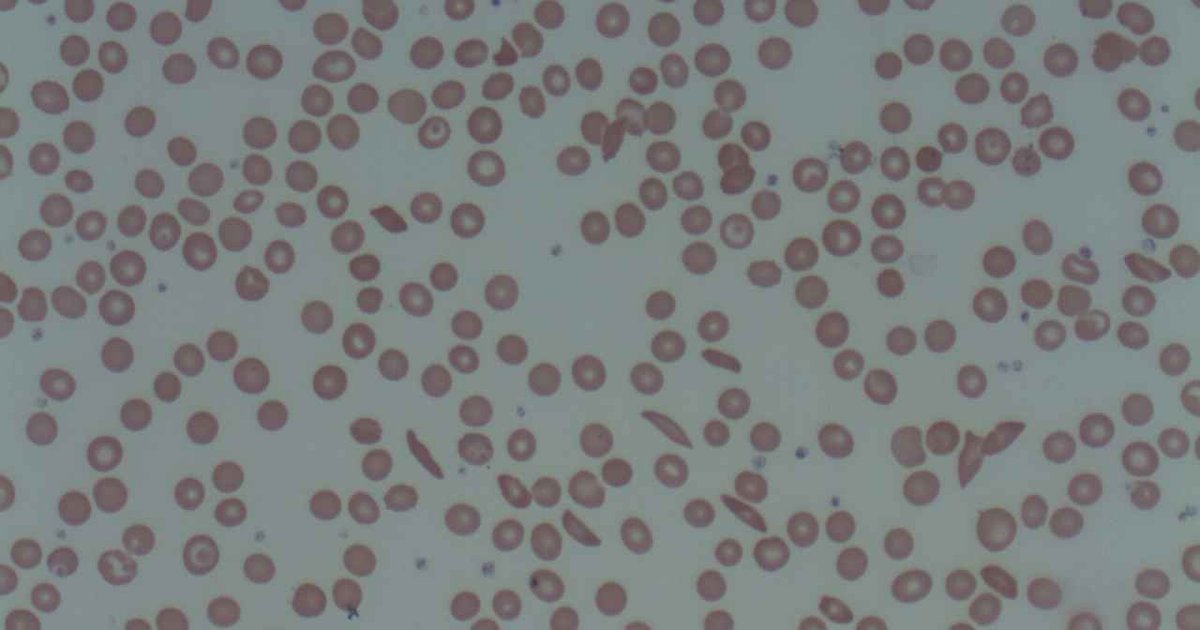
Table of contents
A 19-year-old young man with sickle cell disease (HbSS genotype) comes to the hematology outpatient clinic with his mother. He has been on hydroxyurea at the maximum tolerated dose for three years and, even so, had four severe vaso-occlusive crises in the last year, two of them requiring hospitalization. He missed half the classes of the semester. He has no compatible siblings for transplant. He read about a CRISPR therapy "that cures sickle cell anemia" and asks whether he can have it, how long it takes and whether he will be able to have children. The scene is fictional and was written for teaching.
This text uses the case as a scenario for clinical reasoning for students and health professionals. The question opens others: what exagamglogene autotemcel (exa-cel, brand name Casgevy) does, where it is approved and for whom, what the path from collection to infusion looks like, which risks come from conditioning with busulfan and what to monitor afterward. The text does not replace the hematologist's assessment, the package insert of your country or the transplant center's protocol. If you play the case of the day on NEXO, you will recognize the challenge: putting together clinical, regulatory and personal clues before answering.
Key points
- Exa-cel uses the patient's own stem cells edited with CRISPR/Cas9 to increase fetal hemoglobin.
- It is indicated for sickle cell disease with recurrent vaso-occlusive crises and for transfusion-dependent beta-thalassemia.
- The FDA approved it on December 8, 2023 (sickle cell disease) and on January 16, 2024 (thalassemia); the label revised in 7/2026 applies from 2 years of age.
- In the European Union, the conditional authorization of February 9, 2024 applies from 12 years of age, when there is no compatible related donor.
- The treatment requires months of preparation, mobilization with plerixafor, myeloablative conditioning with busulfan and hospitalization.
- Infertility is a real risk of conditioning, and fertility preservation should be discussed before mobilization.
Why this is a reasoning scenario
Sickle cell disease is one of the most common genetic diseases in the world, and for decades the only curative option was allogeneic stem cell transplant, limited by the lack of a donor, the risk of graft-versus-host disease and toxicity (Sharma et al., 2026). Gene therapy with the patient's own cells changes the conversation, but it does not make it simple (Sharma et al., 2026), (Cheng and Kwiatkowski, 2026).
The scenario is good for training because every clue counts. The frequency of crises despite hydroxyurea defines severity. The lack of a related donor weighs on the choice. Age changes eligibility depending on the country. The question about children is not a detail: it changes the order of the steps. The post on signs, symptoms and history shows how to listen to what the patient brings, and the post on clinical decision-making discusses how to choose approaches when there are several options.
What the scene teaches
The scene trains five habits. The first is confirming that the disease is severe by the criteria used in the studies. The second is checking the approved indication in the patient's country. The third is explaining the full path, which takes months. The fourth is discussing fertility before any collection. The fifth is arranging a follow-up that lasts years.
What is not at stake
Gene therapy is not an emergency and does not replace basic care. While the decision is being made, the young man still needs hydroxyurea, adequate analgesia during crises, screening for organ damage and support for his studies. The decision is shared among the team, the patient and the family.
What exa-cel does and what the studies showed
In sickle cell disease, an amino acid swap in the beta chain of hemoglobin produces hemoglobin S, which polymerizes when it loses oxygen and deforms the red blood cells (Lesmana and colleagues, 2024). Fetal hemoglobin protects against this polymerization. Exa-cel is made from the patient's own CD34+ hematopoietic stem cells, edited outside the body with CRISPR/Cas9 at the erythroid enhancer of the BCL11A gene (Leonard and Kanter, 2025). With the enhancer switched off in red blood cells, fetal hemoglobin production rises again (Leonard and Kanter, 2025), (US label for Casgevy, revised 7/2026).
The edit is made once, in the laboratory, with the Cas9 enzyme delivered as a ribonucleoprotein complex, and the edited cells are returned to the patient by intravenous infusion (Magdy and colleagues, 2026). In thalassemia, the approach is the same: more fetal hemoglobin compensates for the lack of beta chains (Cheng and Kwiatkowski, 2026).
Editing is not gene addition
There are two gene therapy strategies for hemoglobinopathies. Gene addition places a functional copy of beta globin via a lentiviral vector, as in lovotibeglogene autotemcel (Lyfgenia) and betibeglogene autotemcel (Leonard and Kanter, 2025), (Cheng and Kwiatkowski, 2026). Gene editing modifies genes the cell already has, as in exa-cel (Cheng and Kwiatkowski, 2026). The difference matters for counseling: the Lyfgenia label carries a boxed warning about hematologic malignancy, based on participants treated with an earlier version of the product (Leonard and Kanter, 2025).
Results in sickle cell disease
In the main study with adolescents and adults, participants had on average 3.5 severe vaso-occlusive crises per year before treatment (US label for Casgevy, revised 7/2026). Among those evaluable, 29 of 31 (93.5 percent) went at least 12 consecutive months without a severe crisis, and the median duration without a crisis was 22.2 months (US label for Casgevy, revised 7/2026). In the pediatric study of 5 to under 12 years, all 8 evaluable participants reached the same outcome (US label for Casgevy, revised 7/2026).
Quality of life also improved. In adults, the total FACT-G questionnaire score rose on average 13.7 points by month 6 and 19.2 points by month 36, above the minimum difference considered important (Sharma and colleagues, 2025). Clinically relevant improvements have also been described in thalassemia (Fuente and colleagues, 2025).
Results in transfusion-dependent thalassemia
In transfusion-dependent beta-thalassemia, 32 of 35 evaluable participants (91.4 percent) went at least 12 months without transfusion, maintaining a mean hemoglobin of at least 9 g/dL (US label for Casgevy, revised 7/2026). The post about diagnostic uncertainty helps remind us that study numbers are group averages, not a promise for one person.

Regulatory status: MHRA, FDA and EMA
Exa-cel was the first approved CRISPR therapy, and the indications are not the same everywhere. The difference between the US label and the European authorization is the point that most changes the answer to the patient.
United Kingdom. On November 16, 2023, the MHRA announced the authorization of Casgevy for sickle cell disease and transfusion-dependent beta-thalassemia in patients aged 12 and older, describing it as the first licensed medicine that uses CRISPR (MHRA, 2023).
United States. On December 8, 2023, the FDA approved Casgevy and Lyfgenia, the first gene therapies for sickle cell disease, for patients aged 12 and older with recurrent vaso-occlusive crises (FDA, 2023). The approval letter for transfusion-dependent thalassemia is dated January 16, 2024, and the FDA page lists letters dated March 18, June 15 and July 1, 2026 for a second product license (STN 125787), with an indication from age 2 (FDA, Casgevy page). In the label revised in 7/2026, the indication now applies from 2 years of age, for sickle cell disease with recurrent crises or transfusion-dependent thalassemia (US Casgevy label, revised in 7/2026). The US label does not require the absence of a matched donor.
European Union. The EMA granted conditional marketing authorization on February 9, 2024, for patients aged 12 and older with severe sickle cell disease and recurrent crises or with transfusion-dependent thalassemia, when stem cell transplantation is appropriate and a compatible HLA-matched related donor is not available (EMA, Casgevy). The authorization provides for a 15-year follow-up registry, and the product information was updated on 10/12/2026 (EMA, Casgevy).
Other countries. Outside these regions, the indication, access and funding depend on the local agency and health system. The young man in the scene, aged 19 and without a matched sibling, would fall within both the US and the European indications.
| Aspect | United States (FDA) | European Union (EMA) | United Kingdom (MHRA) |
|---|---|---|---|
| First decision | 12/08/2023 (sickle cell disease) | 02/09/2024, conditional | 11/16/2023 |
| Transfusion-dependent thalassemia | 01/16/2024 | Included since 02/09/2024 | Included since 11/16/2023 |
| Minimum age | 2 years (7/2026 label) | 12 years | 12 years |
| Donor requirement | Not stated in the label | No compatible HLA-matched related donor | See product information |
| Planned follow-up | 15 years | 15-year registry | Post-authorization monitoring |
Table sources: (FDA, 2023), (FDA, Casgevy page), (US Casgevy label, revised in 7/2026), (EMA, Casgevy) and (MHRA, 2023).
Who is a candidate
The label defines the indication, but choosing the candidate goes beyond it. Recommendations from the American Society for Transplantation and Cellular Therapy (ASTCT) and the International Society for Cell & Gene Therapy call for selection to consider not only biological eligibility but also the person's goals, social context and ability to complete the whole journey, from mobilization to follow-up (Sharma et al., 2026).
Disease severity
In the studies, severe disease was defined by at least two severe vaso-occlusive crises in each of the two previous years or by four crises in 24 months despite hydroxyurea at the maximum tolerated dose (Sharma et al., 2026). The young man in the scene, with four severe crises in one year on hydroxyurea, fits this profile.
Genotype
The US labels do not restrict genotypes, but all study participants had HbSS or HbS beta zero thalassemia (Sharma et al., 2026). In other genotypes, the evidence is still limited.
Chronic pain
Chronic pain may improve after gene therapy, but this can take one to two years (Sharma et al., 2026). Some pain may persist, because it comes from accumulated damage, such as avascular necrosis, or from central sensitization after years of crises (Sharma et al., 2026). This conversation needs to happen beforehand, so that expectations are realistic.
What the team checks before proposing it
- Frequency and severity of crises in the last two years, with the hydroxyurea dose used.
- Organ function: heart, lungs, liver and kidneys, with attention to damage that increases the risk of conditioning.
- History of stroke or abnormal transcranial Doppler.
- Iron overload and the need for chelation before conditioning.
- Bone marrow assessment before collection, to rule out another underlying disease.
- Reproductive wishes and fertility preservation options.
- Support network, transport and the ability to spend months near the center.
List sources: (Sharma et al., 2026) and (US Casgevy label, revised in 7/2026). The post on interprofessional clinical reasoning shows why this assessment brings together hematology, transplantation, reproduction, psychology and social work.
From preparation to infusion: the steps
The whole journey, from the decision to the infusion, involves many coordinated steps and usually takes months (Cheng and Kwiatkowski, 2026). Product manufacturing time can range from 3 to 6 months (Sharma and colleagues, 2026).
Before mobilization
The label directs stopping hydroxyurea and crizanlizumab at least 8 weeks before mobilization (US Casgevy label, revised 7/2026). In sickle cell disease, the patient receives transfusions or red cell exchange for at least 8 weeks before mobilization, with a target hemoglobin S below 30 percent and total hemoglobin of at most 11 g/dL (US Casgevy label, revised 7/2026). Transfusions reduce the risk of crisis during apheresis and improve CD34+ cell collection (Sharma and colleagues, 2026). A central venous catheter is often needed (Sharma and colleagues, 2026).
Mobilization and collection
In sickle cell disease, mobilization is done with plerixafor 0.24 mg/kg subcutaneously, 2 to 3 hours before each apheresis, for up to 3 consecutive days (US Casgevy label, revised 7/2026). Granulocyte colony-stimulating factor (G-CSF) is contraindicated for mobilization in sickle cell disease (US Casgevy label, revised 7/2026). The collection target is at least 20 million CD34+ cells per kg for manufacturing, and a reserve of at least 2 million per kg is kept as an unedited rescue (US Casgevy label, revised 7/2026). Mobilization cycles are separated by at least 14 days (US Casgevy label, revised 7/2026).
Collection can fail. In the main study, the median was two mobilization cycles, and 6 participants who started mobilization did not reach infusion because of insufficient collection (US Casgevy label, revised 7/2026). Even with several attempts, it may be impossible to collect enough cells (Sharma and colleagues, 2026).
Conditioning
Iron chelation must stop at least 7 days before conditioning (US Casgevy label, revised 7/2026). Conditioning is myeloablative, with intravenous busulfan for 4 days and pharmacokinetic dose adjustment (US Casgevy label, revised 7/2026). In patients aged 12 and older, the starting dose in the label is 3.2 mg/kg per day once daily, or 0.8 mg/kg every 6 hours (US Casgevy label, revised 7/2026). The label directs considering seizure prophylaxis, without phenytoin, and prophylaxis of hepatic veno-occlusive disease (US Casgevy label, revised 7/2026).
Infusion and hospital stay
The infusion is given between 48 hours and 7 days after the last busulfan dose, with premedication with an antipyretic and an antihistamine, no filter in the line, and within 20 minutes after thawing (US Casgevy label, revised 7/2026). The minimum dose is 3 million CD34+ cells per kg (US Casgevy label, revised 7/2026). After that, the patient stays in hospital until blood cell recovery, which usually takes weeks, followed by months of outpatient follow-up before returning to routine (Sharma and colleagues, 2026).

Risks: conditioning, engraftment and fertility
Most of the toxicity comes from busulfan conditioning, not from the editing itself. The label, the recommendations and the review on conditioning converge on this point (US Casgevy label, revised 7/2026), (Sharma and colleagues, 2026), (Sharma and Corbacioglu, 2026).
Busulfan toxicity
Busulfan causes mucositis, severe cytopenias of several lineages, risk of infection, hepatic veno-occlusive disease (sinusoidal obstruction syndrome) and risk of seizures because it crosses the blood-brain barrier (Sharma and Corbacioglu, 2026). Pulmonary fibrosis is rare but severe (Sharma and Corbacioglu, 2026). In the label, severe mucositis and febrile neutropenia were frequent, and all patients had severe neutropenia and thrombocytopenia (US Casgevy label, revised 7/2026). In thalassemia, hepatic veno-occlusive disease appeared in 10 percent of the participants in one of the studies (US Casgevy label, revised 7/2026). Alternative regimens, such as reduced-dose melphalan, treosulfan with thiotepa and antibody-based conditioning, are under study (Sharma and Corbacioglu, 2026).
Neutrophil and platelet engraftment
In sickle cell disease, neutrophil engraftment took a median of 26 days in patients aged 17 and older and 29 days between 12 and 17 years (US Casgevy label, revised 7/2026). Platelet engraftment was slower: median of 32.5 days from age 17, 40 days between 12 and under 17 years and 47 days between 5 and under 12 years (US Casgevy label, revised 7/2026). All patients engrafted in the studies, but the label advises using the rescue cells if neutrophil engraftment fails and not giving G-CSF in the 21 days after infusion (US Casgevy label, revised 7/2026). Until platelet recovery, there is a risk of bleeding, and the count should be monitored (US Casgevy label, revised 7/2026).
Fever in this period is febrile neutropenia until proven otherwise. The post on sepsis in nursing triage and the post on clinical deterioration on the ward show how to recognize and escalate early.
Fertility: the young man's question
Myeloablative conditioning with busulfan can cause infertility, and the label advises offering counseling on fertility preservation before treatment (US Casgevy label, revised 7/2026). For many families, the possibility of irreversible infertility is one of the biggest barriers to gene therapy (Sharma and Corbacioglu, 2026).
For men, the options include freezing ejaculated semen or, before puberty, testicular tissue (Sharma et al., 2026). Because oligospermia is common in sickle cell disease, especially with hydroxyurea, several samples may be needed, and an interval after stopping hydroxyurea is usually required (Sharma et al., 2026). For women, the standard options are cryopreservation of ovarian tissue and ovarian stimulation with freezing of eggs or embryos; before puberty, only ovarian tissue is possible (Sharma et al., 2026). Ovarian reserve may already be reduced by the disease itself, and anti-Mullerian hormone helps estimate it (Pecker and Cameron, 2024).
The label also requires a pregnancy test before each mobilization and before conditioning, and contraception from mobilization until at least 6 months after infusion (US Casgevy label, revised 7/2026).
Off-target editing
CRISPR tools can cut sites similar to the target, and the risk needs to be assessed at several levels (Magdy et al., 2026). The label states that the risk of off-target editing in each person's cells, because of individual genetic variants, cannot be ruled out, and that the clinical meaning of this possible editing is unknown (US Casgevy label, revised 7/2026). It is one of the reasons for long-term follow-up.
Infusion reactions
The product contains dimethyl sulfoxide (DMSO) and dextran, which can cause hypersensitivity reactions (US Casgevy label, revised 7/2026). That is why there is premedication and observation during infusion.
Long-term follow-up
The FDA recommends follow-up for up to 15 years after infusion, and the EMA plans a 15-year registry (Sharma et al., 2026), (EMA, Casgevy). The recommendations suggest annual surveillance starting 1 to 2 years after treatment (Sharma et al., 2026).
Three follow-up domains
The recommendations organize follow-up into three domains: late effects of conditioning, such as gonadal failure and secondary cancer; risks linked to genetic modification, such as insertional mutagenesis or off-target editing; and progression of organ damage from sickle cell disease and quality of life (Sharma and colleagues, 2026). As of the publication of the recommendations, no secondary neoplasm had been reported in participants treated with exa-cel (Sharma and colleagues, 2026).
Iron, pain and daily life
The label advises avoiding iron chelators for 3 months after infusion in the case of non-myelosuppressive chelators, and for 6 months in the case of myelosuppressive ones (US Casgevy label, revised 7/2026). Pain may not go away right away, and people with opioid tolerance need a reduction plan (Sharma and colleagues, 2026). Returning to school and work should be planned with the team.
How NEXO helps train this reasoning
In NEXO, the case of the day is fictional, with a real clinical presentation and up to six progressive clues, and you propose the diagnosis by looking for the ICD-10 code. Therapies such as exa-cel are a good exercise because they mix clinical, regulatory and personal clues. The post on case-based learning explains why this format fixes knowledge, and the post on differential diagnosis with clues shows how to organize hypotheses.
Three exercises with cases
Change the country. Say whether the young man would be eligible if he were 10 years old, in the United States and in the European Union.
Change the donor. Say how the conversation would change if he had an HLA-matched sibling.
Change the order. Put together the sequence of fertility preservation, hydroxyurea suspension, transfusions and mobilization.
The post on diagnostic pause reminds you to stop before closing the management plan, and the post on simulating a consultation shows how to train the conversation with the patient.
The limits of use of the game are described on the NEXO economy page. If you research teaching of clinical reasoning, the page for researchers explains how to get in touch. Professionals who write or review cases find information in curation and in creators, and institutions can learn about the proposal on the partnerships page.
Frequently asked questions
Does exa-cel cure sickle cell disease?
In the studies, most participants went at least one year without severe crises (US Casgevy label, revised 7/2026). Follow-up is still short to speak of a definitive cure, and for that reason it lasts 15 years (Sharma and colleagues, 2026).
Does it require a donor?
No. The cells come from the patient (US Casgevy label, revised 7/2026). In the European Union, however, the indication applies when there is no compatible related donor (EMA, Casgevy).
How long does it take?
Months. Manufacturing alone can take 3 to 6 months, in addition to preparation, collection and hospitalization (Sharma and colleagues, 2026).
Can I use G-CSF for mobilization?
In sickle cell disease, no: the label contraindicates G-CSF for mobilization and advises plerixafor (US Casgevy label, revised 7/2026).
Will I be able to have children?
Busulfan can cause infertility. Fertility preservation should be discussed and, if desired, done before mobilization (US Casgevy label, revised 7/2026), (Sharma and colleagues, 2026).
Final checklist
- I confirmed the severity of the crises and the use of hydroxyurea at the maximum tolerated dose.
- I checked the indication in the patient's country, including minimum age and donor requirement.
- I assessed organ function, iron overload and bone marrow.
- I discussed fertility preservation before suspending hydroxyurea and mobilizing.
- I planned suspension of hydroxyurea and crizanlizumab 8 weeks before and transfusions with a target HbS below 30 percent.
- I scheduled mobilization with plerixafor, without G-CSF.
- I explained the risks of busulfan, delayed engraftment and the risk of bleeding.
- I arranged annual follow-up for up to 15 years.
Want to practice reasoning with progressive clues? Play the case of the day.
References
- Cheng AN, Kwiatkowski JL. Current therapeutic landscape of β-thalassemia: focus on gene therapy. Ther Adv Rare Dis. 2026. PMID 41919270.
- Fuente J, Frangoul H, Lang P, et al. Improvements in health-related quality of life in patients with transfusion-dependent β-thalassemia after exagamglogene autotemcel. Blood Adv. 2025. PMID 40862696.
- European Medicines Agency. Casgevy. EPAR. Accessed on 24/10/2026. Official source.
- Leonard A, Kanter J. Clinical data comparison for FDA-approved gene therapies in sickle cell disease. Exp Biol Med (Maywood). 2025. PMID 41439171.
- Lesmana H, Kim SY, Corado AM, et al. Casgevy (exagamglogene autotemcel) and Lyfgenia (lovotibeglogene autotemcel) for individuals 12 years and older with sickle cell disease (SCD) and recurrent vaso-occlusive crises (VOC): A therapeutics bulletin of the American College of Medical Genetics and Genomics (ACMG). Genet Med Open. 2024. PMID 39822266.
- Magdy M, Gibson JR, Dhungana A, et al. On-target and off-target activities of CRISPR therapeutics across scales. Trends Biotechnol. 2026. PMID 42608275.
- Medicines and Healthcare products Regulatory Agency. MHRA authorises world-first gene therapy that aims to cure sickle-cell disease and transfusion-dependent β-thalassemia. 16/11/2023. Official source.
- Pecker LH, Cameron K. Sickle cell disease and infertility risks: implications for counseling and care of affected girls and women. Expert Rev Hematol. 2024. PMID 38913857.
- Sharma A, Corbacioglu S. Alternative conditioning regimens for hemoglobinopathy gene therapy: balancing efficacy, toxicity, and the next frontier. Blood Adv. 2026. PMID 42418372.
- Sharma A, Kassim A, Thompson A, et al. Gene Therapy for Sickle Cell Disease: Practice Recommendations from the American Society for Transplantation and Cellular Therapy and the International Society for Cell & Gene Therapy. Transplant Cell Ther. 2026. PMID 41905703.
- Sharma A, Locatelli F, Bhatia M, et al. Improvements in health-related quality of life in patients with severe sickle cell disease after exagamglogene autotemcel. Blood Adv. 2025. PMID 40857358.
- U.S. Food and Drug Administration. CASGEVY. Product page. Accessed on 24/10/2026. Official source.
- U.S. Food and Drug Administration. FDA Approves First Gene Therapies to Treat Patients with Sickle Cell Disease. 08/12/2023. Official source.
- Vertex Pharmaceuticals. CASGEVY (exagamglogene autotemcel), suspension for intravenous infusion. Prescribing Information. Revised in 7/2026. Accessed on 24/10/2026. Official source.