NephrologyToxicologyClinical cases
Drug kidney injury: NSAID, aminoglycoside, vancomycin
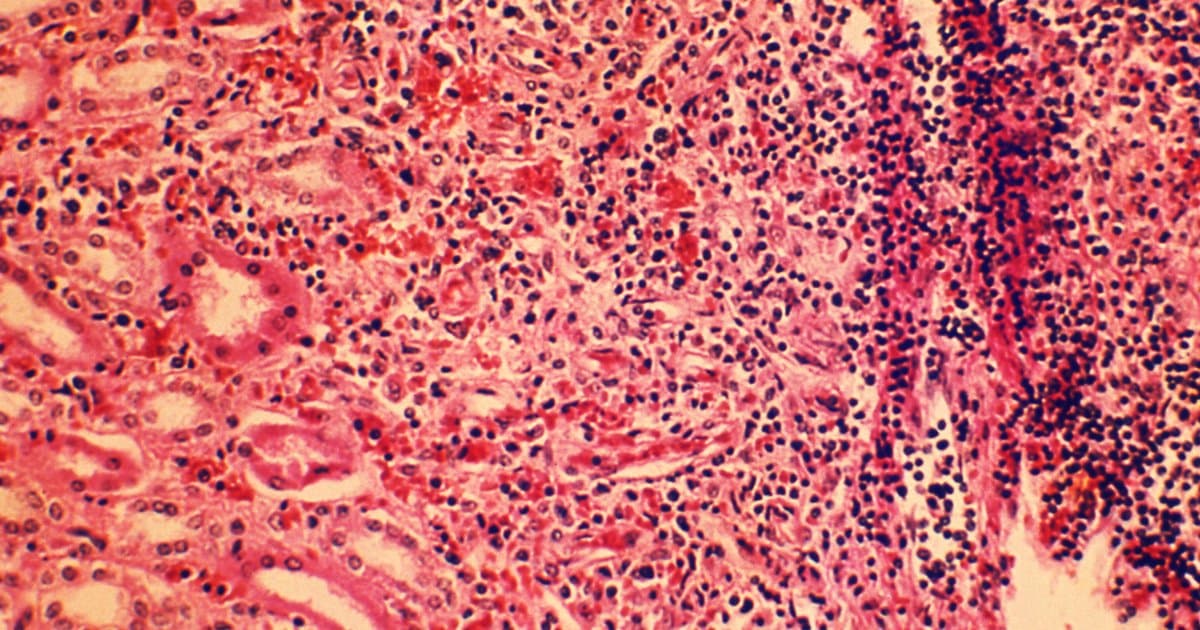



Table of contents
- Why think of the medication first
- The four patterns of injury
- When the kidney loses perfusion: anti-inflammatory and the triple combination
- Tubular necrosis: aminoglycoside, vancomycin and company
- Interstitial nephritis: the immune reaction to the drug
- Crystals: when the drug precipitates in the tubule
- From pattern to culprit: a bedside script
- How NEXO helps train this reasoning
- Frequently asked questions
- Take-home messages
- References
In a fictional case, a 68-year-old man with hypertension and heart failure has been taking enalapril and furosemide for years. Knee pain leads him to buy an anti-inflammatory without a prescription, and the same weekend he gets diarrhea. Three days later he arrives at the emergency department dizzy, with creatinine three times above his usual level. He improves and is discharged, but a week later he returns with fever, back pain and pneumonia. In the hospital he receives vancomycin with piperacillin-tazobactam, and a gastric protector enters the prescription. On the fifth day, creatinine rises again.
These are two episodes of kidney injury in the same patient, and neither is explained by the underlying disease alone. In the Botucatu cohort, medications accounted for 19.3 percent of the kidney injuries followed by the nephrology team, almost always together with ischemia or sepsis (Garcia et al., 2024). The practical question is which medication, and the answer is usually in the pattern of the injury.
This text organizes medication-related kidney injury into four patterns (perfusion drop, tubular necrosis, interstitial nephritis and crystals), shows the most common culprits in each and what to do with each clue.
Key points
- Medications are behind a large share of kidney injuries in the hospital; in Botucatu, 19.3 percent, and three in four cases mixed medication with ischemia or sepsis (Garcia et al., 2024).
- The pattern of the injury guides the search: perfusion (anti-inflammatory with diuretic and renin-angiotensin system blocker), tubular necrosis (aminoglycoside, vancomycin, contrast, amphotericin), interstitial nephritis (antibiotic, gastric protector, anti-inflammatory) and crystals (sulfamethoxazole, high-dose amoxicillin).
- The combination of diuretic, renin-angiotensin system inhibitor and anti-inflammatory doubled the chance of kidney injury in a 2025 meta-analysis (Calvo et al., 2025).
- Vancomycin with piperacillin-tazobactam had twice the chance of kidney injury compared with vancomycin with meropenem (Alshehri et al., 2025).
- In interstitial nephritis, the triad of fever, rash and eosinophilia is the exception, and rapid discontinuation of the medication is the main treatment (Muhammad et al., 2024).
- Measuring creatinine every day in those receiving nephrotoxins reduced kidney injury in hospitalized children (McWilliam et al., 2017).
Summary
- Why think of the medication first
- The four patterns of injury
- When the kidney loses perfusion: anti-inflammatory and the triple combination
- Tubular necrosis: aminoglycoside, vancomycin and company
- Interstitial nephritis: the immune reaction to the medication
- Crystals: when the medication precipitates in the tubule
- From pattern to culprit: a bedside script
- How NEXO helps train this reasoning
- Frequently asked questions
- Take-home messages
Why think of the medication first
A common and hidden culprit
Medication-related kidney injury is frequent and almost never comes alone. In the retrospective cohort of the Hospital das Clínicas de Botucatu, with 1,398 adults followed by the acute kidney injury team between 2016 and 2022, 270 had injury attributed to medication (Garcia et al., 2024). Only a quarter of these cases were medication injury alone; the other 74.8 percent combined the medication with ischemia, sepsis or both (Garcia et al., 2024).
The international DIRECT study, which gathered cases of stage 2 or higher kidney injury in 42 centers, showed how hard it is to point to the culprit. Even with a panel of experienced nephrologists, agreement between two evaluators was low (Yousif et al., 2023). The most suspected medications were vancomycin, in 48.7 percent of cases, anti-inflammatories, in 18.2 percent, and piperacillin-tazobactam, in 17.8 percent (Yousif et al., 2023).
Who is at higher risk
The review that opens the Botucatu study lists the patient's risk factors: age above 65 years, female sex, chronic kidney disease, cirrhosis, nephrotic syndrome and prolonged or combined use of nephrotoxins (Garcia et al., 2024). The kidney receives about a quarter of cardiac output and concentrates medications and metabolites in the interstitium and medulla, which explains the vulnerability. In DIRECT, the authors recall that the risk of kidney injury grows with each nephrotoxin added to the prescription (Yousif et al., 2023).
That is why reviewing medications counts as a step in the reasoning and not as a formality. The diagnostic pause before settling the cause of a rising creatinine includes reading the entire prescription, including whatever the patient bought without one.
Type A and type B
A useful division separates type A reactions, predictable from pharmacology and dose-dependent, which show up as acute tubular necrosis, from type B reactions, unpredictable and idiosyncratic, which show up as interstitial nephritis or crystal nephropathy (Garcia et al., 2024). In Botucatu, most were type A, with vancomycin as the main nephrotoxin, followed by contrast, vancomycin with an aminoglycoside, amphotericin B and polymyxin B (Garcia et al., 2024).
The division helps with management. In type A, adjusting the dose, shortening the course and avoiding combinations reduces the risk. In type B, the dose matters less, and what counts is recognizing it early and stopping the drug.
The four patterns of injury
A map for rising creatinine
Drug-induced kidney injury follows a few paths. The Botucatu review describes three main mechanisms in kidney tissue, tubular necrosis, interstitial nephritis and crystal nephropathy, and to these is added the drop in perfusion caused by drugs that affect glomerular hemodynamics (Garcia et al., 2024). Each pattern has a typical timing, its own urine findings and a group of likely culprits.
The reasoning resembles that of any differential diagnosis trained with clues: high creatinine is the finding; the sediment, the exposure time and the systemic signs are the clues that separate the hypotheses.
Table: pattern, clue and drug
| Pattern | Typical clues | Most remembered drugs | Source |
|---|---|---|---|
| Drop in perfusion | Dehydration, low blood pressure, urine little changed | Anti-inflammatory with a diuretic and a renin-angiotensin system inhibitor | Calvo et al., 2025 |
| Tubular necrosis | Exposure over days, granular or epithelial casts, injury often without oliguria | Aminoglycoside, vancomycin, contrast, amphotericin B | Garcia et al., 2024 |
| Interstitial nephritis | Sterile leukocyturia, sometimes fever, rash or eosinophilia | Antibiotics, gastric protectors, anti-inflammatories | Muhammad et al., 2024 |
| Crystals | High dose, concentrated urine, crystals in the sediment | Sulfamethoxazole, intravenous amoxicillin at a high dose | Garnier et al., 2020 |
| Antibiotic combination | Rising creatinine in the first days | Vancomycin with piperacillin-tazobactam | Alshehri et al., 2025 |
The urinalysis as the first clue
The urinalysis with sediment, collected before any management, separates a good share of the patterns. In DIRECT, the presence of intense pyuria made drug-induced injury less likely and infection more likely, which shows that the sediment changes the hypothesis (Yousif et al., 2023). Granular and epithelial casts suggest tubular necrosis; white cells without bacteria suggest interstitial nephritis; crystals of unusual shape suggest precipitated drug.
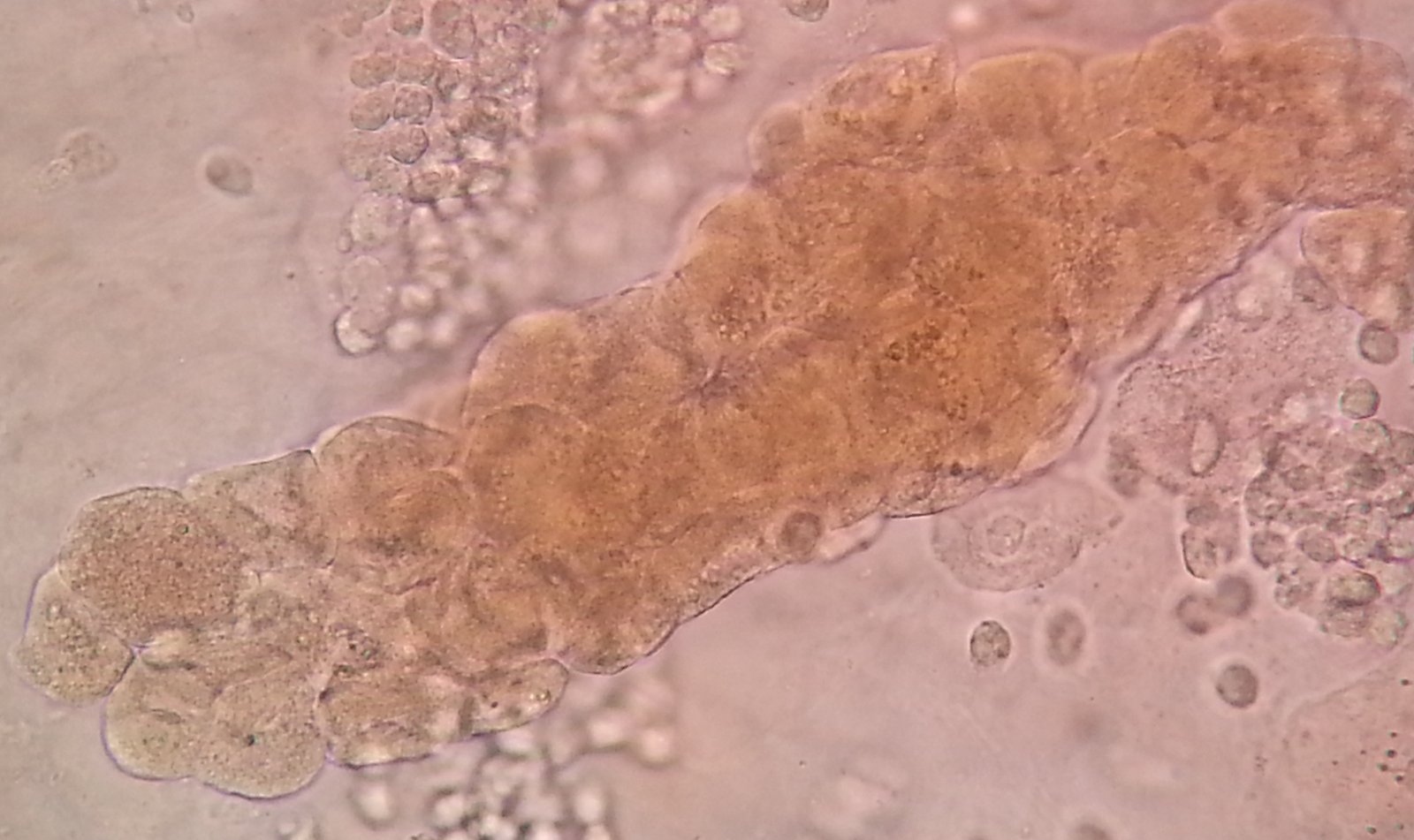
The sediment does not replace the biopsy, but it guides who to ask for one from, when to stop and when to wait. Reading by the physician, and not just the automated report, is what makes it possible to see casts and crystals.
When the kidney loses perfusion: anti-inflammatory and the triple combination
How the anti-inflammatory reduces filtration
Anti-inflammatories block the production of prostaglandins, which keep open the arteriole that brings blood to the glomerulus when volume falls. Angiotensin-converting enzyme inhibitors and angiotensin receptor blockers do the opposite at the outgoing arteriole, and diuretics reduce circulating volume. The combination compromises the kidney's autoregulation, especially in those who are dehydrated, have heart failure or have prior kidney disease (Calvo et al., 2025).
The English nickname is "triple whammy". Dipyrone (metamizole) appeared in some studies as an alternative to the anti-inflammatory in the same trio, because whether it is less nephrotoxic is debated (Calvo et al., 2025).
What the meta-analysis showed
The systematic review by Calvo and colleagues gathered observational studies on the triple combination. Simultaneous use of a diuretic, a renin-angiotensin system inhibitor and an anti-inflammatory drug or dipyrone doubled the chance of kidney injury, with an odds ratio of 2.01, on low-certainty evidence (Calvo et al., 2025). In a large study included in the review, hospitalization for kidney injury was 36 percent more likely in those exposed, and the combination with dipyrone carried higher risk than the combination with an anti-inflammatory drug (Calvo et al., 2025).
This finding matters where dipyrone is sold without a prescription, because it is often not seen as a drug that poses a risk to the kidney. The review found no difference in the need for dialysis, and the mortality data were of very low certainty (Calvo et al., 2025).
Prevention in practice
Prevention starts with prescribing and with guidance. In people who use a diuretic and a renin-angiotensin system inhibitor, the anti-inflammatory drug should be avoided or used for the shortest possible time, with guaranteed hydration. On days of vomiting, diarrhea or high fever, it is worth advising temporary suspension of the diuretic and the inhibitor, with a combined return, a rule that must be explained with the same care as any discharge instruction, as in the text on checking whether the patient understood.
Extreme heat adds dehydration to the same trio of drugs, the subject of the text on extreme heat and drugs that make it worse. The decision to cut drugs together with the patient, and not only for the patient, follows the logic of deprescribing.
Tubular necrosis: aminoglycoside, vancomycin and company
The aminoglycoside and the proximal tubule cell
The kidney toxicity of aminoglycosides is selective for proximal tubule cells. About 5 percent of the filtered dose accumulates in these cells, taken up by the megalin receptor (McWilliam et al., 2017). The result ranges from mild tubular dysfunction to acute kidney injury, usually without oliguria, which makes the injury go unnoticed when only urine output is watched (McWilliam et al., 2017).
In children, the injury is common. In a US tertiary center, with creatinine measured every day, kidney injury appeared in 25 percent of patients exposed to an aminoglycoside for three days or more (McWilliam et al., 2017). In premature newborns, gentamicin reaches almost every inpatient in some units, and kidney injury was seen in 26.2 percent of a US cohort (McWilliam et al., 2017).
Once-daily dosing, serum level and daily creatinine
Protective measures combine dose, time and monitoring. Raised trough levels suggest reduced clearance and are considered a risk factor; several patients with cystic fibrosis who had kidney injury had a tobramycin trough above 2 mg/L (McWilliam et al., 2017). Once-daily dosing, shorter courses and withdrawal of other nephrotoxic drugs are among the changes in practice described by the authors.
The strongest example comes from the NINJA program, which used the electronic health record to identify children on intravenous aminoglycoside for three days or more, or on three nephrotoxic drugs at the same time, and recommended daily creatinine. Over three years of the program, exposure to nephrotoxic drugs fell 38 percent and the rate of kidney injury fell 64 percent (McWilliam et al., 2017).
Vancomycin and the combination with piperacillin-tazobactam
Vancomycin was the main nephrotoxic drug in Botucatu and the most suspected drug in DIRECT (Garcia et al., 2024; Yousif et al., 2023). In Botucatu, vancomycin was associated with a greater need for dialysis and with more deaths among patients with drug-induced injury (Garcia et al., 2024).
The risk increases when vancomycin is combined with piperacillin-tazobactam, a common regimen in hospital-acquired sepsis. The meta-analysis by Alshehri and colleagues pooled 17 observational studies with more than 80,000 patients and found twice the chance of kidney injury with this combination, compared with vancomycin and meropenem, with an odds ratio of 2.02 (Alshehri et al., 2025). The association appeared both inside and outside intensive care and also for severe injury, but mortality did not differ between the groups (Alshehri et al., 2025).
Real injury or a creatinine that rises?
Part of the effect may not be injury. Piperacillin-tazobactam competes with creatinine for tubular secretion and can raise creatinine without changing filtration (Alshehri et al., 2025). The authors from Botucatu note this discussion about a possible pseudolesion, especially in stage 1, and recall that not all series showed more dialysis or death with the combination (Garcia et al., 2024).
In practice, the doubt does not justify ignoring creatinine. The safest approach is to shorten the combination, review the regimen when cultures arrive, measure the vancomycin level and look for other signs of injury, such as falling urine output and changes in the sediment. The choice of empirical antibiotic in sepsis follows guidelines, such as the one discussed in the text about Surviving Sepsis 2026.
Other culprits of tubular necrosis
Iodinated contrast, amphotericin B and polymyxin B complete the Botucatu list (Garcia et al., 2024). In the study, amphotericin B was associated with a lower risk of dialysis and death than the other drugs (Garcia et al., 2024). Because three in four cases mixed a drug with ischemia or sepsis, separating the effect of contrast from the effect of severe disease requires looking at each patient's timeline.
Interstitial nephritis: the immune reaction to the drug
Who causes it
Acute interstitial nephritis is a type B immune reaction, with an infiltrate of inflammatory cells in the kidney interstitium. In a series of 171 patients with biopsy, cited by Muhammad and colleagues, antibiotics and gastric protectors accounted for 35 percent of nephritis each, and anti-inflammatory drugs for 20 percent (Muhammad et al., 2024). Beta-lactams, sulfonamides, quinolones and vancomycin are among the most remembered antibiotics.
The case of gastric protectors is the most treacherous, because the drug is used for years and seems harmless. The case-control study by Blank and colleagues, carried out in a national New Zealand cohort with more than 570,000 users, found a chance about five times higher of interstitial nephritis with current use compared with past use (Blank et al., 2014). The absolute risk was low, about 12 diagnoses per 100,000 person-years, but it reached about 20 per 100,000 per year above age 60 (Blank et al., 2014).
The classic triad almost never appears
The triad of fever, rash and eosinophilia was described in reactions to methicillin and is an exception today. In the review by Muhammad and colleagues, the complete triad appears in up to 10 percent of cases, the rash in 15 to 50 percent and eosinophilia in a minority (Muhammad et al., 2024). Eosinophiluria is not useful for diagnosis, because it appears in pyelonephritis, cystitis, atheroembolic disease, glomerulonephritis and other diseases (Muhammad et al., 2024).
The most common picture is a creatinine that rises days or weeks after starting the drug, with sterile leukocyturia, low proteinuria and sometimes hematuria. Biopsy is the most reliable test for diagnosis, but it does not point to the responsible drug (Muhammad et al., 2024). When the hypothesis is strong, the pretest probability decides whether biopsy will change management.
Infection or antibiotic?
The patient with an infection who receives an antibiotic creates a classic problem: the infection itself can inflame the interstitium. The review by Muhammad and colleagues compares the two situations and recalls that, in nephritis caused by infection, steroids can worsen the picture and should wait for control of the infection (Muhammad et al., 2024). In nephritis caused by the antibiotic, the first step is to switch the drug for another of a different class.
Stopping early and the place of steroids
Prompt withdrawal of the suspected drug is the basis of treatment and protects kidney function in the long term (Muhammad et al., 2024). The evidence on corticosteroids comes from observational studies. Huang and colleagues followed 72 Chinese patients with drug-induced interstitial nephritis severe enough to require dialysis; all came off dialysis, 59 recovered kidney function completely and 13 progressed to chronic kidney disease (Huang et al., 2021).
Those who progressed to chronic disease were older and started corticosteroids later, on average 33 days after symptoms, versus 13 days in the group that recovered (Huang et al., 2021). In the study, starting corticosteroids after 22.5 days was the point that best predicted progression (Huang et al., 2021). The design does not prove that corticosteroids caused the improvement, but it reinforces that delay in recognizing nephritis costs kidney.
Crystals: when the drug precipitates in the tubule
Sulfamethoxazole
Some drugs are poorly soluble in urine and precipitate as crystals inside the tubules, the rarest mechanism in the Botucatu cohort (Garcia et al., 2024). The French series by Azencot and colleagues gathered 11 patients with kidney injury probably caused by crystals of a sulfamethoxazole metabolite, found in the crystalluria laboratory of Tenon Hospital (Azencot et al., 2024). All were immunosuppressed, most had prior chronic kidney disease and function fell rapidly after starting the drug and improved after discontinuation.
The risk factors cited by the authors are acidic urine, low diuresis, low albumin, high urinary concentration of the drug and prior kidney disease (Azencot et al., 2024). Only half of the patients had acidic urine, which shows that hydration and dose adjusted to kidney function weigh as much as pH.
High-dose amoxicillin
Amoxicillin seems like a harmless drug, but at high intravenous doses it can crystallize in urine. At the university hospital of Angers, among adults who received at least 8 g per day intravenously, amoxicillin crystal nephropathy had an incidence of 4.5 percent and explained more than a third of stage 2 or 3 kidney injuries (Garnier et al., 2020). The main indications were endocarditis, osteoarticular infection and central nervous system infection.
The French drug agency recommended limiting the daily dose to 12 g, infusing at most 2 g at a time over at least 20 minutes, maintaining diuresis with hydration and monitoring kidney function (Garnier et al., 2020). Urine crystal testing confirms the diagnosis, but it is rarely done, and the problem is probably underestimated.
What to do when crystals are suspected
When suspected, management has three parts: stop or reduce the drug, hydrate to increase diuresis and ask for sediment reading by someone who knows crystals. Patients with myeloma, who already have kidneys at risk of light chain crystals, deserve the same care in choosing drugs, as discussed in the text on integrated care in myeloma.
From pattern to culprit: a bedside script
Step by step
DIRECT used simple criteria to attribute an injury to a drug: exposure of at least 24 hours before the injury, biological plausibility, weight of the drug against other factors and temporal relationship (Yousif et al., 2023). The Botucatu cohort adopted the same criteria (Garcia et al., 2024). At the bedside, they become a script:
- List all drugs from the last few days, with start date and dose, including those bought without a prescription.
- Collect urine with sediment before changing the prescription.
- Classify the pattern: perfusion, tubular necrosis, interstitial nephritis or crystals.
- Stop or switch the most likely drug and adjust the doses of those that remain to current kidney function.
- Measure creatinine every day while nephrotoxic drugs are in use.
- Record the suspected drug in the chart and in the discharge letter, so the exposure is not repeated.
Dose adjustment and serum level
The drugs that remain need doses adjusted to filtration at the moment, not at admission. Vancomycin and aminoglycosides require serum levels. Drug-induced injury is not exclusive to dosing errors, but adjustment reduces the risk of type A reactions (Garcia et al., 2024). When the injury comes with high potassium, correction follows the emergency logic discussed in the text on intravenous potassium and hyperkalemia.
After discharge
Drug-induced injury leaves a mark. In DIRECT, acute kidney disease, that is, function still abnormal after the acute phase, was more common at discharge in cases attributed to drugs, although the difference disappeared at 28 and 90 days (Yousif et al., 2023). In severe interstitial nephritis, 13 of 72 patients progressed to chronic kidney disease (Huang et al., 2021). If filtration remains low, staging follows the KDIGO guidance for chronic kidney disease.
Back to the patient from the opening
The first episode is a drop in perfusion: diuretic, enalapril and an anti-inflammatory drug added to diarrhea. The approach is to stop the anti-inflammatory, pause the diuretic and enalapril, give fluids and advise a gradual return after recovery. The second episode calls for a different reading. Creatinine rises on the fifth day of vancomycin with piperacillin-tazobactam, with a new gastric protector. The sediment decides the next step: epithelial casts point to tubular necrosis and call for a vancomycin level and switching piperacillin-tazobactam when possible; sterile leukocyturia points to interstitial nephritis and calls for stopping the gastric protector and the suspected beta-lactam. The discharge letter must list the drugs to avoid.
How NEXO helps train this reasoning
In NEXO, the case of the day is fictional, with a real clinical presentation and up to six progressive clues, and you propose the diagnosis by searching for the ICD-10 code.
The limits on using the game are described on the NEXO economy page. If you research the teaching of clinical reasoning, the page for researchers explains how to get in touch. Professionals who write or review cases find information under curation and creators, and institutions can learn about the proposal on the partnerships page. Searching for the right ICD-10 code completes this training.
Frequently asked questions
Which drug most often causes kidney injury in the hospital?
In the Botucatu and DIRECT cohorts, vancomycin was the drug most linked to kidney injury, followed by contrast, anti-inflammatory drugs and antibiotic combinations (Garcia et al., 2024; Yousif et al., 2023).
Is dipyrone safer for the kidney than anti-inflammatory drugs?
There is no certainty. In the meta-analysis of the triple combination, hospitalization for kidney injury was more likely with dipyrone than with an anti-inflammatory drug, together with a diuretic and a renin-angiotensin system inhibitor (Calvo et al., 2025).
Should I switch piperacillin-tazobactam if the patient is already on vancomycin?
The combination doubled the chance of kidney injury in observational studies, with no difference in mortality (Alshehri et al., 2025). In practice, it is worth shortening the combination, reviewing the regimen with the cultures and measuring the vancomycin level.
How do you suspect interstitial nephritis without fever or rash?
From creatinine that rises days or weeks after a new drug, with sterile leukocyturia. The classic triad appears in few cases, and eosinophiluria does not help.
Can the gastric protector harm the kidney?
It can, through interstitial nephritis. The absolute risk is low, but higher above age 60, and many people take the drug without a clear indication (Blank et al., 2014).
Is daily creatinine worth it?
In children on nephrotoxic drugs, daily monitoring within a structured program reduced exposure and kidney injury (McWilliam et al., 2017).
Take-home messages
- Drugs are behind many kidney injuries in the hospital, almost always together with ischemia or sepsis (Garcia et al., 2024).
- The pattern of injury points to the culprit: perfusion, tubular necrosis, interstitial nephritis or crystals.
- A diuretic, a renin-angiotensin system inhibitor and an anti-inflammatory drug or dipyrone form a risk combination, especially in dehydration.
- Aminoglycoside and vancomycin call for adjusted dosing, serum level, a short course and daily creatinine.
- Vancomycin with piperacillin-tazobactam raises creatinine; shorten it and review with the cultures.
- In interstitial nephritis, do not wait for the triad: stop the drug early.
- Crystals appear with a high dose and concentrated urine: give fluids, adjust and ask for the sediment reading.
- Record the suspected drug at discharge.
Milestone inventory
- 1985: first report of crystalluria from amoxicillin, in a healthy volunteer (Garnier et al., 2020).
- 1992: first suspicion of interstitial nephritis linked to omeprazole (Blank et al., 2014).
- 2014: a New Zealand study measures the risk of interstitial nephritis with gastric protectors (Blank et al., 2014).
- 2017: a review describes the NINJA program and the drop in kidney injury with daily creatinine in children (McWilliam et al., 2017).
- 2020: the Angers series shows a high incidence of amoxicillin crystal nephropathy at high dose (Garnier et al., 2020).
- 2023: the DIRECT study describes cases of drug-induced kidney injury at 42 centers (Yousif et al., 2023).
- 2024: the Botucatu cohort measures drug-induced kidney injury at a Brazilian hospital (Garcia et al., 2024).
- 2025: meta-analyses on the triple combination and on vancomycin with piperacillin-tazobactam (Calvo et al., 2025; Alshehri et al., 2025).
Play the case of the day on NEXO.
References
- Garcia G, Pacchini VR, Zamoner W, Balbi AL, Ponce D. Drug-induced acute kidney injury: a cohort study on incidence, identification of pathophysiological mechanisms, and prognostic factors. Front Med (Lausanne). 2024;11:1459170. PMID 39534223. DOI 10.3389/fmed.2024.1459170.
- Yousif ZK, Koola JD, Macedo E, et al. Clinical Characteristics and Outcomes of Drug-Induced Acute Kidney Injury Cases. Kidney Int Rep. 2023;8(11):2333-2344. PMID 38025217. DOI 10.1016/j.ekir.2023.07.037.
- McWilliam SJ, Antoine DJ, Smyth RL, Pirmohamed M. Aminoglycoside-induced nephrotoxicity in children. Pediatr Nephrol. 2017;32(11):2015-2025. PMID 27848094. DOI 10.1007/s00467-016-3533-z.
- Calvo DM, Saiz LC, Leache L, Celaya MC, Gutiérrez-Valencia M. Acute kidney injury and morbi-mortality associated with "triple whammy" combination: Systematic review and meta-analysis. Br J Clin Pharmacol. 2025;91(11):3031-3041. PMID 40876867. DOI 10.1002/bcp.70263.
- Alshehri AM, Al Yami MS, Aldairem A, et al. Evaluating the risk of acute kidney injury and mortality associated with concomitant use of vancomycin with piperacillin/tazobactam or meropenem in critically ill and non-critically ill patients: a systematic review and meta-analysis. BMC Infect Dis. 2025;25(1):36. PMID 39773457. DOI 10.1186/s12879-024-10227-0.
- Blank ML, Parkin L, Paul C, Herbison P. A nationwide nested case-control study indicates an increased risk of acute interstitial nephritis with proton pump inhibitor use. Kidney Int. 2014;86(4):837-844. PMID 24646856. DOI 10.1038/ki.2014.74.
- Muhammad A, Zhang Y, Huang L, et al. The diagnosis of acute interstitial nephritis caused by infection versus antibiotic-induced interstitial nephritis: a narrative review. Clin Kidney J. 2024;17(4):sfae054. PMID 38572500. DOI 10.1093/ckj/sfae054.
- Huang L, Liang S, Dong J, et al. Prognosis of severe drug-induced acute interstitial nephritis requiring renal replacement therapy. Ren Fail. 2021;43(1):1020-1027. PMID 34187299. DOI 10.1080/0886022X.2021.1942914.
- Azencot R, Saint-Jacques C, Haymann JP, Frochot V, Daudon M, Letavernier E. Sulfamethoxazole-induced crystal nephropathy: characterization and prognosis in a case series. Sci Rep. 2024;14(1):6078. PMID 38480876. DOI 10.1038/s41598-024-56322-9.
- Garnier AS, Dellamaggiore J, Brilland B, et al. High Incidence of Amoxicillin-Induced Crystal Nephropathy in Patients Receiving High Dose of Intravenous Amoxicillin. J Clin Med. 2020;9(7):2022. PMID 32605085. DOI 10.3390/jcm9072022.