Advanced gastric cancer: HER2, PD-L1 (CPS) and MSI
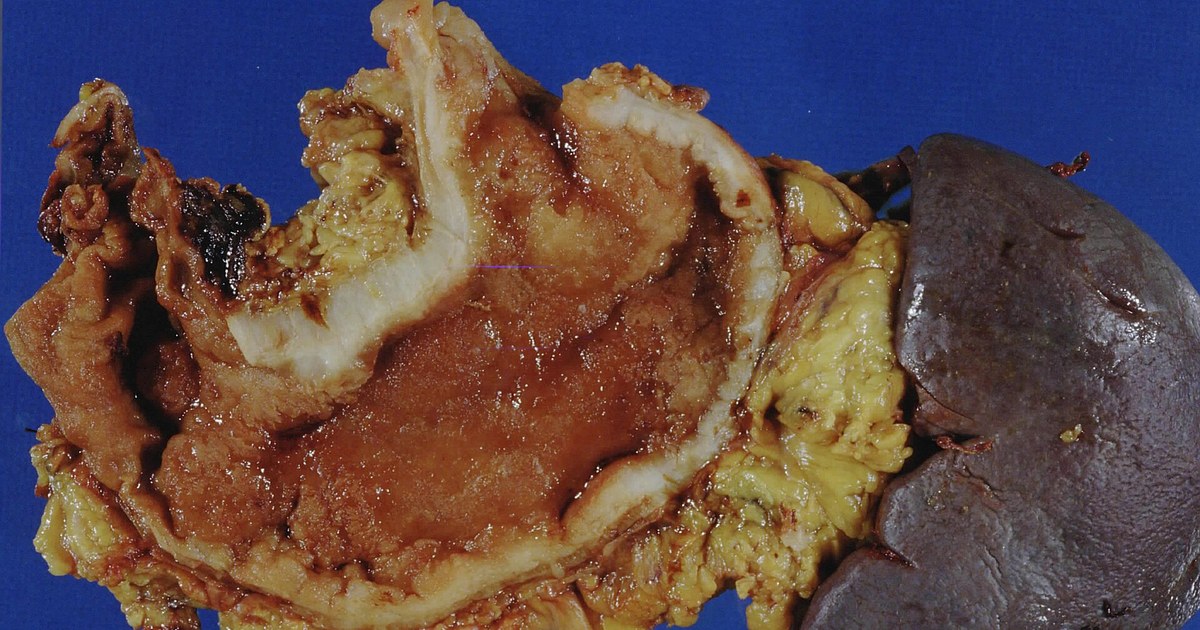
Table of contents
- Why this is a reasoning scenario
- The three biomarkers and what each one answers
- HER2: what ToGA taught
- PD-L1 and the combined positive score
- What CheckMate 649 showed
- What KEYNOTE-859 showed
- Microsatellite instability: the small group that changes everything
- Sample, assay and timing: where the reasoning fails
- How NEXO helps train this reasoning
- Frequently asked questions
- Final checklist
- References
A 64-year-old man seeks the emergency department with fatigue and dark stools. Endoscopy shows an ulcerated lesion in the antrum, and biopsy confirms gastric adenocarcinoma. CT finds liver nodules and enlarged retroperitoneal lymph nodes. The pathology report arrives with the histological type and a line about HER2, but it does not mention PD-L1 or microsatellite instability. The family wants to know when chemotherapy starts, and the resident wants to know if it can start now. The scene is fictional and was written for teaching.
This text uses the case as a clinical reasoning scenario for students and health professionals. The topic is the choice of first-line treatment in advanced gastric cancer based on three biomarkers: HER2, PD-L1 measured by the combined positive score (CPS) and microsatellite instability (MSI). The question Dr. Alexei proposed for the series is direct: which biomarkers need to be available before deciding first-line treatment, and what changes with each result? The text does not replace your country's guideline or your service's protocol. If you play the case of the day on NEXO, you already know that the missing clue is often exactly the one that decides management.
Key points
- In advanced gastric cancer, HER2, PD-L1 (CPS) and MSI or mismatch repair deficiency (dMMR) should be ready before first-line treatment, or at least requested in the same order.
- The ToGA study established trastuzumab with chemotherapy for HER2-positive tumors, with a greater gain when expression is high.
- CheckMate 649 showed that nivolumab with chemotherapy prolongs survival, with benefit concentrated in tumors with higher CPS.
- KEYNOTE-859 showed a similar result with pembrolizumab, also stronger when CPS is 10 or higher.
- Tumors with high microsatellite instability form a small group that is very sensitive to immunotherapy.
- PD-L1 trials are not interchangeable, and the sample must have enough tissue for all tests.
Why this is a reasoning scenario
For a long time, first-line treatment for metastatic gastric cancer was almost always the same: a fluoropyrimidine with a platinum derivative. The result was poor. The CheckMate 649 article in Nature recalls that, with standard chemotherapy, most patients with HER2-negative gastroesophageal adenocarcinoma had progression and died within less than a year (Shitara et al., 2022). This scenario changed because the tumor began to be divided by biology, and each subgroup gained its own option.
The change brought a new trap. Before, the histological diagnosis was enough to start. Now, the right treatment depends on three answers that do not appear on endoscopy or CT. If the report arrives incomplete and the team starts without waiting, the patient may lose the chance to receive the antibody that would benefit them most. If the team waits too long, the symptomatic patient gets worse. Clinical reasoning here is not about memorizing studies, but about organizing the sequence: request everything at once, know what to do while the result does not arrive, and interpret each number within the study that validated it.
There is also a language problem. The studies use different cutoffs, different populations and different immunohistochemistry assays. Those who read only the headline may think that every HER2-negative patient gains a lot from immunotherapy, which is not true. Those who read only the subgroup may think that those with low CPS gain nothing, which is also debatable. The post on clinical decision-making addresses exactly this balance between ordering the test and knowing what it changes.
What makes this error easy to make
Time pressure is real. The patient with bleeding, anemia and weight loss seems to have no time to wait for reports. In many services, ordering PD-L1 and MSI depends on a separate form, an external laboratory or health insurance authorization. Each of these steps can delay the result by weeks. The way out is to treat biomarkers as part of the diagnosis, not as a later step. The post about staging failures in gastric cancer shows that many wrong decisions start with an incomplete investigation.
The three biomarkers and what each one answers
Each biomarker answers a different question. Thinking this way avoids the common confusion of assuming they all measure the same thing.
- HER2 answers whether the tumor depends on human epidermal growth factor receptor 2. When positive, it opens the way for trastuzumab together with chemotherapy.
- PD-L1 by CPS estimates how much the tumor and the surrounding inflammatory cells express programmed death ligand 1. It helps estimate the size of the benefit from PD-1 inhibitors.
- MSI or dMMR identifies tumors with a defect in DNA repair, which accumulate mutations and are usually very visible to the immune system.
Röcken's review of predictive biomarkers in gastric cancer sums up the logic: tumors with microsatellite instability and those positive for the Epstein-Barr virus often express immune checkpoint molecules such as PD-L1, and genomically stable tumors may have claudin 18.2 alterations (Röcken, 2023). The same author warns that most of these biomarkers suffer from heterogeneity within the tumor, and that adequate tissue sampling is essential.
In what order to order them
There is no order that leaves one of the three for later. Ideally the order goes out together with confirmation of the adenocarcinoma, for unresectable or metastatic tumors. When the material is small, the pathologist needs to know in advance that they will need sections for three tests, in addition to the diagnosis. A short conversation between the endoscopist, the pathologist and the oncologist can save a new endoscopy. Claudin 18.2 has already entered many routines as a fourth marker, but it is outside the focus of this text.


HER2: what ToGA taught
ToGA was the first phase 3 study to show a gain with targeted therapy in advanced gastric cancer. In the analysis of the screening data, Van Cutsem and colleagues report that trastuzumab added to chemotherapy increased median overall survival by 2.7 months in HER2-positive tumors, with a hazard ratio of 0.74 compared with chemotherapy alone (Van Cutsem and colleagues, 2015). In patients with higher expression, defined as immunohistochemistry 3+ or 2+ with positive FISH, median survival reached 16.0 months in the same work.
The ToGA screening data also show where to look. The positivity rate was about 22 in every 100 tumors analyzed, similar between European and Asian patients. It was much higher in the Lauren intestinal type than in the diffuse type (about 32 versus 6 in every 100) and higher in the gastroesophageal junction than in the stomach (about 32 versus 21 in every 100), according to Van Cutsem and colleagues (Van Cutsem and colleagues, 2015). This does not mean the diffuse type can skip the test. It means a negative result in a diffuse tumor is expected, while a negative result in an intestinal tumor of the junction deserves a critical look at the sample.
Why gastric HER2 is not the same as breast HER2
The gastric tumor has more heterogeneous HER2 expression and may stain only the basolateral or lateral membrane of the glands. Rüschoff and colleagues showed that the score used in breast cancer failed to recognize gastric tumors that could respond, and proposed adapted criteria, validated in hundreds of diagnostic samples in laboratories in Germany (Rüschoff and colleagues, 2010). In ToGA, variation in staining, with 30 or fewer of every 100 cells stained, appeared in almost half of the samples, without affecting the treatment result (Van Cutsem and colleagues, 2015).
The practical consequence is the number of biopsies. Röcken reports that expert groups recommend at least five tumor fragments, taken from the primary site, to reduce sampling error (Röcken, 2023). A 2+ result goes on to in situ hybridization, and only 3+ or 2+ with amplification count as positive.
HER2 positive and immunotherapy
The next step was to test adding pembrolizumab to trastuzumab and chemotherapy. The KEYNOTE-811 design, published by Chung and colleagues, describes a double-blind, placebo-controlled, first-line study for gastric or gastroesophageal junction adenocarcinoma that is HER2 positive (Chung and colleagues, 2021). The results of that study led to approvals conditional on PD-L1 in several countries, which reinforces the idea that, even in HER2-positive tumors, the CPS needs to be available.
PD-L1 and the combined positive score
The CPS adds up the tumor cells and immune cells that express PD-L1, divides by the total number of viable tumor cells and multiplies by 100. It differs from the tumor proportion score used in the lung because it also counts lymphocytes and macrophages. This difference explains why the same tumor can look negative by one measure and positive by another.
The first approval tied to the CPS in gastric cancer came in 2017, in the United States. The FDA summary describes the accelerated approval of pembrolizumab for tumors with a CPS of 1 or more that progressed after two or more lines, with a confirmed response rate of 13.3 in every 100 patients in the KEYNOTE-059 study (Fashoyin-Aje and colleagues, 2019). The same summary records that the drug was approved together with the 22C3 pharmDx test as a companion diagnostic.
Which cutoff to use
The meta-analysis by Xie and colleagues pooled 12 studies and 6,488 patients treated with immunotherapy. The response rate with the inhibitor alone rose with the CPS: about 3 in every 100 in PD-L1-negative tumors, 13 with a CPS of 1 or more, 20 with a CPS of 5 or more and 23 with a CPS of 10 or more (Xie and colleagues, 2021). The authors concluded that monotherapy showed no survival advantage in PD-L1-negative patients. The combination with chemotherapy, on the other hand, benefited the overall population, driven by CheckMate 649.
The cutoff, therefore, is not a line that separates benefit from no benefit. It is a scale on which the gain grows with the CPS. This reading helps in talking with the low-CPS patient without promising too much or denying an approved option.

What CheckMate 649 showed
CheckMate 649 randomized patients with gastric, gastroesophageal junction or esophageal adenocarcinoma, without prior treatment for advanced disease and without known HER2 positive status. The main arms compared nivolumab plus chemotherapy against chemotherapy alone. Nivolumab was given at 360 mg every 3 weeks or 240 mg every 2 weeks, together with CapeOX (oxaliplatin 130 mg/m² on day 1 and capecitabine 1,000 mg/m² orally twice a day on days 1 to 14, every 3 weeks) or FOLFOX, as chosen by the investigator (Shitara and colleagues, 2022).
The primary outcomes were assessed in patients with a CPS of 5 or more, who were about 60 in every 100 participants. With a minimum follow-up of 24 months, median survival in this group was 14.4 months with nivolumab plus chemotherapy against 11.1 months with chemotherapy alone, with a hazard ratio of 0.70 (Shitara and colleagues, 2022). In all randomized patients, the hazard ratio was 0.79 in the same report.
The 3-year update confirmed the effect. With a minimum follow-up of 36.2 months, the hazard ratio for survival in the CPS of 5 or more remained at 0.70, and 21 in every 100 patients were alive at 36 months with the combination, against 10 in every 100 with chemotherapy alone (Janjigian and colleagues, 2024). The objective response rate was 60 against 45 in every 100 patients, and the median duration of response was 9.6 against 7.0 months.
What happens with a low CPS
Reading by subgroup is the most discussed part. In the Nature article, the hazard ratios for survival in patients with CPS below 10, below 5 and below 1 were 0.91, 0.94 and 0.95, all with confidence intervals that cross 1 (Shitara et al., 2022). This suggests that the benefit is concentrated in tumors with higher CPS. For this reason, several agencies and guidelines restricted the indication to CPS cutoffs, while others approved it for all HER2-negative patients. Check the rule in your country.
Toxicity and quality of life
Adding nivolumab increased serious adverse events. In the 3-year update, grade 3 or 4 treatment-related events occurred in 60 out of every 100 patients on the combination, versus 45 out of every 100 on chemotherapy, and most immune-mediated events were grade 1 or 2 (Janjigian et al., 2024). The analysis of patient-reported outcomes, led by Moehler et al., showed no increase in symptom burden with nivolumab, and time to definitive deterioration in quality of life was longer with the combination (Moehler et al., 2023).
What KEYNOTE-859 showed
KEYNOTE-859 tested pembrolizumab plus chemotherapy against placebo plus chemotherapy in 1,579 patients with HER2-negative locally advanced or metastatic gastric or gastroesophageal junction adenocarcinoma. Pembrolizumab was given at 200 mg every 3 weeks for up to 35 cycles, with cisplatin and fluorouracil or with CAPOX (capecitabine 1,000 mg/m² twice a day on days 1 to 14 and oxaliplatin 130 mg/m² on day 1, every 3 weeks), according to the 4.5-year update by Rha et al. (Rha et al., 2026).
With a median follow-up of 54.8 months, median survival in the intention-to-treat population was 12.9 months with pembrolizumab versus 11.5 months with placebo, hazard ratio 0.78 (Rha et al., 2026). The gain was larger as CPS rose: hazard ratio 0.74 for CPS of 1 or more and 0.64 for CPS of 10 or more, where the median reached 15.8 versus 11.8 months. Grade 3 or 4 treatment-related events occurred in about 58 versus 49 out of every 100 patients.
The analysis of the Chinese subgroup, published by Qin et al., showed results in the same direction as the global study, which helps support applying the data to populations in different regions (Qin et al., 2025).
| Biomarker | Result | Reference study | What usually changes in first-line treatment |
|---|---|---|---|
| HER2 | IHC 3+ or IHC 2+ with positive ISH | ToGA; KEYNOTE-811 | Trastuzumab plus chemotherapy; pembrolizumab may be added depending on PD-L1 and local approval |
| HER2 | Negative | CheckMate 649; KEYNOTE-859 | Chemotherapy plus a PD-1 inhibitor, with a larger gain the higher the CPS |
| PD-L1 (CPS) | 5 or 10 or more | CheckMate 649; KEYNOTE-859 | Clearer survival benefit with immunotherapy |
| PD-L1 (CPS) | Below 1 | CheckMate 649 (subgroup) | Uncertain benefit; the decision depends on local approval and on talking with the patient |
| MSI or dMMR | High instability or repair deficiency | Pietrantonio meta-analysis | Group highly sensitive to immunotherapy; prioritize a PD-1 inhibitor |
Microsatellite instability: the small group that changes everything
Tumors with high microsatellite instability are few in advanced disease, but their response to immunotherapy is very different from the average. The meta-analysis by Pietrantonio et al. pooled the KEYNOTE-062, CheckMate 649, JAVELIN Gastric 100 and KEYNOTE-061 studies, with 2,545 patients of known status (Pietrantonio et al., 2021). Only 123 of them, about 4.8 out of every 100, had high instability. In this group, the hazard ratio for survival with anti-PD-1 regimens was 0.34, versus 0.85 in stable tumors, a statistically significant difference.
In CheckMate 649, only 3 out of every 100 patients had tumors with high instability, and the hazard ratio for survival in this subgroup was 0.38, while in stable tumors it was close to that of the general population (Shitara et al., 2022). The small number of patients makes the estimates imprecise, but the direction is consistent across studies.
The clinical profile of the unstable tumor
The review by Ratti and colleagues describes gastric cancer with microsatellite instability as more common in older people, in women and in the distal stomach, with fewer involved lymph nodes (Ratti and colleagues, 2018). The same authors cite data suggesting a worse outcome with perioperative chemotherapy in this subgroup and argue that testing should be done in all stages. These clues help you remember the test, but they do not serve to decide whom to test. The result needs to exist for all patients with advanced disease.
How to measure
In routine practice, repair deficiency is assessed by immunohistochemistry for the MLH1, PMS2, MSH2 and MSH6 proteins, and instability can be measured by polymerase chain reaction or by sequencing. Loss of expression of one of the proteins indicates deficiency. The two methods agree well, and the choice depends on the laboratory's structure.


Sample, assay and timing: where the reasoning fails
Even with all three tests requested, the decision can fail on technical details. The first is the PD-L1 assay. Each drug was studied with a different antibody: 22C3 for pembrolizumab and 28-8 for nivolumab. Yeong and colleagues compared the assays in 362 samples and found a positivity rate about twice as high with 28-8 as with 22C3 at all cutoffs (Yeong and colleagues, 2022). At the 5 cutoff, agreement between the two was only moderate.
Angerilli and colleagues, in a practical guide to PD-L1 assessment in gastroesophageal cancer, show the same case stained with clones SP142 and 22C3 with different staining patterns, which can produce different scores, and note that some authors state that the clones should not be considered interchangeable (Angerilli and colleagues, 2023). 22C3 is the one approved for pembrolizumab in gastroesophageal adenocarcinoma. The message is that some assays are close and others are not. The report must state which antibody was used, and the oncologist must know in which study that number was validated.
Most common errors
- Requesting only HER2 and leaving PD-L1 and MSI for after the first consultation.
- Sending a single small biopsy and exhausting the tissue on diagnosis.
- Using a CPS measured with one antibody to indicate a drug studied with another, without considering the difference.
- Ignoring heterogeneity and repeating the test only on the primary tumor when there is an accessible metastasis.
- Treating low CPS as an absolute contraindication or high CPS as a guarantee of response.
- Forgetting the MSI test because the tumor does not have the classic profile.
What to do while the result has not arrived
When the patient is symptomatic and the biomarkers are delayed, many teams start backbone chemotherapy and add the antibody in the next cycle, as soon as the result comes out. This strategy appears in institutional protocols, but it was not the design of the studies, which required known status at randomization. Discuss the choice with the team and record the reason. It is also worth treating bleeding, anemia and nutritional status, which weigh as much on the outcome as the choice of antibody. The post on nutrition and the team in gastric cancer addresses this care.
When to repeat the test
Repeating makes sense in some situations:
- the sample was insufficient or had little tumor;
- the result contradicts what is expected for the histological type and location;
- an accessible metastasis appears at progression;
- the report does not state the antibody or the score used.
Röcken cites a study in which pathogenic alterations discordant between the primary tumor and the metastases appeared in 45 out of every 100 patients analyzed (Röcken, 2023). Heterogeneity is not an exception in this tumor.
How NEXO helps train this reasoning
In NEXO, the case of the day is fictional, with a real clinical presentation and up to six progressive clues, and you propose the diagnosis by looking for the ICD-10 code. Advanced gastric cancer is a great exercise because the histological diagnosis is not enough: management depends on tests that need to be recalled and interpreted in the right context. The post about differential diagnosis shows how to organize the clues, and the post about the diagnostic pause reminds you to stop before starting treatment with incomplete information.
Three exercises with cases
Change the HER2. Say what changes in first line if the report shows HER2 3+ and CPS equal to 2.
Change the CPS. Say how you would explain the expected benefit of immunotherapy to a patient with CPS below 1 and another with CPS equal to 15.
Change the repair. Say what you would do if immunohistochemistry showed loss of MLH1 and PMS2 in a 78-year-old patient with metastatic disease.
The post on diagnostic uncertainty helps with the conversation when the benefit is small or uncertain. The limits on using the game are described on the NEXO Economy page. If you research the teaching of clinical reasoning, the page for Researchers explains how to get in touch. Professionals who write or review cases find information under Curator and Creators, and institutions can learn about the proposal on the partnerships page.
Frequently asked questions
Which tests need to be ready before first line?
HER2, PD-L1 by CPS and MSI or dMMR. All three should be ordered together, as soon as unresectable or metastatic adenocarcinoma is confirmed (Röcken, 2023).
Should every HER2-negative patient receive immunotherapy?
The benefit is greater the higher the CPS. With CPS below 1, the CheckMate 649 estimates were close to no effect (Shitara and colleagues, 2022). The indication depends on local approval and on the conversation with the patient.
Does the CPS from one trial apply to any drug?
Not necessarily. The 28-8 tends to give higher values than the 22C3, and agreement at the cutoff of 5 was only moderate (Yeong and colleagues, 2022).
Why test MSI if it is so rare?
Because the group with high instability has a much greater benefit with anti-PD-1, with a hazard ratio of 0.34 for survival in the meta-analysis by Pietrantonio and colleagues (Pietrantonio and colleagues, 2021).
How many biopsies are needed for HER2?
Expert recommendations call for at least five tumor fragments from the primary site, because of heterogeneity (Röcken, 2023).
Final checklist
- I confirmed the adenocarcinoma and its unresectable or metastatic status.
- I ordered HER2, PD-L1 (CPS) and MSI or dMMR at the same time.
- I checked whether the sample had enough tissue for all three tests.
- I verified which antibody was used for PD-L1.
- I sent the HER2 2+ for in situ hybridization.
- I chose the regimen according to the result and local approval.
- I explained the expected benefit without promising a response.
- I treated bleeding, anemia and nutrition while the reports were pending.
Want to practice reasoning with progressive clues? Play the case of the day.
References
- Angerilli V, Fassan M, Parente P, et al. A practical approach for PD-L1 evaluation in gastroesophageal cancer. Pathologica. 2023. PMID 36537078.
- Chung HC, Bang YJ, S Fuchs C, et al. First-line pembrolizumab/placebo plus trastuzumab and chemotherapy in HER2-positive advanced gastric cancer: KEYNOTE-811. Future Oncol. 2021. PMID 33167735.
- Fashoyin-Aje L, Donoghue M, Chen H, et al. FDA Approval Summary: Pembrolizumab for Recurrent Locally Advanced or Metastatic Gastric or Gastroesophageal Junction Adenocarcinoma Expressing PD-L1. Oncologist. 2019. PMID 30120163.
- Janjigian YY, Ajani JA, Moehler M, et al. First-Line Nivolumab Plus Chemotherapy for Advanced Gastric, Gastroesophageal Junction, and Esophageal Adenocarcinoma: 3-Year Follow-Up of the Phase III CheckMate 649 Trial. J Clin Oncol. 2024. PMID 38382001.
- Moehler M, Xiao H, Blum SI, et al. Health-Related Quality of Life With Nivolumab Plus Chemotherapy Versus Chemotherapy in Patients With Advanced Gastric/Gastroesophageal Junction Cancer or Esophageal Adenocarcinoma From CheckMate 649. J Clin Oncol. 2023. PMID 37713657.
- Pietrantonio F, Randon G, Di Bartolomeo M, et al. Predictive role of microsatellite instability for PD-1 blockade in patients with advanced gastric cancer: a meta-analysis of randomized clinical trials. ESMO Open. 2021. PMID 33460964.
- Qin S, Bai Y, Li J, et al. First-Line Pembrolizumab Plus Chemotherapy for HER2-Negative Advanced Gastric Cancer: China Subgroup Analysis of the Randomized Phase 3 KEYNOTE-859 Study. Adv Ther. 2025. PMID 40025394.
- Ratti M, Lampis A, Hahne JC, et al. Microsatellite instability in gastric cancer: molecular bases, clinical perspectives, and new treatment approaches. Cell Mol Life Sci. 2018. PMID 30173350.
- Rha SY, Wyrwicz LS, Yañez P, et al. Pembrolizumab plus chemotherapy as first-line therapy for advanced HER2-negative gastric or gastroesophageal junction adenocarcinoma: 4.5-year follow-up from the randomized phase III KEYNOTE-859 study. ESMO Open. 2026. PMID 42748509.
- Röcken C. Predictive biomarkers in gastric cancer. J Cancer Res Clin Oncol. 2023. PMID 36260159.
- Rüschoff J, Dietel M, Baretton G, et al. HER2 diagnostics in gastric cancer-guideline validation and development of standardized immunohistochemical testing. Virchows Arch. 2010. PMID 20665045.
- Shitara K, Ajani JA, Moehler M, et al. Nivolumab plus chemotherapy or ipilimumab in gastro-oesophageal cancer. Nature. 2022. PMID 35322232.
- Van Cutsem E, Bang YJ, Feng-Yi F, et al. HER2 screening data from ToGA: targeting HER2 in gastric and gastroesophageal junction cancer. Gastric Cancer. 2015. PMID 25038874.
- Xie T, Zhang Z, Zhang X, et al. Appropriate PD-L1 Cutoff Value for Gastric Cancer Immunotherapy: A Systematic Review and Meta-Analysis. Front Oncol. 2021. PMID 34540656.
- Yeong J, Lum HYJ, Teo CB, et al. Choice of PD-L1 immunohistochemistry assay influences clinical eligibility for gastric cancer immunotherapy. Gastric Cancer. 2022. PMID 35661944.