T-DM1 in residual HER2 breast cancer

Table of contents
A 44-year-old teacher found a 4 cm nodule in her left breast and a hardened lymph node in the axilla. The biopsy showed HER2-positive invasive carcinoma, with positive estrogen receptor. She received chemotherapy with a taxane, trastuzumab and pertuzumab before surgery, and the tumor shrank considerably. In the mastectomy specimen, however, the pathologist found 8 mm of residual invasive carcinoma and one lymph node with metastasis. The echocardiogram before chemotherapy was normal, and she reports tingling in her feet since the taxane. At the multidisciplinary meeting, the question is what to do in the coming weeks. The scene is fictional and was written for teaching.
This text uses the case as a clinical reasoning scenario for students and health professionals. The topic is trastuzumab emtansine, also called T-DM1, as adjuvant treatment for people with HER2-positive breast cancer who have residual invasive disease after neoadjuvant treatment, tested in the KATHERINE trial. The focus is on reading the surgical specimen as a clue to risk and to treatment choice, not as a final point. It does not replace your institution's protocol or the multidisciplinary team's decision. If you play the case of the day on NEXO, you will recognize the challenge: the most important clue sometimes arrives after surgery.
Key points
- KATHERINE compared 14 cycles of T-DM1 with 14 cycles of trastuzumab in 1486 patients with residual invasive disease after a taxane and trastuzumab.
- In the primary analysis, 88.3 percent of the T-DM1 group were alive and free of invasive disease at 3 years, versus 77.0 percent of the trastuzumab group.
- In the long-term follow-up analysis, overall survival also improved, with a hazard ratio of 0.66.
- The dose is 3.6 mg/kg intravenously every 3 weeks, without exceeding this dose and without mistakenly swapping T-DM1 for trastuzumab.
- Toxicity is greater than with trastuzumab, with low platelets, raised transaminases and peripheral neuropathy.
- The FDA approved the indication on 05/03/2019, and the EMA committee gave a favorable opinion on 11/14/2019.
Why this is a reasoning scenario
In stage II or III HER2-positive breast cancer, chemotherapy with HER2 blockade usually comes before surgery (Krawczyk et al., 2022). One advantage of this path is that the surgical specimen shows how the tumor responded (Matuschek et al., 2022). Those with a pathological complete response, with no invasive cancer in the breast and lymph nodes, have a better prognosis than those left with residual disease (Delgado et al., 2021). In HER2-positive cancer, a complete response is not achieved in 40 to 60 percent of patients (Delgado et al., 2021). Before KATHERINE, these people completed 12 months of trastuzumab (Delgado et al., 2021).
The idea of using the response to adjust what comes after surgery became known as post-neoadjuvant treatment (Matuschek et al., 2022). It allows treatment to be intensified when risk remains high and reduced when the prognosis is good (Matuschek et al., 2022). KATHERINE was the trial that brought this idea to HER2-positive cancer (Delgado et al., 2021). The post on signs, symptoms and history helps you not forget the teacher's tingling feet, which weighs on the choice, and the post on clinical decision-making reminds you that the specimen report must be complete before the decision.
What the scene teaches
The scene trains six habits. The first is to read the specimen report looking for invasive disease, not just in situ disease. The second is to know which neoadjuvant treatment was given, because the indication requires a taxane and trastuzumab. The third is to check heart function before starting. The fourth is to ask about neuropathy, liver and bleeding. The fifth is to plan radiotherapy and hormone therapy together with T-DM1. The sixth is to explain to the patient that the goal is to reduce the risk of the cancer coming back, not to promise a cure.
What is not at stake
The text does not cover adjuvant pertuzumab in detail, which is the topic of the next text in this series. It also does not discuss the newer antibody conjugates being tested in this setting. The post about diagnostic uncertainty helps when the report leaves doubt about what is invasive disease and what is in situ disease.
Who is eligible: residual disease as a clue
Residual invasive disease
KATHERINE included patients with residual invasive tumor in the breast or axillary lymph nodes after neoadjuvant treatment (Kadcyla label of 03/2026). The EMA changed the wording of the indication to make clear that only residual invasive disease, and not in situ disease, entered the study (Delgado et al., 2021). In the scene, the 8 mm of invasive carcinoma and the positive lymph node place the teacher within the indication.
The neoadjuvant treatment given
The study required at least 9 weeks of trastuzumab with taxane-based chemotherapy before surgery (Delgado et al., 2021). A second anti-HER2 agent and an anthracycline were allowed (Delgado et al., 2021). In the label, 77 percent had received an anthracycline and 20 percent received another anti-HER2 agent, almost always pertuzumab (Kadcyla label of 03/2026). This means that few patients in the study had the dual blockade that is common today (Delgado et al., 2021) (Liu et al., 2026). The teacher received trastuzumab with pertuzumab, so she is in the smaller group of the study.
Confirmed HER2
In the study, HER2 positive was defined as immunohistochemistry 3+ or an in situ hybridization amplification ratio of 2.0 or more, checked at a central laboratory (Kadcyla label of 03/2026). The label requires an FDA-authorized test, performed in a laboratory with proven proficiency (Kadcyla label of 03/2026). Sometimes the surgical specimen shows HER2 negative in a tumor that was positive on biopsy (Loibl et al., 2022). The post about differential diagnosis helps to think through the explanations for this change, such as test error, tumor heterogeneity or selection of cells by the treatment.
Heart, liver and nerves
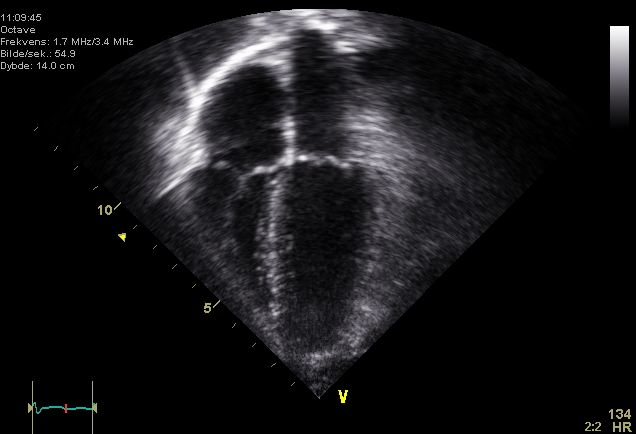
Patients with cardiopulmonary dysfunction were excluded from the study (Delgado et al., 2021). The label requires assessment of left ventricular ejection fraction before starting and of liver function before each dose (Kadcyla label of 03/2026). The label does not list contraindications (Kadcyla label of 03/2026). Even so, the tingling the teacher already has matters, because peripheral neuropathy was more common with T-DM1 (Delgado et al., 2021). The post about diagnostic pause helps to make this check before the first infusion.

What KATHERINE tested
Design
KATHERINE was a phase 3, randomized, multicenter, open-label study (Delgado et al., 2021). Of 1925 patients assessed, 1486 were randomized in a 1 to 1 ratio (Delgado et al., 2021). Randomization was stratified by clinical stage at presentation, hormone receptor, anti-HER2 treatment before surgery and lymph node status after treatment (Kadcyla label of 03/2026). The study was open-label because the two drugs have very different toxicities, and the EMA accepted this justification (Delgado et al., 2021).
The two arms
T-DM1 was given intravenously at a dose of 3.6 mg/kg every 3 weeks (Kadcyla label of 03/2026). Trastuzumab was given intravenously at a dose of 6 mg/kg every 3 weeks, after a loading dose of 8 mg/kg (Delgado et al., 2021). Both arms had 14 cycles, unless there was recurrence, withdrawal of consent or unacceptable toxicity (Kadcyla label of 03/2026). Those who stopped T-DM1 for a reason other than recurrence could complete the time with trastuzumab (Kadcyla label of 03/2026).
Radiotherapy and hormone therapy
Patients received radiotherapy and hormone therapy alongside the study treatment, according to local guidelines (Kadcyla label of 03/2026). This matters in practice, because the teacher has estrogen receptor positive disease and will probably do both at the same time as T-DM1.
Outcomes
The primary outcome was invasive disease-free survival, which counts recurrence in the breast, local or regional recurrence, distant metastasis, invasive cancer in the other breast or death from any cause (Kadcyla label of 03/2026). Overall survival was secondary and could only be tested if the primary outcome was positive (Delgado et al., 2021). The study was designed with 56 percent power to detect a hazard ratio of 0.80 in overall survival, and the EMA acknowledged that a study with greater power might not be feasible (Delgado et al., 2021).
What KATHERINE showed
Primary analysis
In the planned interim analysis, with a data cutoff of July 25, 2018 and a median follow-up of about 41 months, the study met its primary outcome (Delgado et al., 2021). An event occurred in 12.2 percent of the T-DM1 group and in 22.2 percent of the trastuzumab group (Kadcyla label of 03/2026). The hazard ratio was 0.50, with a 95 percent confidence interval of 0.39 to 0.64 (Kadcyla label of 03/2026). At 3 years, 88.3 percent of the T-DM1 group were alive and free of invasive disease, versus 77.0 percent of the trastuzumab group (Kadcyla label of 03/2026).
Overall survival
In the first analysis, the survival data were immature, with a hazard ratio of 0.70 and an interval of 0.47 to 1.05 (Delgado et al., 2021). The EMA therefore requested the final overall survival analysis, with a deadline of June 30, 2024 (Delgado et al., 2021). In the second interim survival analysis described in the label, the hazard ratio was 0.66, with an interval of 0.51 to 0.87, and the difference was statistically significant (Kadcyla label of 03/2026). With a median follow-up of 101 months, invasive disease-free survival at 7 years was 80.8 percent with T-DM1 and 67.1 percent with trastuzumab, and overall survival at 7 years was 89.1 percent and 84.4 percent (Geyer and Loibl, 2025).
The table summarizes the main numbers.
| Measure | T-DM1 | Trastuzumab | Source |
|---|---|---|---|
| Free of invasive disease at 3 years | 88.3 percent | 77.0 percent | (Kadcyla label of 03/2026) |
| Hazard ratio for invasive disease or death | 0.50 (0.39 to 0.64) | Reference | (Kadcyla label of 03/2026) |
| Free of invasive disease at 7 years | 80.8 percent | 67.1 percent | (Geyer and Loibl, 2025) |
| Alive at 7 years | 89.1 percent | 84.4 percent | (Geyer and Loibl, 2025) |
| Hazard ratio for death | 0.66 (0.51 to 0.87) | Reference | (Kadcyla label of 03/2026) |
Where the cancer came back
Distant metastasis was the most common event in both arms (Delgado et al., 2021). Among those who had recurrence, the central nervous system was the first site in 43 of 91 T-DM1 patients, 47 percent, and in 30 of 165 trastuzumab patients, 18 percent (Delgado et al., 2021). The total number of patients with central nervous system recurrence during follow-up, however, was similar, 45 versus 40 (Delgado et al., 2021). The EMA concluded that the benefit appeared mainly outside the central nervous system (Delgado et al., 2021). In practice, a new headache during follow-up deserves attention.
Subgroups and biomarkers
Among those who had received two or more anti-HER2 agents before surgery, the hazard ratio was 0.54, with an interval of 0.27 to 1.06 (Delgado et al., 2021). The interval includes the value 1 because the group was small, so this finding should be read with caution. In the biomarker analysis, the benefit of T-DM1 was consistent across all main subgroups defined by HER2 signaling and by immune activation of the tumor (Denkert et al., 2023). High expression of the HER2 gene in residual disease was associated with more risk in the trastuzumab arm, but not in the T-DM1 arm (Denkert et al., 2023).
HER2 negative in the specimen
In 845 sample pairs with a valid central result, 70 residual specimens, 8.3 percent, were HER2 negative (Loibl et al., 2022). In this group, there were 11 events among 42 trastuzumab patients and none among 28 T-DM1 patients (Loibl et al., 2022). The analysis was descriptive, with small groups (Loibl et al., 2022). Two 2025 texts discuss whether switching to T-DM1 is still justified when the specimen is HER2 negative: one says yes (Geyer and Loibl, 2025), and the other raises doubts based on cases seen in practice (Tjalma et al., 2025). The post about interprofessional clinical reasoning shows why the pathologist needs to be part of this conversation.
How to use adjuvant T-DM1
Dose and infusion
The label indicates 3.6 mg/kg intravenously every 3 weeks, for a total of 14 cycles in early breast cancer, unless there is recurrence or toxicity that cannot be managed (Kadcyla label of 03/2026). The dose must not exceed 3.6 mg/kg (Kadcyla label of 03/2026). The first infusion takes 90 minutes, with observation during and for at least 90 minutes afterward; subsequent infusions may take 30 minutes if the previous ones were well tolerated (Kadcyla label of 03/2026). The label warns not to swap T-DM1 for trastuzumab or the reverse (Kadcyla label of 03/2026). Five percent glucose solution is not used (Kadcyla label of 03/2026).
Dose reduction
The first reduction is to 3 mg/kg, and the second is to 2.4 mg/kg; if further reduction is needed, treatment is stopped (Kadcyla label of 03/2026). After a reduction, the dose is not increased again (Kadcyla label of 03/2026). If a dose is delayed, it should be given as soon as possible, keeping a 3-week interval between doses (Kadcyla label of 03/2026).
Rules for early breast cancer
The label has its own table for early breast cancer. The points below summarize the main rules.
- ALT above 3 up to 20 times the upper limit on the day of the dose: do not give until it returns to grade 1, then reduce one level.
- ALT above 20 times the upper limit at any time: stop permanently.
- Platelets from 25,000 to less than 75,000 on the day of the dose: wait until they return to 75,000 or more and keep the dose.
- Platelets below 25,000: wait until they return to 75,000 or more and reduce one level.
- Ejection fraction below 45 percent: do not give, repeat in 3 weeks and stop if confirmed.
- Nodular regenerative hyperplasia of the liver, pneumonitis or interstitial lung disease: stop permanently.
The items come from the label (Kadcyla label of 03/2026). For radiation pneumonitis in the adjuvant setting, permanent discontinuation applies to grade 3 or higher and to grade 2 that does not improve with usual treatment (Kadcyla label of 03/2026).
Toxicity in the trial
Adverse events of grade 3 or higher occurred in 25.7 percent of the T-DM1 group and in 15.4 percent of the trastuzumab group (Delgado et al., 2021). Discontinuation due to adverse events was 18.0 percent versus 2.1 percent (Delgado et al., 2021). T-DM1 had more low platelets, 28.5 percent versus 2.4 percent, more hepatotoxicity, 37.3 percent versus 10.6 percent, more peripheral neuropathy, 32.3 percent versus 16.9 percent, and more bleeding, 29.2 percent versus 9.6 percent (Delgado et al., 2021). Cardiac dysfunction was slightly more frequent in the trastuzumab group (Delgado et al., 2021). The label reports pneumonitis in 1.1 percent of those treated with T-DM1 in KATHERINE (Kadcyla label of 03/2026). The post about clinical deterioration on the ward helps recognize worsening in a patient with bleeding or shortness of breath.


Radiotherapy together
In a series of 35 patients who received breast or chest wall radiotherapy together with T-DM1, 66 percent had grade 2 skin reactions and 9 percent had grade 3 (Dastgheyb et al., 2023). All responded to usual management, and no one had long-term skin complaints (Dastgheyb et al., 2023). The authors call for attention to the skin when the two treatments are given together (Dastgheyb et al., 2023).
In real life
In a French cohort of 102 patients treated outside a trial, with a median follow-up of 44 months, 7 percent had distant metastasis and 4-year disease-free survival was 92.5 percent (De Moura and colleagues, 2025). The first site of recurrence was the central nervous system in 5 patients, and the only factor associated with recurrence was a positive lymph node at diagnosis (De Moura and colleagues, 2025). In a Turkish cohort of 102 patients, adjuvant T-DM1 had good results with different neoadjuvant regimens (Agaoglu and colleagues, 2025). In a Chinese cohort of 272 patients, trastuzumab with pertuzumab and T-DM1 showed no statistical difference at 3 years, but the authors warn that the result only generates hypotheses and does not prove equivalence (Liu and colleagues, 2026). In this cohort, T-DM1 had more grade 3 or higher adverse events (Liu and colleagues, 2026).
Regulatory status: FDA and EMA
FDA
Kadcyla has BLA 125427 at the FDA, with original approval on 02/22/2013 for metastatic disease (Drugs@FDA, BLA 125427). Supplement S-105, which added the adjuvant use in residual invasive disease after taxane and trastuzumab, was approved on 05/03/2019 (Drugs@FDA, BLA 125427) (FDA approval letter of 05/03/2019). The current label was revised in 03/2026 and lists hepatotoxicity, cardiac toxicity and fetal toxicity in the boxed warning (Kadcyla label of 03/2026).
EMA
At the EMA, Kadcyla received a positive opinion on 09/19/2013 and marketing authorization on 11/15/2013 (Kadcyla page at the EMA). The application for extension to the adjuvant use was filed on February 4, 2019 (Delgado and colleagues, 2021). The extension was assessed in procedure II/0045, with an opinion from the committee for medicinal products for human use on 11/14/2019 (EMA assessment report, 2019). The European indication refers to residual invasive disease in the breast or lymph nodes after neoadjuvant treatment with taxane and anti-HER2 therapy (Kadcyla page at the EMA).
How NEXO helps train this reasoning
In NEXO, the case of the day is fictional, with a real clinical presentation and up to six progressive clues, and you propose the diagnosis by searching for the ICD-10 code. Adjuvant T-DM1 is a good exercise because the decisive clue, the pathology report on the specimen, arrives after months of treatment. The post on case-based learning explains why this format fixes knowledge.
Three exercises with cases
Change the specimen. Say what changes if the report showed only residual carcinoma in situ, with no invasive disease.
Change the lab. Say what you would do if, at the second cycle, platelets were 60,000 on the day of the dose.
Change the heart. Say what you would do if the echocardiogram at the fourth cycle showed an ejection fraction of 43 percent.
The post on simulation of consultations helps train the conversation with the patient about benefit, toxicity and uncertainty.
The limits of use of the game are described on the NEXO economy page. If you research the teaching of clinical reasoning, the page for researchers explains how to get in touch. Professionals who write or review cases find information under curation and under creators, and institutions can learn about the proposal on the partnerships page.
Frequently asked questions
Does adjuvant T-DM1 cure breast cancer?
The study showed fewer recurrences and more survival, not a guaranteed cure. At 7 years, 80.8 percent of the T-DM1 group were free of invasive disease (Geyer and Loibl, 2025).
What is the dose?
3.6 mg/kg intravenously every 3 weeks, for 14 cycles (Kadcyla label of 03/2026).
Should patients with a pathological complete response receive T-DM1?
Not according to the indication. The study only included those with residual invasive disease (Kadcyla label of 03/2026).
What if the patient received pertuzumab before surgery?
She fits the indication, but this group was small in the study, about 18 percent (Delgado and colleagues, 2021).
Can I give radiotherapy at the same time?
Yes, the study allowed it, but the skin reaction may be greater (Kadcyla label of 03/2026) (Dastgheyb and colleagues, 2023).
Final checklist
- I confirmed residual invasive disease in the pathology report on the specimen.
- I confirmed taxane and trastuzumab in the neoadjuvant treatment.
- I reviewed HER2 from the biopsy and, if available, from the specimen.
- I asked for an ejection fraction before starting.
- I asked for liver function and platelets before each dose.
- I asked about neuropathy and bleeding.
- I checked the label so it would not be confused with trastuzumab.
- I explained that the goal is to reduce the risk of recurrence.
Want to practice your reasoning with progressive clues? Play today's case.
References
- Agaoglu AB, Erdogan AP, Ekinci F, et al. Neoadjuvant Regimens and Their Impact on Adjuvant T-DM1 Outcomes in HER2-Positive Early Breast Cancer. Medicina (Kaunas). 2025. PMID 41303803.
- Dastgheyb SS, Kim K, Doucette A, et al. Acute skin radiation toxicity seen with concurrent T-DM1: A single institutional report of 35 patients. Breast. 2023. PMID 36566691.
- De Moura A, Gleizes O, Cabel L, et al. Efficacy and toxicity of post-neoadjuvant trastuzumab emtansine in HER2-positive breast cancer patients treated at Institut Curie Hospitals. Sci Rep. 2025. PMID 41203771.
- Delgado J, Vleminckx C, Sarac S, et al. The EMA review of trastuzumab emtansine (T-DM1) for the adjuvant treatment of adult patients with HER2-positive early breast cancer. ESMO Open. 2021. PMID 33647599.
- Denkert C, Lambertini C, Fasching PA, et al. Biomarker Data from the Phase III KATHERINE Study of Adjuvant T-DM1 versus Trastuzumab for Residual Invasive Disease after Neoadjuvant Therapy for HER2-Positive Breast Cancer. Clin Cancer Res. 2023. PMID 36730339.
- European Medicines Agency. Assessment report. Kadcyla. Procedure No. EMEA/H/C/002389/II/0045. 14/11/2019. Official source.
- European Medicines Agency. Kadcyla | European Medicines Agency (EMA). Accessed on 24/10/2026. Official source.
- Food and Drug Administration. BLA 125427/S-105. SUPPLEMENT APPROVAL. Approval letter dated 03/05/2019. Official source.
- Food and Drug Administration. Drugs@FDA: FDA-Approved Drugs. BLA 125427, Kadcyla. Accessed on 24/10/2026. Official source.
- Genentech. KADCYLA® (ado-trastuzumab emtansine) for injection, for intravenous use. Prescribing information revised in 03/2026. Official source.
- Geyer CE Jr, Loibl S. Switching to T-DM1 remains justified in patients with HER2-negative residual invasive breast cancer after neoadjuvant therapy. Breast. 2025. PMID 40148195.
- Krawczyk N, Fehm T, Ruckhaeberle E, et al. Post-Neoadjuvant Treatment in HER2-Positive Breast Cancer: Escalation and De-Escalation Strategies. Cancers (Basel). 2022. PMID 35740667.
- Liu Z, Wang X, Gai J, et al. Comparative effectiveness and safety of adjuvant trastuzumab plus pertuzumab versus trastuzumab emtansine in HER2-positive breast cancer with residual disease after neoadjuvant therapy: a real-world retrospective study. Front Oncol. 2026. PMID 42434737.
- Loibl S, Huang CS, Mano MS, et al. Adjuvant trastuzumab emtansine in HER2-positive breast cancer patients with HER2-negative residual invasive disease in KATHERINE. NPJ Breast Cancer. 2022. PMID 36117201.
- Matuschek C, Jazmati D, Bölke E, et al. Post-Neoadjuvant Treatment Strategies in Breast Cancer. Cancers (Basel). 2022. PMID 35267554.
- Tjalma W, Teuwen LA, Altintas S, et al. Is switching to T-DM1 still justified in HER2-negative residual breast cancer after neoadjuvant systemic therapy? Breast. 2025. PMID 39890556.