Sickle cell trait, cabin hypoxia and splenic infarct
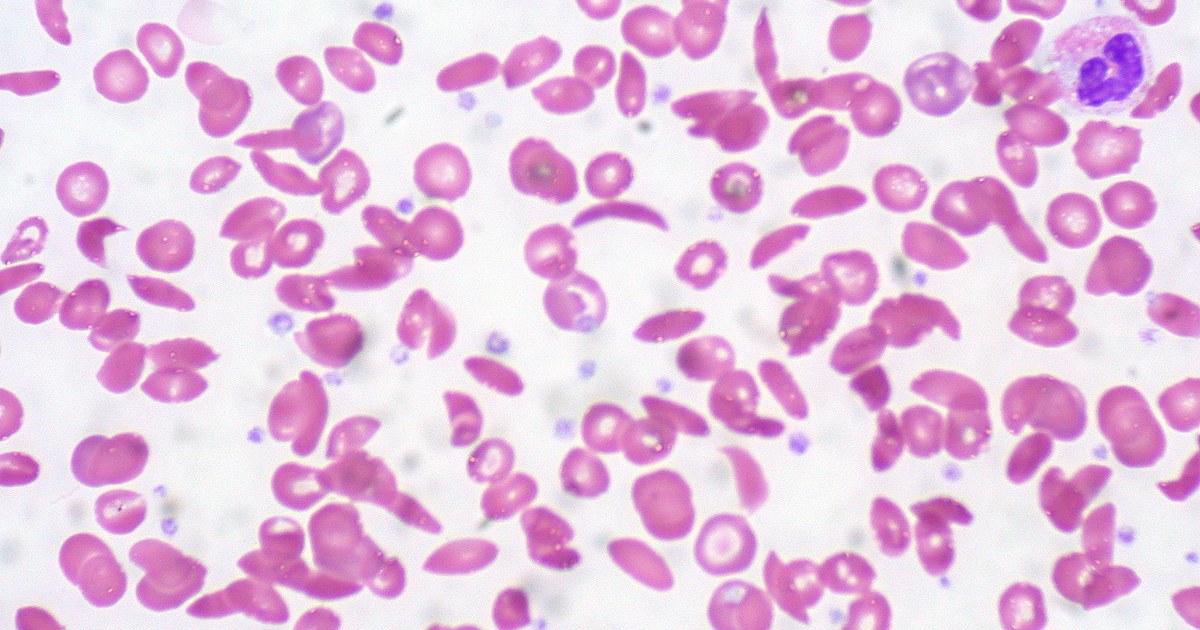
Table of contents
- Why this is a reasoning scenario
- Sickle cell trait is not sickle cell disease
- Pathophysiology: why the spleen
- How the condition presents
- The differential diagnosis
- Tests: what to order and when
- Management
- Triggers beyond altitude
- Complications and what to monitor
- The contrast with sickle cell disease
- Reasoning: what stays from the case
- How NEXO helps train this reasoning
- Frequently asked questions
- Final checklist
- References
A 30-year-old man with no known disease travels on a multi-hour commercial flight. In the second half of the trip, he feels severe pain on the left side, under the ribs, radiating to the shoulder, and starts vomiting. He tells the doctor who offers to help that he had similar, milder pain after a trip to a mountain town the year before, and that at the time they said it was gastritis. He has never had a hemoglobin test. The scene is fictional and was written for teaching.
This text uses the scenario as a setting for clinical reasoning. The question that unlocks the case is simple and rarely asked: does anyone in the family have sickle cell disease, or has he ever heard that he has the trait? The text is not a summary of airline rules. If you play the case of the day on NEXO, you will recognize the challenge: a condition considered benign can explain a severe picture when the environment changes.
Key points
- Sickle cell trait is not sickle cell disease, but it can cause splenic infarction in hypoxia.
- Pain in the left hypochondrium during a flight or a climb to the mountain is the central clue.
- There are reports of splenic infarction linked to international flight, but the role of the cabin is not established.
- A CT scan done early may look almost normal, and the infarction may appear days later.
- Hemoglobin electrophoresis confirms the trait.
- Most reports involved conservative management, with oxygen, fluids and analgesia.
Why this is a reasoning scenario
The case brings together a common symptom, an environment that changes physiology and a condition that almost no one associates with acute disease. Abdominal pain with vomiting on a flight usually leads to digestive hypotheses, such as gastritis, pancreatitis or biliary colic. The location in the left hypochondrium, the radiation to the shoulder and the repetition after a trip to the mountain point to another organ: the spleen.
A 2026 Canadian report describes a 33-year-old man with no relevant medical history who had sudden, intense abdominal pain during an international flight and arrived at the emergency department 24 hours later with pain in the left upper quadrant (Chadelat et al., 2026). The unenhanced CT scan looked normal, and only the contrast phase showed the splenic infarction. Electrophoresis revealed sickle cell trait, which he did not know he had, and his mother and sister also had the trait.
What the scene teaches
The passenger brings a history that repeats in two environments with less oxygen. The repetition is the clue. The post on signs, symptoms and history shows how an old, poorly explained episode can be the key to the current episode.
Sickle cell trait is not sickle cell disease
The distinction is essential and protects the patient from two errors. The report of the expert panel of the American heart, lung and blood institute states that sickle cell trait, or HbAS, is not a form of sickle cell disease, and that people with the trait do not have the vaso-occlusive crises typical of the disease (NHLBI, Expert Panel Report, 2014). The same report describes the laboratory profile of the trait with HbS up to about 40 and HbA above 60 per 100 of hemoglobin.
A review by hematologists from the American institute notes that people with the trait are usually asymptomatic and have a life expectancy similar to those without it (Xu and Thein, 2019). The authors cite splenic infarction documented in case reports, often, but not always, in men exposed to altitude, and warn that, without detailed genetic study, one cannot conclude that the trait alone explained each case. The reasoning must hold both ideas at the same time.
The trap of "the trait does not cause disease"
The sentence is true for everyday life and false for a low-oxygen environment. In a study of health records in Colorado, with 1460 adults with trait and 7300 controls, the trait was strongly associated with splenic infarction, with an odds ratio of 55.9 (Stafford et al., 2025). The post about heuristics in clinical reasoning shows how simple rules help in daily life and fail precisely on the exceptions.
Pathophysiology: why the spleen
Hemoglobin S tends to polymerize when it loses oxygen. In trait, the amount of HbS is lower than that of HbA, and under normal conditions sickling is of little relevance. In hypoxia, dehydration, cold or intense exercise, the proportion of red cells that sickle can grow. The spleen is the most vulnerable organ because blood passes slowly through it, in an environment with little oxygen and more acid, which favors sickling and obstruction.
Goodman's series gathered 25 patients with altitude-associated splenic syndrome in people with trait, all male. In the 17 with electrophoresis, HbA was greater than HbS, and HbS was between 37 and 45 per 100, a trait profile and not a disease profile (Goodman et al., 2014). The authors cite the greater rigidity of red cells and the greater blood viscosity in trait as a possible predisposition, worsened by the drop in oxygen pressure at altitude.
And the airplane cabin?
The pressurized cabin is not at sea level, but the link between cabin and splenic infarction in trait comes from case reports, not from studies that measure this risk. The authors of the Canadian report cite hypoxia and dehydration at altitudes above 3000 meters and on plane trips as contributors (Chadelat et al., 2026). To gauge the risk, it is worth looking at the altitude at which the syndrome appears on land. In Goodman's series, the 22 visitors who lived at sea level fell ill with peak exposures between about 2300 and 2900 meters, ski resort altitudes and not expedition altitudes, and all 20 with available data had pain in the first 24 hours after reaching the highest point (Goodman et al., 2014).
Prohl's report points to other contributors. The patient had severe untreated sleep apnea, which worsens hypoxia during sleep at altitude, and hyperglycemia, which favors dehydration (Prohl and Vaidya, 2025). The post about linking mechanism and symptom shows how to add small factors to explain a large event.


How the condition presents
The main symptom is pain in the left upper quadrant, often with nausea, vomiting and sometimes left shoulder pain. Prohl's report describes a man who, after going up to a mountain town, had abdominal pain and shortness of breath, with saturation of 92 on room air, tachycardia and high blood pressure at the first visit (Prohl and Vaidya, 2025). An X-ray showed a small left pleural effusion, and he left with an antibiotic for pneumonia, without repeating the abdominal imaging.
Rarity also delays the diagnosis. A report from Hiroshima describes a 24-year-old man with left flank pain after climbing Mount Fuji. In a review of 13 reports published in Japan, 12 occurred on Mount Fuji and all involved foreigners (Haratake et al., 2026). The authors note that the HbS gene is rare in Japan and that familiarity with the trait is still limited.
The clue that repeats
The passenger in the case had a similar episode after the mountain trip. In Goodman's series, conservative management with transfer to a lower altitude usually had a good outcome (Goodman et al., 2014). A pattern of pain that appears at altitude and goes away on descent is a piece of data worth gold in the history, and it is almost never asked about.
An American report shows the same scene with another hemoglobin, HbSE. A 55-year-old woman had pain in the left upper quadrant during a hike at about 3350 meters in the Swiss Alps, and the pain worsened on the return flight (Pajak et al., 2020). The CT showed infarction of more than half of the spleen.
The differential diagnosis
Severe pain in the left hypochondrium with vomiting has several explanations, and the reasoning needs to go through them. The hypotheses the scene requires considering are:
- Splenic infarction due to sickle cell trait in hypoxia.
- Thromboembolic splenic infarction, of cardiac origin or due to thrombophilia.
- Acute pancreatitis.
- Left renal colic.
- Mesenteric ischemia.
- Left lower lobe pneumonia or pleural effusion with referred pain.
- Vaso-occlusive crisis in undiagnosed sickle cell disease.
Pneumonia deserves special attention because it has already been the wrong diagnosis in published reports. A small left pleural effusion may be a reaction to the spleen infarction, and not a lung infection (Prohl and Vaidya, 2025). The vaso-occlusive crisis is in the differential to remind us that, if electrophoresis shows sickle cell disease and not trait, management changes.
Closing too early
The onboard doctor and the first hospital tend to stop at the first common explanation. The post on diagnostic pause helps build the habit of reviewing the history before concluding. One question about altitude, travel and family changes the whole list.
Tests: what to order and when
Hemoglobin electrophoresis confirms the trait. In the Canadian report, HbS was 39.2 and HbA was 48 per 100 (Chadelat et al., 2026). In Prohl's report, screening for sickling was positive and electrophoresis defined the profile (Prohl and Vaidya, 2025). The American report describes the AS profile, with HbS up to about 40 and HbA above 60 per 100, which helps separate trait from disease (NHLBI, Expert Panel Report, 2014).
A trait profile does not always end the investigation. The review by Xu and Thein describes a 19-month-old girl, identified as carrying the trait on newborn screening, who had a crisis with splenic sequestration during a flight and needed a splenectomy. Sequencing showed a second mutation in the same HbS gene (Xu and Thein, 2019). When the picture is more severe than expected for the trait, it is worth discussing the case with hematology.
Contrast-enhanced CT is the most used imaging test. Prohl's report teaches an important precaution, however: the CT done 12 hours after onset was read as mild heterogeneous enhancement, with no acute disease, and only in retrospect was a large area without enhancement seen in the portal venous phase (Prohl and Vaidya, 2025). The CT repeated 10 days later showed a large, clear infarction.
The shape of the infarction tells the cause
The same report describes that the infarction from the trait had a different shape from the typical wedge of thromboembolic infarction, which is the most common cause of splenic infarction in general (Prohl and Vaidya, 2025). In the Mount Fuji report, however, the area without enhancement was wedge-shaped (Haratake et al., 2026), and so the shape helps, but does not separate the causes on its own. The post on pretest probability explains why a normal image changes little when the history is very suggestive.
| Finding | What it suggests | Source |
|---|---|---|
| Pain in the left hypochondrium during flight or at altitude | Splenic infarction, especially with trait | Goodman et al., 2014 |
| Pain in the first 24 hours after ascent | Moderate altitude is already enough | Goodman et al., 2014 |
| HbA greater than HbS, HbS between 37 and 45 per 100 | Trait profile, not disease | Goodman et al., 2014 |
| CT in the first hours nearly normal | Infarction may appear days later | Prohl and Vaidya, 2025 |
| Small left pleural effusion | May be a reaction to the infarction, and not pneumonia | Prohl and Vaidya, 2025 |
| AS profile on electrophoresis | Trait, and not sickle cell disease | NHLBI, 2014 |
Management
The management described in the reports is supportive. In the final care of Prohl's report, the patient received supplemental oxygen, intravenous fluids, antiemetics and opioid analgesia, and was discharged 36 hours after symptom onset (Prohl and Vaidya, 2025). The sources read do not provide opioid doses for this scenario, and so the text does not include them.
In Goodman's series, 20 of 25 patients had conservative management, with descent to a lower altitude, intravenous hydration, oxygen, analgesia and antiemetics, and 5 underwent splenectomy, one of them for rupture and another for hemorrhage (Goodman et al., 2014). An Italian panel of experts describes splenic infarction in trait as a condition that very rarely requires splenectomy and that usually has complete recovery with rest, hydration, oxygen, analgesia and rapid transport to a lower altitude (Pinto et al., 2023).
On board and after landing
On board, what can be done is oxygen, oral hydration if tolerated, analgesia available in the kit and contact with the ground medical team. After landing, admission allows intravenous hydration, adequate analgesia, imaging and electrophoresis. The authors of the Canadian report recall that treatment is supportive, with fluids and analgesia, and that anticoagulant is not indicated, because the event is vaso-occlusive. The patient received enoxaparin for 5 days, stopped when electrophoresis arrived (Chadelat et al., 2026). In the HbSE report, anticoagulation was followed by hemorrhagic transformation of the infarct, and the authors ask that it be restricted to confirmed thromboembolic events (Pajak et al., 2020).
Flying again
The sources read do not define when a person can fly again after a splenic infarction, and the decision remains individual. The Italian panel observes that splenic infarction does not appear in people with trait who were born or have lived for many years at high altitude, which suggests a protective effect of acclimatization (Pinto et al., 2023).
For the future, Prohl lists precautions that make sense for people with trait: adequate hydration, avoiding intense and prolonged exercise in the heat, acclimatization to altitude, attention to the risk of thrombosis during long immobility and seeking care promptly in the face of acute abdominal pain or blood in the urine (Prohl and Vaidya, 2025).


Triggers beyond altitude
Hypoxia is the most remembered trigger, but it does not act alone. In Goodman's series, only 3 of the 22 visitors had the pain during skiing, and the others did not link the onset to exercise. The authors point to dehydration from insufficient water intake at altitude as a possible factor added to hypoxia (Goodman et al., 2014). Intense exercise and cold appear in other reports as factors that add to the effect of low oxygen pressure.
In a Colombian study with 51 patients with trait, 27 had had complications, almost all active-duty military personnel. Spleen complications were the main ones, and the change in altitude was the most frequent associated factor (Vargas-Hernández et al., 2023). In Prohl's report, sleep apnea and hyperglycemia added nocturnal hypoxia and fluid loss (Prohl and Vaidya, 2025). On a long flight, the passenger in this case may have drunk little water, slept badly and sat for hours, which adds dehydration to the mild hypoxia of the cabin.
People with trait who do not know
Many people with trait have never had electrophoresis. In the Colorado study, in 33 of the 41 patients with splenic infarction the trait was diagnosed at the same visit (Stafford et al., 2025). The Italian panel estimates that more than three hundred million people worldwide have sickle cell trait (Pinto et al., 2023), which makes trait a frequent condition and not a textbook rarity. In a busy emergency department, this means that people with trait come through every day, almost always for reasons that have nothing to do with it. The question only makes a difference when the clinical picture and the setting combine, as in the case of this passenger.
For the history, this means the question has to be asked differently. Instead of asking "do you have sickle cell anemia?", it is worth asking whether anyone in the family has the disease, whether the person has already had the newborn screening test or a hemoglobin test, and whether they have ever had abdominal pain at altitude, on a flight or after intense exercise. The post about implicit biases in diagnosis discusses how assumptions about who has a given condition can delay the right question.
Complications and what to monitor
Most splenic infarcts from the trait resolve well, but some complications call for attention. In the Colombian study, 18.5 in every 100 symptomatic patients needed a splenectomy (Vargas-Hernández et al., 2023). The Italian panel recalls that, in the most severe cases, the spleen can rupture and require emergency surgery, and suggests that, after a documented infarct, the person be treated as someone with functional hyposplenism, with the full vaccine schedule (Pinto et al., 2023).
In Goodman's series, 5 of 25 patients had a splenectomy, which shows that the course is not always benign (Goodman et al., 2014). The sources read do not define criteria for indicating surgery, and so the text does not include them.
Signs that change management
- Pain that worsens despite analgesia.
- A drop in hemoglobin or hemodynamic instability, which suggest bleeding.
- Persistent fever, which calls for repeat imaging.
- Pain that returns on new exposure to altitude.
These signs call for a new assessment and, often, new imaging. The post about prognostic reasoning shows how to think about what comes after the diagnosis, and not only about the diagnosis itself.
The contrast with sickle cell disease
If electrophoresis shows sickle cell disease rather than trait, the reasoning changes. In vaso-occlusive crisis, the American report calls for analgesia to start within 30 minutes of triage or within 60 minutes of registration, parenteral opioid for severe pain and oxygen when saturation is below 95 (NHLBI, Expert Panel Report, 2014).
For long-term prevention, the same report recommends hydroxyurea in adults with an indication, at a starting dose of 15 mg/kg/day, reduced to 5 to 10 mg/kg/day in chronic kidney disease (NHLBI, Expert Panel Report, 2014). That dose is for sickle cell disease and does not apply to the trait.
Air travel in sickle cell disease
For people with sickle cell disease, flying is also a care topic. Guidance on in-flight oxygen varies. In a survey of professionals in North America, a minority recommended supplemental oxygen, and the majority advised hydration, painkillers in the luggage and warm clothing (Padda et al., 2020).
Reasoning: what stays from the case
The scenario teaches you not to rule out a condition because it is considered benign. Sickle cell trait is not a disease, but the environment can make it the cause of a serious event. The post about baseline rate in diagnosis recalls that the frequency of the trait varies greatly between populations, and that variation changes the probability before any test.
The second lesson is about the timing of imaging. A CT scan in the first hours that is almost normal does not close the case when the history is strong. The third is about repetition: two episodes in low-oxygen environments are a pattern, not a coincidence. The post about differential diagnosis with clues shows how to keep the hypothesis alive until the right test confirms it.
How NEXO helps train this reasoning
To use the case of the day as training, try three habits. Before your first guess, ask what environment the person has just left. With each clue, see whether it repeats an old episode. After the result, note whether you ruled out a hypothesis because you thought it was benign.
Three exercises with cases
Look for the environment. For each case, write down where the person was in the hours before and how that changes physiology.
Link episodes. Ask whether there was a similar picture before and under what condition.
Question the rule. Write a simple rule you used and a situation in which it would fail.
The post about learning based on clinical cases shows how cases help fix this habit.
The limits on using the game are described on the NEXO Economy page. If you research the teaching of clinical reasoning, the page for Researchers explains how to get in touch. Professionals who write or review cases find information on Curator and on Creators, and institutions can learn about the proposal on the partnerships page.
Frequently asked questions
Can sickle cell trait cause splenic infarction?
Yes. The Goodman series gathered 25 patients with altitude-associated splenic syndrome in people with the trait, with left upper quadrant pain in all of them (Goodman et al., 2014).
Can this happen on a pressurized commercial flight?
There is a report of splenic infarction associated with an international flight in a person with the trait (Chadelat et al., 2026), but the cabin risk has not been measured.
Does hemoglobin electrophoresis confirm the trait?
Yes. The AS pattern shows HbS up to about 40 and HbA above 60 per 100 (NHLBI, Expert Panel Report, 2014).
Is it worth repeating the imaging if the first CT looks normal?
Yes. In one report, the infarction only became clear on the CT repeated 10 days later (Prohl and Vaidya, 2025).
Do most people improve with conservative treatment?
Yes. Splenic infarction in the trait very rarely requires splenectomy and usually has a full recovery with supportive care (Pinto et al., 2023).
Final checklist
- I asked about air travel, altitude and exercise in the previous hours.
- I asked about similar episodes in other settings.
- I asked about sickle cell disease or trait in the family.
- I considered splenic infarction in left upper quadrant pain.
- I kept pancreatitis, renal colic and ischemia in the differential.
- I suspected pneumonia when there was only a small effusion on the left.
- I ordered hemoglobin electrophoresis.
- I ordered contrast CT and thought about repeating it if the first was nearly normal.
- I offered oxygen, hydration and analgesia.
- I advised hydration, acclimatization and seeking care quickly in the future.
Want to practice reasoning with progressive clues? Play the case of the day.
References
- Chadelat A, Tassart M, Bachmeyer C. International flight-associated splenic infarction in a 33-year-old man with sickle cell trait. CMAJ. 2026. PMID 42259533.
- Goodman J, Hassell K, Irwin D, et al. The splenic syndrome in individuals with sickle cell trait. High Alt Med Biol. 2014. PMID 25361178.
- Haratake D, Miyamori D, Ikeda K, et al. Splenic Infarction Associated with Sickle Cell Trait: A Diagnosis Based on a Characteristic History of Climbing Mt. Fuji, with a Brief Literature Review. Intern Med. 2026. PMID 40803848.
- National Heart, Lung, and Blood Institute. Evidence-Based Management of Sickle Cell Disease: Expert Panel Report. 2014. Panel report.
- Padda A, Corriveau-Bourque C, Belletrutti M, et al. Supplemental oxygen therapy recommendations in patients with sickle cell disease during air travel: A cross-sectional survey of North American health care providers. Paediatr Child Health. 2020. PMID 33390748.
- Pajak A, Li JC, Liu A, et al. Hemoglobin SE Disease Presenting as a High-Altitude Massive Splenic Infarction Complicated by Hemorrhagic Conversion and Splenectomy. Cureus. 2020. PMID 33052282.
- Pinto VM, De Franceschi L, Gianesin B, et al. Management of the Sickle Cell Trait: An Opinion by Expert Panel Members. J Clin Med. 2023. PMID 37240547.
- Prohl EG, Vaidya NK. Splenic Infarction in a Patient With Sickle Cell Trait Following High-Altitude Exposure. Cureus. 2025. PMID 39949449.
- Stafford KA, Osataphan S, Patell R, Key NS. Adverse clinical outcomes associated with sickle cell trait at high altitude. Haematologica. 2025. PMID 39363860.
- Vargas-Hernández DA, Uscategui-Ruiz AC, Prada-Rueda AJ, et al. Sickle Cell Trait, Clinical Manifestations and Outcomes: A Cross-Sectional Study in Colombia. Mediterr J Hematol Infect Dis. 2023. PMID 36908870.
- Xu JZ, Thein SL. The carrier state for sickle cell disease is not completely harmless. Haematologica. 2019. PMID 31097635.