Psychological first aid after a disaster
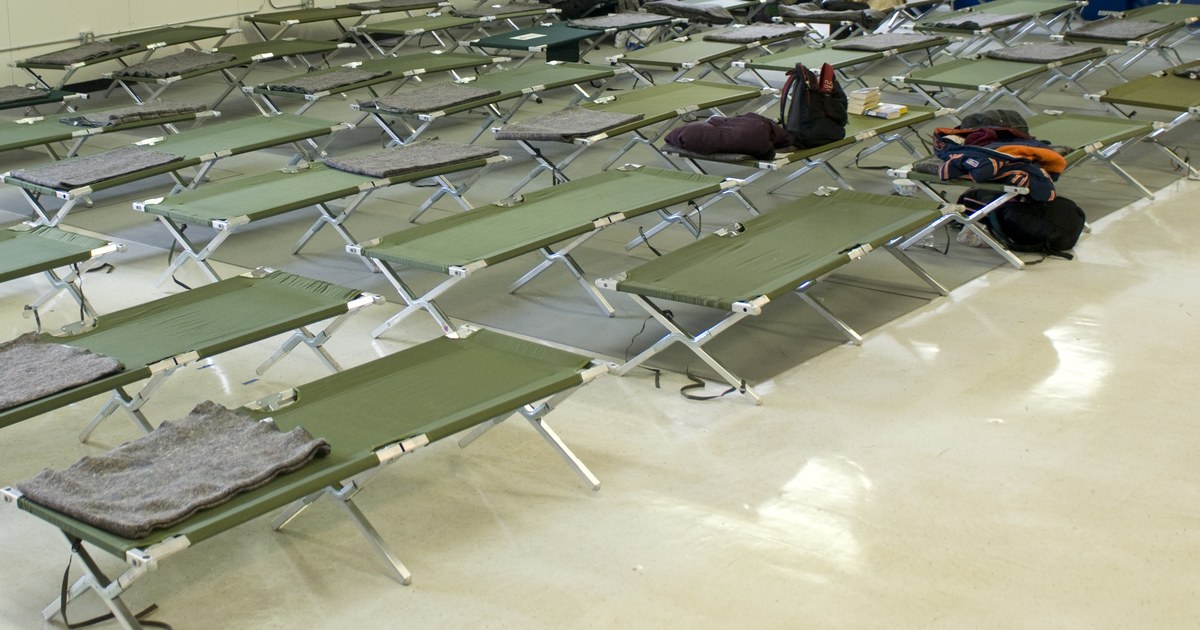
Table of contents
- What psychological first aid is
- Why forced debriefing fell out of use
- What the evidence shows
- Screen and treat those who do not improve
- How to apply it on shift and in the shelter
- Psychological first aid for those who care for others
- Common mistakes in the psychological response to disaster
- Frequently asked questions
- Take-home messages
- References
On the second night after a flood that destroyed half a neighborhood, a volunteer medical student is at the gym that has become a shelter. A woman sitting on a mat cries quietly and keeps repeating that she has not found her dog. A man paces back and forth and asks everyone in a vest whether there is any news of his brother. The coordinator suggests gathering everyone in a circle so that each person can tell what they lived through. The student hesitates. She read somewhere that making people relive the trauma right afterward can get in the way, but she does not know what to do instead.
Psychological first aid, known by the acronym PFA, tries to answer that question. It is not therapy, it is not diagnosis and it does not require anyone to tell what they lived through. It is a way of getting close, offering safety, listening and connecting the person with what they need. This text reviews what it is, what the evidence shows and where it is weak, why forced debriefing left the scene and how to apply these principles on shift and at the shelter.
Key points
- Psychological first aid is an initial supportive response, without forced debriefing and without requiring a detailed account of the trauma.
- The evidence is positive for anxiety, sense of safety and functioning, but weak for preventing post-traumatic stress and depression.
- The only large trial in an emergency department showed no advantage over psychoeducation at three months.
- Critical incident debriefing has mixed results and signs of harm in some studies.
- Those who still have symptoms weeks later need screening and trauma-focused treatment, not another supportive conversation.
What psychological first aid is
Psychological first aid is a form of support offered soon after disasters or critical incidents to reduce acute distress and restore people's coping and functioning (Adams and North, 2025). Adams and North discuss how ICU health professionals can use the intervention with patients, family members and colleagues, which shows that it is not exclusive to those who work in mental health (Adams and North, 2025).
The model did not come from nowhere. Shultz and Forbes recall that psychological first aid is not a new intervention, but a gathering of elements from earlier models that seemed to help recovery (Shultz and Forbes, 2014). The difference lies in what was removed: the expectation of a detailed review of the incident, which could be iatrogenic (Shultz and Forbes, 2014). The central idea, in the authors' words, was "first, do no harm" (Shultz and Forbes, 2014).
Protocols vary, but they share a base. A review by Wang and colleagues showed that 7 of 11 protocols analyzed aligned with four of the five essential elements described by Hobfoll: safety, calm, efficacy and connectedness (Wang and colleagues, 2024). The fifth element, hope, was less developed (Wang and colleagues, 2024). The common components were active listening, relaxation and stabilization, problem solving and practical help, and social connection with referral (Wang and colleagues, 2024).
Training manuals also reflect this diversity. Ni and colleagues analyzed the content of English-language manuals with topic modeling and found a structure of 10 themes, which included refugees, orientation activities, community applications, PTSD and other psychological problems, specific instructions for helpers and general curriculum (Ni and colleagues, 2023). The depth with which each manual addressed each theme varied widely (Ni and colleagues, 2023).
In practical terms, psychological first aid can be summed up in five moves, which follow Hobfoll's elements:
- Offer physical safety and move the person away from immediate danger.
- Help to calm, with presence, a calm voice and simple breathing techniques.
- Give back some sense of control, solving one practical problem at a time.
- Reconnect the person with family, friends or services.
- Open space for hope, with concrete information about what comes next.


Why forced debriefing fell out of use
For years, the standard response to traumatic events was psychological debriefing, in which the group met soon after the incident to recount what happened, talk about what they felt and hear explanations about expected reactions. Shultz and Forbes recount that debriefing was created for emergency professionals returning from stressful missions and was later extended to civilian disaster survivors (Shultz and Forbes, 2014). Controlled studies raised serious doubts about the long-term benefit, and there were signs that a minority could adapt worse after debriefing (Shultz and Forbes, 2014).
A recent systematic review by Ancarani and colleagues reinforces this picture. Of the 371 studies found, 6 were included, with 4751 participants from rescue teams and emergency services (Ancarani and colleagues, 2025). The results were mixed: some studies showed a reduction in PTSD symptoms, others showed no effect and some suggested harm (Ancarani and colleagues, 2025). The authors report that critical incident debriefing may even worsen post-traumatic stress symptoms, which led to its withdrawal in some jurisdictions (Ancarani and colleagues, 2025).
That is why the current recommendation is clear: no forced debriefing. The person is not asked to recount the trauma in detail, the mandatory circle is not organized, and silence is not interpreted as denial. Adams and North advise that, when listening, the professional may invite the person to talk, but should avoid revisiting unnecessary painful details when the person shows reluctance (Adams and North, 2025). The authors add that forcing discussion of difficult feelings can be countertherapeutic right after a critical incident, when emotions are strong (Adams and North, 2025). In the authors' example, sitting beside a shaken resident after a complication and asking how they are, listening without interrupting, helps much more than investigating the details of the procedure (Adams and North, 2025).
The difference is subtle and it matters. Talking is not forbidden. What is avoided is the expectation that everyone must talk, in the same way and at the same moment.
What the evidence shows
The popularity of psychological first aid grew much faster than the proof. Hermosilla and colleagues reviewed 9048 citations and found 12 studies with 1437 participants that assessed the intervention's effects on mental health (Hermosilla and colleagues, 2023). Only one was a randomized trial (Hermosilla and colleagues, 2023). All suggested a positive impact, with a reduction in anxiety, depression, post-traumatic stress and distress, and an improvement in the sense of safety, connection and control, but the risk of bias was generally high (Hermosilla and colleagues, 2023).
The integrative review by Wang and colleagues reached a similar result with 20 studies selected from 4735 records (Wang and colleagues, 2024). Psychological first aid showed a positive effect on reducing anxiety and improving functioning in the short and medium term, but the evidence for reducing PTSD and depressive symptoms was less convincing (Wang and colleagues, 2024). The authors highlight the wide variation in format, timing and duration of the interventions, and the poor documentation of fidelity to the protocol (Wang and colleagues, 2024).
The most rigorous test came from two emergency departments. Figueroa and colleagues randomized 166 adults who had suffered recent trauma to a single session of psychological first aid, with 78 participants, or to psychoeducation alone, with 88 (Figueroa and colleagues, 2024). The session included active listening, breathing training, organizing needs, referral to the social network and psychoeducation (Figueroa and colleagues, 2024). At three months, there was no significant advantage in reducing PTSD, with p of .148, or depressive symptoms, with p of .201 (Figueroa and colleagues, 2024). There were 86 losses to follow-up, and part of the psychoeducation group also received components of the intervention (Figueroa and colleagues, 2024). The authors found a dose-response relationship between the number of components delivered, the duration of the session and the reduction of PTSD symptoms (Figueroa and colleagues, 2024).
In epidemics, the gap is similar. Koda and colleagues reviewed systematic reviews on the use of psychological first aid in outbreaks of infectious diseases and concluded that the research is insufficient (Koda and colleagues, 2023). The intervention was widely used and could be delivered by phone or video, but there was no evidence of reduction in depression or insomnia (Koda and colleagues, 2023).
| Approach | When to use | What the evidence shows |
|---|---|---|
| Psychological first aid | Hours and days after the event, for those in distress | Positive effect on anxiety and functioning; weak for PTSD and depression (Wang and colleagues, 2024) |
| Single session in the emergency department | Adults with recent trauma | No advantage over psychoeducation at three months (Figueroa and colleagues, 2024) |
| Critical incident debriefing | Not recommended as routine | Mixed results, with signs of harm in some studies (Ancarani and colleagues, 2025) |
| Early intervention without screening | Everyone exposed | No clinically important difference compared with usual care (Roberts and colleagues, 2019) |
| Trauma-focused CBT | Those with symptoms of traumatic stress | Clinically important benefit (Roberts and colleagues, 2019) |
The honest reading is that psychological first aid is a humane and reasonable response to acute distress, with signs of short-term relief, but not a proven preventive treatment for post-traumatic stress disorder. As Shultz and Forbes summarize, the spread was rapid and the search for evidence continues (Shultz and Forbes, 2014).
Screen and treat those who do not improve
If psychological first aid does not provably prevent PTSD, what makes a difference? Roberts and colleagues reviewed 61 studies of early psychological interventions of multiple sessions, started in the first three months after trauma (Roberts and colleagues, 2019). For people exposed to trauma without prior symptom screening, no intervention showed a clinically important difference compared with usual care (Roberts and colleagues, 2019). For those who reported symptoms of traumatic stress, there was a clinically important benefit from trauma-focused cognitive behavioral therapy and from other cognitive approaches (Roberts and colleagues, 2019).
This finding organizes the response into stages. In the first days, everyone receives practical and humane support, without pressure to talk. In the following weeks, the team looks for those who are not improving, and these people are referred for specific treatment. The most common mistake is to invert the logic: offer intensive therapy to everyone right after the event and forget to look for those who are still unwell a month later.
The reasoning is similar to that of suicide risk assessment, in which the conversation captures things the scale does not capture, a topic discussed in the text about what the conversation captures that the scale does not capture. Some signs should lead to referral rather than support alone:
- Thoughts of hurting oneself or others, which require not leaving the person alone and calling for immediate medical help (Adams and North, 2025).
- Symptoms that persist or worsen in the following weeks, such as flashbacks, intense avoidance and insomnia.
- Inability to care for oneself or one's children.
- Increasing use of alcohol or other substances.
- Confusion, intense agitation or altered level of consciousness, which may have an organic cause.
The last item is a reminder that distress after a disaster is not always psychological. Hypoglycemia, withdrawal, infection or a missed dose of a continuous-use medicine can present as agitation or uncontrollable crying, and the text on priorities in the shelter shows who cannot wait. Labeling it too early as an emotional reaction is a form of affective bias.


How to apply it on shift and in the shelter
The principles fit into a few minutes of contact. Adams and North place skilled listening at the center of the intervention: hearing stories with genuine interest, without rushing and without interrupting (Adams and North, 2025). They note that training to relieve distress is not a mandatory part of intensive care education, and that many professionals therefore know little about how to help patients, families and colleagues (Adams and North, 2025). The best way to develop listening, according to the authors, is to practice under the observation of someone experienced (Adams and North, 2025).
A minimal script for those responding in a disaster:
- Introduce yourself, say what you can and cannot offer.
- Ask what the person needs right now: water, shelter, news of someone, a phone to let the family know.
- Solve one concrete thing before any long conversation.
- Listen if the person wants to talk, without asking for details of what they went through.
- Explain that reactions such as fear, crying, insomnia and irritability are common in the first days.
- Connect with family, social services and the mental health team when available.
- Agree on how the person can seek help if things get worse.
Some groups need special attention. In humanitarian crises, first support for survivors of sexual violence follows the same logic of listening without pressure, as the text on first support shows. In armed conflicts, mental health enters triage alongside infectious diseases, as discussed in mental health also enters. Communicating difficult news, such as confirming a death, benefits from structure, and the text on the six steps of SPIKES offers one.
Empathic listening is not an innate talent but a clinical skill that is trained, as the text on how to train empathy in the consultation shows. In a disaster, time is short and demand is enormous, which makes knowing how to listen briefly and in a focused way even more important.
Psychological first aid for those who care for others
Health professionals, first responders and volunteers are also affected. Corey and colleagues reviewed the use of group psychological first aid for humanitarian workers, including volunteers, based on 15 documents and expert opinion (Corey and colleagues, 2021). The result was a set of 7 program theories on how, why and for whom the group intervention works (Corey and colleagues, 2021). According to the authors, the group approach helps people understand their natural stress reactions (Corey and colleagues, 2021).
Access to training is still low. In a national survey in the United Kingdom with 388 nursing home workers during the pandemic, only 37, or 9.5 in 100, had completed the free psychological first aid training (Schoultz and colleagues, 2022). Having completed the training was a significant predictor of greater coping efficacy (Schoultz and colleagues, 2022).
The training seems to teach what it promises. Wang and colleagues reviewed 23 studies on psychological first aid training and identified three most used models (Wang and colleagues, 2021). Evidence of reasonable quality showed improvement in knowledge about adequate psychosocial response and in skills to support people in acute distress (Wang and colleagues, 2021). The authors, however, point to insufficient guidance on how to adapt the training and limited evaluation of its results (Wang and colleagues, 2021).
For the team, what applies to survivors also applies: support is available, with no mandatory round of recounting. The text on peer support shows how this support works after adverse events, and the text on prevention and repair of moral injury deals with the suffering of those who had to make impossible decisions. For the volunteer student, the text on when and where to seek help is a starting point.


Common mistakes in the psychological response to disaster
Some mistakes repeat and are avoidable. The first is organizing mandatory rounds of recounting right after the event, which reproduces forced debriefing. The review by Ancarani and colleagues on critical incident debriefing in first responders and military personnel included 6 studies, with 4751 participants, and found mixed results: some studies reported a reduction in PTSD symptoms, others found no effect, and some suggested possible harm (Ancarani and colleagues, 2025). Only one of the studies had high methodological quality, and the risk of bias was moderate to high in several of them (Ancarani and colleagues, 2025). The authors note that, because of these negative effects, the technique was withdrawn in some jurisdictions (Ancarani and colleagues, 2025).
The second mistake is asking for details of what the person went through when they do not want to tell (Adams and North, 2025). The third is treating everyone exposed as ill. Early intervention offered to everyone, without prior screening, showed no clinically important benefit (Roberts and colleagues, 2019), and the message that helps is different. Adams and North note that most people do not develop psychiatric illness after intense stressors, including major disasters, and that disturbing feelings unlike usual experience do not, by themselves, indicate an illness (Adams and North, 2025). Normalizing and validating the reaction usually comforts those who do not have a psychiatric disorder (Adams and North, 2025). When a disorder is suspected, the role of the person offering support becomes helping the person overcome stigma and reach treatment (Adams and North, 2025).
The fourth mistake is the opposite of the third: forgetting to look, weeks later, for those who still have symptoms, which is precisely the group in which trauma-focused treatment showed benefit (Roberts and colleagues, 2019). The fifth is promising what cannot be delivered, such as news of a relative or a date to return home. Concrete, honest information about what comes next sustains hope better than a promise that later falls apart. The sixth is ignoring one's own team, which also needs support and a group space to understand its natural stress reactions (Corey and colleagues, 2021).
Behind almost all these mistakes is the legitimate wish to do something in the face of enormous suffering. The challenge is to turn that wish into help that respects each person's pace. Current evidence supports a modest, well-executed response: safety, calm, practical help, connection and a clear path to treatment when symptoms persist.
Frequently asked questions
Is psychological first aid therapy?
No. It is an initial support response to reduce acute suffering and restore coping, and it can be used by health professionals from other fields, such as intensive care (Adams and North, 2025).
Do I need to make the person tell what happened?
No. Psychological first aid was designed precisely to avoid the detailed review of the incident, which could cause harm (Shultz and Forbes, 2014).
Does debriefing right after the disaster help?
The evidence is mixed, and some studies suggest that critical incident debriefing can worsen post-traumatic stress symptoms (Ancarani and colleagues, 2025).
Does psychological first aid prevent PTSD?
There is no consistent proof of that. The effect is clearer on anxiety and functioning (Wang and colleagues, 2024), and a trial in an emergency department showed no advantage over psychoeducation (Figueroa and colleagues, 2024).
What should be done for those who are still doing badly weeks later?
Track symptoms and refer to trauma-focused treatment, which has shown benefit in people with symptoms (Roberts and colleagues, 2019).
Does it work remotely?
In epidemics, it was delivered by phone or video, but without evidence of reducing depression or insomnia (Koda and colleagues, 2023).
Take-home messages
- Psychological first aid offers safety, calm, practical help and connection, without forced debriefing.
- No one should be forced to tell what they lived through.
- The evidence shows relief of anxiety and improved functioning, but not proven prevention of PTSD.
- Critical incident debriefing has mixed results and possible harm.
- Those who continue to have symptoms need screening and trauma-focused treatment.
- The team providing care also needs support and training.
References
- Adams TN, North CS. Psychological first aid in the intensive care unit. World J Crit Care Med. 2025. PMID 40491880.
- Ancarani F, Garijo Añaños P, Gutiérrez B, et al. The Effectiveness of Debriefing on the Mental Health of Rescue Teams: A Systematic Review. Int J Environ Res Public Health. 2025. PMID 40283813.
- Corey J, Vallières F, Frawley T, et al. A Rapid Realist Review of Group Psychological First Aid for Humanitarian Workers and Volunteers. Int J Environ Res Public Health. 2021. PMID 33557186.
- Figueroa RA, Cortés PF, Miller C, et al. The effect of a single session of psychological first aid in the emergency department on PTSD and depressive symptoms three months post-intervention: results of a randomised controlled trial. Eur J Psychotraumatol. 2024. PMID 38949539.
- Hermosilla S, Forthal S, Sadowska K, et al. We need to build the evidence: A systematic review of psychological first aid on mental health and well-being. J Trauma Stress. 2023. PMID 36300605.
- Koda M, Horinouchi T, Oya N, et al. Effectiveness of psychological first aid in infectious disease pandemics: An overview of systematic reviews. PCN Rep. 2023. PMID 38868135.
- Ni CF, Lundblad R, Dykeman C, et al. Content analysis of psychological first aid training manuals via topic modelling. Eur J Psychotraumatol. 2023. PMID 37503805.
- Roberts NP, Kitchiner NJ, Kenardy J, et al. Early psychological intervention following recent trauma: A systematic review and meta-analysis. Eur J Psychotraumatol. 2019. PMID 31853332.
- Schoultz M, McGrogan C, Beattie M, et al. Uptake and effects of psychological first aid training for healthcare workers' wellbeing in nursing homes: A UK national survey. PLoS One. 2022. PMID 36327237.
- Shultz JM, Forbes D. Psychological First Aid: Rapid proliferation and the search for evidence. Disaster Health. 2014. PMID 28228996.
- Wang L, Norman I, Edleston V, et al. The Effectiveness and Implementation of Psychological First Aid as a Therapeutic Intervention After Trauma: An Integrative Review. Trauma Violence Abuse. 2024. PMID 38281196.
- Wang L, Norman I, Xiao T, et al. Psychological First Aid Training: A Scoping Review of Its Application, Outcomes and Implementation. Int J Environ Res Public Health. 2021. PMID 33926108.