Multiple myeloma: kidney and bone care
Table of contents
- Why myeloma requires coordination
- The kidney: treating myeloma is treating the kidney
- The bone: imaging, pain and stability
- Frailty, geriatrics and rehabilitation
- Transplant center and local team
- Infection and new therapies
- How NEXO helps train this reasoning
- Frequently asked questions
- Final checklist
- References
A 67-year-old woman, a retired seamstress, arrives at the emergency department with lower back pain for two months, fatigue and nausea. Tests show anemia, high calcium and creatinine of 4.1 mg/dL. The CT scan finds a compression fracture at L1 and several lytic lesions in the pelvis. In three days, she is seen by the internist, the nephrologist, the orthopedist and the hematologist, and each one talks about a part of the body. Her daughter asks who is taking care of her mother as a whole and whether she will need dialysis forever. The scene is fictional and was written for teaching.
This text uses the case as a clinical reasoning scenario for students and health professionals. The topic is the organization of care in multiple myeloma: how hematology, nephrology, orthopedics, radiotherapy and rehabilitation divide tasks, how dentistry and geriatrics enter the plan and how the transplant center shares follow-up with the local team. The text does not replace your country's guideline or your service's protocol. If you play the case of the day in NEXO, you will recognize the challenge: the clues arrive from different specialties, and the diagnosis only appears when someone puts them all together.
Key points
- Myeloma affects bone, kidney, marrow and the immune system at the same time, and therefore requires clear coordination from the first week.
- In the kidney, what matters most for recovery is a rapid response to myeloma treatment, not the mechanical removal of light chains.
- In bone, whole-body imaging, an antiresorptive agent, pain control and spinal procedures are decided together.
- Dental evaluation before bisphosphonate or denosumab reduces problems that interrupt treatment.
- Frailty and functional age guide treatment intensity, and rehabilitation starts early.
- The transplant center and the local team need a written plan of who does what.
Why myeloma requires coordination
Multiple myeloma is a plasma cell neoplasm of the bone marrow. The diseased cells produce a monoclonal protein, often free light chains, and release signals that activate osteoclasts and inhibit osteoblasts. The result is a condition that spreads across several organs: bone loses mass and fractures, the kidney suffers from light chains and high calcium, the marrow produces fewer normal cells and the immune system becomes less able to produce antibodies. Each of these problems has its specialist, and that is where the risk lies. Without coordination, the patient in the scene may receive three plans that do not talk to each other: the nephrologist waiting for dialysis, the orthopedist thinking about surgery and hematology waiting for the marrow result.
The Chinese consensus on myeloma bone disease advocates a multidisciplinary approach that includes hematology, radiology, orthopedics and other specialties, with supportive care such as pain control, rehabilitation, nutritional support and dental evaluation, according to the document by Wang and colleagues. The same text describes that bone events occur in 35 to 46 out of every 100 patients already at diagnosis and in up to 75 out of every 100 in the first two years, according to the consensus. These numbers show that bone is not a detail: it defines pain, mobility and independence for years.
In practice, coordination starts with a simple question: who is the reference physician? In myeloma, it is usually hematology, which defines the treatment of the disease and calls the other areas. But the reference only works if the others know it exists and if there is a fast channel for urgent decisions, such as spinal cord compression, renal worsening or infection.
Who does what in the first week
| Area | Main question | Typical decision |
|---|---|---|
| Hematology | What is the diagnosis, the risk and the initial treatment? | Confirm myeloma, start therapy and coordinate the plan |
| Nephrology | Will the kidney recover? Does it need dialysis now? | Hydration, calcium correction, medication review, dialysis if indicated |
| Radiology | How many lesions are there and where is the fracture risk? | Whole-body imaging and report with risk lesions |
| Orthopedics and spine | Is the spine stable? Is there neurological risk? | Orthosis, vertebroplasty, kyphoplasty or surgery |
| Radiotherapy | Is there localized pain, compression or a lesion that threatens fracture? | Palliative radiotherapy in a limited field |
| Dentistry | Is the mouth ready for the antiresorptive? | Assessment and treatment of foci before the first dose |
| Rehabilitation | What can the patient do safely? | Mobility plan, fall prevention and exercise |

The kidney: treating myeloma is treating the kidney
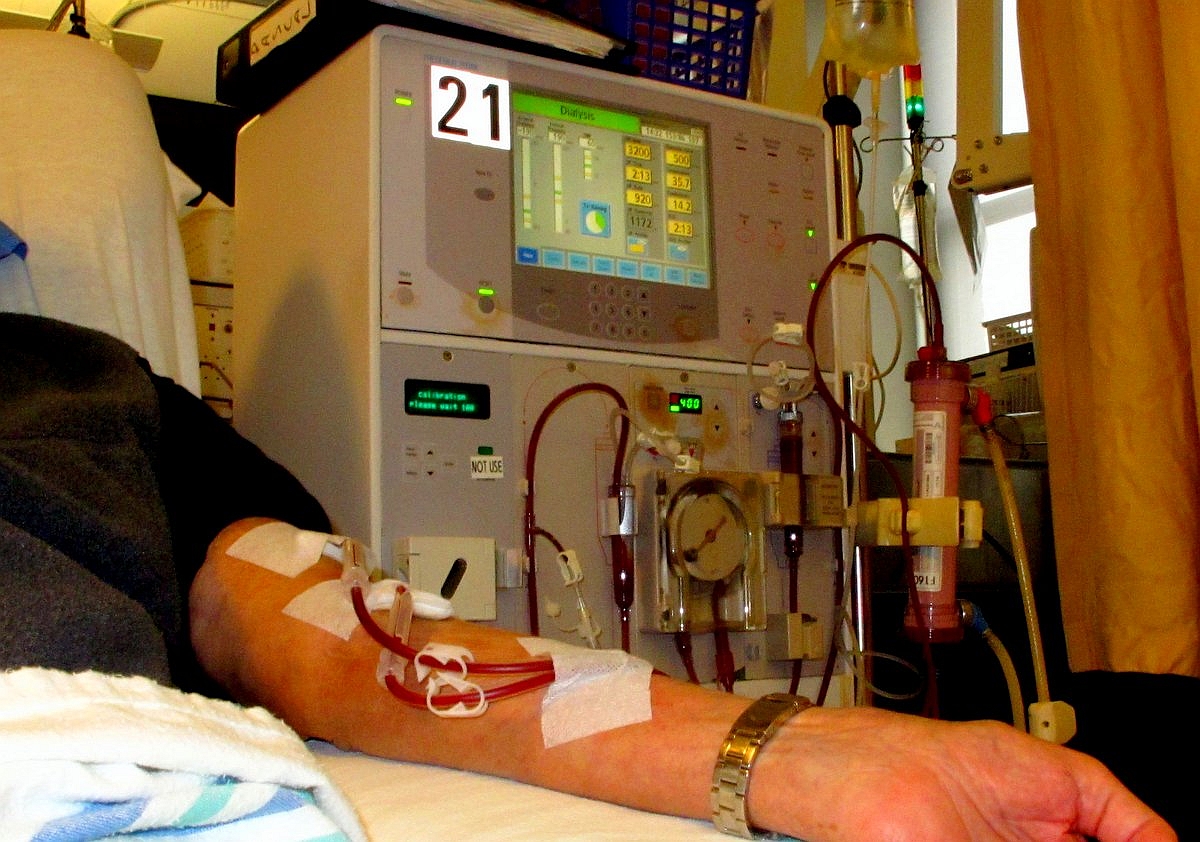
Kidney failure is one of the most frightening presentations of myeloma. The review by Gembillo and colleagues describes that it affects up to half of patients with newly diagnosed myeloma and that 2 to 4 in every 100 need dialysis at presentation, almost always due to light chain cast nephropathy, according to the review published in 2026. The same review shows that kidney recovery is associated with the speed and intensity of the fall in light chains in the blood, and that this fall mainly reflects the hematologic response to treatment.
Therefore, the first task of nephrology and hematology is a joint one: start myeloma treatment quickly and care for the kidney at the same time. Hydration, correction of calcium, stopping anti-inflammatory drugs and unnecessary contrast agents and reviewing drug doses are part of the care. Removal of light chains by extracorporeal methods has been much studied. The randomized trials of hemodialysis with high cut-off membranes, MYRE and EuLITE, showed no benefit in the primary kidney outcome, and EuLITE had more lung infections in the high cut-off arm, according to the Gembillo review. The authors' conclusion is that conventional high-flux hemodialysis, added to rapid myeloma treatment, is the standard when dialysis is needed.
MYRE also compared two bortezomib regimens in 184 patients with cast nephropathy who did not need immediate dialysis, and the kidney response at 3 months was about 45 and 51 in every 100, with no significant difference, according to the same review. For the team, the message is that effective treatment of the disease matters more than small variations in the regimen.
Dialysis can be temporary
The patient's daughter's question has an encouraging answer in some cases. At a Canadian center, 70 patients with newly diagnosed myeloma arrived with severe kidney failure requiring dialysis; 48 in every 100 became free of dialysis, and early achievement of a very good response, in less than 4.4 months, was the factor associated with recovery, according to the study by Sharma and colleagues. In the same group, 73 in every 100 underwent autologous transplant, and independence from dialysis, low LDH and transplant were associated with longer survival, according to the same article. It is a retrospective, single-center study and does not justify individual promises, but it helps the team say that dialysis at the start does not necessarily mean dialysis forever.
This conversation needs to happen with two voices. The nephrologist explains what dialysis is, the vascular access and the signs of recovery; the hematologist explains that the response to myeloma treatment is what weighs most. When each one speaks only about their part, the family hears two different stories.
- Start myeloma treatment without waiting for kidney recovery.
- Correct calcium and volume status and stop nephrotoxic drugs.
- Adjust the dose of each drug to the kidney function of the day.
- Monitor light chains and creatinine on agreed dates.
- Rediscuss dialysis at every response reassessment.
The bone: imaging, pain and stability
Bone is where myeloma hurts most. The review by Thalambedu and colleagues recalls that up to 90 in every 100 patients develop bone disease over their lifetime, more often in the spine, according to the review on vertebral augmentation procedures. Pain limits mobility, immobility worsens strength and the risk of falls, and a fall causes a new fracture. Breaking this cycle is the work of several areas.
Whole-body imaging
Skeletal radiography, once the standard, misses early lesions, especially in the spine and pelvis. The imaging group of the Asian myeloma network describes that a survey with plain radiographs underestimates active disease in up to 40 out of every 100 exams when compared with FDG PET or low-dose whole-body CT, according to the consensus by Nagarajan and colleagues. The authors argue for early detection because surgical, radiotherapy or mechanical interventions before fracture protect function. In practice, the radiologist who knows myeloma helps a great deal when the report points out lesions at risk of fracture, and not just the list of lesions.
Antiresorptives and pain control
Myeloma treatment is the foundation for the bone, but it is not enough. The Wang consensus describes the use of bisphosphonates or denosumab to reduce bone loss and skeletal events, with surgery and radiotherapy for structural or pain problems, according to the 2025 document. The choice between the two agents depends on kidney function, dental risk and logistics, and the dose and interval follow the label and the local protocol. For pain control, the same consensus notes that some opioids require adjustment and that fentanyl and butorphanol are preferred in severe kidney failure, with creatinine clearance below 30 mL/min, according to the consensus. Neuropathic pain is also common and has its own treatment.
Vertebroplasty and kyphoplasty
For painful vertebral fractures, vertebral augmentation procedures inject cement into the vertebral body. In a series of 792 patients with myeloma and compression fractures, treated with 2693 procedures at a single center, mean pain fell from 6.9 to 2.7 on the visual scale, fewer than 1 in every 100 patients needed antibiotics for local infection and there was no neurological deficit, according to the study by Erdem and colleagues. It is a case series, without a control group, but the result explains why interventional radiology and spine surgery are part of the team.
The review by Thalambedu describes that these procedures offer better and faster pain control, with likely lower morbidity than nonoperative approaches, and discusses indications, contraindications and timing, according to the 2024 review. Spine instability and spinal cord compression are another matter: they call for urgent surgical and radiotherapy assessment.
- Pain that worsens at night or when lying down.
- Weakness or tingling in the legs.
- Change in control of urine or stool.
- New and intense pain after minor exertion.
- New deformity of the spine or loss of height.
These warning signs should be in the material given to the patient and her family, with the phone number of whoever handles it.
Radiotherapy: when and what for
Radiotherapy has been used in myeloma for decades for symptomatic lytic lesions and extramedullary disease. The review by Schlusemann and colleagues summarizes that the goals are to relieve symptoms and prevent complications such as neurological deficit and pathological fracture, according to the review on radiotherapy in the era of immune therapies. The same authors describe new indications: radiotherapy as a bridge before CAR-T cell therapy, as rescue after CAR-T failure and for control of oligoprogressive or extramedullary disease during bispecific antibodies.
These new indications increase the need for conversation between the radiation oncologist and the hematologist. The field, the dose and the timing must respect cell collection, the cell therapy window and the risk of marrow toxicity. Radiotherapy that is too extensive can reduce marrow reserve and get in the way of future treatments. For those who want to understand cell therapy in myeloma, the text on CAR-T in myeloma, cytokine release syndrome and ICANS goes deeper into toxicity and monitoring.
Mouth, teeth and antiresorptives


Medication-related osteonecrosis of the jaw is a known complication of bisphosphonates and denosumab. It can be painful, become infected and interrupt treatment. In a Swedish cohort of 144 patients with newly diagnosed myeloma, all with clinical and radiological examination of the mouth and treatment of infectious foci before the bisphosphonate, invasive dental treatment was associated with a risk of osteonecrosis about eight times higher, and periodontitis, fewer teeth and three or more lines of treatment also weighed in, according to the study by Olofsson and colleagues. In the same group, about 30 in every 100 reported mouth pain or discomfort linked to treatment, according to the same article.
The authors' conclusion is practical: dental screening and planning can result in fewer oral infections and fewer interruptions of myeloma treatment. For the team, this means a simple flow. Hematology requests the dental assessment as soon as the antiresorptive is planned, dentistry treats the foci and reports when the mouth is ready, and dental follow-up goes into the schedule. When bone pain is intense and the antiresorptive cannot wait, the team records the decision and schedules the assessment as soon as possible.
- Clinical and radiological assessment of the mouth before the first dose.
- Treatment of caries, periodontitis and teeth with no prognosis.
- Guidance on hygiene and warning signs, such as bone exposure.
- Direct contact between dentist and hematology before any extraction.
- Periodic dental review during treatment.
Frailty, geriatrics and rehabilitation
Myeloma is a disease of older people. The document by Côté and colleagues, from Quebec, notes that the median age at diagnosis is 70 years and that about one third of patients are over 75, according to the recommendations on geriatric support. The authors highlight the IMWG frailty score, which adds points for age, basic and instrumental activities of daily living, and classifies the patient as fit, intermediate fit or frail. They propose a structured referral pathway, with screening by age and criteria for a geriatric consultation.
Frailty changes the conversation about intensity. In an IMWG report cited in the trial by Lee and colleagues, frailty was associated with worse survival and more treatment interruption, 31 versus 17 in every 100, according to the 2026 article. Age in the document is not enough: two people aged 75 can have completely different reserves. The geriatrician helps separate what is fixed frailty from what is a reversible effect of the disease, such as pain that prevents walking or anemia that causes fatigue.
Exercise after transplant
Rehabilitation does not have to wait for the end of treatment. In the randomized trial by Lee and colleagues, 32 pre-frail or frail myeloma survivors, up to 180 days after autologous transplant, were divided between app-guided exercise and usual care; the program had 8 weeks of supervised teleexercise and 8 weeks at home, with adherence of 85 and 78 in every 100 sessions, according to the trial published in 2026. The exercise group had a greater reduction in the frailty score and improvement in the time to rise from a chair, according to the same study. It is a small, single-center study, but it shows that guided exercise is possible even during the recovery period.
For the patient in the scene, physiotherapy starts in the hospital, with safe mobilization after the spine management, transfer training and guidance for home. Occupational therapy reviews the bathroom, bed and kitchen. Nutrition assesses weight loss and protein intake, especially if there is nausea from high calcium or kidney failure.
Transplant center and local team
For eligible patients, autologous stem cell transplant remains part of first-line treatment in many services. It requires a structure that not every hospital has: cell collection, admission to a specialized unit, hemotherapy and a team trained in infection. That is why the patient often alternates between two places, the transplant center and the team that follows them near home.
The qualitative study by Hansen and colleagues interviewed 12 patients with myeloma and 4 caregivers in focus groups and described that symptoms after transplant and the long recovery had a negative impact on the quality of life of patients and caregivers, according to the article published in 2023. The authors argue that the decision about transplant should be shared and include professionals, the patient and caregivers, according to the same study. This also applies to logistics: who will provide care, for how long and how transport will work.
Sharing follow-up works when there is a simple document, given to the patient and sent to the local team, with the following points.
- Summary of the diagnosis, the risk and the treatment received.
- Dates of the next response assessments and who performs them.
- Schedule of vaccines, prophylaxis and follow-up tests.
- Signs that call for contacting the transplant center.
- Phone number and name of who responds at each place.
Infection and new therapies
Myeloma reduces the production of normal antibodies, and many treatments deepen this immunodeficiency. With bispecific antibodies, the risk increased. In a retrospective study of 44 patients treated with teclistamab, there were 5 hospitalizations for infection in 4378 days with intravenous immunoglobulin and 14 in 4619 days without it, according to the study by Sheu and colleagues. It is a small observational study, but it reinforces that infectious diseases and hemotherapy are part of the team, especially in the more advanced lines.
Therapies targeting GPRC5D brought another type of effect. The Belgian consensus by Albrecht and colleagues describes taste changes, dry mouth, difficulty swallowing, skin and nail changes, which are usually low grade but affect quality of life and nutritional status; strategies include dose adjustment, mouth care, dermatological support and early referral to nutrition, according to the 2026 multidisciplinary recommendations. The document was written for hematologists, oncology nursing, dietitians and patients, an example of how the team expands as treatment changes.
For nursing, this means actively asking about taste, weight, skin and nails at every visit, and not waiting for the complaint. For nutrition, it means stepping in before weight loss. For hematology, it means knowing that a low-grade effect may be the reason the patient considers abandoning a treatment that works.
How NEXO helps train this reasoning
NEXO uses fictional cases with a real clinical presentation, with up to six clues, to train step-by-step decision-making. Myeloma is a great example of scattered clues: low back pain, anemia, high creatinine and altered calcium can be seen by different professionals without anyone putting the picture together. Training the question "what ties these clues together?" is the same skill the team uses to coordinate care. The text on how to train differential diagnosis with clues shows this exercise, and the post on interprofessional clinical reasoning discusses how professions share thinking.
The Researcher track goes deeper into the mechanisms behind the clues, the Closer profile helps measure one's own accuracy, Curator organizes case curation and Creators brings together those who produce medical content. Usage limits are at /economia. To think about how the emotion of the family and the team weighs on the decision, also see the text on affective bias.
Frequently asked questions
Who coordinates care in multiple myeloma?
Generally hematology, which defines the treatment of the disease and calls in nephrology, orthopedics, radiotherapy, dentistry, geriatrics and rehabilitation as needed. What matters is that everyone knows who the reference is.
Is dialysis at the start of myeloma forever?
Not always. Some patients recover kidney function, and a rapid response to myeloma treatment is the factor most associated with recovery. The team reassesses the need for dialysis at each stage.
Do special filters to remove light chains help the kidney?
Randomized trials with high cut-off membranes showed no benefit in the primary renal outcome. Conventional hemodialysis with rapid myeloma treatment is the standard when dialysis is needed.
Why go to the dentist before the bone medication?
Because bisphosphonates and denosumab can cause osteonecrosis of the jaw, and invasive dental treatment after starting them increases this risk. Treating the foci beforehand reduces infections and interruptions.
Does vertebroplasty resolve the pain of the fracture?
In case series, pain dropped substantially with few complications. The indication depends on spine stability and the absence of neurological compression, and it is decided with the spine team and radiology.
Can older adults undergo the full treatment?
It depends on fitness, not only on age. Frailty scores and geriatric assessment help choose the intensity, and rehabilitation can improve reserve.
Final checklist
- Referring physician defined and known to all areas.
- Renal function, calcium and nephrotoxic medications reviewed on the first day.
- Whole-body imaging with lesions at risk of fracture described.
- Spine management discussed with orthopedics, radiology and radiotherapy.
- Dental assessment before the antiresorptive.
- Frailty score and rehabilitation plan recorded.
- Infection prophylaxis plan according to the treatment.
- Follow-up document shared between the transplant center and the local team.
Play the case of the day on NEXO and practice putting together clues that arrive by different paths.
References
- Albrecht N, Boeckx E, Caers J, et al. Multidisciplinary approach to managing GPRC5D-related adverse events in relapsed or refractory multiple myeloma patients. Ann Hematol. 2026. PMID 42463915.
- Côté J, Desforges P, Dionne C, et al. Perspective recommendations on geriatric support for older adults with multiple myeloma based on challenges faced by a multidisciplinary team. Front Oncol. 2026. PMID 41869669.
- Erdem E, Samant R, Malak SF, et al. Vertebral augmentation in the treatment of pathologic compression fractures in 792 patients with multiple myeloma. Leukemia. 2013. PMID 23728152.
- Gembillo G, Soraci L, Lo Cicero L, et al. Extracorporeal Free-Light-Chain Removal in Myeloma Cast Nephropathy: Plasma Exchange and Hemodialysis Strategies in the Era of Effective Antimyeloma Therapy. J Clin Med. 2026. PMID 42795985.
- Hansen DK, Bixby T, Fixler K, et al. Experience of Autologous Stem Cell Transplant in Multiple Myeloma: The Patient and Caregiver Perspective. J Patient Exp. 2023. PMID 37766811.
- Lee K, Shamunee J, Lee H, et al. mHealth-Supported Exercise Rehabilitation to Reverse Frailty After Autologous Transplantation in Multiple Myeloma: Randomized Controlled Trial. JMIR Mhealth Uhealth. 2026. PMID 42166768.
- Nagarajan C, Anthony NF, Hillengass J, et al. Imaging in plasma cell disorders-consensus recommendations of the Asian myeloma network bone imaging workgroup. Lancet Reg Health West Pac. 2025. PMID 40535453.
- Olofsson R, Korytowska M, Almhöjd U, et al. Oral health, dental treatment, and medication related osteonecrosis of the jaw in multiple myeloma - a longitudinal cohort study. BMC Oral Health. 2024. PMID 38317122.
- Schlusemann T, Shumilov E, Reinartz G, et al. Role of Radiotherapy in the Era of Novel Immune-Based Treatment Strategies for Multiple Myeloma. Hematol Oncol. 2026. PMID 41832944.
- Sharma R, Atenafu EG, Masih-Khan E, et al. Survival and Renal Recovery in Newly Diagnosed Multiple Myeloma Patients Presenting With Dialysis-Requiring Severe Renal Impairment. Eur J Haematol. 2026. PMID 41536023.
- Sheu M, Molina Garcia S, Patel M, et al. Infection Prophylaxis with Intravenous Immunoglobulin in Multiple Myeloma Patients Treated with Teclistamab. Oncology. 2026. PMID 41129420.
- Thalambedu N, Kamran M, Al-Hadidi S. The Role of Vertebral Augmentation Procedures in the Management of Multiple Myeloma. Clin Hematol Int. 2024. PMID 38817694.
- Wang Y, Xu Q, Li Y, et al. Expert consensus on a multidisciplinary approach for the management of multiple myeloma-related bone disease. Cancer Pathog Ther. 2025. PMID 40697511.