DTPA for plutonium and americium: contaminated wound
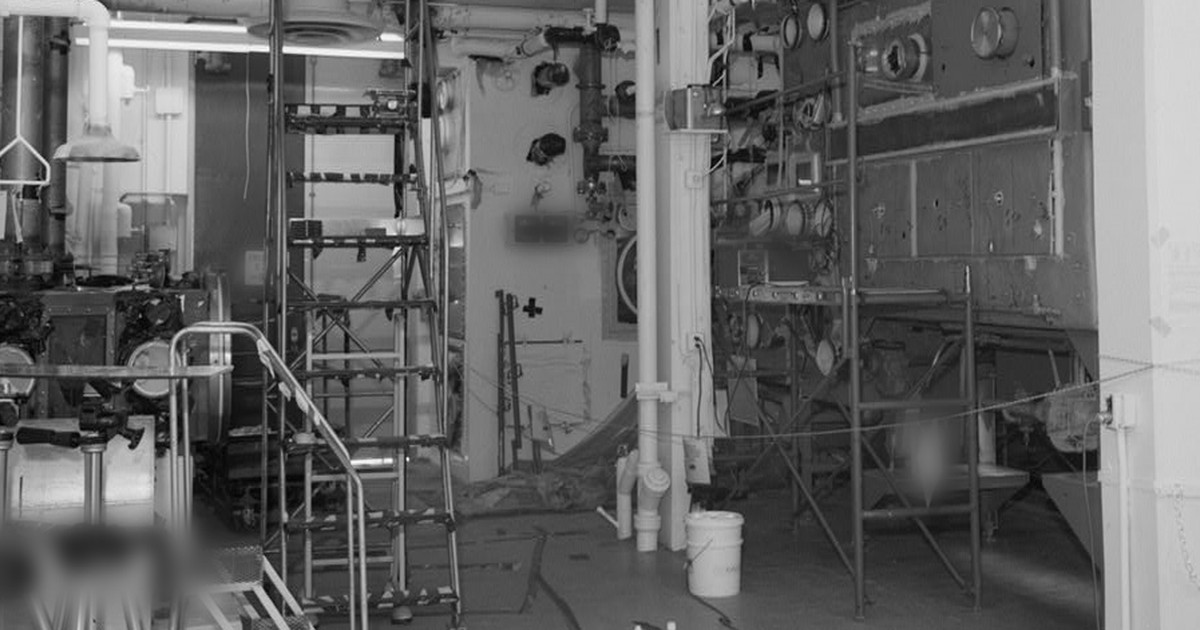
Table of contents
- Why this is a reasoning scenario
- What americium does inside the body
- The wound: wash, measure and decide on excision
- DTPA: which salt, what dose and by which route
- Risks and reasoning errors
- Regulatory status: FDA and WHO
- How NEXO helps train this reasoning
- Frequently asked questions
- Final checklist
- References
A 31-year-old laboratory technician is working in a glovebox preparing a solution of americium-241 nitrate. A glass vial cracks, the glove tears and she feels a prick at the tip of her left index finger. She pulls her hand out, sees a drop of blood and calls the radiation protection supervisor. The hand detector shows a high count over the cut. There is no other injury, she is conscious, without significant pain, and the cut is about 3 mm. In the facility infirmary, the nurse asks the on-call physician whether to give a stitch, whether the cut needs to go to surgery and whether there is any medicine to remove the material from inside the body. The scene is fictional and was written for teaching.
This text uses the case as a clinical reasoning scenario for students and health professionals. The topic is internal contamination by plutonium, americium and curium that enter through a wound, and treatment with DTPA salts. The focus is what the physician decides in the first hours: decontaminate the wound without increasing the damage, measure what remains, consider excision, choose between Ca-DTPA and Zn-DTPA, get the dose and route right and plan monitoring for months. It does not replace your service's protocol or the guidance of the radiation protection specialist. If you play the case of the day in NEXO, you will recognize the challenge: deciding with clues that arrive in sequence.
Key points
- A wound contaminated with an alpha emitter is a gateway into the blood, and time matters.
- The wound should be washed with saline without causing further trauma, and washing stops when the count stops falling.
- Excision of contaminated tissue enters the conversation when residual activity in the wound is high.
- The first dose, in the first 24 hours, is Ca-DTPA, 1 g intravenously in adults and 14 mg/kg in children, not exceeding 1 g.
- After the first dose, maintenance is preferably with Zn-DTPA, because Ca-DTPA removes more zinc, magnesium and manganese from the body.
- In a pregnant woman, treatment starts and continues with Zn-DTPA, unless internal contamination is high.
Why this is a reasoning scenario
The cut in the scene is small, and that is what makes the case treacherous. The temptation is to treat it as an ordinary laboratory injury: clean it, close it and release the patient. But a wound contaminated with americium is not just a skin problem. It is a gateway for an alpha emitter that, if it reaches the blood, will deposit in the liver and bone for years. The decision that matters is made in the first hours, when the material is still at the wound site or circulating.
The review by Li and colleagues on past incidents shows that, in each event, it is necessary to consider the radionuclide involved, the exposure route, individual monitoring, dose estimation and treatment (Li and colleagues, 2022). The same review presents occupational accidents in which the routes included not only inhalation and ingestion, but also wounds and skin absorption (Li and colleagues, 2022). Griffiths and colleagues recall that, in occupational accidents at nuclear facilities, the most likely routes of internal contamination by plutonium and americium are inhalation and a wound (Griffiths and colleagues, 2021).
The post on clinical decision-making helps organize the choices in sequence, and the post on interprofessional clinical reasoning shows why the conversation with the radiation protection supervisor is part of the management.
What the scene teaches
The scene trains six habits. The first is to treat what threatens life first and contamination only afterwards. The second is to wash the wound with saline and measure again. The third is to stop washing when the count no longer falls. The fourth is to discuss excision based on residual activity. The fifth is to give the first dose of Ca-DTPA in the first hours, without waiting for the urine test result. The sixth is to set up the plan for urine and stool collection and for zinc and blood count monitoring.
What is not at stake
The text does not deal with cesium, which has another antidote, nor with radioactive iodine, which was the topic of the previous article in this series. It also does not deal with acute radiation syndrome, because the external dose from a small cut with americium is low. The focus is internal contamination by actinides. The post about diagnostic pause helps you avoid closing the case as a trivial cut before looking at the detector.
What americium does inside the body
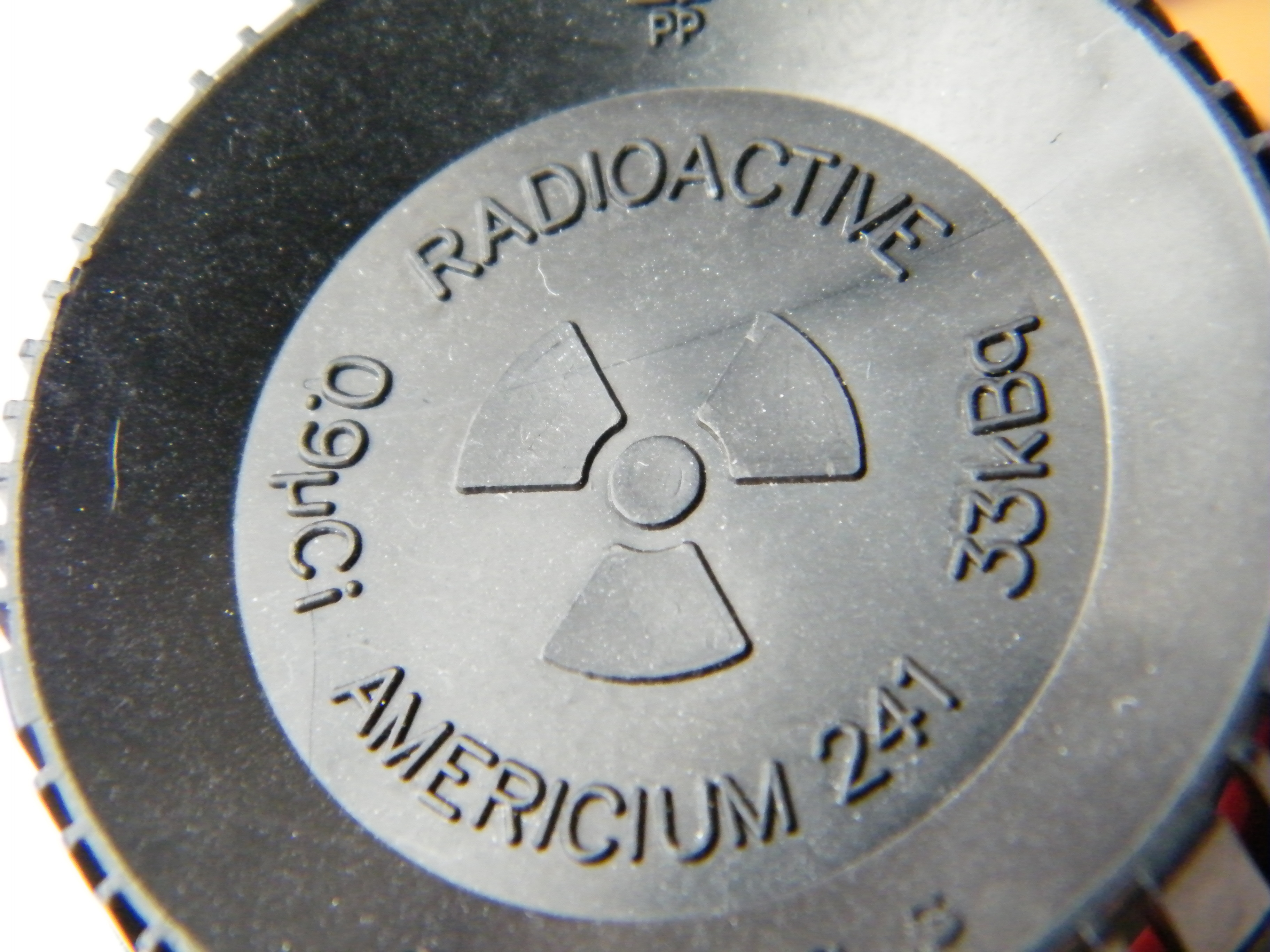
Americium, plutonium and curium are actinides that emit alpha particles. On intact skin they barely penetrate, because skin is usually a good barrier, except when it is damaged, as in a burn, or open, as in a wound (Kazzi et al., 2015). Kazzi et al. describe the routes by which radioactive material enters the body: the digestive tract, the respiratory tract, open wounds and, less often, intact skin (Kazzi et al., 2015).
After the wound, part of the material stays at the entry site and part passes into the blood. Griffiths et al. show that internal contamination by inhalation or through a wound deposits the material at the primary site, the lung or the wound, and also in the tissues that retain these elements in the body (Griffiths et al., 2021). The Ca-DTPA label explains that the chelator's effectiveness decreases over time because the actinides become incorporated into the tissues (Ca-DTPA label). It also says that effectiveness falls as the material becomes sequestered in the liver and bone (Ca-DTPA label).
The chemical form changes everything
The solubility of the compound matters as much as the radionuclide. Griffiths et al. contaminated wounds and lungs of rats with a poorly soluble mixed oxide or with more soluble forms of plutonium, such as nitrate and citrate (Griffiths et al., 2021). After the poorly soluble oxide, most of the activity stayed at the entry site, and little reached the rest of the body (Griffiths et al., 2021). DTPA protocols could not remove the insoluble actinide from the lung or from the wound (Griffiths et al., 2021). For moderately soluble actinides, local or intravenous DTPA reduced the activity both at the contamination site and in the organs (Griffiths et al., 2021).
In the scene, the material is americium nitrate in solution, a more soluble form. This increases the chance of passage into the blood and also the chance that DTPA will work. If the material were an oxide, the wound would be the main deposit, and excision would play an even larger role.

The wound: wash, measure and decide on excision
The first rule is that contamination does not take priority over care. The wound in the scene is small and the patient is stable, so decontamination can start right away. Kazzi et al. describe the sequence: a survey with a detector to locate the contamination in the facial orifices, on the skin and in the wound, followed by decontamination with soap and water wherever there is a count (Kazzi et al., 2015). They recommend washing contaminated wounds with saline, taking care not to cause additional tissue trauma (Kazzi et al., 2015).
When to stop washing
Washing is not endless. If a new survey of the wound no longer shows a drop in the amount of radiation detected, decontamination should stop, and the wound should be repaired as clinically indicated, without focusing too much on the contamination (Kazzi et al., 2015). The rule protects against the mistake of scrubbing the wound for hours and creating a lesion larger than the original one.
Damaged skin is harder to decontaminate. In the model of Van der Meeren et al., with rat skin outside the body, washing with water left 70 to 80 percent of the activity on damaged skin, versus 20 to 60 percent on healthy skin (Van der Meeren et al., 2024). In the same study, a gel with Ca-DTPA decontaminated damaged skin better than the Ca-DTPA solution (Van der Meeren et al., 2024). The gel is still an experimental product, and the finding serves to show that simple washing removes only part of the material.
Measuring what is left in the wound
After washing, the radiation protection team measures the activity left in the wound. The review by Li and colleagues describes a 2014 accident at the Mayak facility in Russia, in which a maintenance worker injured the palm of his left hand during a repair on contaminated equipment (Li and colleagues, 2022). Measurement with a semiconductor detector estimated 1 × 10⁴ Bq of plutonium-239 in the wound, which indicated the need to remove the contaminated tissue (Li and colleagues, 2022). Excision on the same day reduced the activity in the wound to 5.5 × 10² Bq (Li and colleagues, 2022). Subsequent measurements confirmed that no more plutonium passed from the wound into the blood (Li and colleagues, 2022).
The Mayak accident also shows the cost of delay. The delay in identifying the case came from the lack of immediate notification, the absence of a screening system for small puncture wounds with actinides and the month-long wait for the test analysis (Li and colleagues, 2022). At the scene, the technician notified the supervisor right away, and that is the first thing done right in this case.
Excision in another case
In June 2010, a glovebox operator at the Savannah River Site in the United States suffered a puncture wound while venting cans containing old material contaminated with plutonium-238 (Li and colleagues, 2022). Measurement with the whole-body counter showed contamination much greater than surface counts suggested (Li and colleagues, 2022). The dose avoided by physical removal with punch biopsies and excision, added to removal by DTPA, was estimated at 1.1 Sv (Li and colleagues, 2022). The lesson is that counting on the skin surface can underestimate what is inside the wound.
DTPA: which salt, what dose and by which route
The two DTPA salts approved by the FDA are trisodium calcium pentetate, called Ca-DTPA, and trisodium zinc pentetate, called Zn-DTPA (Ca-DTPA label) (Zn-DTPA label). The Ca-DTPA label indicates treatment of people with known or suspected internal contamination with plutonium, americium or curium, to increase the rate of elimination (Ca-DTPA label). Ca-DTPA forms stable chelates with metal ions by exchanging calcium for a metal with greater affinity, and the radioactive chelates leave in the urine by glomerular filtration (Ca-DTPA label).
DTPA does not work for every radionuclide. The label states that Ca-DTPA forms less stable chelates with uranium and neptunium and that efficacy against them is not expected (Ca-DTPA label). It also states that DTPA does not bind to radioactive iodine (Ca-DTPA label). If there are other contaminants or if the contaminant is unknown, other therapies may be needed, such as Prussian blue and potassium iodide (Ca-DTPA label).
Why calcium first
In rodents contaminated with plutonium and treated within one hour, Ca-DTPA increased urinary elimination about 10-fold compared with Zn-DTPA (Ca-DTPA label). The chelating capacity of Ca-DTPA is greatest right after contamination and for up to about 24 hours, while the material is still circulating (Ca-DTPA label). After the first dose, maintenance with Ca-DTPA or with Zn-DTPA gave similar elimination, but Ca-DTPA was more toxic at comparable doses (Ca-DTPA label). The Zn-DTPA label describes, in the same study, less loss of metals, lower mortality and absence of kidney, liver and intestinal lesions (Zn-DTPA label).
REMM summarizes the FDA sequence. If both products are available, the first dose should be Ca-DTPA, because it is more effective in the first 24 hours (REMM, DTPA). After that, the two have similar efficacy, but Ca-DTPA causes more loss of essential metals such as zinc (REMM, DTPA). If Ca-DTPA is not available or if treatment cannot start within the first 24 hours, treatment should start with Zn-DTPA (REMM, DTPA). The two salts should not be given at the same time (REMM, DTPA).
Doses
The package insert indicates a single initial dose of 1.0 g of Ca-DTPA intravenously for adults and adolescents (Ca-DTPA package insert). For children under 12 years old, the initial dose is 14 mg/kg intravenously, not exceeding 1.0 g (Ca-DTPA package insert). The maintenance dose in adults is 1.0 g once a day intravenously, and in children it is 14 mg/kg once a day, not exceeding 1.0 g per day (Ca-DTPA package insert). No dose adjustment is needed in renal failure, but it can slow the removal rate, and dialysis can be used in heavily contaminated patients (Ca-DTPA package insert).
The table summarizes the decision between the two salts.
| Situation | First choice | Package insert note |
|---|---|---|
| First 24 hours, adult | Ca-DTPA 1 g IV, single initial dose | More effective than Zn-DTPA in this period |
| First 24 hours, child under 12 years old | Ca-DTPA 14 mg/kg IV, up to 1 g | Inhalation route without established safety in children |
| Maintenance from the following day | Zn-DTPA 1 g IV per day | If only Ca-DTPA is available, give zinc supplementation |
| Start after 24 hours or without Ca-DTPA | Zn-DTPA | Similar efficacy after 24 hours |
| Pregnant woman | Zn-DTPA from start to finish | Ca-DTPA only if internal contamination is high |
| Contamination by inhalation only in the last 24 hours | Nebulized Ca-DTPA, diluted 1:1 | May worsen asthma |
Route of administration
The intravenous route is recommended and should be used when the route of contamination is unknown or when there is more than one likely route (Ca-DTPA package insert). The solution of 1 g in 5 mL can be given as a slow bolus over 3 to 4 minutes or diluted in 100 to 250 mL of 5 percent glucose solution, lactated Ringer's or saline (Ca-DTPA package insert). When contamination was by inhalation only in the previous 24 hours, Ca-DTPA can be nebulized, diluted at a ratio of 1 to 1 with sterile water or saline (Ca-DTPA package insert). REMM adds that, if the routes are multiple, such as inhalation and wound, the intravenous route is preferred (REMM, DTPA). The safety and efficacy of the intramuscular route have not been established (Ca-DTPA package insert).
In the scene, contamination is through a wound, so the route is intravenous. If inhalation of aerosol from the solution were suspected at the moment the vial cracked, the intravenous route would still be the choice, because it covers both routes.
The human data
All clinical data come from accidentally contaminated people (Ca-DTPA package insert). In the United States registry, 18 people had urine measurements before and after the chelator, and 17 received 1 g of Ca-DTPA as the first dose (Ca-DTPA package insert). After one dose, the mean urinary excretion enhancement factor was 25.7 (Ca-DTPA package insert). Results by the intravenous and inhalation routes were considered similar (Ca-DTPA package insert). The longest treatment lasted about 6.5 years (Ca-DTPA package insert).
The Hanford accident
The most cited case of a wound with americium is the Hanford case. On August 30, 1976, a resin column with about 100 g of americium-241 and nitric acid exploded at the Plutonium Finishing Plant and heavily contaminated a worker (Li and colleagues, 2022). After initial decontamination at the site, he received 1 g of Ca-DTPA intravenously about 2 hours after exposure (Li and colleagues, 2022). The team performed skin decontamination, wound debridement and surgical removal of fragments from the face (Li and colleagues, 2022). Ca-DTPA was given twice a day for the first four days and between days 16 and 25, with Zn-DTPA on days 5 to 15 and after day 26 (Li and colleagues, 2022). Treatment with Zn-DTPA continued for more than 4 years (Li and colleagues, 2022). The estimate is that prolonged use of the two salts prevented the deposition of 99 percent of the americium in internal organs (Li and colleagues, 2022).
Monitoring and duration of treatment
Monitoring starts before the first dose when possible. The package insert calls for baseline blood and urine samples: complete blood count with differential, urea, biochemistry and electrolytes, urinalysis, and radioassay of blood and urine (Ca-DTPA package insert). To build the elimination curve, one should obtain a baseline estimate of the internal burden and elimination measurements by whole-body counting, bioassay, or stool and urine samples (Ca-DTPA package insert). Kazzi and colleagues note that a 24-hour urine or stool collection allows measuring the activity of each element per liter (Kazzi and colleagues, 2015).
During treatment
During treatment, radioactivity in blood, urine and stool should be measured every week to track elimination (Ca-DTPA package insert). The complete blood count, urea, biochemistry, electrolytes and urinalysis should be monitored regularly (Ca-DTPA package insert). Ca-DTPA requires very careful control of serum zinc and the complete blood count, and zinc supplements should be given when indicated (Ca-DTPA package insert). The duration of treatment depends on the amount of internal contamination and on each person's response (Ca-DTPA package insert).
Urine alone can mislead. Grémy and colleagues followed a worker who inhaled plutonium and started DTPA months after contamination (Grémy and colleagues, 2021). The analysis showed that DTPA-induced plutonium excretion through stool contributed substantially to total removal (Grémy and colleagues, 2021). The authors argue for measuring plutonium in consecutive urine and stool collections after treatment to better estimate the benefit (Grémy and colleagues, 2021). Dumit and colleagues modeled the case of a worker who inhaled a mixture of plutonium and americium and received 1 g of Ca-DTPA on days 0, 5 and 14 (Dumit and colleagues, 2025). They point out that the increased excretion from the chelator changes plutonium kinetics and makes estimating the internal dose harder (Dumit and colleagues, 2025).
Guidance for the patient
The package insert gives practical guidance for those receiving treatment. The list helps the nurse explain what to do at home:
- Drink plenty of fluids and urinate often to dilute the radioactive chelate in urine and reduce the dose to the bladder {CA}.
- Use the toilet instead of a bedpan and flush several times after each use {CA}.
- Clean up spilled urine or stool completely and wash hands well {CA}.
- Wash clothing and sheets that came into contact with blood or urine separately {CA}.
- Do not breastfeed if internal contamination is known or suspected, with or without a chelator {CA}.
Risks and reasoning errors
The most common errors in this scenario come from treating the wound as trivial or treating the chelator as harmless. The list summarizes the main ones:
- Closing the wound without measuring residual contamination and losing the chance for excision {LI22}.
- Scrubbing the wound for hours instead of stopping when the count stops falling {KAZ}.
- Waiting for the urine result to give the first dose, when effectiveness is greatest in the first 24 hours {CA}.
- Continuing Ca-DTPA for days without zinc supplementation and without monitoring the complete blood count {CA}.
- Using DTPA for uranium, neptunium or iodine, against which it does not work {CA}.
- Nebulizing Ca-DTPA in a patient with asthma without caution {CA}.
Safety of Ca-DTPA
The package insert lists no known contraindications (Ca-DTPA package insert). Ca-DTPA removes metals such as zinc, magnesium and manganese from the body, and the loss increases with divided doses on the same day, with higher doses and with longer treatment (Ca-DTPA package insert). Therefore, only one initial dose of Ca-DTPA is recommended, and further therapy should continue with Zn-DTPA (Ca-DTPA package insert). Over time, zinc loss can inhibit a blood enzyme and suppress the bone marrow (Ca-DTPA package insert). Nebulization can worsen asthma (Ca-DTPA package insert). The package insert calls for caution in severe hemochromatosis, because there were deaths in patients who received up to 4 times the daily intramuscular dose for more than one day, with no established causal relationship (Ca-DTPA package insert).
In the United States registry, 646 people received at least one dose of Ca-DTPA or Zn-DTPA (Ca-DTPA label). The presence or absence of adverse events was recorded in 310 of them, and 19, or 6.1 percent, had at least one event (Ca-DTPA label). The events included headache, dizziness, chest pain, allergic reaction, dermatitis, metallic taste, nausea, diarrhea and reactions at the injection site (Ca-DTPA label).
Pregnancy
Ca-DTPA is considered teratogenic based on animal data and because chelation removes zinc from the body (Ca-DTPA label). The label recommends that a pregnant woman start and continue treatment with Zn-DTPA, if available, except in cases of high internal contamination (Ca-DTPA label). In these cases, the risk of radiation to the mother and the fetus must be weighed against the risk of Ca-DTPA, and a single dose of Ca-DTPA with zinc supplementation may be appropriate as initial treatment (Ca-DTPA label). The Zn-DTPA label says that treatment of a pregnant woman should start and continue with Zn-DTPA (Zn-DTPA label). REMM also indicates Zn-DTPA as the preferred treatment in pregnancy (REMM, DTPA).
Regulatory status: FDA and WHO
Both DTPA salts are approved by the FDA for known or suspected internal contamination with plutonium, americium or curium (Ca-DTPA label) (Zn-DTPA label). REMM records the announcement of the initial approval on August 11, 2004 (REMM, DTPA). The Ca-DTPA label describes 5 mL ampoules with 200 mg/mL, the equivalent of 1000 mg per ampoule, in boxes of 10 ampoules (Ca-DTPA label). The label asks that data from each treatment be sent to the manufacturer to build long-term response data (Ca-DTPA label).
DiCarlo and colleagues describe the United States preparedness for radiological and nuclear emergencies and cite both DTPA salts among the licensed products, alongside Prussian blue and potassium iodide (DiCarlo and colleagues, 2021). They note that the use of these products in a mass casualty event depends on factors such as the route of administration and the limited reach of each one against radionuclides (DiCarlo and colleagues, 2021).
The WHO guideline
The WHO assembled a group to develop evidence-based guidelines on the assessment and treatment of internal contamination with plutonium, americium and curium (Li and colleagues, 2025). The group uses the GRADE method at every step, from the research questions to the recommendations (Li and colleagues, 2025). The authors note that, once published, these will be the first evidence-based recommendations on this topic (Li and colleagues, 2025). They also note that the WHO 2023 guidance on national stockpiles recommends including Ca-DTPA and Zn-DTPA in these stockpiles (Li and colleagues, 2025). For the professional, this means knowing where your service's stockpile is and who releases the medication, before the accident.
How NEXO helps train this reasoning
NEXO publishes one fictional clinical case per day, with up to six progressive clues. You can attempt the diagnosis at each clue, searching for the ICD-10 code, and you receive proximity feedback at five levels. The format trains the same skill as this scene: putting together data that arrive gradually, such as the count in the wound, the chemical form of the material and the time since the accident, and deciding without closing too early. The post on case-based learning explains why this format works, and the post on diagnostic uncertainty helps you act before knowing the exact internal burden.
Three exercises with cases
The first exercise is to redo the scene with a technician who is 16 weeks pregnant and decide which salt to use and why. The second is to redo the scene with a poorly soluble oxide instead of the nitrate and discuss what changes between DTPA and excision. The third is to redo the scene assuming the technician only reported the accident three days later and decide which salt to use as the first dose.
Teachers and content creators can build their own cases in the space for Creators. The exercise works well in the classroom, in emergency simulations and in training for occupational health teams at nuclear facilities and laboratories.
Frequently asked questions
What is the initial dose of Ca-DTPA in adults?
1.0 g intravenously, as a single initial dose (Ca-DTPA label).
And in a child?
14 mg/kg intravenously, not exceeding 1.0 g (Ca-DTPA package insert).
Why switch to Zn-DTPA afterward?
Because after the first 24 hours the two have similar efficacy, but Ca-DTPA removes more zinc from the body (REMM, DTPA).
Does DTPA work for uranium?
Efficacy against uranium or neptunium is not expected (Ca-DTPA package insert).
When should wound washing stop?
When a new survey no longer shows a drop in the count (Kazzi et al., 2015).
Final checklist
- I treated what threatened life first.
- I washed the wound with saline without causing trauma.
- I stopped washing when the count stopped falling.
- I requested the residual activity measurement and discussed excision.
- I gave Ca-DTPA 1 g IV in the first hours, or 14 mg/kg in the child.
- I planned maintenance with Zn-DTPA and zinc supplementation if Zn-DTPA was unavailable.
- I collected baseline blood and urine and planned weekly urine and stool tests.
- I asked about pregnancy and breastfeeding.
Want to practice your reasoning with progressive clues? Play the case of the day.
References
- DiCarlo AL, Homer MJ, Coleman CN. United States medical preparedness for nuclear and radiological emergencies. J Radiol Prot. 2021. PMID 34153947.
- Dumit S, Avtandilashvili M, McComish SL, et al. Modeling Plutonium Decorporation in a Female Nuclear Worker Treated with Ca-DTPA after Inhalation Intake. Health Phys. 2025. PMID 39037363.
- Griffiths NM, Van der Meeren A, Grémy O. Comparison of Local and Systemic DTPA Treatment Efficacy According to Actinide Physicochemical Properties Following Lung or Wound Contamination in the Rat. Front Pharmacol. 2021. PMID 33841153.
- Grémy O, Blanchin N, Miccoli L. Interpretation of Enhanced Fecal and Urinary Plutonium Excretion Data under a 2-y Regular DTPA Treatment Started Months after Intake. Health Phys. 2021. PMID 34591820.
- Hameln Pharmaceuticals. Pentetate calcium trisodium injection. Package insert on DailyMed. Accessed on 24/10/2026. Official source.
- Hameln Pharmaceuticals. Pentetate zinc trisodium injection. Package insert on DailyMed. Accessed on 24/10/2026. Official source.
- Kazzi Z, Buzzell J, Bertelli L, Christensen D. Emergency department management of patients internally contaminated with radioactive material. Emerg Med Clin North Am. 2015. PMID 25455668.
- Li C, Alves Dos Reis A, Ansari A, et al. Public health response and medical management of internal contamination in past radiological or nuclear incidents: A narrative review. Environ Int. 2022. PMID 35378442.
- Li C, Kenbayeva Z, Dainiak N, et al. Development of Evidence-based Guidelines on Assessment and Management of Internal Contamination with Transuranic Actinides. Disaster Med Public Health Prep. 2025. PMID 40538032.
- Radiation Emergency Medical Management. DTPA (Diethylenetriamine pentaacetate). Accessed on 24/10/2026. Official source.
- Van der Meeren A, Devilliers K, Griffiths N, et al. Decontamination of Actinide-contaminated Injured Skin with Ca-DTPA Products Using an Ex Vivo Rat Skin Model. Health Phys. 2024. PMID 38768323.