Bedside teaching: how to teach in front of the patient
 Alexei Peter dos Santos, Thiago Longo Moraes, and Caroline Wilhelmsen Martins
Table of contents
- What bedside teaching is
- What actually happens in sessions
- The patient at the center of the scene
- How to react to the student's error
- Short models for teaching reasoning
- A script in three stages
- Those who teach also need to learn
- How NEXO helps train this reasoning
- Frequently asked questions
- Take-home messages
- References
The visit starts in the hallway. The resident presents the case for ten minutes, the group discusses the hypothesis, the attending asks questions and someone recalls the latest article on the topic. When everyone finally enters the room, the patient has already been discussed in full without hearing a word. They get a quick greeting, an auscultation and a goodbye.
Bedside teaching is something else. It is learning in the patient's presence, with the patient taking part in the scene. This text shows what studies observed in real sessions, how to include the patient, how to react to a student's error and which short models help the attending teach clinical reasoning without turning the visit into a lecture.
Key points
- In the recorded sessions, less than a third of the teaching time took place at the bedside (Blaschke, 2022).
- The patient can be included as a participant or treated as an object of demonstration, and the difference shows in the language and in the group's position (Elsey, 2017).
- Patients describe bedside teaching in an altruistic and positive way, with attention to privacy (Carty, 2020).
- Memory errors receive more rejection and less explanation than reasoning errors (Rubisch, 2023).
- SNAPPS increased the number of hypotheses discussed compared with the traditional presentation (Jain, 2019).
- The evidence on the format is still limited, and those who teach rarely receive specific training (Rotthoff, 2022).
Summary
- What bedside teaching is
- What actually happens in sessions
- The patient at the center of the scene
- How to react to a student's error
- Short models for teaching reasoning
- A three-step script
- Those who teach also need to learn
- How NEXO helps train this reasoning
- Frequently asked questions
- Take-home messages
What bedside teaching is
A short and widely cited definition describes bedside teaching as the process of active learning in the presence of a patient (Blaschke, 2022). In its classic form, it brings together three people: a learner, who may be a student or a resident, someone more experienced and the patient (Ahmed, 2023).
The goals go beyond the physical examination. The literature links the format to communication with the patient, history taking, diagnosis, clinical reasoning and, perhaps above all, the opportunity to show professional behavior and humanism to those in training (Blaschke, 2022). For the patient, teaching time at the bedside can increase confidence in the service, help build rapport and help them understand their own illness (Gimson, 2019).
This text is about teaching, not about examination technique. The use of the clinical examination as a diagnostic instrument when resources are scarce is covered in the physical examination organized by protocol.
Why it has been shrinking
Reviews describe a long decline in bedside teaching over the decades, and recent measurements show its size (Carty, 2020). An academic intensive care unit, measured by independent observers, found bedside teaching in 12 of every 100 minutes of rounds, about 16.85 minutes per day (Ahmed, 2023).
The reasons cited include more clinical work for physicians, more imaging and laboratory tests and growing attention to the patient's digital record on the computer (Rotthoff, 2022). Attendings report less time, feel poorly prepared to teach and care for more patients than before (Blaschke, 2022).
There is also an organizational problem. When bedside teaching is everyone's responsibility, it ends up being no one's responsibility (Gimson, 2019). The authors suggest support from the teaching coordination, incentives for teaching, fixed groups of students linked to a responsible physician and a support structure (Gimson, 2019).
What actually happens in sessions
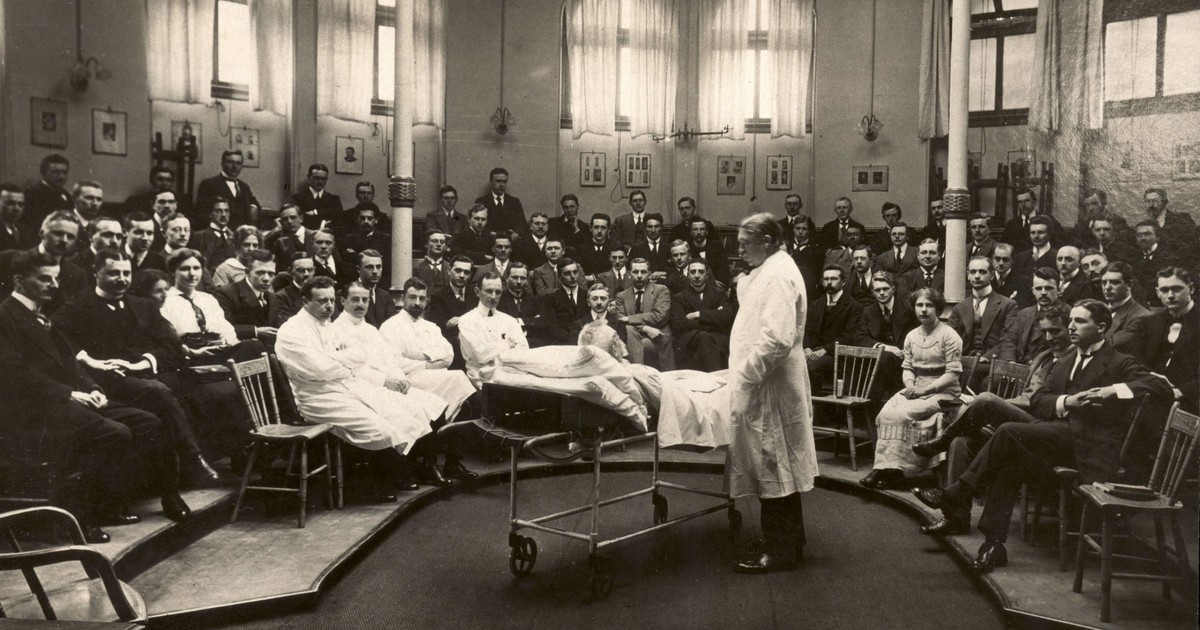
The best picture comes from studies that recorded real sessions. An analysis of nearly 80 hours of video, across 36 bedside teaching sessions, found a mean duration of 125 minutes (Blaschke, 2022). Most of the time was spent in the group, and less than a third took place at the bedside (Blaschke, 2022).
The content was also divided by space. History taking was practiced mainly at the bedside, while the case presentation, clinical reasoning and theoretical knowledge stayed largely away from the patient (Blaschke, 2022). The clinical examination appeared in similar proportion in the room and in the discussion room (Blaschke, 2022).
This picture shows a missed opportunity. Clinical reasoning is exactly what the student most needs to see happen in front of a sick person, with the clues still open. The authors recommend reviewing the sequence of the examination before the session and consciously deciding when to use small groups and when to use the whole group (Blaschke, 2022).

Choosing the patient and the objective
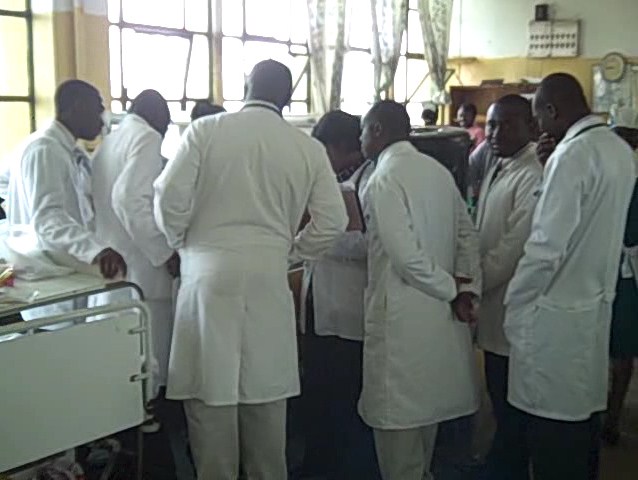
Choosing the patient is part of the planning, because each session calls for a different profile. The service described in the patient interviews asked students to confirm with the team who was in a condition to take part before any approach (Carty, 2020). A patient with severe pain, recently back from a procedure or in the middle of a difficult conversation with the family is rarely the best choice for a visit with five people.
The objective also has to fit the time. The teaching tips suggest setting priorities in the meeting with the patient, because learning happens in a zone where the student can move forward with help, and not beyond it (Rotthoff, 2023). An objective such as "recognize the signs of decompensated heart failure in this patient" works better than "review heart failure". A small, observable target allows concrete feedback at the end of the visit.
Perception and reality of time
In the intensive care unit studied, 43 professionals in training answered a questionnaire about the visits (Ahmed, 2023). Even with bedside teaching taking up a small fraction of the visit, 77 in every 100 considered the time adequate or more than adequate, and 58 in every 100 found the teaching very or extremely effective (Ahmed, 2023). A few minutes well used can be worth more than a long, scattered visit.
The patient at the center of the scene
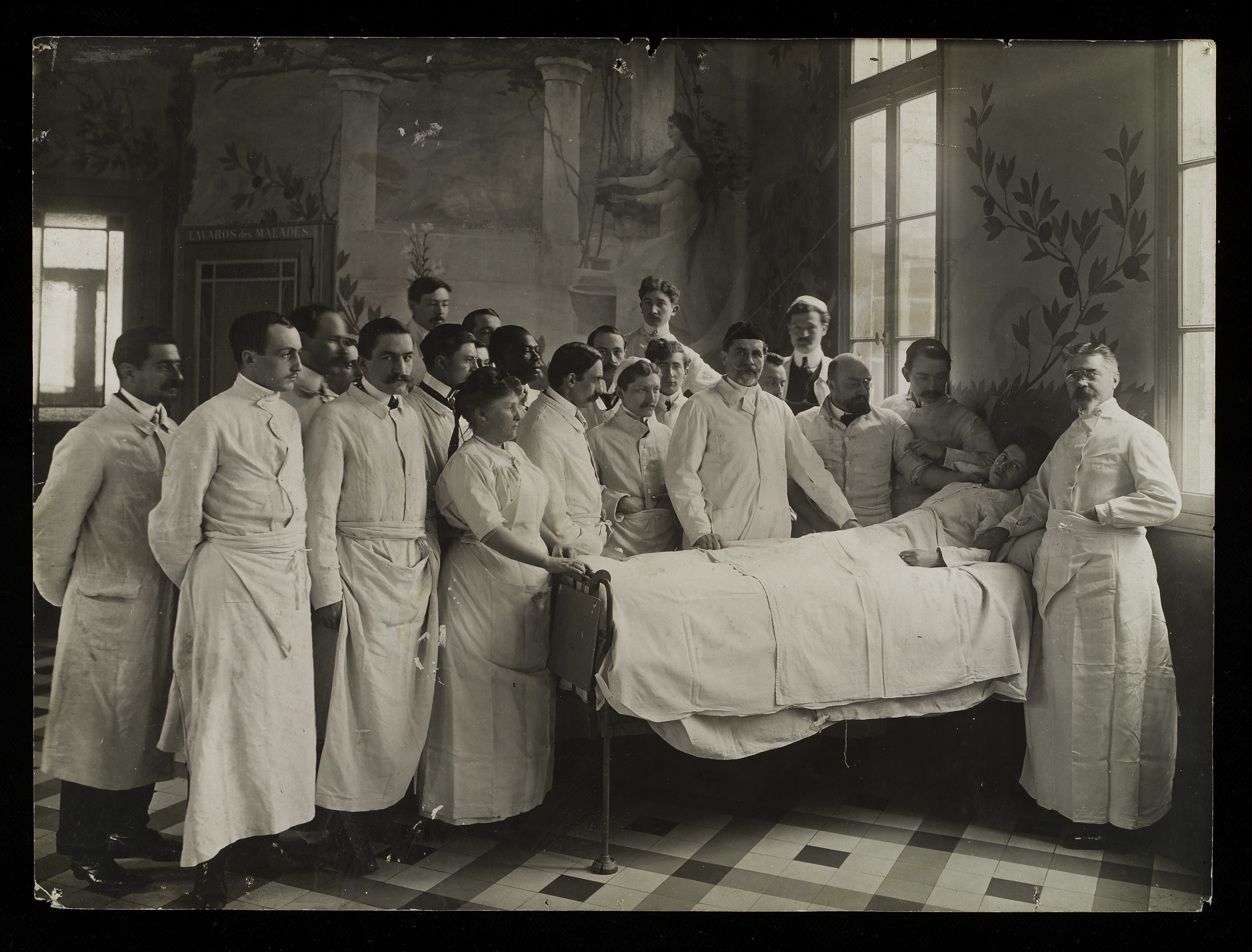
A video ethnography study analyzed 25 bedside teaching encounters with 50 participants, in general practice, surgery and internal medicine (Elsey, 2017). The authors identified two ways of representing the patient: the patient incorporated into the scene, when they take part actively, and the patient as a body, when they are used mainly as support for learning (Elsey, 2017).
Exclusion was greater during the physical examination than in the talking activities (Elsey, 2017). It happened through the physical position of the doctor and the students and through the habit of talking about the patient, and not with them, using jargon and technical comments at the same time as the examination (Elsey, 2017). The visible sign was the gaze: the patient fixed on a distant point whenever medical terminology appeared (Elsey, 2017).

What patients say
Interviews with 22 patients who took part in teaching sessions in obstetrics, gynecology and neonatology identified four main themes: professional attitude, privacy and well-being, quality of the experience and importance of clinical learning (Carty, 2020). The patients' reaction was altruistic and positive, with value placed on the training of future doctors (Carty, 2020).
In the service studied, students learned three principles for contact with the patient: choice, consent and confidentiality (Carty, 2020). Before approaching someone, they confirmed with the team which patients were in a condition to take part and asked for consent directly (Carty, 2020).
How to include the patient in practice
Inclusion begins before entering the room, with the request for permission and the explanation of what will happen. During the session, it depends on simple gestures: positioning the group so that the patient sees everyone, directing the questions to them, translating the technical terms and inviting them to correct the history presented. The patient's agenda also fits into the teaching visit, with an open question about what worries them most.
When the topic is sensitive, the technical discussion can continue outside the room, as long as the patient knows what was said about them. Difficult news follows its own rules, described in the text about the preceptor's role in the room.
How to react to the student's error
The error in front of the patient is the most sensitive moment of bedside teaching. An analysis of 36 recorded sessions in internal medicine, orthopedics and neurology classified the students' errors and the preceptors' reactions (Rubisch, 2023). The authors defined error as the situation in which the preceptor explicitly judges a student's contribution as incorrect (Rubisch, 2023).
Reproduction errors, linked to recalling facts, were the most frequent (Rubisch, 2023). They also received the highest rejection rate and the lowest degree of elaboration, that is, the preceptor said it was wrong and moved on (Rubisch, 2023). When the error was one of analysis or application, the student more often received time to correct it (Rubisch, 2023).
This pattern wastes a good part of the error's potential. A forgotten fact can hide a reasoning failure, and a follow-up question helps to find out which of the two happened. Useful feedback explains the why, and not only the right and the wrong.
Emotion and learning
The practical tips for bedside teaching start with emotion (Rotthoff, 2023). Anxiety competes for the student's attention and reduces the ability to think at the moment they need it most. A student exposed in front of the patient may keep the memory of shame and forget the content.
In practice, this calls for some choices. Agreeing beforehand how errors will be handled, correcting simple facts discreetly and saving the longer discussion for after the visit help to keep an environment in which making mistakes is part of learning. Students interviewed about their own experience described positive and challenging aspects of bedside teaching and recalled that every preceptor serves as a model (Uhomoibhi, 2024).
Short models for teaching reasoning
Busy rounds leave little time for teaching. Two models were created to fit into those minutes: the one-minute preceptor and SNAPPS, the latter centered on the learner (Seki, 2016). Both work well at the bedside, as long as the patient follows the conversation.
The one-minute preceptor
The one-minute preceptor organizes the interaction into six microskills (Seki, 2016):
- get a commitment, asking the learner to say what they think is happening;
- probe for the evidence that supports that opinion;
- teach a general rule applicable to other cases;
- reinforce what was done correctly;
- correct the errors;
- identify the next study steps.
SNAPPS
SNAPPS hands the lead to the learner in six steps: summarize the history and findings, narrow the differential to two or three possibilities, analyze the differential by comparing the options, ask the preceptor about doubts and alternatives, plan the management and select a topic for self-directed study (Seki, 2016). The idea is to condense the presentation of facts and open space for reasoning.
In a randomized study with residents, the SNAPPS group brought more content linked to questions and uncertainties than the one-minute preceptor group, and reported more ease in raising doubts and presenting the case efficiently (Seki, 2016). Another randomized trial, with 18 residents and 54 ward presentations, compared SNAPPS with the traditional presentation (Jain, 2019). The SNAPPS residents kept on average 2.56 hypotheses in the differential, against 1.74 in the traditional group, and the discussion lasted 4.04 minutes, against 2.07 (Jain, 2019).
| Model | Who leads | Strength | Bedside care |
|---|---|---|---|
| Traditional presentation | Learner reports, preceptor comments | Familiar to everyone | Tends toward long lists of facts and few hypotheses (Jain, 2019) |
| One-minute preceptor | Preceptor, with questions in sequence | Fast and easy to learn | Can become an interrogation if the tone is that of an exam (Seki, 2016) |
| SNAPPS | Learner, who sets out doubts | More hypotheses and more explicit uncertainties (Jain, 2019) | A slightly longer discussion; include the patient in the summary |
Both models train the same thing described in the text about summarizing the problem in the clinical cycle: summarizing the problem, committing to hypotheses and justifying the choice. The difference is who holds the thread of the conversation.
A script in three stages
Tips based on learning theories suggest structuring bedside teaching with a short conversation beforehand, clear priorities during and a structured discussion afterwards (Rotthoff, 2023). The author acknowledges that specific empirical evidence for this format is still lacking, and that the tips should be applied selectively (Rotthoff, 2023).
The script below brings these suggestions together:
- Before: choose an objective for the session, agree on roles and how errors will be handled, review the examination sequence and ask the patient's permission (Rotthoff, 2023; Carty, 2020).
- During: reduce the information load, choose a few aspects of the case and think aloud to show how the clues change the hypothesis (Rotthoff, 2023).
- During: address the patient, translate the jargon and position the group so that everyone can see (Elsey, 2017).
- During: use Socratic questions, which encourage answers through inquiry, and give the student time to correct their own mistake (Rotthoff, 2023; Rubisch, 2023).
- After: close with a structured discussion and feedback, outside the room when the subject calls for it (Rotthoff, 2023).
Thinking aloud
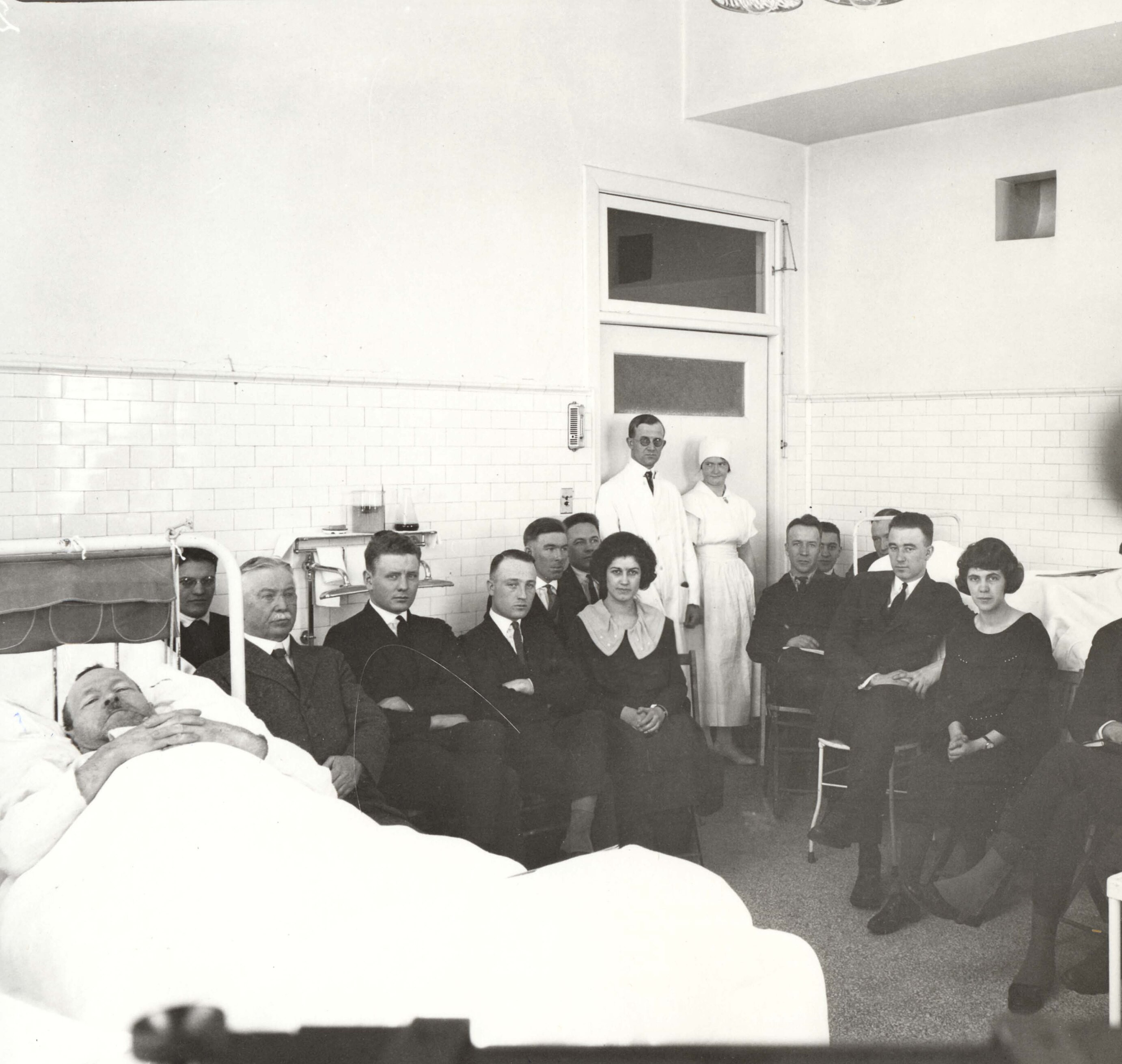
Thinking aloud reveals the cognitive processing of the person deciding (Rotthoff, 2023). The experienced physician recognizes patterns and accesses stored illness scripts, and the student only learns this process if they can see it happen (Rotthoff, 2023). In front of the patient, it might sound like this: "the fever and cough make me think of pneumonia, but the pain when breathing and the recent trip force me to consider embolism; let's see what the examination adds".
The same principle applies to interprofessional clinical reasoning. Nursing, physiotherapy and pharmacy bring clues that the medical team rarely sees, and the teaching visit is a good place to show them.

Adapt to the learner's level
The support given to the student, called scaffolding, needs to decrease as they gain autonomy (Rotthoff, 2023). The student at the start of the clinical cycle needs more closed questions and a small objective. The resident can lead SNAPPS alone and receive feedback at the end. With practice with feedback, each visit adds a little to the learner's progress.
Those who teach also need to learn
Most physicians value bedside teaching. A review describes the almost unanimous response that the format is essential for medical training (Rotthoff, 2022). Even so, the scientific evidence on the format is small, with few prospective randomized studies in the last decade (Rotthoff, 2022).
Training for those who teach is also scarce. A search of medical school websites in a European country found explicit training for bedside teaching in about 30 out of every 100 of them (Rotthoff, 2022). In a survey with medical students, only 25 out of every 100 felt well prepared by the school for the teaching role (ter Brugge, 2024).
Today's student is tomorrow's preceptor. Interviews with 14 final-year students showed that the experience as a learner at the bedside shapes the way they imagine teaching in the future (Uhomoibhi, 2024). For this reason, the authors advocate peer teaching programs and the idea that every physician is a role model for those who come after (Uhomoibhi, 2024).
Train away from the bedside to teach at the bedside
Simulation and active learning help the preceptor practice beforehand. Rehearsing the one-minute preceptor with colleagues, recording a visit with consent and reviewing one's own speech are inexpensive ways to improve. Active learning offers the same principle for the student: learning by practicing, testing and correcting.
In the SNAPPS trial, preceptors and residents were prepared with videos, role plays and written material in two 30-minute sessions (Jain, 2019). A small investment like that fits into almost any service.
The review that calls for more evidence also suggests the path: bring bedside teaching to the center of education research and of didactic training programs (Rotthoff, 2022). For the service, this means measuring what happens on rounds, listening to patients and students, and treating teaching as part of clinical work, with time set aside on the schedule. When teaching has an owner, a time and feedback, it stops depending only on the goodwill of whoever is on shift.
For those starting to teach, a few simple habits help. Agreeing with the patient before entering the room, setting a learning goal for each visit, letting the student speak first and setting aside a few minutes at the end for feedback give a quick bedside pass a beginning, a middle and an end. Asking the student for feedback on the session also helps the preceptor improve.
How NEXO helps train this reasoning
In NEXO, the case of the day is fictional, with a real clinical presentation and up to six progressive clues, and you propose the diagnosis by looking for the code in ICD-10.
The limits of using the game are described on the NEXO economy page. If you research the teaching of clinical reasoning, the page for researchers explains how to get in touch. Professionals who write or review cases find information under curation and under creators, and institutions can learn about the proposal on the partnerships page. Training differential diagnosis with clues and looking for the right code in ICD-10 complete this practice.
Frequently asked questions
What is bedside teaching?
It is active learning in the patient's presence, usually with a learner, someone more experienced and the patient themself (Blaschke, 2022; Ahmed, 2023). The focus includes history taking, examination, clinical reasoning and professional conduct.
Do patients mind bedside teaching?
Most react in an altruistic and positive way, as long as privacy and consent are respected (Carty, 2020). Asking permission and explaining what will happen is part of the session.
How can you keep the patient from becoming an object of demonstration?
By talking with them, not about them, translating the jargon and positioning the group so that they can see everyone (Elsey, 2017). Exclusion tends to be greater during the physical examination.
What should you do when the student makes a mistake in front of the patient?
Correct simple facts discreetly and give them time to review their reasoning (Rubisch, 2023). The longer discussion can wait until after the visit.
What is the difference between the one-minute preceptor and SNAPPS?
In the one-minute preceptor, the preceptor leads with a sequence of questions; in SNAPPS, the learner leads and sets out their own doubts (Seki, 2016). SNAPPS increased the number of hypotheses discussed (Jain, 2019).
How much time does bedside teaching take?
A few well-used minutes can be enough. In an intensive care unit, about 17 minutes a day were considered adequate by most learners (Ahmed, 2023).
Take-home messages
- Bedside teaching is learning with the patient present and taking part in the scene.
- In real sessions, clinical reasoning often stays far from the bedside; it is worth bringing it closer.
- Talk with the patient, not about them, and ask permission before starting.
- Treat the error as a clue to the reasoning, not just as a wrong fact.
- The one-minute preceptor and SNAPPS fit into a busy visit.
- Those who teach also need training, and today's student is tomorrow's preceptor.
Want to train the reasoning you will teach at the bedside? Play the case of the day on NEXO.
References
- Ahmed H, King AB, Mohamed N, et al. Perception versus reality: analysis of time spent on bedside rounds in an academic ICU (Intensive Care Unit). BMC Med Educ. 2023. PMID 37085853. DOI 10.1186/s12909-023-04243-y.
- Blaschke AL, Rubisch HPK, Schindler AK, et al. How is modern bedside teaching structured? A video analysis of learning content, social and spatial structures. BMC Med Educ. 2022. PMID 36380308. DOI 10.1186/s12909-022-03855-0.
- Carty M, O'Riordan N, Ivers M, et al. Patient perspectives of bedside teaching in an obstetrics, Gynaecology and neonatology hospital. BMC Med Educ. 2020. PMID 32293405. DOI 10.1186/s12909-020-02016-5.
- Elsey C, Challinor A, Monrouxe LV. Patients embodied and as-a-body within bedside teaching encounters: a video ethnographic study. Adv Health Sci Educ Theory Pract. 2017. PMID 27246146. DOI 10.1007/s10459-016-9688-3.
- Gimson A, Javadzadeh S, Doshi A. Bedside teaching: everybody's but nobody's responsibility. Adv Med Educ Pract. 2019. PMID 31213940. DOI 10.2147/AMEP.S181877.
- Jain V, Rao S, Jinadani M. Effectiveness of SNAPPS for improving clinical reasoning in postgraduates: randomized controlled trial. BMC Med Educ. 2019. PMID 31226996. DOI 10.1186/s12909-019-1670-3.
- Rotthoff T. Between expectation and reality. A plea for more evidence-based bedside teaching. GMS J Med Educ. 2022. PMID 36119144. DOI 10.3205/zma001559.
- Rotthoff T. Practical tips to improve bedside teaching using learning theories and clinical reasoning. MedEdPublish (2016). 2023. PMID 38707219. DOI 10.12688/mep.19826.2.
- Rubisch HPK, Blaschke AL, Berberat PO, et al. Student mistakes and teacher reactions in bedside teaching. Adv Health Sci Educ Theory Pract. 2023. PMID 37170035. DOI 10.1007/s10459-023-10233-y.
- Seki M, Otaki J, Breugelmans R, et al. How do case presentation teaching methods affect learning outcomes?--SNAPPS and the One-Minute preceptor. BMC Med Educ. 2016. PMID 26762292. DOI 10.1186/s12909-016-0531-6.
- Ter Brugge BP, Fegg LS, Wijnen-Meijer M. Preparing medical students for their educational task as physicians: important, desirable and unexplored territory. BMC Med Educ. 2024. PMID 38594694. DOI 10.1186/s12909-024-05328-y.
- Uhomoibhi C, Kearns A. Bedside teaching - insights into the medical student experience and likely impact on future role as clinical teacher. BMC Med Educ. 2024. PMID 39696304. DOI 10.1186/s12909-024-06199-z.