Digital health and AIObstetrics and gynecologyGlobal health
AI in ultrasound: gestational age without a specialist



Table of contents
- Why gestational age matters
- How gestational age is estimated without ultrasound
- What blind sweeps are
- What the foundational studies showed
- Performance outside the sites of origin
- Where the tool still fails
- Implementation: who operates it and what changes in the service
- How NEXO helps train this reasoning
- Frequently asked questions
- Take-home messages
- References
In a fictional case, a 24-year-old woman arrives for the first time at a rural health post, in a region with no ultrasound operator. She thinks she is pregnant "for about five or six months", but does not remember the date of her last menstrual period. Uterine height suggests something between 22 and 26 weeks. The post's nurse-midwife received one day of training with a portable probe connected to a tablet: she slides the probe over the abdomen in straight lines, without looking for any structure, and an artificial intelligence program returns an estimate of gestational age.
The scene describes what some studies have already tested. The World Health Organization (WHO) recommends an ultrasound before 24 weeks of gestation to estimate gestational age, improve the detection of fetal anomalies and multiple pregnancy and reduce induction for prolonged pregnancy (WHO, antenatal care, 2016). Where there is no one who knows how to perform and interpret the exam, this recommendation is hard to meet.
This text uses the WHO as its axis and gathers the main studies on blind sweeps read by AI to answer two questions: how close to conventional ultrasound this estimate gets, and in which situations it still does not deserve trust.
Key points
- In the study by Pokaprakarn and colleagues, the AI model estimated gestational age with a mean absolute error of 3.9 days, against 4.7 days for biometry performed by ultrasound operators (Pokaprakarn et al., 2022).
- In a prospective study with users with no prior experience, the tool integrated into the probe was equivalent to standard ultrasound between 14 and 27 weeks, with 3.2 days of mean error against 3.0 days (Stringer et al., 2024).
- Near term, between 37 and 40 weeks, the AI error was greater than that of standard ultrasound, and the authors do not recommend the tool at this stage (Stringer et al., 2024).
- In Chicago and Nairobi, with another probe model and new operators, the system kept a mean error of 4.2 days, without being inferior to the clinical standard (Willis et al., 2026).
- Professionals from African countries consulted on the topic showed interest in automatic dating, but also concern about the algorithm's accuracy and about excessive dependence on the machine (Della Ripa et al., 2025).
- Why gestational age matters
- How gestational age is estimated without ultrasound
- What the blind sweep is
- What the foundational studies showed
- Performance outside the places of origin
- Where the tool still fails
- Implementation: who operates it and what changes in the service
- How NEXO helps train this reasoning
- Frequently asked questions
- Take-home messages
Why gestational age matters
Almost every antenatal decision depends on knowing how long the woman has been pregnant. Gestational age defines whether a birth is premature, when to offer interventions that have a certain window and when a pregnancy has passed term. The WHO defines premature birth as birth before 37 completed weeks and estimates 13.4 million premature births in 2020, more than one in ten births (WHO, Preterm birth).
The weight of this number is unequal. The same descriptive note states that complications of prematurity are the leading cause of death in children under five and that about 900,000 children died from this cause in 2019 (WHO, Preterm birth). In low-income countries, more than 90 percent of extremely premature babies die in the first days of life, against less than 10 percent in high-income countries (WHO, Preterm birth).
To act in the face of premature labor, the team needs to know whether it is in fact premature. The WHO lists antenatal corticosteroids in certain situations among the possible care measures, and cites ultrasound before 24 weeks, provided for in the antenatal recommendations, as a way to help determine gestational age and detect multiple pregnancy (WHO, Preterm birth). Without a reliable date, these decisions are based on fragile estimates.
Extreme heat is an example of exposure in which gestational age enters the reasoning: the risk of premature birth associated with heat can only be measured and monitored when one knows which week the pregnancy is in.
What the WHO recommends in antenatal care
The 2016 recommendations raised the number of antenatal contacts from four to eight and included an ultrasound before 24 weeks (WHO, antenatal care, 2016). The WHO text also calls for midwives and other trained professionals to provide this care, including through community actions, and cites task shifting among professionals as a strategy (WHO, antenatal care, 2016).
Stringer and colleagues describe this recommendation for an ultrasound before 24 weeks as largely aspirational in low- and middle-income countries (Stringer et al., 2024). The systematic review by Schott and colleagues states that nearly half of pregnant women in these countries have no ultrasound during pregnancy (Schott et al., 2026).
How gestational age is estimated without ultrasound
When there is no ultrasound, the date of the last menstrual period and fundal height are what remain. Both often fail. In Stringer's study, among participants who remembered the date of their last menstrual period, the mean error of that estimate was 7.4 days, and that of fundal height was 7.1 days, compared with about 3.2 days for the AI tool (Stringer et al., 2024). Twenty-three women in that study did not remember the date.
The problem grows because the first visit often happens late. In Lusaka, Zambia, the median gestational age at the first antenatal visit was 23 weeks, and more than 100,000 pregnancies a year were followed with imprecise dating (Pokaprakarn et al., 2022). Stringer and colleagues, using data from Zambia, report that 85 percent of first visits happen by 27 weeks and 97 percent by 36 weeks (Stringer et al., 2024).
Why accuracy falls as pregnancy advances
Conventional ultrasound also loses accuracy over time. In the first trimester, crown-rump length predicts gestational age with an accuracy of 3 to 7 days; after 14 weeks, this measurement is no longer used and biometry combines other fetal measurements (Benson et al., 2025). Benson and colleagues summarize the literature: the accuracy of biometry is about 7 to 10 days up to 24 weeks, 10 to 14 days between 24 and 28 weeks, and 21 to 30 days in the third trimester (Benson et al., 2025).
What blind sweeps are
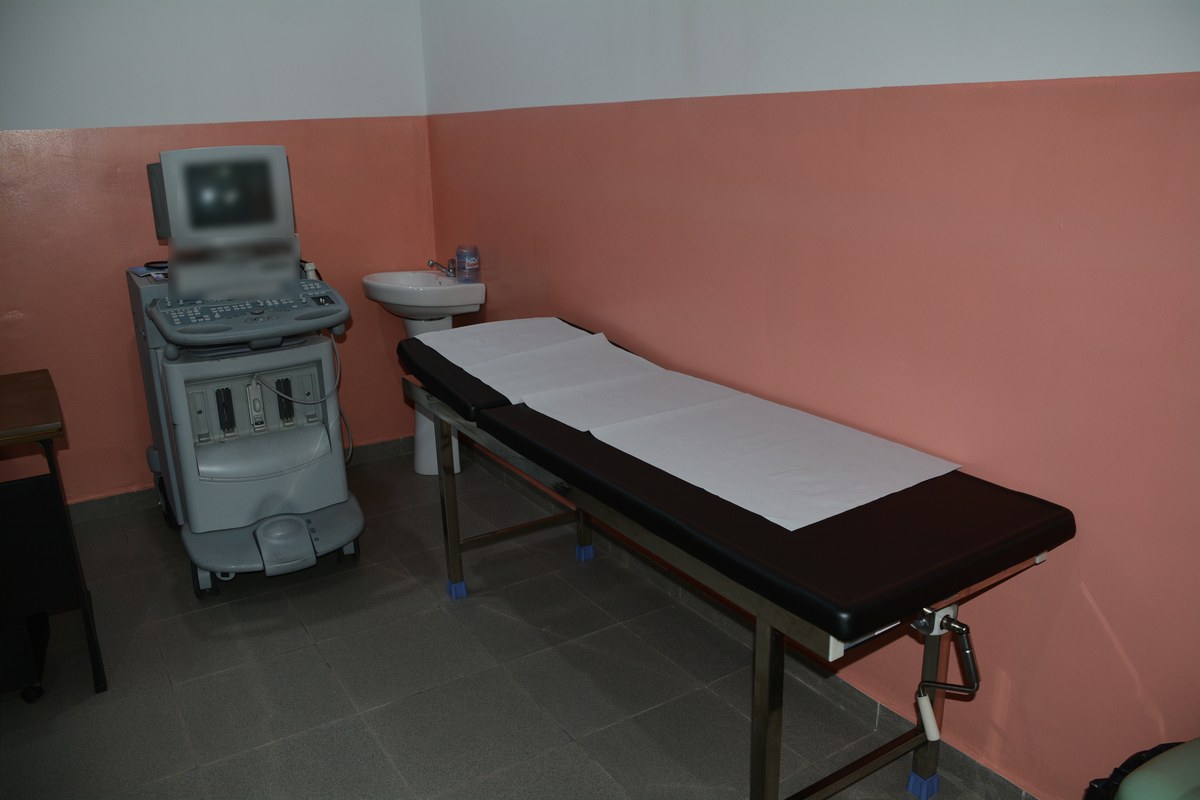
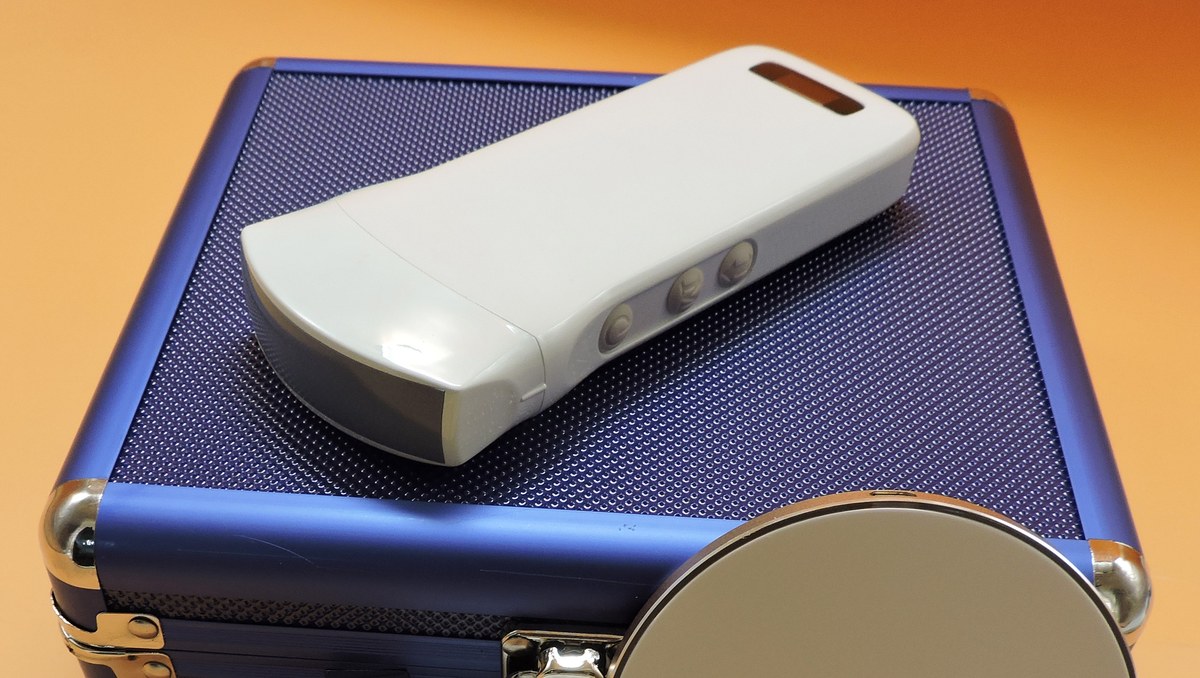
In blind sweeps, the person holding the probe does not look for the fetus or measure structures. The person moves the transducer over the abdomen in a fixed pattern, in vertical and horizontal lines, and records short videos. In Pokaprakarn's study, each sweep lasted about 10 seconds (Pokaprakarn et al., 2022). The work of interpreting the images falls to the AI model, trained on large volumes of video.
The idea separates two skills that conventional ultrasound combines: acquiring good images and interpreting them. Gomes and colleagues describe a protocol of six sweeps that can be done by people with a few hours of training and show that two of the six sweeps were enough to maintain the accuracy of the estimate (Gomes et al., 2022).
From video to number
The model described by Pokaprakarn was trained on 109,806 sweeps from 3,509 participants, a total of more than 21 million image frames (Pokaprakarn et al., 2022). Instead of measuring head, abdomen and femur, it analyzes the entire videos. The authors acknowledge that they do not know which image features the model uses to reach the estimate (Pokaprakarn et al., 2022).
What the foundational studies showed
The study by Pokaprakarn and colleagues, published in 2022, used data from the FAMLI cohort, with 4,695 participants from North Carolina, in the United States, and from Zambia, recruited between 2018 and 2021 (Pokaprakarn et al., 2022). In the main test set, with 716 participants, the model's mean absolute error was 3.9 days, compared with 4.7 days for biometry, a difference of 0.8 day in favor of the model (95 percent confidence interval, 0.5 to 1.1 day) (Pokaprakarn et al., 2022).
The proportion of estimates with an error of up to 7 days was 86.0 percent with the model and 77.0 percent with biometry (Pokaprakarn et al., 2022). The advantage appeared mainly in the third trimester, with a difference of 1.3 days. In pregnancies by in vitro fertilization, where the date of conception is known, the model had an error of 2.8 days versus 3.6 for biometry, but with only 47 participants the difference was not statistically significant (Pokaprakarn et al., 2022).
Nurses without ultrasound training
The same work included a set of 249 participants in Zambia whose scans were done by eight obstetric nurses without ultrasound training, using a simple portable probe (Pokaprakarn et al., 2022). In this group, the model's error was 4.9 days, versus 5.4 for biometry, a difference that did not reach significance. Compared with the date of the last menstrual period, however, the model was off by an average of 4.9 days, versus 17.4 days for the menstrual date (Pokaprakarn et al., 2022).
With the tool, 75.1 percent of estimates were within 7 days of the reference, versus 40.1 percent of estimates by last menstrual period (Pokaprakarn et al., 2022).
The prospective test with novice users
The study by Stringer and colleagues, published in 2024, tested the tool already integrated into a portable probe and a tablet, operated in real time by people with no ultrasound experience, who received one day of training (Stringer et al., 2024). A total of 400 pregnant women from Lusaka and Chapel Hill took part, and the reference was the crown-rump length measured transvaginally in the first trimester.
In the main window, from 14 to 27 weeks, the mean error was 3.2 days with AI and 3.0 days with standard ultrasound, a difference of 0.16 day within the two-day equivalence margin (Stringer et al., 2024). Estimates within 7 days of the reference were 90.7 percent with AI and 92.5 percent with the standard, and there was a single tool failure among 400 participants (Stringer et al., 2024). Between 28 and 36 weeks, the AI error was 6.1 days, versus 7.1 for the standard, also within equivalence.
Comparison between the main studies
| Study | Site and operator | Comparison | Main result |
|---|---|---|---|
| Pokaprakarn 2022 | North Carolina and Zambia; sonographers | AI versus biometry | Error of 3.9 versus 4.7 days; within 7 days in 86.0 versus 77.0 percent |
| Pokaprakarn 2022 | Zambia; nurses without ultrasound training | AI versus last menstrual period | Error of 4.9 versus 17.4 days; within 7 days in 75.1 versus 40.1 percent |
| Gomes 2022 | United States and Zambia; sonographers and novices | AI on a smartphone versus biometry | Difference of 1.4 day in favor of AI, without inferiority |
| Stringer 2024 | Zambia and United States; novices with one day of training | AI in real time versus standard ultrasound | From 14 to 27 weeks, error of 3.2 versus 3.0 days; within 7 days in 90.7 versus 92.5 percent |
| Willis 2026 | Chicago and Nairobi; novices, another probe model | Adapted AI versus clinical standard | Error of 4.2 versus 4.5 days, without inferiority |
| Eisenkolb 2026 | London; experienced sonographers, 11 to 13 weeks | AI versus crown-rump length | Error of 2.1 days, with lower precision than the standard measurement |
The references and designs differ between studies, so the table serves to guide reading, not to add up results.
Performance outside the sites of origin
A model that works where it was trained can fail in another hospital, with another population or another device. Willis and colleagues tested exactly this: the system trained with data from North Carolina and Zambia was evaluated in Chicago and in Nairobi, with novice operators and a probe from another manufacturer (Willis et al., 2026). The adaptation used data from 120 participants from Chicago, and no data from Nairobi.
Among 385 participants from 16 to 36 weeks, the mean error was 4.1 days in Chicago and 4.3 days in Nairobi, and the set came to 4.2 days versus 4.5 days for the clinical standard, without inferiority (Willis et al., 2026). The rate of scans rejected by the system was 1.8 percent in Nairobi and 7.9 percent in Chicago, and the authors raise the hypothesis that the roughly six hours of hands-on training in Nairobi improved image quality (Willis et al., 2026).
Other models and the first trimester
There are other approaches besides standard sweeps. Benson and colleagues trained a model with more than two million images from 78,531 pregnancies in Australia, India and the United Kingdom, able to estimate gestational age from any fetal image, in any orientation, and to report the uncertainty of each estimate (Benson et al., 2025). In independent validation, the error was 1.7 days between 14 and 18 weeks and 2.8 days between 18 and 24 weeks, and performance held across body mass index categories.
In the first trimester, Eisenkolb and colleagues evaluated 285 singleton pregnancies at a hospital in London, with non-targeted sweeps between 11 and 13 weeks (Eisenkolb et al., 2026). The mean error relative to crown-rump length was 2.1 days, but the AI was less accurate than the measurement made by experienced sonographers. The authors themselves point out that the study, single-center and with certified clinicians, was not designed to assess use by novices or in low- and middle-income countries (Eisenkolb et al., 2026).
What the reviews say
The meta-analysis by Naz and colleagues included 17 studies and pooled data from 10 of them (Naz et al., 2025). With blinded sweep videos, the pooled mean error was 2.55 days, but the calculation pooled only four studies, with a confidence interval from minus 0.13 to 5.23 days and heterogeneity of 100 percent (Naz et al., 2025). The authors call the experience preliminary and point to the lack of first-trimester studies.
The systematic review by Schott and colleagues gathered 14 studies and found mean errors of 3 to 5 days in mid-pregnancy, with performance comparable to or better than that of sonographers (Schott et al., 2026). The same review records lower accuracy late in pregnancy and limited validation early in pregnancy and in anomaly detection, and concludes that clinical adoption requires broader validation, better interpretability of the models and integration with health systems.
Where the tool still fails
The limits appear in the articles themselves and deserve the same weight as the results. The most important for practice is term. Between 37 and 40 weeks, in the Stringer study, the mean AI error was 11.5 days, against 9.1 days for standard ultrasound, and the result was considered inconclusive (Stringer et al., 2024). The authors do not recommend the tool at this stage.
Pokaprakarn and colleagues report scarce data after 37 weeks and a tendency to underestimate gestational age in that range in the group of novice nurses (Pokaprakarn et al., 2022). Willis and colleagues also observed variable performance after 36 weeks and discuss that part of the difference may come from inconsistencies in the reference itself (Willis et al., 2026).
At the other extreme, the Pokaprakarn study had almost no exams before 9 weeks, and the model does not generate estimates below that (Pokaprakarn et al., 2022). Gomes and colleagues also had few videos before 12 weeks and after 37 weeks, and state that they cannot guarantee that the models generalize to those ranges (Gomes et al., 2022).
Populations left out
The studies excluded or had little data from groups in which dating is often harder. The main points of concern described by the authors are these:
- Stringer excluded women with a body mass index of 40 or more, twin pregnancies and known anomalies, and studied a general population, without a focus on hypertension, diabetes or severe obesity (Stringer et al., 2024).
- In the same study, among 97 women with a body mass index above 30, the AI error was 3.8 days against 3.1 for the standard, in a subgroup analysis without hypothesis testing (Stringer et al., 2024).
- Schott and colleagues note that measuring two fetuses in a blinded sweep requires identifying and labeling each one, a task for which current models were not designed (Schott et al., 2026).
- Willis and colleagues describe small samples for multiple pregnancy and for extremes of fetal weight (Willis et al., 2026).
What the estimate does not replace
The estimate of gestational age answers one question. It does not confirm where the pregnancy is implanted, does not assess fetal anatomy and does not replace the investigation of bleeding or pain in early pregnancy, which is the topic of ectopic pregnancy, beta-hCG and uncertainty. Stringer and colleagues state that the tool's accuracy in the presence of fetal anomalies cannot be determined with the study data (Stringer et al., 2024).
Schott's review argues that AI should be seen as a complement to, not a substitute for, clinical competence (Schott et al., 2026). Pokaprakarn and colleagues acknowledge that the technology may be seen as a threat to building local diagnostic capacity and that the way to disseminate it still needs study (Pokaprakarn et al., 2022). They also note that there was no strictly external validation cohort in the original work.
When the pregnant woman's question is about imaging tests that use radiation, the reasoning is different, and it is described in the text on radiation in pregnancy and counseling.
Implementation: who operates it and what changes in the service
The technology only helps if it fits the service. Della Ripa and colleagues interviewed 41 midwives, physicians, researchers and program implementers, focusing on people who live or work in low- and middle-income African countries, about a prototype portable ultrasound device with AI (Della Ripa et al., 2025). Automatic dating was one of the functions that drew the most interest, alongside concern about the algorithm's accuracy and about the loss of clinical reasoning through excessive dependence on the machine.
Participants generally agreed that both standard portable ultrasound and AI-enabled portable ultrasound could improve adherence to prenatal care, with 75 and 65 percent agreement, respectively, and professionals' confidence in clinical decisions, with 85 and 70 percent (Della Ripa et al., 2025). AI always generated more uncertainty than standard ultrasound. The themes raised included task sharing with midwives, training content, data security, legal liability and the need for decision support and a referral network for the exam to change outcomes.
The estimate as a gateway to other decisions
Gestational age also opens the way to other interventions with a defined window. The protocol by Swarray Deen and colleagues describes a study with 969 pregnant women at 13 services in Ghana, Kenya and South Africa, in which trained midwives will perform scans with an AI system between 11 and 13 weeks, compared with measurements by sonographers (Swarray Deen et al., 2026). The goal is to support screening for pre-eclampsia risk, which depends on correct dating.
According to this protocol, the WHO recommends offering aspirin to women at moderate or high risk of pre-eclampsia, preferably before 20 weeks (Swarray Deen et al., 2026). As it is still a protocol, the results are not available, and the study illustrates the field's next question: whether the estimate made by a non-specialist is good enough to guide a clinical decision with a deadline.
Who benefits from the tool
The studies were designed for places where there is no sonographer, not to replace exams where they exist. Stringer and colleagues conclude that, between 14 and 37 weeks, portable ultrasound with AI allowed users with no prior ultrasound training to estimate gestational age with the same accuracy as credentialed sonographers using high-specification devices (Stringer et al., 2024). The underlying studies were partly funded by a philanthropic foundation and used probes donated by the manufacturer, information that the articles themselves disclose (Pokaprakarn et al., 2022).
For those who study the topic, the distinction between this type of AI, which reads images, and the language models used to support diagnosis helps in reading each piece of evidence in its context. The use of language models is discussed in artificial intelligence in clinical reasoning, and an example of a predictive model in another specialty is in AI in nephrology.
Back to the case
The woman at the start does not remember her last menstrual period, and the uterine height gives a range of four weeks. With the blind sweep read by AI, the nurse has an estimate that, between 14 and 27 weeks, came close to standard ultrasound in validation studies (Stringer et al., 2024). This date then guides the schedule of upcoming visits and makes it possible to recognize, later on, whether labor is premature.
The estimate does not answer whether the pregnancy is twin, whether there are anomalies or where the placenta is. If the patient returns near term, the tool should not be used to redate the pregnancy, because the error was greater at that stage (Stringer et al., 2024). The record of gestational age obtained now, at mid-pregnancy, is worth more than any late estimate.
How NEXO helps train this reasoning
In NEXO, the case of the day is fictional, with a real clinical presentation and up to six progressive clues, and you propose the diagnosis by searching for the ICD-10 code. Knowing how much to trust a vague last menstrual period date, a uterine height or an automatic estimate requires the same exercise: weighing each new clue and revising the hypothesis, as in training differential diagnosis with clues.
The limits of use of the game are described on the NEXO economy page. If you research the teaching of clinical reasoning, the page for researchers explains how to get in touch. Professionals who write or review cases find information in curation and in creators, and institutions can learn about the proposal on the partnerships page. Searching for the right ICD-10 code completes this training.
Frequently asked questions
Does AI in ultrasound replace the sonographer?
The studies do not support this conclusion. The tool estimates gestational age, but does not assess anatomy, placenta or multiple pregnancy, and the review by Schott and colleagues describes it as a complement to clinical competence (Schott et al., 2026).
How much training is needed to perform the blind sweep?
In the Stringer study, inexperienced users received one day of training (Stringer et al., 2024). In Nairobi, about six hours of hands-on training were associated with fewer rejected sweeps than the informal training in Chicago (Willis et al., 2026).
Does the estimate work late in pregnancy?
It works worse. Between 37 and 40 weeks, the mean error was 11.5 days with AI and 9.1 days with standard ultrasound, and the authors do not recommend the tool at this stage (Stringer et al., 2024).
And early in pregnancy?
Data are scarce. The Pokaprakarn model does not estimate below 9 weeks (Pokaprakarn et al., 2022), and the meta-analysis by Naz and colleagues found a single study in the first trimester (Naz et al., 2025). Between 11 and 13 weeks, a single-center study showed an error of 2.1 days, with lower accuracy than the standard measurement (Eisenkolb et al., 2026).
Does the system need internet?
The version described by Gomes and colleagues runs on a cell phone, without a connection, and delivers the result in less than 3 seconds after the sweep (Gomes et al., 2022).
Take-home messages
- Remember that the WHO recommends an ultrasound before 24 weeks to estimate gestational age, a recommendation that is hard to meet where there is a shortage of sonographers (WHO, antenatal care, 2016).
- Between 14 and 27 weeks, blind sweeps performed by novices and read by AI were equivalent to standard ultrasound in a prospective study (Stringer et al., 2024).
- Compare the AI estimate with what you actually have: given the last menstrual period, the error fell from 17.4 to 4.9 days in the group of novice nurses (Pokaprakarn et al., 2022).
- Avoid using the tool to date the pregnancy near term, a stage at which the error was greater than that of the standard exam (Stringer et al., 2024).
- Keep in mind that twins, severe obesity and anomalies were left out or have been little studied (Stringer et al., 2024).
- Treat AI as a complement to the service, with training, decision support and a referral network (Della Ripa et al., 2025).
References
- World Health Organization. New guidelines on antenatal care for a positive pregnancy experience. Press release, November 7, 2016. [Full text](https://www.who.int/news/item/07-11-2016-new-guidelines-on-antenatal-care-for-a-positive-pregnancy-experience).
- World Health Organization. Preterm birth. Fact sheet. [Full text](https://www.who.int/news-room/fact-sheets/detail/preterm-birth).
- Pokaprakarn T, Prieto JC, Price JT, et al. AI estimation of gestational age from blind ultrasound sweeps in low-resource settings. NEJM Evid. 2022;1(5). [PMID 36875289](https://pubmed.ncbi.nlm.nih.gov/36875289/). DOI 10.1056/evidoa2100058.
- Stringer JSA, Pokaprakarn T, Prieto JC, et al. Diagnostic accuracy of an integrated AI tool to estimate gestational age from blind ultrasound sweeps. JAMA. 2024;332(8):649-57. [PMID 39088200](https://pubmed.ncbi.nlm.nih.gov/39088200/). DOI 10.1001/jama.2024.10770.
- Gomes RG, Vwalika B, Lee C, et al. A mobile-optimized artificial intelligence system for gestational age and fetal malpresentation assessment. Commun Med (Lond). 2022;2:128. [PMID 36249461](https://pubmed.ncbi.nlm.nih.gov/36249461/). DOI 10.1038/s43856-022-00194-5.
- Willis A, Lee C, Krogue J, et al. Generalization of AI-based gestational age assessment using blind sweep ultrasonography. JAMA Netw Open. 2026;9(7):e2622484. [PMID 42424080](https://pubmed.ncbi.nlm.nih.gov/42424080/). DOI 10.1001/jamanetworkopen.2026.22484.
- Benson M, Walton S, Hartley T, et al. Fetal gestational age estimation using artificial intelligence on non-targeted ultrasound images and video. NPJ Digit Med. 2025;8(1):700. [PMID 41266569](https://pubmed.ncbi.nlm.nih.gov/41266569/). DOI 10.1038/s41746-025-02024-z.
- Eisenkolb G, Wright D, Syngelaki A, et al. Real-time gestational-age estimation at 11-13 weeks using artificial intelligence on non-targeted ultrasound sweeps. Ultrasound Obstet Gynecol. 2026;68(4):510-7. [PMID 42740444](https://pubmed.ncbi.nlm.nih.gov/42740444/). DOI 10.1002/uog.70335.
- Naz S, Noorani S, Jaffar Zaidi SA, et al. Use of artificial intelligence for gestational age estimation: a systematic review and meta-analysis. Front Glob Womens Health. 2025;6:1447579. [PMID 39950139](https://pubmed.ncbi.nlm.nih.gov/39950139/). DOI 10.3389/fgwh.2025.1447579.
- Schott J, Wilmes M, Walter A, et al. The application of artificial intelligence in blind ultrasound sweep diagnostics for prenatal medicine: a systematic literature review. Acta Obstet Gynecol Scand. 2026;105(3):403-17. [PMID 41574472](https://pubmed.ncbi.nlm.nih.gov/41574472/). DOI 10.1111/aogs.70147.
- Della Ripa S, Santos N, Walker D. AI-enabled obstetric point-of-care ultrasound as an emerging technology in low- and middle-income countries: provider and health system perspectives. BMC Pregnancy Childbirth. 2025;25(1):729. [PMID 40615993](https://pubmed.ncbi.nlm.nih.gov/40615993/). DOI 10.1186/s12884-025-07796-6.
- Swarray Deen A, McDougall ARA, Chemway R, et al. Prospective accuracy study on an artificial intelligence-based ultrasound system for gestational age estimation among pregnant women in Ghana, Kenya and South Africa: protocol. BMJ Open. 2026;16(9):e118330. [PMID 42731844](https://pubmed.ncbi.nlm.nih.gov/42731844/). DOI 10.1136/bmjopen-2026-118330.