CardiologyEmergency medicine
Acute coronary syndrome: the ESC 2023 reasoning
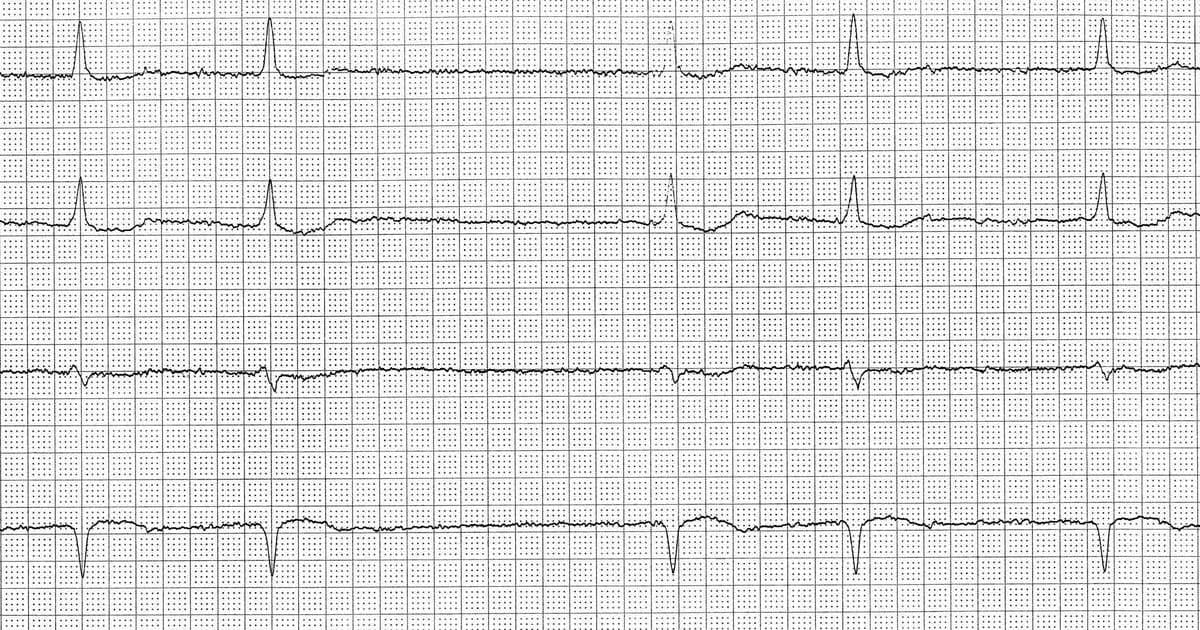


Table of contents
- One spectrum instead of two diseases
- The electrocardiogram: elevation, equivalents and occlusion
- High-sensitivity troponin and the 0 h/1 h algorithm
- Reperfusion in ST-elevation infarction: the clock rules
- Non-ST syndrome: risk defines when to catheterize
- Antiplatelet therapy: pretreatment and choice of P2Y12 inhibitor
- After the procedure: duration, multivessel disease and special cases
- How NEXO helps train this reasoning
- Frequently asked questions
- Take-home messages
- References
A 61-year-old woman arrives at the emergency department with chest tightness for 40 minutes, cold sweat and nausea. The first electrocardiogram, done in seven minutes, shows ST depression from V1 to V4, without clear ST-segment elevation. The high-sensitivity troponin is still being collected. The on-call physician must decide within minutes whether to activate the cath lab now, wait for the second troponin or treat it as ordinary chest pain.
The 2023 European guideline on acute coronary syndromes was written for this kind of moment (Byrne et al., 2023). For the first time, the European Society of Cardiology brought ST-elevation myocardial infarction and non-ST-elevation acute coronary syndrome together in a single document. The change goes beyond form: the text asks clinicians to think of the syndrome as a spectrum, with a working diagnosis that can change with every test.
This text follows the guideline's reasoning in the order it happens on shift: the suspicion, the electrocardiogram, the troponin, the time to reperfusion, the choice of invasive strategy and the antiplatelet drugs. The definition and classification of myocardial infarction are left for the text on the fourth universal definition; here the focus is management.
Key points
- The 2023 ESC guideline treats acute coronary syndrome as a single spectrum, from the presentation without elevation to infarction with elevation (Byrne et al., 2023).
- The electrocardiogram must be performed and read within 10 minutes of first contact, and ST-elevation equivalents count as elevation.
- High-sensitivity troponin with a 0 h and 1 h algorithm (or 0 h and 2 h) is the recommended way to confirm or rule out non-ST-elevation infarction.
- In ST-elevation infarction, primary angioplasty is preferred if it can be done within 120 minutes of diagnosis; if it will take longer, fibrinolysis starts within 10 minutes.
- In non-ST-elevation syndrome, the urgency of catheterization depends on risk: immediate in very high risk and within 24 hours in high risk.
- Routine pre-treatment with a P2Y12 inhibitor is out when catheterization within the first 24 hours is planned.
- Standard dual antiplatelet therapy lasts 12 months, with options to shorten it according to bleeding risk.
Summary
- One spectrum instead of two diseases
- The electrocardiogram: elevation, equivalents and occlusion
- High-sensitivity troponin and the 0 h/1 h algorithm
- Reperfusion in ST-elevation infarction: the clock rules
- Non-ST-elevation syndrome: risk defines when catheterization happens
- Antiplatelet therapy: pre-treatment and choice of P2Y12 inhibitor
- After the procedure: duration, multivessel disease and special cases
- How NEXO helps train this reasoning
- Frequently asked questions
- Take-home messages
One spectrum instead of two diseases
Earlier ESC guidelines separated ST-elevation infarction and non-ST-elevation syndrome into different documents, published in different years. In practice, the same patient can move from one group to another within minutes, when the ST segment rises or returns to normal. The 2023 edition accepted this: acute coronary syndrome is now described as a spectrum, and the recommendations were organized around the working diagnosis at each moment (Byrne et al., 2023).
The working diagnosis
The guideline uses the term working diagnosis of ST-elevation infarction or of non-ST-elevation syndrome. The word working matters: it is a hypothesis that guides the first hour and must be reviewed when troponin, echocardiography and catheterization results arrive. A Lancet review describes the same reasoning, recalling that some infarctions have a cause other than plaque rupture, such as spontaneous coronary artery dissection or myocardial infarction with non-obstructive coronary arteries, the latter more frequent in women (Bergmark et al., 2022). These causes more frequent in women, such as MINOCA, dissection and takotsubo, change management after catheterization and remind us that the working diagnosis is provisional.
Symptoms without labels
The guideline asks that pain be described as cardiac, possibly cardiac or probably not cardiac, and recommends dropping the term atypical. Shortness of breath, epigastric pain and arm or jaw pain count as equivalents of chest pain. The text on the typical and atypical labels in infarction in women shows how this change of vocabulary reduces delays.
The electrocardiogram: elevation, equivalents and occlusion
A 12-lead electrocardiogram must be performed and interpreted within 10 minutes of first medical contact (Byrne et al., 2023). It sorts the patient into two paths: suspected acute coronary occlusion, which calls for immediate reperfusion, and non-ST-elevation syndrome, which calls for risk stratification.
ST-elevation equivalents
The guideline acknowledges that some occlusions appear without the classic elevation. Left bundle branch block, right bundle branch block or a pacemaker rhythm prevent reading of the ST segment; in these cases, symptoms strongly suggesting ongoing ischemia call for the same management as ST-elevation, even when the block is old. ST depression in V1 to V3 suggests posterior infarction, and ST elevation in aVR with diffuse ST depression suggests left main or multivessel disease. Patterns such as de Winter, with upsloping ST depression at the J point followed by a tall, symmetric T wave in the precordial leads, indicate occlusion of the left anterior descending artery and call for urgent catheterization (Asatryan et al., 2019).
The idea of infarction by occlusion
A group of emergency physicians and cardiologists proposes going further: classifying infarction by the presence of coronary occlusion, and less by ST elevation. According to this review, about a quarter of the infarctions called non-ST-elevation have an occluded artery, receive reperfusion later and die more (McLaren et al., 2024). The authors list signs such as hyperacute T waves, maximal ST depression in V1 to V4 in posterior infarction and the South African flag pattern in occlusion of the first diagonal branch. A machine learning model, tested in 3287 external validation patients, raised sensitivity for detecting occlusion by about 28 points compared with the classic criteria (Al-Zaiti et al., 2023). The 2023 ESC guideline still works with ST elevation and its equivalents, but the concept of occlusion appears in the text as the reason for immediate care.
High-sensitivity troponin and the 0 h/1 h algorithm
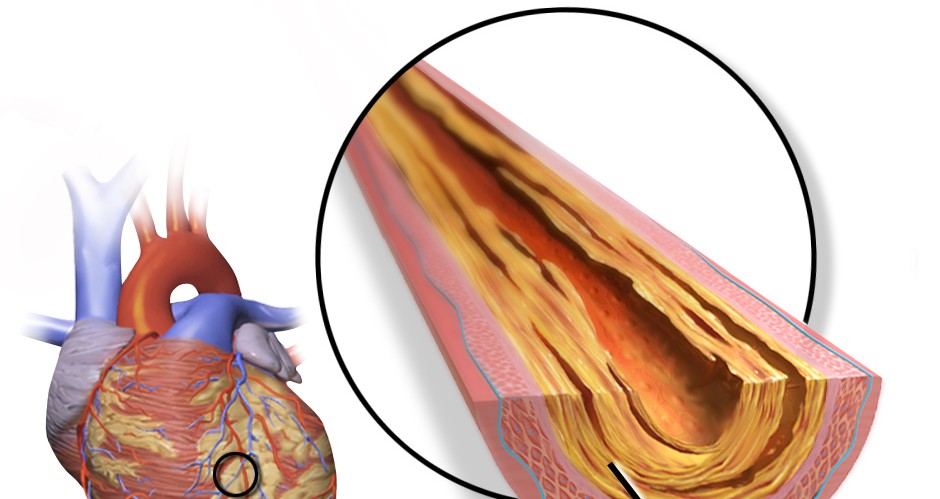
In suspected non-ST-elevation syndrome, the guideline recommends high-sensitivity troponin, with a result within 60 minutes of collection, and an algorithm of serial measurements at 0 h and 1 h, or 0 h and 2 h, to confirm or rule out infarction (class I, level B). The cutoffs of each algorithm depend on the assay used, and the 0 h and 1 h algorithm is described as the best option (Byrne et al., 2023).
Three zones
The algorithm sorts patients into three groups: rule-out, rule-in and observation. Those who fall in the observation zone need a third troponin at 3 hours, with or without echocardiography, and a reassessment of clinical risk. The 2021 Brazilian guideline follows the same logic of serial measurements and stresses that troponin must be read together with the clinical picture and the electrocardiogram (Nicolau et al., 2021).
Troponin and scores together
Troponin measures myocardial injury, and injury also appears in sepsis, pulmonary embolism, renal failure and myocarditis. The algorithm must therefore be integrated with the history, the examination and the electrocardiogram. Those who see undifferentiated chest pain can combine this reading with the HEART score and serial troponin, and remember the clinical probability of pulmonary embolism when shortness of breath dominates the picture.
Reperfusion in ST-elevation infarction: the clock rules
With a working diagnosis of ST-elevation infarction and symptoms for up to 12 hours, reperfusion is recommended. Primary angioplasty is preferred over fibrinolysis when the expected time from diagnosis to intervention is less than 120 minutes (class I, level A). The targets are crossing the guidewire in less than 60 minutes when the patient is already at a center with a cath lab and in less than 90 minutes when the patient needs to be transferred (Byrne et al., 2023).
The first minutes
While reperfusion is being organized, the guideline covers the basics with clear recommendations. Oxygen is recommended when saturation is below 90 (class I), and routine oxygen in those with saturation above that received class III, level A. Intravenous opioids can relieve pain (class IIa), with the caveat that they delay absorption of oral antiplatelet agents. An intravenous beta-blocker, preferably metoprolol, should be considered on arrival of those going for primary angioplasty, provided there are no signs of acute heart failure and systolic pressure is above 120 mmHg (class IIa, level A) (Byrne et al., 2023).
Logistics also became a recommendation. Regional reperfusion networks, centers with a cath lab running 24 hours a day and direct transfer to the catheterization room, without going through the emergency department or the coronary care unit, received class I. The pre-hospital care team should take the patient with suspected STEMI directly to a center with angioplasty, without stops at hospitals that do not offer the procedure.
When fibrinolysis comes in
If angioplasty within 120 minutes is not feasible, fibrinolysis is recommended within 12 hours of symptom onset, with a target of 10 minutes to the thrombolytic bolus. After it, the patient goes to a center with a cath lab: catheterization between 2 and 24 hours if fibrinolysis worked, and rescue angioplasty if ST resolution stays below half at 60 to 90 minutes or if instability appears. A network meta-analysis of 31 trials showed primary angioplasty with the lowest mortality, an odds ratio of 0.73 compared with fibrinolysis alone, followed by the pharmacoinvasive strategy, with an odds ratio of 0.79 (Fazel et al., 2020).
The reality of each country
In many places, the cath lab is far away. A Mexico City registry with 579 patients compared the pharmacoinvasive strategy with primary angioplasty and found a similar composite outcome, with a hazard ratio of 0.76 and a confidence interval that crossed one, and similar major bleeding (Araiza-Garaygordobil et al., 2021). The guideline's message is to organize regional networks, take the patient straight to the cath lab and use fibrinolysis without hesitation when angioplasty will take too long.
Late presentation
Between 12 and 48 hours from symptom onset, routine primary angioplasty should be considered (class IIa). After 12 hours, it is recommended if there are persistent symptoms, hemodynamic instability or severe arrhythmia (Byrne et al., 2023).
Non-ST syndrome: risk defines when to catheterize
For those with a working diagnosis of non-ST syndrome, the guideline recommends an invasive strategy during hospitalization, with timing defined by risk (Byrne et al., 2023).
Very high risk: immediate catheterization
Immediate catheterization is recommended (class I, level C) when at least one of these criteria is present: hemodynamic instability or cardiogenic shock, recurrent or refractory pain despite treatment, life-threatening arrhythmia during hospitalization, mechanical complication of the infarction, acute heart failure attributed to ischemia, or recurrent dynamic ST or T wave changes, especially intermittent ST elevation. In practice, these patients are treated as if they had ST elevation.
High risk: within 24 hours
An invasive strategy within 24 hours should be considered (class IIa, level A) when there is infarction confirmed by the troponin algorithm, dynamic ST or T wave changes, transient ST elevation or a GRACE score above 140. In the 2020 edition, this recommendation had class I; the change to IIa reflects trials and meta-analyses in which the benefit of early over late catheterization appeared mainly in higher-risk patients.
Lower risk: selective strategy
For those with normal troponin and low suspicion, the guideline accepts a selective strategy, with a non-invasive test or coronary CT angiography before deciding on catheterization. This choice spares procedures in those with a low probability of obstructive disease, but it requires follow-up: pain that returns, troponin that rises on a new measurement or dynamic ST change take the patient out of this group right away. The 2021 Brazilian guideline follows a similar path, with stratification by risk scores and shared decision-making with the patient (Nicolau et al., 2021).
Table: from working diagnosis to management
| Situation | Management per ESC 2023 | Class |
|---|---|---|
| STEMI or equivalent, angioplasty feasible within 120 minutes | Primary angioplasty | I |
| STEMI or equivalent, angioplasty not feasible within 120 minutes | Fibrinolysis within 12 hours, then transfer | I |
| Failed fibrinolysis | Rescue angioplasty | I |
| NSTEMI, very high risk | Immediate catheterization | I |
| NSTEMI, high risk | Catheterization within 24 hours | IIa |
| NSTEMI, lower risk | Selective strategy | As assessed |
| P2Y12 pretreatment without anatomy, catheterization in less than 24 hours | Avoid as routine | III |
Table sources: Byrne et al., 2023 and Fazel et al., 2020.
Antiplatelet therapy: pretreatment and choice of P2Y12 inhibitor
Dual antiplatelet therapy with acetylsalicylic acid and a potent P2Y12 inhibitor, prasugrel or ticagrelor, is the standard strategy. Clopidogrel is reserved for when the potent agents are contraindicated or unavailable, for patients at high bleeding risk and, as an option, for older patients (Byrne et al., 2023).
Prasugrel before ticagrelor
For those going to angioplasty, prasugrel should be considered in preference to ticagrelor (class IIa). The guideline relies on the ISAR-REACT 5 trial, in which the prasugrel strategy reduced the composite outcome of death, myocardial infarction or stroke without increasing bleeding, with the limitation of being an open-label trial.
The end of routine pretreatment
Pretreatment means giving the P2Y12 inhibitor before knowing the coronary anatomy. In NSTEMI with catheterization planned in less than 24 hours, routine pretreatment is no longer recommended (class III). According to the guideline summary, the ACCOAST trial showed more bleeding without ischemic benefit with early prasugrel, and DUBIUS was stopped for futility. If catheterization will take more than 24 hours, pretreatment may be considered according to bleeding risk; in STEMI referred for primary angioplasty, it may also be considered (class IIb).
After the procedure: duration, multivessel disease and special cases
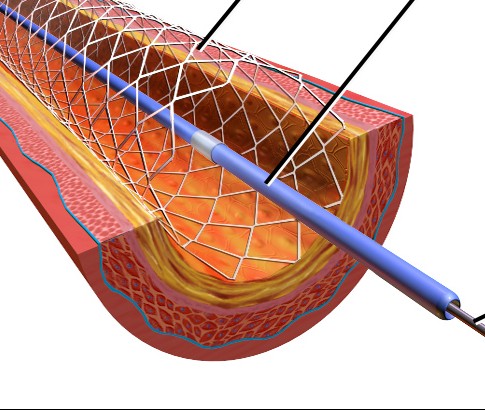
Dual antiplatelet therapy remains recommended for 12 months as the standard. The big change in 2023 is in the alternatives: for those without events after 3 to 6 months whose ischemic risk is no longer high, monotherapy, preferably with the P2Y12 inhibitor, should be considered (class IIa, level A). In high bleeding risk, monotherapy after 1 month may be considered (class IIb). De-escalation in the first 30 days after the event received class III (Byrne et al., 2023).
What supports monotherapy
A meta-analysis with individual data from six trials and 24096 patients compared P2Y12 inhibitor monotherapy and dual antiplatelet therapy after angioplasty. The ischemic outcome was similar, with a hazard ratio of 0.93, and bleeding fell by half, with a hazard ratio of 0.49 (Valgimigli et al., 2021).
Who is at high bleeding risk
The consortium that standardized the concept defines high bleeding risk as a risk of major bleeding of at least 4 in 100 in one year or of intracranial hemorrhage of at least 1 in 100 in one year, with major and minor criteria (Urban et al., 2019). Advanced age was the most frequent criterion in the trials that gave rise to the definition.
Multivessel disease
In STEMI with hemodynamic stability, complete revascularization is recommended, in the same intervention or within 45 days, with the decision on non-culprit lesions based on angiographic severity. In cardiogenic shock, angioplasty is restricted to the culprit artery at first, and the others may be treated in stages (class IIa) (Byrne et al., 2023).
Cardiac arrest, cancer and frail older adults
The guideline brings new sections. After an out-of-hospital cardiac arrest with recovered circulation, stability and absence of persistent ST elevation, routine immediate catheterization is no longer recommended. Assessment of neurological prognosis, in all survivors in coma, should wait at least 72 hours, and transport to a cardiac arrest referral center should be considered. When the arrest has another cause, such as hypoxia, the logic changes, as the text on resuscitation in drowning shows. In patients with cancer and high-risk syndrome, an invasive strategy is recommended if life expectancy is at least 6 months. In frail older adults, the guideline calls for a global approach that weighs the risks and benefits of each treatment. Intensification of cholesterol medication starts during hospitalization. This attention to context is the same one trained when you include severe causes early in the differential diagnosis.
Back to the shift
In the opening case, ST depression in V1 to V4 with ongoing pain raises the hypothesis of posterior infarction due to occlusion. Leads V7 to V9 and a bedside echocardiogram help, but persistent pain is already enough to place the patient in the very high-risk group, with immediate catheterization and no routine pretreatment before anatomy. Syncope of cardiac cause and hyperkalemia on the ECG are other scenarios in which the tracing decides the pace.
How NEXO helps train this reasoning
In NEXO, the case of the day is fictional, with a real clinical presentation and up to six progressive clues, and you propose the diagnosis by searching for the ICD-10 code.
The limits of use of the game are described on the NEXO economy page. If you research clinical reasoning teaching, the page for researchers explains how to get in touch. Professionals who write or review cases find information under curation and creators, and institutions can learn about the proposal on the partnerships page. Searching for the right ICD-10 code completes this training.
Frequently asked questions
Why did the ESC combine STEMI and NSTEMI in a single guideline?
Because the same patient moves between the two pictures, and initial decisions depend on the working diagnosis at the moment (Byrne et al., 2023). The single document organizes management as a spectrum.
Does an old bundle branch block rule out STEMI?
The guideline says to treat left bundle branch block, right bundle branch block or pacemaker rhythm as STEMI when symptoms suggest ongoing ischemia, whether the block is new or old (Byrne et al., 2023).
How long can I wait for angioplasty before giving thrombolysis?
The limit is 120 minutes from diagnosis to intervention. If that time is not possible, fibrinolysis should be given within 10 minutes, followed by transfer to a center with a cath lab (Byrne et al., 2023).
Does every NSTEMI need catheterization within 24 hours?
The 24-hour window applies to high risk and has class IIa. Very high risk calls for immediate catheterization, and lower risk may follow a selective strategy (Byrne et al., 2023).
Should I give the P2Y12 inhibitor in the emergency department?
In NSTEMI with catheterization planned in less than 24 hours, routine pretreatment received class III. In STEMI referred for primary angioplasty, it may be considered (Byrne et al., 2023).
Can dual antiplatelet therapy be shortened?
Yes, in selected patients. After 3 to 6 months without events, monotherapy should be considered, and the meta-analysis of individual data showed half the bleeding with similar ischemic protection (Valgimigli et al., 2021).
Take-home messages
- Acute coronary syndrome is a spectrum, and the working diagnosis changes with each test.
- Electrocardiogram within 10 minutes, with attention to ST elevation equivalents and the idea of occlusion.
- High-sensitivity troponin at 0 h and 1 h, read together with the clinical picture.
- In STEMI, angioplasty within 120 minutes or fibrinolysis without delay.
- In NSTEMI, risk defines the timing of catheterization: immediate, within 24 hours or selective.
- Pretreatment with a P2Y12 inhibitor is no longer routine before anatomy.
- 12 months of dual antiplatelet therapy as the standard, with exits planned by bleeding risk.
Milestone inventory
- 2019: an academic consortium standardizes the definition of high bleeding risk in angioplasty.
- 2021: an individual patient data meta-analysis supports P2Y12 inhibitor monotherapy after short dual antiplatelet therapy.
- 2023: ESC publishes the first single guideline for the entire spectrum of acute coronary syndrome.
- 2024: a review proposes replacing the ST-elevation paradigm with the occlusion myocardial infarction paradigm.
Play the case of the day on NEXO.
References
- Byrne RA, Rossello X, Coughlan JJ, et al. 2023 ESC Guidelines for the management of acute coronary syndromes. Eur Heart J. 2023;44(38):3720-3826. PMID 37622654. DOI 10.1093/eurheartj/ehad191. Read in the full PDF of the publisher's version in the ORBi repository.
- Bergmark BA, Mathenge N, Merlini PA, et al. Acute coronary syndromes. Lancet. 2022;399(10332):1347-1358. PMID 35367005.
- Nicolau JC, Feitosa Filho GS, Petriz JL, et al. Brazilian Society of Cardiology Guidelines on Unstable Angina and Acute Myocardial Infarction without ST-Segment Elevation - 2021. Arq Bras Cardiol. 2021;117(1):181-264. PMID 34320090.
- Urban P, Mehran R, Colleran R, et al. Defining high bleeding risk in patients undergoing percutaneous coronary intervention: a consensus document from the Academic Research Consortium for High Bleeding Risk. Eur Heart J. 2019;40(31):2632-2653. PMID 31116395.
- Valgimigli M, Gragnano F, Branca M, et al. P2Y12 inhibitor monotherapy or dual antiplatelet therapy after coronary revascularisation: individual patient level meta-analysis of randomised controlled trials. BMJ. 2021;373:n1332. PMID 34135011.
- McLaren J, de Alencar JN, Aslanger EK, et al. From ST-Segment Elevation MI to Occlusion MI: The New Paradigm Shift in Acute Myocardial Infarction. JACC Adv. 2024;3(11):101314. PMID 39435181.
- Al-Zaiti SS, Martin-Gill C, Zègre-Hemsey JK, et al. Machine learning for ECG diagnosis and risk stratification of occlusion myocardial infarction. Nat Med. 2023;29(7):1804-1813. PMID 37386246.
- Asatryan B, Vaisnora L, Manavifar N. Electrocardiographic Diagnosis of Life-Threatening STEMI Equivalents: When Every Minute Counts. JACC Case Rep. 2019;1(4):666-668. PMID 34316902.
- Fazel R, Joseph TI, Sankardas MA, et al. Comparison of Reperfusion Strategies for ST-Segment-Elevation Myocardial Infarction: A Multivariate Network Meta-analysis. J Am Heart Assoc. 2020;9(12):e015186. PMID 32500800.
- Araiza-Garaygordobil D, Gopar-Nieto R, Cabello-López A, et al. Pharmacoinvasive Strategy vs Primary Percutaneous Coronary Intervention in Patients With ST-Elevation Myocardial Infarction: Results From a Study in Mexico City. CJC Open. 2021;3(4):409-418. PMID 34027343.