Exercise hyponatremia: when drinking too much is dangerous



Table of contents
- What exercise-associated hyponatremia is
- How often it happens
- Why sodium falls: too much water and vasopressin
- Who is at risk
- Recognizing it in the field: hyponatremia, heat or something else
- On-site treatment: what to do and what to avoid
- Prevention: drink according to thirst
- How NEXO helps train this reasoning
- Frequently asked questions
- Take-home messages
- References
A 38-year-old female runner completes her first marathon in 5 hours and 40 minutes on a mild day. She drank water at every aid station because she read that dehydration was the main risk of the race. In the medical tent, she complains of headache, nausea, and vomits twice. She is confused, with swollen hands, and her measured temperature is normal. Someone offers intravenous normal saline, "because she must be dehydrated." The case is fictional, and the scene repeats at marathons, triathlons, trail runs, and military training.
The right decision, according to the international consensus conference on the topic, goes against instinct: suspect exercise-associated hyponatremia, stop hypotonic and isotonic fluids, measure sodium when possible, and, if there are signs of encephalopathy, treat with intravenous hypertonic saline without waiting for the result (Hew-Butler, 2015). The intuition to "give more fluid" is exactly what can worsen the condition.
Key points
- Exercise-associated hyponatremia is serum sodium below the reference value, generally below 135 mmol/L, during or up to 24 hours after prolonged physical activity (Bennett, 2020).
- The main mechanism, and the one in all known deaths, is drinking hypotonic fluid beyond losses, combined with non-osmotic vasopressin secretion (Hew-Butler, 2015).
- Gaining or maintaining weight during a long race is a sign of excess fluid; almost all symptomatic cases occurred in athletes in this situation (Hew-Butler, 2015).
- Symptom severity, not the sodium value, guides treatment (Hew-Butler, 2015).
- With signs of encephalopathy, the consensus recommends a 100 mL bolus of hypertonic saline, with 3 grams of sodium chloride in each 100 mL, intravenously, repeated every 10 minutes until neurological signs improve (Hew-Butler, 2017).
- Drinking to thirst is the main prevention strategy recommended by the consensus and by the Wilderness Medical Society (Bennett, 2020).
Summary
- What exercise-associated hyponatremia is
- How often it happens
- Why sodium falls: too much water and vasopressin
- Who is at risk
- Recognizing it in the field: hyponatremia, heat, or something else
- On-site treatment: what to do and what to avoid
- Prevention: drinking to thirst
- How NEXO helps train this reasoning
- Frequently asked questions
- Take-home messages
What exercise-associated hyponatremia is
The third international consensus conference, held in Carlsbad, California, in 2015, with 17 experts from 4 countries, defines exercise-associated hyponatremia as blood sodium below the laboratory reference value, generally below 135 mmol/L, linked to typical symptoms and signs (Hew-Butler, 2015). The Wilderness Medical Society guideline, updated in 2019, adds the timing: the condition arises during prolonged activity or up to 24 hours after it (Bennett, 2020).
The consensus separates two forms. The asymptomatic form is a laboratory finding, usually in a research test collected on arrival. The symptomatic form ranges from vague complaints, such as dizziness and nausea, to headache, vomiting, and altered mental status, with confusion and seizure. When there is cerebral edema, the name is exercise-associated hyponatremic encephalopathy, which may be accompanied by non-cardiogenic pulmonary edema (Hew-Butler, 2015).
The speed of the fall matters as much as the final value. The consensus notes that symptoms can appear when sodium falls by 7 to 10 per 100 parts of the initial value in 24 hours, and therefore values between 125 and 130 mmol/L that develop quickly can also cause symptoms (Hew-Butler, 2015). The general reasoning about hyponatremia, with osmolality, volume, and urinary sodium, is in the post on hypotonic hyponatremia. Here the focus is the athlete, the field, and the medical tent.
Why the topic left the laboratory
The condition was described in endurance athletes in the 1980s. The 2017 review by the consensus group recalls that the deaths of two charity marathon runners in 2003 exposed the complication to the public and to sports physicians (Hew-Butler, 2017). In the following decade, the press reported deaths in high school American football players after practice, in a soldier on the first day of training, in a police officer during a 19-kilometer bicycle ride, in a student forced to do calisthenics during hazing, in a triathlete and in an ultradistance canoeist (Hew-Butler, 2017).
| Form | What is seen | Typical sodium | Initial management in the consensus |
|---|---|---|---|
| Asymptomatic | Finding on a test collected for another reason | Below 135 mmol/L | Restrict hypotonic and isotonic fluids until urination; oral hypertonic saline is acceptable, especially below 130 mmol/L |
| Mildly symptomatic | Dizziness, nausea, headache, malaise, swelling | Variable | Observe until urination, oral hypertonic saline or intravenous bolus |
| Severe, with encephalopathy | Vomiting, confusion, seizure, coma, shortness of breath | Generally below 125 mmol/L, or a rapid drop | Intravenous hypertonic saline bolus without waiting for the test and transport with the team |
Source: Hew-Butler, 2015 and Bennett, 2020.
How often it happens
The frequency varies greatly with the type and duration of the activity, the location, the weather and the characteristics of the participants. The consensus reports asymptomatic hyponatremia in 0 to 51 out of every 100 athletes tested soon after finishing, depending on the race (Hew-Butler, 2015). Among athletes who sought medical care, the symptomatic form reached 23 out of every 100 in an Ironman and 38 out of every 100 in an ultramarathon, but most races, especially marathon distance and shorter, record no symptomatic case.
Two large compilations help to calibrate this. In a set of 2135 athletes from 8 endurance races, between 42.2 and 161 kilometers, the symptomatic form appeared in 1 out of every 100 study participants, and the asymptomatic form in 6 out of every 100 (Hew-Butler, 2015). In 669 runners of 161-kilometer ultramarathons, followed for 5 years, there was a single symptomatic case; considering all those enrolled in the period, the real incidence was close to 6 out of every 10 thousand participants.
Short races and very long races
In a marathon and half marathon in Jacksonville, Florida, in 2008, hyponatremia appeared in 8 of 161 runners before the start and in 16 of 195 at the finish, about 5 and 8 out of every 100 (Mohseni, 2011). The finding is noteworthy because some of the runners already started with low sodium. At the opposite extreme, in the Spartathlon, a continuous 246-kilometer ultramarathon between Athens and Sparta, 41 of 63 men who finished the race had hyponatremia at the finish, mild in 27 and severe in 14 (Seal, 2019).
The review by Knechtle and colleagues recalls that hyponatremia with sodium below 130 mmol/L appears mainly in long and very long races, in slow participants and in women (Knechtle, 2019). The list of activities with documented cases goes far beyond running: open water swimming, mountain biking, hiking, yoga in a heated room and even lawn bowling in a person with cystic fibrosis (Hew-Butler, 2017).
Why sodium falls: too much water and vasopressin
The 2015 consensus is direct: the main cause of exercise-associated hyponatremia, and of all known deaths, is drinking hypotonic fluids in an amount greater than the capacity to eliminate water, together with vasopressin secretion that does not respond to osmolality (Hew-Butler, 2015). The recommendation receives the highest grade of evidence in the document.
Vasopressin, antidiuretic hormone, should fall when the blood becomes diluted. In prolonged exercise, stimuli such as nausea, pain, falling glucose, heat and inflammation keep the hormone high even with low sodium, and the kidney continues to retain water (Hew-Butler, 2017). The review also cites rhabdomyolysis and interleukin 6 as pathways that can raise vasopressin even further.
What weight shows
The study by Noakes and colleagues weighed 2135 athletes before and after endurance races. Most finished euhydrated or with weight loss, but among the 231 who gained weight, 19 in 100 had sodium between 129 and 135 mmol/L and 11 in 100 had sodium below 129 mmol/L (Noakes, 2005). Sodium at the finish fell linearly as weight gain increased. The authors concluded that weight gain from excess fluid was the main cause of low sodium.
The modeling by Montain, Cheuvront and Sawka reached the same point by another route. When simulating runners weighing 50 to 90 kilos, in mild and hot weather, with various rates of water intake and sodium loss in sweat, the factor that weighed most in the drop in sodium was drinking above the sweat rate (Montain, 2006). Salty sweat reduced the amount of excess needed to dilute sodium, and the combination of partial replacement with large salt loss explained some cases of hyponatremia with dehydration.
The hypovolemic form
The 2017 review recalls that not every case involves weight gain. In a Czech study of ultramarathons, most athletes with low sodium appeared to have volume reduced by weight (Hew-Butler, 2017). In these cases, sodium loss through sweat and vasopressin stimulated by low volume contribute. Sweat varies greatly: in Spanish marathoners, sweat sodium concentration ranged from 7 to 95.5 mmol/L, and 1 in 5 runners had sweat with more than 60 mmol/L (Lara, 2016).

Who is at risk
The consensus lists the main risk factors: drinking water, isotonic drinks or other hypotonic beverages in excess; gaining weight during exercise; activity lasting more than 4 hours; little experience or inadequate preparation for the race; slow pace; high or low body mass index; and fluid easily available, such as stations every few kilometers (Hew-Butler, 2015). The single most important factor is sustained fluid intake above losses through sweat, breathing and urine.
The practical profile, according to the document, is that of the smaller person, who runs slowly and drinks more than they sweat. Incidence is higher in women, but the difference between sexes loses significance when adjusted for body mass index and race time (Hew-Butler, 2015). The review by Knechtle also points to women, slow participants and very long races as higher-risk groups (Knechtle, 2019).
Do sports drinks protect?
The question is common, and the consensus answer is no. All sports drinks are hypotonic relative to plasma, with about 10 to 38 mmol/L of sodium, and excess volume outweighs any protective effect of the sodium in the drink (Hew-Butler, 2015). The Wilderness Medical Society guideline agrees: salty foods and sodium should be available in long and hot races, but the strategy does not prevent hyponatremia when there is excess drinking (Bennett, 2020).
Anti-inflammatories and other factors
Nonsteroidal anti-inflammatory drugs have been cited as a risk factor, perhaps because they potentiate the effect of vasopressin in the kidney, but the data are conflicting and the consensus calls for more studies (Hew-Butler, 2015).
| Factor | Why it matters | Source |
|---|---|---|
| Drinking beyond thirst and losses | Accumulation of free water dilutes sodium | Hew-Butler, 2015 |
| Weight gain during the race | Sign of positive fluid balance | Noakes, 2005 |
| Race lasting more than 4 hours and slow pace | More time and more opportunities to drink | Hew-Butler, 2015 |
| Smaller body | The same volume dilutes a smaller mass of body water | Montain, 2006 |
| Very salty sweat | Reduces the excess water needed to lower sodium | Lara, 2016 |
Recognizing it in the field: hyponatremia, heat or something else
The consensus calls for every athlete with signs or symptoms compatible with acute hyponatremia to be evaluated for the condition (Hew-Butler, 2015). The Wilderness Medical Society guideline organizes the signs into two lists. The mild form includes weakness, malaise, fatigue, irritability, headache, a feeling of bloating with weight gain, nausea, vomiting, dizziness and variable urine output. The severe form includes collapse, vomiting, confusion, ataxia, normal temperature, shortness of breath and frothy sputum from pulmonary edema, seizure and coma (Bennett, 2020).
The problem is that many of these signs overlap with those of heat exhaustion, dehydration and heat stroke. The guideline marks in its own table which symptoms are confused with each condition and notes that getting this difference wrong is a recognized cause of worsening and death (Bennett, 2020). The post about the spectrum of heat illness helps review the heat-related conditions.
The clues that tell them apart
Temperature is one of the most useful clues. In heat stroke, core temperature rises above 40 °C with altered mental status; in severe hyponatremia, the guideline lists normal temperature among the signs (Bennett, 2020). Other clues in favor of hyponatremia are weight gain, swollen hands and feet, a report of drinking a lot of water during the race, arriving after many hours and worsening after the finish, when the athlete keeps drinking.
Putting the hypotheses side by side avoids the most dangerous mistake in this case: treating it as dehydration. A marathon, a mild day, a slow runner who drank at every aid station and arrived confused with a normal temperature change the pretest probability in favor of hyponatremia before any test.
On-site sodium testing
The consensus considers it ideal to have on-site sodium analysis with a portable device at every large endurance event, and recommends that team physicians and event medical directors have hypertonic saline on hand (Hew-Butler, 2015). At small, remote or wilderness events, this is not always possible, and treatment then relies on the clinical examination.
| Clue | Favoring hyponatremia | Favoring heat stroke |
|---|---|---|
| Core temperature | Normal | Above 40 °C |
| Weight | Equal to or above usual | Usually loss |
| Fluid intake | A lot, at every aid station | Variable |
| Timing | End of a long race or hours later | During intense exertion in the heat |
| Swelling | Swollen hands and feet, tight rings | Uncommon |
| Breathing | Frothy sputum if there is pulmonary edema | Tachypnea |
Source: Bennett, 2020 and Hew-Butler, 2015.
On-site treatment: what to do and what to avoid
The central principle of the consensus is that symptom severity, not the sodium value, should guide treatment (Hew-Butler, 2015). A runner with a sodium of 128 mmol/L and only malaise and another with 131 mmol/L in seizure require very different approaches. The second principle is that the team should avoid hypotonic and isotonic fluids, by mouth and intravenously, until the athlete starts to urinate.
Asymptomatic form and mild form
In asymptomatic hyponatremia found on a test, the consensus recommends restricting hypotonic and isotonic fluids until diuresis begins, to keep the athlete from progressing to the symptomatic form. Oral hypertonic saline is a reasonable option, especially when sodium is below 130 mmol/L (Hew-Butler, 2015). Before discharging the athlete, the team should explain that headache, vomiting or confusion in the next 24 hours require emergency care, and ideally the athlete should leave accompanied.
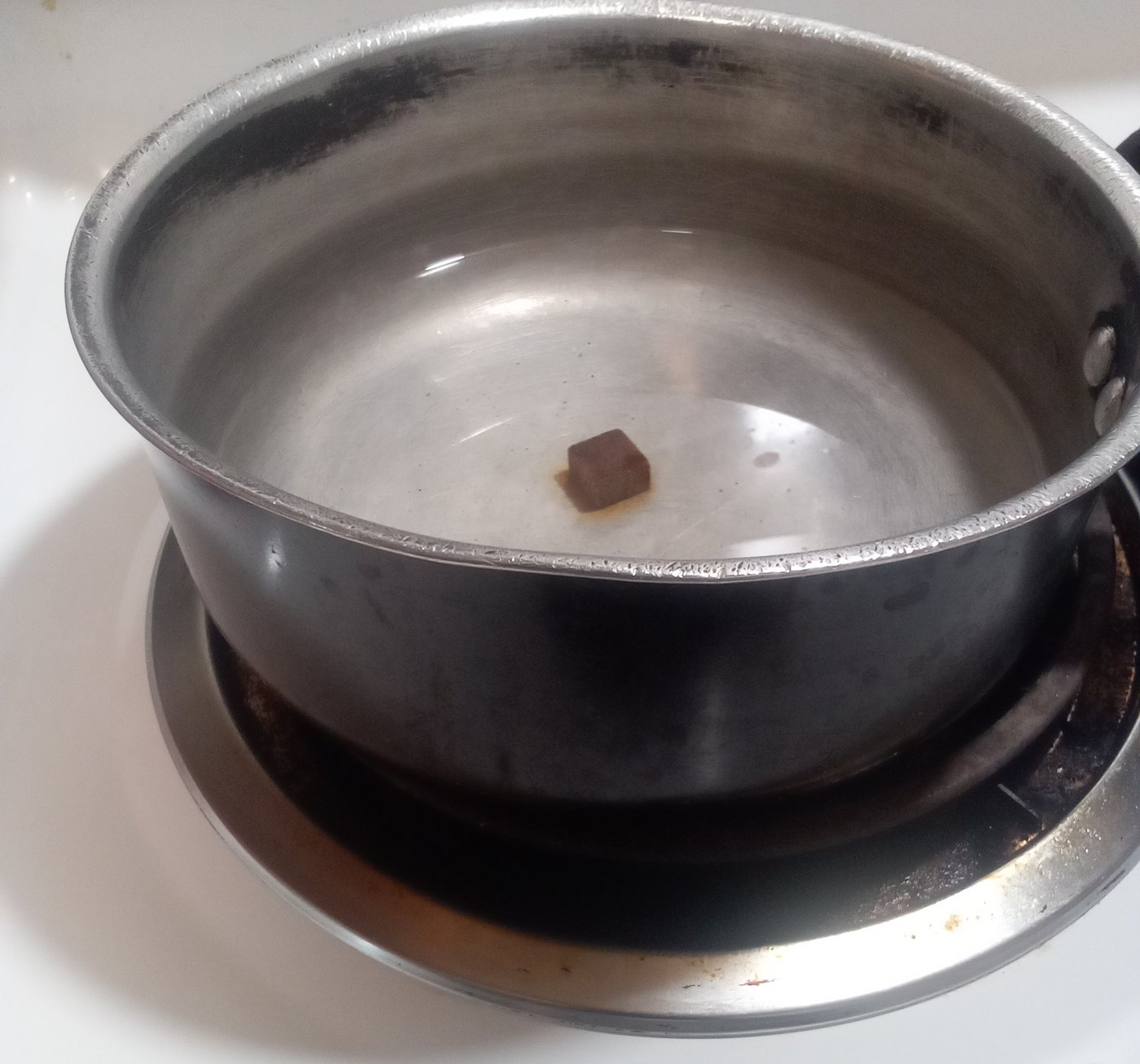
In the mild form, the consensus accepts three paths: observe until diuresis, offer oral hypertonic saline or give an intravenous bolus of hypertonic saline (Hew-Butler, 2015). As an oral option, the document cites, among others, 4 bouillon cubes dissolved in half a cup, about 125 mL, of hot water, or 100 mL of hypertonic saline at 3 grams of sodium chloride per 100 mL. The Wilderness Medical Society guideline reinforces fluid restriction in the mild form (Bennett, 2020).
Monitoring those who improve is also part of care. A specific safety net, with the symptoms that call for immediate return and who will stay with the athlete, is worth more than a "come back if anything happens". Time also works as a test: spontaneous diuresis and improvement of symptoms during observation are signs that the excess water is being eliminated.
Severe form and encephalopathy
With signs of encephalopathy, such as confusion, seizure, coma or persistent vomiting, the consensus recommends a bolus of 100 mL of hypertonic saline with 3 grams of sodium chloride per 100 mL intravenously, which can be repeated two more times if there is no clinical improvement, at intervals of about 10 minutes (Hew-Butler, 2015). Each bolus usually raises sodium by 2 to 5 mmol/L. The 2017 review describes the same regimen, repeated every 10 minutes until the neurological signs resolve, and reports an athlete who needed 950 mL in total (Hew-Butler, 2017).
The consensus advises that, in seizure or coma, the bolus be given before any test, when sodium cannot be measured immediately, and that empirical treatment is justified when the clinical suspicion is strong and local analysis is not available (Hew-Butler, 2015). The Wilderness Medical Society classifies empirical treatment in this scenario as recommendation 2B (Bennett, 2020). The team should keep a saline-locked IV line for transport and monitor the airway, because vomiting and seizures are common.
The saline that makes it worse
The classic mistake is to treat the confused athlete as dehydrated and infuse saline or Ringer's. The consensus contraindicates isotonic and hypotonic solutions in exercise-associated hyponatremia, because high vasopressin makes the kidney retain free water and sodium falls even further (Hew-Butler, 2015). The exception is the athlete with clear signs of volume loss, such as hypotension, in whom replacement may be necessary, preferably with sodium measured and close monitoring.
Concern about osmotic demyelination syndrome, common in chronic hyponatremia, is much lower here. The consensus states that there are no reports of this complication when hypertonic saline is used in acute exercise-associated hyponatremia (Hew-Butler, 2015). The difference is in time: the athlete's brain swells within hours and has not yet made the adaptations that make rapid correction dangerous.
| Situation | The consensus recommends | The consensus advises against |
|---|---|---|
| Abnormal test, athlete well | Restrict fluids until urination; advise and discharge with accompaniment | Offer more water or sports drink |
| Mild symptoms | Observation, oral hypertonic saline or IV bolus | Routine saline |
| Encephalopathy | Bolus of 100 mL of hypertonic saline, repeated if needed, before testing if analysis is unavailable | Wait for the result to treat |
| Transport | Saline-locked line and team attentive to the airway | Continuous infusion of isotonic fluid |
Source: Hew-Butler, 2015 and Bennett, 2020.
In the hospital and back home
The athlete with encephalopathy should go to an emergency department after initial treatment. The consensus describes that the hospital repeats sodium, assesses the neurological response and looks for pulmonary and cerebral edema, with imaging tests when indicated (Hew-Butler, 2015). When the athlete starts urinating large volumes, sodium can rise quickly, and the team monitors the rate of correction.
The 2017 review recalls that exercise-associated hyponatremia continues to cause preventable deaths, and the consensus points to delayed recognition and infusion of isotonic fluids among the errors to avoid (Hew-Butler, 2017). The heuristic "an exhausted athlete is a dehydrated athlete" helps in most medical tents and gets in the way precisely in this group.
Returning to training and competition
The consensus documents give little detail on return, and the decision is usually individual. What the sources make clear is that anyone who has had an episode should review the hydration strategy, test the plan in long training sessions and weigh themselves before and after to understand their own sweat rate (Racinais, 2023). A shared decision between athlete and team, considering the race distance, the weather and previous experience, is usually more useful than fixed rules.
Prevention: drink according to thirst
The main prevention recommendation of the consensus is to drink according to thirst. The document notes that thirst protects against excess fluid and that a loss of up to about 3 in every 100 parts of body weight is usually well tolerated, without important harm to performance in most races (Hew-Butler, 2015). Part of the weight lost in a long race comes from glycogen and the water bound to it, which is released during exertion (Hew-Butler, 2017).
Kenefick reviewed when each strategy makes sense. Drinking according to thirst works well in activities of up to 1 hour to 90 minutes, in cold to mild weather or at low intensity. The drinking plan, calculated from the sweat rate, makes more sense in activities longer than 90 minutes, in heat, with a high sweat rate or when the goal is maximum performance (Kenefick, 2018). In both cases, the limit is the same: drink less than you lose, and never to the point of gaining weight.
Weight, urine and thirst
The International Olympic Committee consensus for races in the heat suggests that the athlete learn their own response with the weight, urine and thirst method, and test the hydration strategy in training, not on race day (Racinais, 2023). A weight variation below 1 to 2 in every 100 parts and light-colored urine indicate good hydration. The hyponatremia consensus adds: weight equal to or above the starting weight after hours of activity indicates excess fluid (Hew-Butler, 2015).
What falls to the organizer
Organizers also have a role. The consensus suggests avoiding excess fluid stations in long races, educating participants and teams about the risks of drinking too much, and ensuring that the medical team has on-site sodium analysis and hypertonic saline available (Hew-Butler, 2015). The Wilderness Medical Society guideline adds that, in a remote setting, replacement should follow the weight lost and thirst, with salt available in long activities in the heat (Bennett, 2020).
| Strategy | When it applies | Source |
|---|---|---|
| Drink according to thirst | Activities of up to 90 minutes, mild weather, low intensity; main prevention rule | Kenefick, 2018 |
| Individual drinking plan | More than 90 minutes, heat, high sweat, maximum performance | Kenefick, 2018 |
| Weigh before and after | Long training sessions, to learn the sweat rate | Racinais, 2023 |
| Salt and salty foods | Long races in the heat, without replacing volume control | Bennett, 2020 |
How NEXO helps train this reasoning
In NEXO, the case of the day is fictional, with a real clinical presentation and up to six progressive clues, and you propose the diagnosis by looking for the code in ICD-10. Separating exercise-associated hyponatremia from dehydration, heat stroke or hypoglycemia is the kind of reasoning you train clue by clue. The post about syncope in the emergency department helps separate benign fainting from serious fainting.
The limits of using the game are described on the NEXO Economy page. If you research the teaching of clinical reasoning, the page for Researchers explains how to get in touch. Professionals who write or review cases find information under Curator and Creators, and institutions can learn about the proposal on the partnerships page.
Frequently asked questions
Is exercise hyponatremia the same thing as dehydration?
Most severe cases happen in the opposite situation: the athlete drank too much and gained or maintained weight (Noakes, 2005). There is a form with reduced volume, more common in ultramarathons, but the mechanism of all known deaths is excess fluid (Hew-Butler, 2015).
Do sports drinks prevent hyponatremia?
All sports drinks are hypotonic relative to plasma. In excess, they also dilute sodium, and the consensus states that they do not prevent hyponatremia when the athlete drinks more than they lose (Hew-Butler, 2015).
Do salt capsules solve it?
Salt can help in long activities in the heat, but the Wilderness Medical Society guideline states that it does not prevent hyponatremia when there is excess drinking (Bennett, 2020). The focus remains on fluid volume.
Why doesn't the team give the confused athlete normal saline?
In exercise-associated hyponatremia, high vasopressin makes the kidney retain free water, and isotonic saline can lower sodium even further. The consensus contraindicates isotonic and hypotonic fluids in this situation (Hew-Butler, 2015).
Does it only happen in a marathon?
There are cases in triathlon, ultramarathon, swimming, cycling, hiking, military training, hot yoga and even in American football players after practice (Hew-Butler, 2017).
Take-home messages
- Exercise-associated hyponatremia is sodium below 135 mmol/L during or up to 24 hours after prolonged activity.
- The main mechanism is drinking beyond losses, with high vasopressin that prevents eliminating the water.
- Gaining or maintaining weight in a long race is a warning sign.
- Symptoms, not the sodium value, guide management.
- In encephalopathy, the consensus recommends intravenous hypertonic saline bolus, without waiting for the test when it is unavailable.
- Normal saline and Ringer worsen the condition and are contraindicated.
- Drinking to thirst is the main prevention strategy.
Play today's case on NEXO.
References
- Hew-Butler T, Rosner MH, Fowkes-Godek S, et al. Statement of the Third International Exercise-Associated Hyponatremia Consensus Development Conference, Carlsbad, California, 2015. Clin J Sport Med. 2015;25(4):303-320. PMID 26102445. DOI 10.1097/JSM.0000000000000221.
- Hew-Butler T, Loi V, Pani A, et al. Exercise-Associated Hyponatremia: 2017 Update. Front Med (Lausanne). 2017;4:21. PMID 28316971. DOI 10.3389/fmed.2017.00021.
- Bennett BL, Hew-Butler T, Rosner MH, et al. Wilderness Medical Society Clinical Practice Guidelines for the Management of Exercise-Associated Hyponatremia: 2019 Update. Wilderness Environ Med. 2020;31(1):50-62. PMID 32044213. DOI 10.1016/j.wem.2019.11.003.
- Noakes TD, Sharwood K, Speedy D, et al. Three independent biological mechanisms cause exercise-associated hyponatremia: evidence from 2,135 weighed competitive athletic performances. Proc Natl Acad Sci U S A. 2005;102(51):18550-18555. PMID 16344476. DOI 10.1073/pnas.0509096102.
- Montain SJ, Cheuvront SN, Sawka MN. Exercise associated hyponatraemia: quantitative analysis to understand the aetiology. Br J Sports Med. 2006;40(2):98-105. PMID 16431994. DOI 10.1136/bjsm.2005.018481.
- Knechtle B, Chlíbková D, Papadopoulou S, et al. Exercise-Associated Hyponatremia in Endurance and Ultra-Endurance Performance-Aspects of Sex, Race Location, Ambient Temperature, Sports Discipline, and Length of Performance: A Narrative Review. Medicina (Kaunas). 2019;55(9):537. PMID 31455034. DOI 10.3390/medicina55090537.
- Kenefick RW. Drinking Strategies: Planned Drinking Versus Drinking to Thirst. Sports Med. 2018;48(Suppl 1):31-37. PMID 29368181. DOI 10.1007/s40279-017-0844-6.
- Mohseni M, Silvers S, McNeil R, et al. Prevalence of hyponatremia, renal dysfunction, and other electrolyte abnormalities among runners before and after completing a marathon or half marathon. Sports Health. 2011;3(2):145-151. PMID 23016001. DOI 10.1177/1941738111400561.
- Seal AD, Anastasiou CA, Skenderi KP, et al. Incidence of Hyponatremia During a Continuous 246-km Ultramarathon Running Race. Front Nutr. 2019;6:161. PMID 31681787. DOI 10.3389/fnut.2019.00161.
- Racinais S, Hosokawa Y, Akama T, et al. IOC consensus statement on recommendations and regulations for sport events in the heat. Br J Sports Med. 2023;57(1):8-25. PMID 36150754. DOI 10.1136/bjsports-2022-105942.
- Lara B, Gallo-Salazar C, Puente C, et al. Interindividual variability in sweat electrolyte concentration in marathoners. J Int Soc Sports Nutr. 2016;13:31. PMID 27478425. DOI 10.1186/s12970-016-0141-z.