Thrombosis after long trips: risk and prevention

Table of contents
- Why thrombosis after a trip is a reasoning scenario
- What is known about the risk
- Who is at higher risk
- What to do during the trip
- Compression stockings: what the evidence shows
- Anticoagulation and aspirin before the flight
- Risk and approach: a table for the visit
- After landing: when to suspect
- How to investigate a swollen leg after a trip
- The biases that get in the way of the investigation
- How NEXO helps train this reasoning
- Frequently asked questions
- Final checklist
- References
A forty-four-year-old man comes to the emergency department five days after returning from a work trip. There were two flights of more than ten hours, with a week of meetings in between. He reports that his left calf has been hurting since the day before, that the leg seems more swollen at the end of the day, and that he thought it was tiredness from so much walking at the airport. He is tall, is overweight, and had an ankle sprain treated with an immobilizing boot two months earlier. He has no shortness of breath. The scene is fictional and was written for teaching. This text uses that picture as a clinical reasoning scenario: why long trips raise the risk of thrombosis, who needs prevention, what the evidence says about stockings and medications, and how to investigate a swollen leg after landing.
NEXO is a daily medical diagnosis game: one clinical case a day, up to six progressive clues, and ICD-10 proximity feedback across five levels.
This text is not an anticoagulation protocol. Choice of medication, dose and duration of treatment follow their own guidelines, which change over time. The interest here is the reasoning: how to turn the question "could this be thrombosis?" into an organized assessment, which clues raise suspicion, and why the trip is a clue that often does not come up in the first conversation. If you play the case of the day on NEXO, you will recognize the move: a piece of information about what the patient did in recent weeks can change the reading of a common symptom.
Key points
- Long trips, by plane, car, bus or train, raise the risk of venous thrombosis, but the absolute risk for most travelers is small.
- The risk is higher in people who already have other factors, such as previous thrombosis, recent surgery or trauma, active cancer, pregnancy, estrogen use and obesity.
- Moving the legs, walking in the aisle and doing calf exercises are simple measures recommended for all travelers at risk.
- Compression stockings and anticoagulation are reserved for those at increased risk, with low-certainty evidence.
- When faced with a swollen leg after a trip, clinical probability and D-dimer help decide who needs an ultrasound.
Why thrombosis after a trip is a reasoning scenario
Deep vein thrombosis is a diagnosis that tends to be remembered when the patient mentions recent surgery or cancer. The trip, on the other hand, rarely comes up spontaneously in the history. The patient does not connect the leg pain to the flight the week before, and the doctor, if he does not ask, does not find out. That is why this picture is a good scenario: it trains the question about what happened before the symptoms, and not only about the symptoms.
Kuipers and colleagues reviewed the studies on the topic and concluded that long trips raise the risk of venous thrombosis by about two to four times (Kuipers and colleagues, 2007). The authors note, however, that the absolute risk of a symptomatic event is small and that the exact mechanism has not yet been well studied. This contrast between relative risk and absolute risk is one of the central lessons of the topic.
What the scene teaches
In the opening scene, two long flights, the calf pain, the swelling, the height, the excess weight and the recent ankle immobilization form a pattern. No clue, on its own, closes the diagnosis. Muscle pain after a lot of walking is a plausible explanation, and it is precisely this easy explanation that can delay the investigation. The post on signs, symptoms and history shows how context changes the weight of each finding.
A question that changes the probability
Asking "have you traveled in the last few weeks?" takes a few seconds and can change the probability of thrombosis before any test. The post on pretest probability explains why this initial estimate defines how to interpret D-dimer and ultrasound. The post on base rate in diagnosis helps remind us that a risk factor raises the chance, but does not turn any leg pain into thrombosis.
What is known about the risk
Kuipers and colleagues followed employees of large international organizations for several years and cross-referenced travel records with cases of thrombosis (Kuipers and colleagues, 2007). In the eight weeks after a flight of at least four hours, the risk of symptomatic thrombosis was about three times higher than in the period without travel. In absolute numbers, the authors estimated about one event per five thousand long flights.
The risk grows with exposure
In the same study, Kuipers and colleagues observed that the risk increased with the number of flights taken in a short time and with the duration of the trip (Kuipers and colleagues, 2007). The risk was higher in the first two weeks after the trip and returned to baseline around the eighth week. In the scene, the two long flights in one week and the onset of symptoms a few days after returning fit this pattern.
It is not just the plane
Cannegieter and colleagues analyzed a large case-control study and found a risk of thrombosis about twice as high after trips of at least four hours, by plane, car, bus or train (Cannegieter and colleagues, 2006). The risks were similar across the different means of transport, and most cases were diagnosed in the first week after the trip. The page of the United States Centers for Disease Control and Prevention also notes that anyone who travels for more than four hours, by any means, may be at risk of thrombosis (Centers for Disease Control and Prevention, 2024).


Why immobility matters
The page of the centers for disease control explains that clots can form in the deep veins of the legs during travel because the person sits still in a cramped space for a long time, and that the longer the immobility, the higher the risk (Centers for Disease Control and Prevention, 2024). Kuipers and colleagues note that immobility does not explain everything and that a controlled study suggested other mechanisms of coagulation activation after the flight (Kuipers and colleagues, 2007). For the clinician, the practical point is that travel adds risk to factors the patient already had.
Who is at higher risk
The page of the centers for disease control notes that, even on long trips, the risk of thrombosis is usually very small and that most people who develop travel-related thrombosis have one or more additional risk factors (Centers for Disease Control and Prevention, 2024). The list includes older age, with risk increasing from age forty, overweight or obesity, surgery or trauma in the last three months, use of estrogen contraceptives or menopausal hormone therapy, pregnancy and the three months after childbirth, previous thrombosis, inherited thrombophilia or family history of thrombosis, active cancer or recent cancer treatment, some chronic heart and lung diseases, diabetes, limited mobility, a catheter in a large vein and varicose veins.
The combination of factors
Cannegieter and colleagues showed that combining travel with other factors greatly increases the risk (Cannegieter and colleagues, 2006). Carriers of an inherited mutation that increases coagulation had a much higher risk after traveling, and women who used oral contraceptives had an even stronger interaction with air travel. Very tall people also had a higher risk after traveling, perhaps because of the unnatural position in the seat.
Height, weight and hormones
Kuipers and colleagues found a particularly high risk in employees under thirty, in women who used oral contraceptives and in people who were very short, very tall or overweight (Kuipers and colleagues, 2007). In the scene, height, excess weight and the recent immobilization of the ankle add up to clues that raise the probability before any exam. The sum of factors, and not a single factor, weighs most in the decision.
What to do during the trip
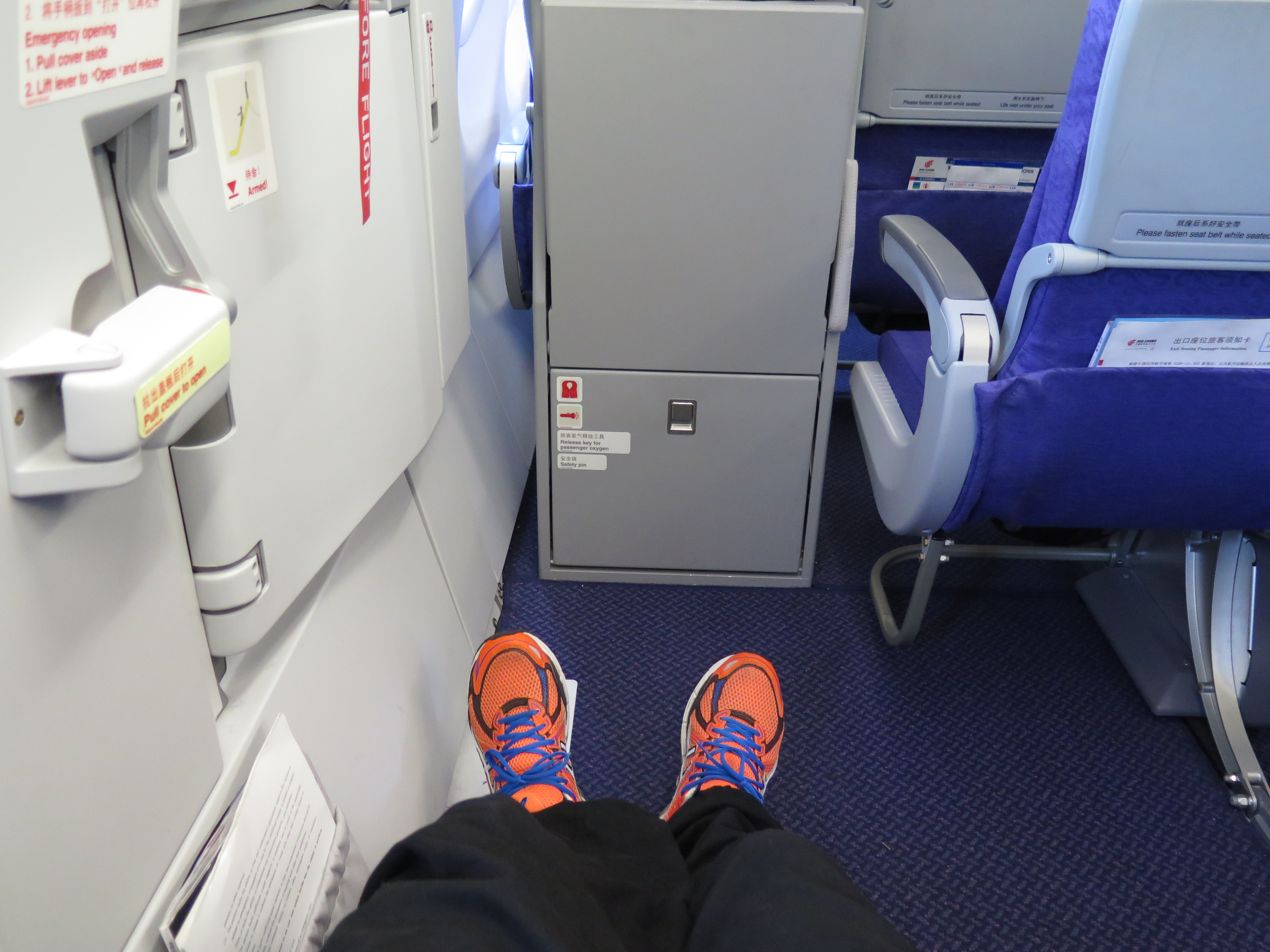
The page from the centers for disease control recommends moving the legs often on long trips, doing calf exercises and, after sitting for a long time, getting up and stretching the legs (Centers for Disease Control and Prevention, 2024). The guidance suggests stretching the legs and pulling the toes toward the body, and notes that some airlines suggest pulling each knee toward the chest for a few seconds, repeating the movement a few times.

What the guidelines suggest
Kahn and colleagues, in the American College of Chest Physicians guideline, suggest that long-distance travelers at increased risk of thrombosis walk often, do calf exercises and choose an aisle seat (Kahn and colleagues, 2012). The same guideline notes that these suggestions have weak evidence, but are simple, cheap and low risk. The guidance from the centers for disease control stresses that the most important thing is to know and recognize the symptoms of thrombosis (Centers for Disease Control and Prevention, 2024).
Water, alcohol and sleep
In practice, many travelers ask about hydration, alcohol and sleeping pills. The Aerospace Medical Association guidance on the stresses of flying recommends keeping normal fluid intake and limiting alcohol and caffeine, and notes that long periods seated in a cramped space can worsen swelling and other circulation problems in the legs (Aerospace Medical Association, 2014). Deep, prolonged sleep in the same position also means many hours without moving the legs, a point worth discussing with anyone at increased risk.
Compression stockings: what the evidence shows
Clarke and colleagues, in a Cochrane systematic review, gathered clinical trials that compared graduated compression stockings with no stockings in passengers on flights of more than four hours (Clarke and colleagues, 2021). The stockings substantially reduced symptomless thrombosis detected by examination, with high-certainty evidence, and reduced leg swelling, with low-certainty evidence. There were no important adverse effects.
What the review cannot answer
Clarke and colleagues note that none of the trials recorded death, pulmonary embolism or symptomatic thrombosis, and that, for this reason, it is not possible to assess the effect of stockings on these outcomes (Clarke and colleagues, 2021). The authors explain that, to measure these rare events, studies would need to include a very large number of people. Symptomless thrombosis is an intermediate outcome, and the clinical question the patient asks, "will I get a thrombosis?", still rests on indirect evidence.
For whom stockings make sense
Kahn and colleagues suggest, for travelers at increased risk, below-knee compression stockings, well fitted, with ankle pressure between fifteen and thirty millimeters of mercury, worn during the trip (Kahn and colleagues, 2012). For other travelers, the same guideline suggests not using stockings routinely. Schünemann and colleagues, in the American Society of Hematology guideline, suggest not using stockings, heparin or aspirin in travelers without risk factors and considering stockings or low-molecular-weight heparin for those with substantially increased risk (Schünemann and colleagues, 2018).
Anticoagulation and aspirin before the flight
Schünemann and colleagues define substantially increased risk with examples such as recent surgery, previous thrombosis, the postpartum period, active cancer or two or more risk factors, including combinations with hormone therapy, obesity or pregnancy (Schünemann and colleagues, 2018). For these people, the guideline suggests compression stockings or low-molecular-weight heparin at preventive doses, and aspirin only when these options are not feasible. All these recommendations are conditional and with very low-certainty evidence.
Two guidelines, one difference
Kahn and colleagues, in the American College of Chest Physicians guideline, suggest not using aspirin or routine anticoagulants to prevent thrombosis in long-distance travelers (Kahn and colleagues, 2012). The most recent American Society of Hematology guideline leaves room for heparin in people whose risk is substantially increased (Schünemann and colleagues, 2018). For the clinician, the difference shows that the decision depends on the risk profile, on the conversation with the patient and on the patient's preferences, not on a single rule.
People who already use anticoagulants
The page from the centers for disease control notes that people who already use anticoagulants should follow their doctor's guidance on using the medicine during the trip (Centers for Disease Control and Prevention, 2024). At the visit before the trip, this includes checking whether the patient has enough medicine, whether they know how to adjust the timing to the time zone change and whether they know what to do if they forget a dose. The post about clinical decision making shows how to weigh benefit and risk when the evidence is limited.
Risk and approach: a table for the visit
The table below summarizes, in a teaching format, common traveler profiles and what the guidelines cited usually suggest. It simplifies a complex topic and does not replace current guidelines or the individual assessment.
| Traveler profile | What weighs on the decision | Frequent approach |
|---|---|---|
| Short trip, no risk factors | Very low risk | No specific measure beyond moving around |
| Long trip, no risk factors | Small absolute risk | Walking, moving the legs, no routine stockings or medicines |
| Long trip with one risk factor | Slightly higher risk | Movement measures, aisle seat, talk about stockings |
| Long trip with substantially increased risk | Previous thrombosis, recent surgery, active cancer, postpartum or several factors | Compression stockings or preventive heparin, individual decision |
| Patient who already uses anticoagulants | Keep the treatment | Follow the prescription and plan doses and time zones |
After landing: when to suspect
The page from the centers for disease control notes that about half of people with deep vein thrombosis have no symptoms and that the most common symptoms are swelling of the leg or arm, unexplained pain or tenderness, skin that is warm to the touch and redness or a change in skin color (Centers for Disease Control and Prevention, 2024). The same page lists the signs of pulmonary embolism: shortness of breath, fast or irregular heartbeat, chest pain that gets worse with deep breathing or coughing, anxiety, coughing up blood, dizziness or fainting.
Embolism without apparent thrombosis
The guidance from the centers for disease control notes that it is possible to have pulmonary embolism without any symptom of thrombosis in the leg (Centers for Disease Control and Prevention, 2024). For reasoning, this means the question about a recent trip also applies when there is unexplained shortness of breath, chest pain or fainting. A patient with sudden shortness of breath after a long flight deserves the same attention as a patient with a swollen leg.
How long the trip counts
Kuipers and colleagues observed that the risk was higher in the first two weeks and returned to baseline around the eighth week after the flight (Kuipers and colleagues, 2007). So the useful question is not only "did you travel yesterday?" but "did you travel in the last few weeks?". In the scene, five days after returning, the patient is within the window of highest risk.
How to investigate a swollen leg after a trip
Wells and colleagues compared two strategies in outpatients with suspected deep vein thrombosis (Wells and colleagues, 2003). In one group, everyone had an ultrasound. In the other, assessment began with a clinical model that separated patients into high or low probability, followed by D-dimer. When clinical probability was low and D-dimer was negative, the ultrasound was not done, and this strategy proved safe in three-month follow-up.
The order of reasoning
The study by Wells and colleagues teaches a sequence that applies to many conditions: estimate the probability before the exam, choose the test that can rule out the diagnosis in low-probability patients, and reserve imaging for those who remain suspected (Wells and colleagues, 2003). The question about travel, surgery, immobilization and cancer falls exactly in the first step, because it changes the clinical probability. D-dimer is useful to rule out thrombosis when the probability is low, but it does not replace ultrasound when the probability is high.
In the scene
In the opening scene, the patient has calf pain and swelling, recent ankle immobilization, excess weight and two long flights. The clinical probability is not low. The doctor who organizes the reasoning orders an ultrasound instead of relying only on D-dimer, examines the leg carefully, asks about shortness of breath and chest pain, and measures oxygen saturation. He also remembers that muscle pain remains possible, but only after ruling out the more dangerous diagnosis.
The biases that get in the way of the investigation
Thrombosis after travel is rarely missed for lack of knowledge. It is usually missed because of predictable habits and biases:
- Not asking about recent travel, because the patient does not bring it up.
- Accepting the first explanation, such as a cramp or tiredness from walking.
- Trusting a negative D-dimer in a patient with high clinical probability.
- Forgetting to look for signs of pulmonary embolism when the complaint is only in the leg.
- Treating relative risk as if it were absolute risk and prescribing medication to those who do not need it.
Croskerry describes anchoring and premature closure among the most frequent cognitive errors in diagnosis (Croskerry, 2003). The post about diagnostic pause shows how a short moment of checking helps to notice what was left out. The post about heuristics in clinical reasoning helps to recognize when a mental shortcut is deciding in place of the assessment.
What to ask when faced with a swollen leg
Some questions organize the consultation and help estimate the probability:
- Have you traveled for more than four hours in recent weeks, by plane, car, bus or train?
- Have you had surgery, trauma, immobilization or a hospital stay in recent months?
- Do you use estrogen birth control or hormone therapy, are you pregnant or have you given birth recently?
- Have you had thrombosis before, or has anyone in your family had it?
- Do you have active cancer or have you had recent treatment?
- Do you have shortness of breath, chest pain, coughing up blood or dizziness?
Back to the scene
In the opening scene, the doctor who turns the complaint into an organized assessment does not stop at the easiest explanation. He asks about the trip, the ankle immobilization and other risk factors, examines both legs and looks for signs of pulmonary embolism. Given the clinical probability that is not low, he orders an ultrasound and, if thrombosis is confirmed, discusses treatment according to current guidelines. He also advises the patient about warning signs and, for future trips, about movement, an aisle seat and the conversation about stockings or other prevention. The reasoning starts with what the patient did in recent weeks, and not only with the leg that hurts.
How NEXO helps train this reasoning
In NEXO, the case of the day is fictional, with a real clinical presentation and up to six progressive clues. You propose a diagnosis by searching for the ICD-10 code and receive proximity feedback at five levels, which shows whether the guess landed on the exact code, the same category, the same group, the same chapter or a different chapter. This format connects with the theme of this text: a clue about a trip or recent surgery can change the reading of a common symptom.
To use the case of the day as training, try three habits. Before each guess, ask what the patient did in the weeks before the symptoms. When a risk factor appears, ask how much it changes the probability. After the result, note which clue would have anticipated the diagnosis.
Three exercises with cases
Look for the exposure. In each case, ask whether there was recent travel, immobilization, surgery or a change of medication.
Add up the factors. Reread a case listing the risk factors and ask which combination weighed most.
Order the exams. When faced with a suspicion, decide which exam rules out the diagnosis and which confirms it.
The post about case-based learning in clinical practice shows how cases help fix patterns that rarely appear in daily practice.
The limits on using the game are described on the NEXO Economy page. If you research the teaching of clinical reasoning, the page for Researchers explains how to get in touch. Professionals who write or review cases find information on the Curator and Creators pages, and institutions can learn about the proposal on the partnerships page.
Frequently asked questions
Does flying cause thrombosis?
Long trips raise the risk of thrombosis by about two to four times, but the absolute risk is small for most travelers, and there are almost always other risk factors involved.
Do car or bus trips count too?
Yes. The studies cited found similar risks for long trips by plane, car, bus and train.
Who should wear compression stockings when traveling?
The guidelines cited suggest stockings for people at increased risk, such as previous thrombosis, recent surgery, active cancer, pregnancy or several factors combined. For people with no risk factors, they do not suggest routine use.
Does aspirin before a flight prevent thrombosis?
The guidelines cited do not suggest routine aspirin. One of them accepts aspirin only for people whose risk is substantially increased and who cannot use stockings or heparin.
For how long after the trip does the risk continue?
In the study cited, the risk was higher in the first two weeks and returned to baseline around the eighth week after the flight.
Which symptoms call for seeking care?
Swelling, pain, warmth or redness in one leg, and especially shortness of breath, chest pain, coughing up blood or fainting.
Final checklist
- I asked about long trips in recent weeks.
- I listed the other risk factors for thrombosis.
- I advised movement, calf exercises and an aisle seat for people at risk.
- I reserved stockings and anticoagulation for people at increased risk, in a shared decision.
- When there was suspicion, I estimated the clinical probability before ordering tests.
- I looked for signs of pulmonary embolism even when the complaint was only in the leg.
Want to practice reasoning with progressive clues? Play the case of the day.
References
- Aerospace Medical Association. Stresses of flight. Medical guidelines for airline travel. 2014. Document.
- Cannegieter SC, Doggen CJ, van Houwelingen HC, Rosendaal FR. Travel-related venous thrombosis: results from a large population-based case control study (MEGA study). PLoS Med. 2006. PMID 16933962.
- Centers for Disease Control and Prevention. Understanding your risk for blood clots with travel. 2024. Information page.
- Clarke MJ, Broderick C, Hopewell S, et al. Compression stockings for preventing deep vein thrombosis in airline passengers. Cochrane Database Syst Rev. 2021. PMID 33878207.
- Croskerry P. The importance of cognitive errors in diagnosis and strategies to minimize them. Acad Med. 2003. PMID 12915363.
- Kahn SR, Lim W, Dunn AS, et al. Prevention of VTE in nonsurgical patients: Antithrombotic Therapy and Prevention of Thrombosis, 9th ed: American College of Chest Physicians Evidence-Based Clinical Practice Guidelines. Chest. 2012. PMID 22315261.
- Kuipers S, Cannegieter SC, Middeldorp S, et al. The absolute risk of venous thrombosis after air travel: a cohort study of 8,755 employees of international organisations. PLoS Med. 2007. PMID 17896862.
- Kuipers S, Schreijer AJ, Cannegieter SC, et al. Travel and venous thrombosis: a systematic review. J Intern Med. 2007. PMID 18028182.
- Schünemann HJ, Cushman M, Burnett AE, et al. American Society of Hematology 2018 guidelines for management of venous thromboembolism: prophylaxis for hospitalized and nonhospitalized medical patients. Blood Adv. 2018. PMID 30482763.
- Wells PS, Anderson DR, Rodger M, et al. Evaluation of D-dimer in the diagnosis of suspected deep-vein thrombosis. N Engl J Med. 2003. PMID 14507948.