Prognostic reasoning: what comes after diagnosis



Table of contents
The diagnosis is settled: heart failure with reduced ejection fraction. The resident presents the case, the attending physician agrees, and, just as everyone is getting up, the patient's daughter asks: "So what now, doctor? How long does she have? Will she walk on her own again?". The resident realizes they studied a lot to arrive at the name of the disease and almost nothing to answer what comes next.
This guide deals with prognostic reasoning: the part of clinical reasoning that estimates the likely course of a disease and uses that estimate to guide decisions. You will see why prognosis has been left in the background in teaching, how accurate doctors' predictions are, what prediction tools offer, how to communicate prognosis and how to train this reasoning in medical school. At the end, there is a table and a checklist.
Key points
- In a study with 468 patients in palliative care, only 20% of doctors' survival predictions were accurate, and 63% were too optimistic (Christakis and Lamont, 2000).
- On average, doctors overestimated survival by 5.3 times (Christakis and Lamont, 2000).
- In a systematic review, the clinical prediction of survival in terminal cancer was accurate within one week in only 25% of cases (Glare et al., 2003).
- The "surprise question" had a sensitivity of 67.0% and a specificity of 80.2% for predicting death in 6 to 18 months (Downar et al., 2017).
- In a Spanish study, 52% of patients with advanced cancer wanted to know the prognosis, but only 37% of doctors thought they did (Ramchandani et al., 2024).
- Validation studies with design flaws can overestimate the performance of clinical prediction rules (Ban et al., 2016).
What prognostic reasoning is
Three questions after the diagnosis
Prognostic reasoning is estimating what will happen to the patient and using that estimate to decide. It answers three questions: what the likely course of the disease is, what can change that course and how this information should be shared with the patient. Prognosis includes formulating and communicating the expected course of the disease (Fahy, 2019).
It is not only about survival
Prognosis is not just "how long". It is also whether function will return, whether pain will improve, what the chance of hospitalization, recurrence or complication is. For many patients, knowing whether they will return to work or to caring for the home matters more than a number of months.
Types of outcome that go into prognosis
When thinking about a patient's prognosis, it is worth going through different outcomes, because each one matters to a different decision:
- survival over a defined horizon, such as one year or five years;
- recovery of function, such as walking, working or caring for oneself;
- symptom control, such as pain, shortness of breath or fatigue;
- chance of complication, hospitalization or readmission;
- chance of recurrence or progression of the disease;
- impact of treatment on quality of life.
The same patient can have a good survival prognosis and a poor functional prognosis, or the opposite. Separating these outcomes avoids generic answers such as "the case is serious" and helps the conversation focus on what matters to that person.
Why it stays in the background
Christakis analyzed editions of William Osler's internal medicine textbook between 1892 and 1988, following lobar pneumonia (Christakis, 1997). He showed that, with the emergence of effective treatments and the change in the cognitive basis of medicine, prognosis came to be seen as part of diagnosis and therapy, and explicit attention to it decreased (Christakis, 1997). The more therapy gains prominence, the less prognosis is discussed (Christakis, 1997). That is why, in medical school, you train much more to arrive at the diagnosis than to think about what comes next.

Prognosis and decision
Prognosis guides concrete decisions: whether to recommend aggressive treatment, plan discharge, call the family, involve palliative care, discuss rehabilitation. When it stays implicit, those decisions are made without anyone saying out loud what they expect to happen. Making the prognosis explicit lets the team disagree, correct and agree on a plan.
How accurate are doctors' predictions
Systematic optimism
Christakis and Lamont asked 343 doctors to estimate the survival of 468 patients at the time of referral to palliative care (Christakis and Lamont, 2000). Median survival was 24 days (Christakis and Lamont, 2000). Only 20% of predictions were accurate, 63% were too optimistic and 17% too pessimistic (Christakis and Lamont, 2000). On average, doctors overestimated survival by 5.3 times (Christakis and Lamont, 2000).
One finding stands out: the longer the doctor-patient relationship and the more recent the last contact, the lower the accuracy (Christakis e Lamont, 2000). Knowing the patient well can make the doctor more optimistic. Doctors in the top quartile of experience were the most accurate (Christakis e Lamont, 2000).
What the reviews show
The systematic review by Glare and colleagues gathered 1,563 pairs of prediction and actual survival in patients with terminal cancer (Glare et al., 2003). Median prediction was 42 days, and median actual survival was 29 days (Glare et al., 2003). The prediction was accurate within one week in 25% of cases and overestimated survival by at least four weeks in 27% (Glare et al., 2003). Even so, prediction and actual survival were strongly associated: predictions discriminate between patients, even if they are poorly calibrated (Glare et al., 2003).
A broader review in palliative care, with 42 studies, found wide variation in accuracy, from 23% to 78% in estimates by category (White et al., 2016). No professional group was consistently more accurate than another (White et al., 2016).
What this teaches about your reasoning
Clinical predictions are not useless, but they tend to err on the side of optimism. Knowing this is the first step to calibrating. The guide to calibrating confidence in diagnosis shows how to compare what you think with what actually happens, and the same exercise applies to prognosis.
Why optimism appears
There are possible explanations for the optimism of predictions. The bond with the patient makes it hard to imagine the worst, and Christakis's own study showed that longer relationships and more recent contacts were associated with lower accuracy (Christakis e Lamont, 2000). The wish to keep the patient's and family's hope alive also weighs in, as does the limited practice of comparing predictions with what happens later. Affective bias describes how emotion can enter clinical reasoning, and the same mechanism can pull the prognosis upward.
This does not mean the doctor should be pessimistic. It means checking your own estimate against another source: a colleague who knows the patient less well, a validated tool or data from studies on the disease.
Tools that help estimate
The surprise question
The surprise question is simple: "Would I be surprised if this patient died in the next 12 months?". A review with 16 studies and 11,621 patients assessed its performance (Downar et al., 2017). Sensitivity was 67.0%, specificity 80.2%, positive predictive value 37.1% and negative predictive value 93.1% (Downar et al., 2017). Performance was worse in non-oncological diseases (Downar et al., 2017). The authors concluded that it works weakly to moderately as a prediction tool (Downar et al., 2017).
For the student, the surprise question is more useful as a trigger than as a test: it reminds you to think about prognosis and to consider a conversation about goals of care.
Clinical prediction rules
Clinical prediction rules combine patient data to estimate a risk. They have limits. A meta-epidemiological study of 287 validation studies showed that case-control designs produced a diagnostic odds ratio 2.2 times higher than cohort designs, and small samples also overestimated performance (Ban et al., 2016). In other words, a rule may look better in the paper than it is in practice.
A review of health professionals' views found three themes that define acceptance of these rules: usefulness, credibility and usability (Kennedy and Gallego, 2019). Professionals value rules that lead to a clear action, that have been validated and that fit into the workflow (Kennedy and Gallego, 2019).
Bringing the clinician and the tool together
Before using a rule, check three things: in which population it was created, whether it was validated in another group of patients and whether your patient resembles the patients in the study. A rule validated in young adults may work poorly in frail older adults, and a rule created in a tertiary hospital may fail in primary care.
In the Glare review, considering functional status, symptoms and corticosteroid use slightly improved the accuracy of the clinical prediction (Glare et al., 2003). The lesson is to use the tool as a second opinion, not as a substitute for reasoning. When the tool and your impression disagree, the disagreement is a good reason to look at the case again.
Table: how to build prognostic reasoning
| Step | Question | Example source |
|---|---|---|
| Natural course | How does this disease usually progress without intervention? | Cohort studies, guidelines |
| Patient factors | Do age, functional status and comorbidities change the estimate? | Clinical examination, functional scales |
| Treatment effect | How much does treatment change the expected course? | Clinical trials, meta-analyses |
| Formal tool | Is there a validated rule for this context? | Cohort validation studies |
| Uncertainty | What is the likely range, not just a number? | Intervals, best and worst case |
| Patient values | What matters to him in this estimate? | Conversation about goals of care |
A step-by-step example
The case
The example below shows how the steps in the table fit into practice, without formulas. Imagine a fictional case: a 78-year-old man with chronic lung disease and heart failure, admitted for pneumonia. He arrived confused, improved with treatment and is on the fourth day of hospitalization. His wife asks whether he will go back to how he was before. The diagnosis is already made; now the reasoning is different.
Building the estimate
The first step is to think about the usual course of pneumonia in this patient profile: most recover from the episode, but older patients with chronic diseases often take longer to return to their previous state, and some do not return. The second is to look at the patient's own factors: how he was before falling ill, whether he walked on his own, whether he managed his own bills, how many hospitalizations he had in the last year. The third is to think about the treatment effect, which has already shown a response. The fourth is to apply the surprise question: would you be surprised if he died in the next year? If the answer is no, that is a sign to consider a conversation about goals of care (Downar et al., 2017).
Turning it into a conversation
With the estimate built, the answer to his wife does not need to be a number. It can be something like: "He is responding well to the pneumonia treatment. Most likely he will be discharged in the next few days, but it may take weeks to recover his strength. He may not return fully to how he was before. We will follow up and talk again at discharge." This answer describes the most likely case, acknowledges uncertainty and sets a next step, as the best case, worst case and most likely case approach suggests (Fahy, 2019).
Questions to guide the conversation
Before giving the estimate, some questions help you understand what the patient and family want to know (Bernacki et al., 2014):
- "What have you understood about the disease so far?"
- "Would you prefer that I talk about the details or give an overview?"
- "What worries you most going forward?"
- "What is most important to him, if time is short?"
- "Who else in the family should take part in this conversation?"
The answers change what you are going to say and how. A family that asks about going home needs information about function and care; a family that asks "how long" needs a different conversation, with more room for emotion.
How to communicate the prognosis
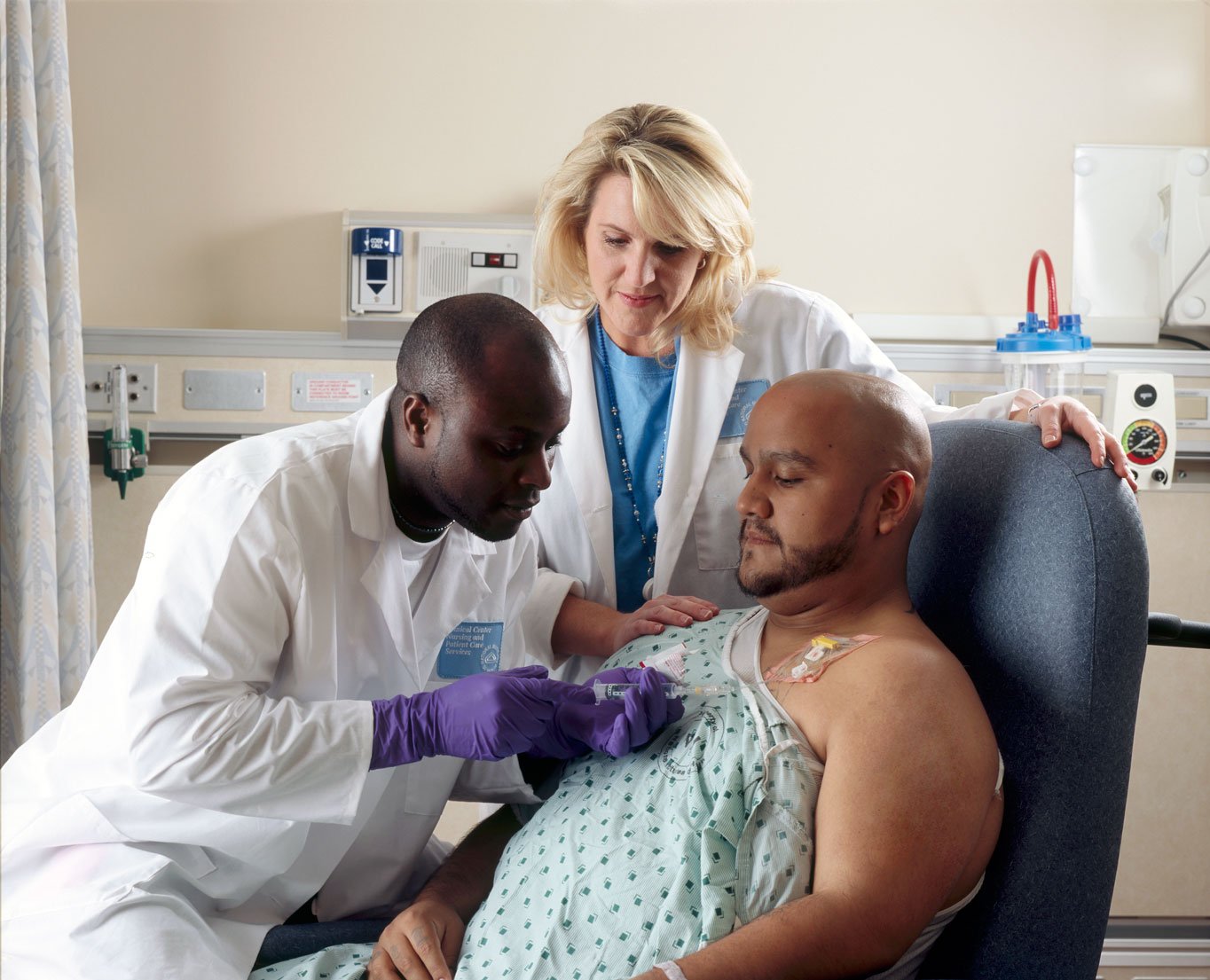
Communicating the prognosis is a skill as clinical as estimating it. The same estimate can help or hurt depending on the moment, the words and the space given for questions. It is also a conversation that rarely happens only once: the prognosis changes as things evolve, and the patient's and family's understanding changes with it.
Many patients want to know
In a study of 748 patients with advanced cancer in 15 Spanish hospitals, 52% preferred to know the prognosis (Ramchandani et al., 2024). Only 37% of doctors thought patients wanted to know, which shows that they underestimate this wish (Ramchandani et al., 2024). Those who wanted to know reported more uncertainty, more satisfaction with the doctor and a more positive attitude (Ramchandani et al., 2024). The authors recommend exploring each patient's preference (Ramchandani et al., 2024).
Ask before informing
A review on communication in serious illness recommends understanding what the patient knows, what they fear, what their goals are and how much they want the family to take part (Bernacki et al., 2014). Structured conversations and dedicated records in the chart help make these conversations part of the routine (Bernacki et al., 2014).
A 2026 qualitative study with patients with hematologic malignancies showed that professionals followed the patient's verbal and emotional signs of readiness or hesitation and adjusted the depth and timing of the information (Borregaard Myrhøj et al., 2026). Prognostic uncertainty was used to acknowledge both realistic concerns and hopes (Borregaard Myrhøj et al., 2026).
Best case, worst case and most likely case
When the prognosis is uncertain, describing the best case, the worst case and the most likely case, or proposing a time-limited treatment trial, can help (Fahy, 2019). This way of speaking respects uncertainty without hiding the information. The guide on diagnostic uncertainty offers useful phrases, and the SPIKES protocol helps when the prognosis is bad news.

A structured script helps
Talking about prognosis improves when the conversation follows a script. In a cluster-randomized clinical trial with patients with advanced cancer, clinicians trained with a structured guide for conversations about serious illness recorded at least one conversation before death in 96% of the patients who died during the study, against 79% in the control group, and these conversations took place, at the median, 2.4 months earlier (Paladino et al., 2019). The records of the trained group also addressed the prognosis and the understanding of the illness more often: 91% against 48% (Paladino et al., 2019). For those who are starting out, the lesson is practical: having a sequence of questions ready makes it more likely that the conversation happens, and earlier.
How to train prognostic reasoning in medical school
Structured training works with those who are starting out
A program adapted the Serious Illness Care Program for students and interns, with a two-and-a-half-hour workshop that included practice with an actor (Zehm et al., 2022). A total of 81 students and 156 interns were trained (Zehm et al., 2022). Confidence increased in all communication skills, and the recording of conversations about serious illness in the chart grew a lot in the following year (Zehm et al., 2022). The authors noted that early learners were more flexible than already trained doctors in adopting the approach (Zehm et al., 2022).
Teaching uncertainty explicitly
Discussing diagnostic and prognostic uncertainty with the patient is central to shared decision-making, and it can be taught explicitly at all levels of training (Moulder et al., 2023). In case sessions, ask that each presentation end with a sentence about the prognosis and its uncertainty.
Prognosis in the case presentation
A simple way to build the habit is to add a line of prognosis at the end of each case presentation on the ward. After the diagnosis and the plan, say what the most likely course is, what could change that course and what the main uncertainty is. At first, the sentence will come out generic. Over time, it becomes more precise, and the attending physician gets a chance to correct your reasoning at this stage too. In discussions of cases that ended badly, separate what was predictable from what only became clear afterwards; that separation trains judgment without falling into retrospective blame.
Exercises to do on your own
When following an inpatient, write down your prediction before discharge: length of stay, chance of readmission, functional status in one month. Then compare it with what happened. This simple record shows whether you tend toward optimism, like the physicians in the Christakis study (Christakis and Lamont, 2000). In morbidity and mortality cases, beware of hindsight bias: knowing the outcome makes it seem as if it was obvious.
Common mistakes
- Stopping at the diagnosis. Closing the diagnosis and not thinking about what comes next leaves the patient without an answer to the question that matters most to them.
- Giving a number without a range. Point predictions are often wrong (Glare et al., 2003). Talk in ranges and scenarios.
- Assuming the patient does not want to know. Physicians underestimate how many patients want to know the prognosis (Ramchandani et al., 2024). Ask.
- Trusting the tool blindly. Prediction rules can have their performance overestimated in studies (Ban et al., 2016). Check in which population the rule was validated.


Clinical reasoning with NEXO
NEXO trains the step that comes before prognosis: reaching the diagnosis. It offers one fictional clinical case per day, with a real clinical presentation, solved in up to six clues, with feedback by proximity in ICD-10. After solving the case, an extra exercise is worthwhile: think about how that patient would probably progress and what would change that course. To understand the whole game, see what NEXO is.
If you coordinate an academic league or a residency program and want cases to discuss, check out NEXO Closer. Researchers in medical education can propose studies through NEXO Researcher, physicians who review cases take part through NEXO Curator and those who create health content on social media can take part through NEXO Creators.
Frequently asked questions
What is prognostic reasoning?
It is estimating the likely course of the disease and using that estimate to decide and to talk with the patient (Fahy, 2019).
Do physicians get the prognosis right?
Often not. In one study, only 20% of survival predictions were accurate, and most were too optimistic (Christakis and Lamont, 2000).
Does the surprise question work as a test?
Its performance is poor to moderate (Downar et al., 2017). It works better as a reminder to think about prognosis and palliative care.
Should I always tell the patient the prognosis?
First ask what they want to know. Many patients do, more than physicians imagine (Ramchandani et al., 2024).
How do I talk about prognosis when there is a lot of uncertainty?
Use best case, worst case and most likely case, or propose a time-limited treatment trial (Fahy, 2019).
Can this be trained in medical school?
Yes. A workshop with practice with an actor increased the confidence of students and interns in these conversations (Zehm et al., 2022).
Prognostic reasoning checklist
- After the diagnosis, I thought about the likely course of the disease.
- I considered age, functional status and comorbidities.
- I estimated the effect of treatment on that course.
- I checked whether there is a prediction rule validated for this context.
- I expressed the prognosis as a range or scenarios.
- I asked the patient what they want to know.
- I recorded my prediction to compare later.
- I remembered the tendency toward optimism in predictions.
Want to train the step that comes before prognosis? Play the case of the day on NEXO.
References
- Christakis NA. The ellipsis of prognosis in modern medical thought. Soc Sci Med. 1997. https://pubmed.ncbi.nlm.nih.gov/9004366/
- Christakis NA, Lamont EB. Extent and determinants of error in doctors' prognoses in terminally ill patients: prospective cohort study. BMJ. 2000. https://pubmed.ncbi.nlm.nih.gov/10678857/
- Glare P, Virik K, Jones M, et al. A systematic review of physicians' survival predictions in terminally ill cancer patients. BMJ. 2003. https://pubmed.ncbi.nlm.nih.gov/12881260/
- White N, Reid F, Harris A, et al. A Systematic Review of Predictions of Survival in Palliative Care: How Accurate Are Clinicians and Who Are the Experts? PLoS One. 2016. https://pubmed.ncbi.nlm.nih.gov/27560380/
- Downar J, Goldman R, Pinto R, et al. The "surprise question" for predicting death in seriously ill patients: a systematic review and meta-analysis. CMAJ. 2017. https://pubmed.ncbi.nlm.nih.gov/28385893/
- Moulder G, Harris E, Santhosh L. Teaching the science of uncertainty. Diagnosis (Berl). 2023. https://pubmed.ncbi.nlm.nih.gov/36087299/
- Fahy BN. Prognostication in oncology. J Surg Oncol. 2019. https://pubmed.ncbi.nlm.nih.gov/30883779/
- Bernacki RE, Block SD, American College of Physicians High Value Care Task Force. Communication about serious illness care goals: a review and synthesis of best practices. JAMA Intern Med. 2014. https://pubmed.ncbi.nlm.nih.gov/25330167/
- Ramchandani A, Mihic-Góngora L, Hernández R, et al. Psychological factors and prognostic communication preferences in advanced cancer: multicentre study. BMJ Support Palliat Care. 2024. https://pubmed.ncbi.nlm.nih.gov/37491146/
- Zehm A, Scott E, Schaefer KG, et al. Improving Serious Illness Communication: Testing the Serious Illness Care Program with Trainees. J Pain Symptom Manage. 2022. https://pubmed.ncbi.nlm.nih.gov/34743012/
- Borregaard Myrhøj C, Jacobsen J, LeBlanc TW, et al. Navigating Prognostic Dialogue During Serious Illness Conversations. JAMA Netw Open. 2026. https://pubmed.ncbi.nlm.nih.gov/42054029/
- Ban JW, Emparanza JI, Urreta I, et al. Design Characteristics Influence Performance of Clinical Prediction Rules in Validation: A Meta-Epidemiological Study. PLoS One. 2016. https://pubmed.ncbi.nlm.nih.gov/26730980/
- Kennedy G, Gallego B. Clinical prediction rules: A systematic review of healthcare provider opinions and preferences. Int J Med Inform. 2019. https://pubmed.ncbi.nlm.nih.gov/30654898/
- Paladino J, Bernacki R, Neville BA, et al. Evaluating an Intervention to Improve Communication Between Oncology Clinicians and Patients With Life-Limiting Cancer: A Cluster Randomized Clinical Trial of the Serious Illness Care Program. JAMA Oncol. 2019. https://pubmed.ncbi.nlm.nih.gov/30870556/