Hypertrophic cardiomyopathy in sport: deciding together



Table of contents
- What changed: from prohibition to conversation
- Athlete's heart or hypertrophic cardiomyopathy
- How much hypertrophic cardiomyopathy weighs in sudden death of the athlete
- What the exercise studies showed
- What the guidelines say
- How shared decision-making works in practice
- Children, adolescents and the athlete with an implanted defibrillator
- How NEXO helps train this reasoning
- Frequently asked questions
- Take-home messages
- References
A 19-year-old volleyball player has an echocardiogram after an abnormal electrocardiogram at the club's assessment. The report describes a septal wall of 16 millimeters and concludes hypertrophic cardiomyopathy. She has no symptoms, has trained for eight years and asks the only thing that matters to her at that moment: will she be able to keep playing?
Twenty years ago, the answer would have been almost automatic. The 2005 American and European recommendations advised removing from competitive sport any athlete with a heart disease capable of causing sudden death (Drezner, 2021). Today the answer involves a long conversation, with data that did not exist before and with the athlete herself taking part.
This text shows what changed in the guidelines, what exercise studies in people with hypertrophic cardiomyopathy showed, why some specialists call for caution and how shared decision-making works in practice.
Key points
- The 2024 American guideline considers vigorous recreational exercise in hypertrophic cardiomyopathy reasonable after annual assessment and shared decision-making, and states that universal restriction brings no benefit (Ommen, 2024).
- In the LIVE-HCM study, with 1660 participants, those who exercised vigorously had no more deaths or serious arrhythmias than the others (Lampert, 2023).
- The European guideline keeps the contraindication to high-intensity exercise for anyone with any marker of increased risk (Pelliccia, 2020).
- Hypertrophic cardiomyopathy remains among the most frequent causes of cardiac arrest in young athletes (Peterson, 2021).
- Shared decision-making is a process with several participants, and the athlete's autonomy has limits (Drezner, 2021).
- Anyone returning to competition needs an accessible defibrillator and a rehearsed emergency plan (Kim, 2025).
Summary
- What changed: from prohibition to conversation
- Athlete's heart or hypertrophic cardiomyopathy
- How much hypertrophic cardiomyopathy weighs in sudden death in athletes
- What the exercise studies showed
- What the guidelines say
- How shared decision-making works in practice
- Children, adolescents and the athlete with an implanted defibrillator
- How NEXO helps train this reasoning
- Frequently asked questions
- Take-home messages
What changed: from prohibition to conversation
For decades, a diagnosis of hypertrophic cardiomyopathy in an athlete ended the competitive career. The logic was simple: the disease is a known cause of sudden death in young people, intense exertion can trigger arrhythmias, and removing the athlete seemed the safest way to protect their life (Drezner, 2021).
This logic began to be questioned for three reasons. The first was epidemiology: more complete records showed that the disease accounts for a smaller fraction of sudden deaths in athletes than was thought. The second was data from people with the diagnosis who kept exercising. The third was the growing value placed on shared decision-making across all of medicine (Drezner, 2021).
The 2020 American guideline had already opened the door by allowing competitive sport to be considered within a conversation with a specialist. The 2024 one went further and changed the tone of the recommendations (Ommen, 2024):
- vigorous recreational exercise came to be considered reasonable after a yearly broad assessment and shared decision-making with an experienced professional;
- competitive sport may be considered for those with high physical performance, after annual assessment by a specialist with experience in athletes with the disease;
- universal restriction of vigorous exercise or competitive sport is no longer indicated for most patients.
The document sums up the new stance in one of its main messages: the health benefits of exercise extend to people with hypertrophic cardiomyopathy, and light, moderate and vigorous recreational exercise was not associated with more ventricular arrhythmias in short-term studies (Ommen, 2024).
The 2025 American scientific statement on competitive sport followed the same direction. It considers participation in competition reasonable after a broad specialist assessment, with shared decision-making in which benefits and risks, including that of sudden death, are discussed (Kim, 2025).
Athlete's heart or hypertrophic cardiomyopathy
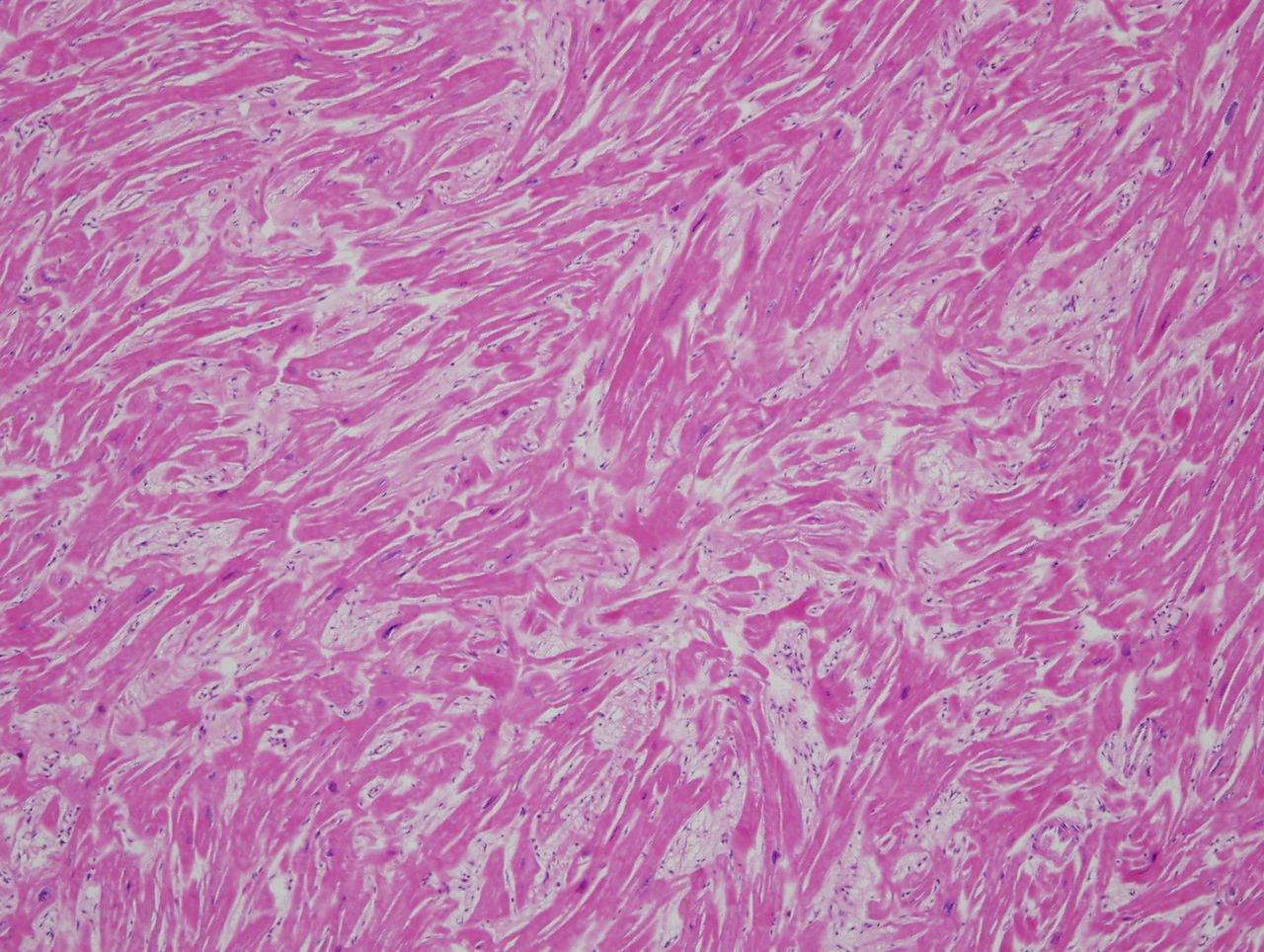
Before deciding about sport, the diagnosis must be certain. Regular training remodels the heart: it increases mass, chambers and wall thickness, with systolic and diastolic function at least normal (Palermi, 2023). People who train strength tend to have concentric hypertrophy, with a normal cavity and a thicker wall; people who train endurance tend to have eccentric hypertrophy, with a larger ventricle.
The American guideline defines the disease in adults by a maximum left ventricular wall thickness of 15 millimeters or more, with no other cause to explain it. A hypertrophy of 13 to 14 millimeters may be enough in relatives of patients or when there is a pathogenic genetic variant (Ommen, 2024). The same document lists training remodeling among the conditions that can be confused with the disease.
The problem lies in the intermediate range. Between physiological adaptation and an early form of the disease there is a gray zone in which the same finding can have both explanations (Palermi, 2023). Erring to one side keeps a healthy athlete away from sport; erring to the other clears someone with a disease that can cause sudden death.
A step-by-step investigation
The proposed step-by-step assessment begins with personal and family history, physical examination and resting electrocardiogram. If there is suspicion, echocardiogram, exercise test, Holter and cardiopulmonary test follow. When these exams leave doubt, the next step includes cardiac magnetic resonance, stress echo and genetic testing (Palermi, 2023).
The American guideline describes the role of magnetic resonance: it measures the wall precisely, finds hypertrophy in segments poorly seen on echo and shows fibrosis through late enhancement, a marker of arrhythmia risk (Ommen, 2024). The same text recalls that left ventricular outflow tract obstruction is dynamic and may not appear on resting echo, which is why maneuvers such as Valsalva and squatting are part of the exam.
Each exam changes the pretest probability of disease, and none of them decides alone. An athlete with a 14-millimeter wall, a large cavity, good diastolic function and a negative family history is in a different place from another with the same wall, a small cavity and an uncle who died young. The reasoning is that of two similar diseases side by side, with each clue weighing in favor of one or the other.
How much hypertrophic cardiomyopathy weighs in sudden death of the athlete
The disease is common for a genetic condition. The prevalence of unexplained asymptomatic hypertrophy in young adults in the United States is close to 1 in 500 (Ommen, 2024). Most of these people live without serious events, and many receive the diagnosis only after age 60.
In young athletes, however, it remains relevant. In a four-year prospective American registry, hypertrophic cardiomyopathy was the most frequent cause among cardiac arrests and sudden deaths with a defined cause, with 43 of 209 events, about one in five, across all age ranges (Peterson, 2021). In college and professional athletes, cardiomyopathies combined accounted for almost half of the events.
Other data qualify this weight. The 2025 American statement cites studies in which sudden death with no cause found at autopsy surpasses hypertrophic cardiomyopathy as the most common cause in athletes under 35 (Kim, 2025). A British review cites an Ontario study in which most sudden deaths from hypertrophic cardiomyopathy in young people occurred in people without a prior diagnosis and at rest or during light activity, 83.3 out of every 100 (Fitzpatrick, 2026).
The argument of those who call for caution
Barry Maron and Martin Maron, leading authors in the field, read these numbers differently. In the American national registry of sudden deaths in athletes, which gathered more than 2,400 deaths over 30 years, hypertrophic cardiomyopathy was the most common single cause, with about 35 out of every 100 events (Maron, 2026).
For them, the low number of current deaths from hypertrophic cardiomyopathy in student athletes probably reflects decades of selective restriction recommendations, especially for those with obstruction, symptoms or risk markers. The authors criticize what they call hasty liberalization based on personal freedoms (Maron, 2026). It is a viewpoint, published as a commentary, not a new study, but it shows that the debate remains open.
What the exercise studies showed
The change in guidelines relied on three lines of evidence: large observational studies, clinical training trials and series of athletes who kept competing.
The LIVE-HCM study
LIVE-HCM prospectively followed 1660 people aged 8 to 60 with hypertrophic cardiomyopathy or with a genetic variant without hypertrophy, recruited at 42 referral centers in the United States, United Kingdom, Canada, Australia and New Zealand (Lampert, 2023). Participants were classified as sedentary, moderately active or vigorously active.
Among the 699 participants who exercised vigorously, 259 competed. The primary outcome combined death, resuscitated cardiac arrest, arrhythmic syncope and appropriate implantable cardioverter-defibrillator shock. Over a median follow-up of 38 months, 77 participants had one of these events (Lampert, 2023).
The vigorous group had an event rate similar to the others, with an adjusted hazard ratio of 1.01. The upper limit of the confidence interval was 1.48, below the 1.5 limit set to show non-inferiority (Lampert, 2023).
The authors themselves point out limitations. The study is observational, patients were followed at experienced centers, and it cannot be ruled out that those who exercised vigorously had less severe disease (Lampert, 2023). A British review notes that the competitive athletes in the study were younger, more often had a positive genotype without phenotype and less often had a cardioverter-defibrillator, which suggests some self-selection (Fitzpatrick, 2026).
The training trials
The RESET-HCM trial randomized 136 adults with the disease to 16 weeks of moderate-intensity training or to usual activity. Peak oxygen consumption rose 1.35 mL/kg/min in the trained group and 0.08 mL/kg/min in the control group, with no major adverse events (Saberi, 2017). The gain was small, and the authors described the study as preliminary.
A more recent British trial tested a supervised high-intensity program for 12 weeks in 80 patients. The trained group gained 4.1 mL/kg/min in peak oxygen consumption and improved anxiety, with no difference in the exploratory arrhythmic safety outcome (Basu, 2025). The authors call for a larger study to confirm long-term safety.
Athletes who kept competing
The athlete series are smaller. In an Italian study of 88 adult athletes, median age 31 years and low-risk phenotype, followed for seven years, those who kept competing had no more cardiac arrest than those who left intense sport (Drezner, 2021). The review describing this study stresses that the results do not apply to adolescents, young adults or those with a more severe phenotype.
The 2025 American statement cites a multicenter analysis of elite athletes with genetic heart diseases, mainly hypertrophic cardiomyopathy and long QT syndrome, who kept competing after shared decision-making, with few events and no deaths (Kim, 2025).
What the guidelines say
The guidelines agree on the principle of individual assessment and differ in how they treat the athlete with risk markers. The table summarizes the positions.
| Document | Vigorous or competitive exercise | Role of shared decision-making | Source |
|---|---|---|---|
| European sports cardiology guideline, 2020 | May be considered in low-risk people; contraindicated with any marker of increased risk | Supports informed decision, within risk limits | Pelliccia, 2020 |
| American hypertrophic cardiomyopathy guideline, 2024 | Vigorous recreational reasonable; competitive may be considered; universal restriction without benefit | Central, with annual specialist assessment | Ommen, 2024 |
| American statement on competitive sport, 2025 | Reasonable competition after specialist assessment; positive genotype without phenotype may compete | Fundamental principle of the document | Kim, 2025 |
| Commentary by Maron and Maron, 2026 | Advocates selective restriction for those with obstruction, symptoms or markers | Criticizes broad liberalization | Maron, 2026 |
The risk markers in the European guideline
The European guideline lists the markers that contraindicate high-intensity recreational or competitive exercise (Pelliccia, 2020):
- cardiac symptoms, previous cardiac arrest or unexplained syncope;
- moderate European risk score, 4 in 100 or more over five years;
- left ventricular outflow tract gradient above 30 mmHg at rest;
- abnormal blood pressure response to exercise;
- exercise-induced arrhythmias.
Before advising on the type and intensity of exercise, the guideline asks that symptoms, the risk score, obstruction at rest or during exercise, the blood pressure response and arrhythmias be considered (Pelliccia, 2020). For people with a genetic variant without hypertrophy, it recommends annual assessment.
Stratifying the risk of sudden death
Regardless of the sport, every patient goes through an assessment of the risk of sudden death, which defines whether there is an indication for an implantable cardioverter-defibrillator. The American guideline recommends discussing the estimated five-year risk within the shared decision about the implant (Ommen, 2024). Stratification and selective use of the device greatly reduced mortality from the disease (Drezner, 2021).
How shared decision-making works in practice
Shared decision-making is a collaborative process between the patient, other interested parties such as the parents, and the physician, which combines informed consent with patient autonomy (Drezner, 2021). The American guideline describes it as a dialogue in which the team presents the options, discusses risks and benefits and ensures that the patient sets out their preferences and goals (Ommen, 2024).
Who takes part
In sports cardiology, the conversation usually involves more people than in an ordinary consultation. With the consent of the athlete or the parents, family members, strength and conditioning coaches, physiotherapists, team physicians, cardiologists, coaches and school or club officials may take part (Drezner, 2021). The American guideline recommends that guidance on high-intensity or competitive sport be given at a center with experience in the disease (Ommen, 2024).
What goes into the conversation
The conversation brings together what is known and what is still uncertain. It covers the individual risk profile, the type of sport, the LIVE-HCM data and the limits of those data, the physical and emotional benefits of exercise and the protection plan during training and games. Diagnostic uncertainty is part of the picture, and annual reassessment makes the decision a matter of follow-up rather than a single verdict.
A British review sums up protection in two points: an easily accessible automated external defibrillator and a club team trained in basic life support (Fitzpatrick, 2026). The 2025 American statement calls for a written emergency action plan, with drills and review at least once a year (Kim, 2025).
The limits of autonomy
The athlete's autonomy in the decision about sport is not absolute, and shared decision-making should not be simplified as a process in which the athlete simply decides (Drezner, 2021). Schools and clubs have their own tolerance for risk, and the 2020 American guideline already recalled that eligibility for competition involves third parties acting on behalf of institutions (Ommen, 2024).
The capacity to understand and weigh the information also counts, especially in adolescents. The text on how to assess decision-making capacity shows the components that apply here: understanding, appreciating one's own situation, reasoning and communicating a choice. Other topics in medicine use the same model, such as the choice between buprenorphine and methadone, in which the person's preferences weigh as much as the numbers.
The bias of the person deciding
The physician also brings emotions to the conversation. The fear of being held responsible for a death can push toward restriction; sympathy for the athlete and their career can push toward clearance. The text on affective bias describes this risk. Recording the data, the options and the choices helps keep the decision on the ground of evidence.
Children, adolescents and the athlete with an implanted defibrillator
Recommendations for children with hypertrophic cardiomyopathy were built mainly from adult studies, autopsy registries and expert opinion (Russell, 2026). A recent pediatric review shows that broad exercise restriction has negative consequences for children's cardiovascular and emotional health, and that guidelines have come to prefer individual assessment and shared decision-making.
Age weighs in both directions. The American guideline notes that sudden death risk factors in children carry different weights than in adults and that there are risk calculators specific to this age range (Ommen, 2024). The Drezner review points to young age and intense competitive sport as risk factors, with higher risk in adolescent and young adult men and in sports such as basketball, soccer and American football (Drezner, 2021).
The athlete with a cardioverter-defibrillator
The device treats the arrhythmia, but its presence changes the conversation about sport. In a survey of elite athletes with an implantable cardioverter-defibrillator, hypertrophic cardiomyopathy was among the most frequent diagnoses. After implantation, 25 athletes returned to sport; among them, 9 received shocks and 4 eventually stopped competing (Vecchiato, 2026).
The British review describes return criteria used in athletes with genetic disease: informing coaches and officials, ensuring an accessible external defibrillator at all training sessions and games, and maintaining annual follow-up (Fitzpatrick, 2026). Some athletes began carrying their own defibrillator in their training bag.
Back to the volleyball player
The conversation with the player begins by confirming the diagnosis with cardiac MRI, exercise testing, Holter monitoring and a detailed family history. If she has no risk markers, the American guidelines allow return to competition to be considered, and the European one accepts participation in low-risk individuals (Ommen, 2024; Pelliccia, 2020). With any marker, the European one contraindicates intense exertion.
In any scenario, the decision involves the athlete, the family and the club, includes a rehearsed emergency plan and is remade every year. The path avoids the two excesses described in the text on quaternary prevention: cascading tests without a clear clinical question and restrictions that take more from the patient than they protect.
How NEXO helps train this reasoning
In NEXO, the case of the day is fictional, with a real clinical presentation and up to six progressive clues, and you propose the diagnosis by searching for the ICD-10 code. Telling athlete's heart from cardiomyopathy is the kind of differential that is trained clue by clue. Syncope in the emergency department and aeronautical cardiology show the same risk reasoning in other scenarios.
The limits on using the game are described on the NEXO economy page. If you research the teaching of clinical reasoning, the page for researchers explains how to get in touch. Professionals who write or review cases find information under curation and under creators, and institutions can learn about the proposal on the partnerships page.
Frequently asked questions
Can people with hypertrophic cardiomyopathy play sport?
Most can. The 2024 American guideline considers vigorous recreational exercise reasonable after annual assessment and shared decision-making, and states that universal restriction brings no benefit (Ommen, 2024).
And competitive sport?
It may be considered after assessment by a specialist with experience in athletes with the disease (Ommen, 2024). The European guideline contraindicates intense exertion when there is any marker of increased risk (Pelliccia, 2020).
Did the LIVE-HCM study prove that intense exercise is safe?
It showed that those who exercised vigorously had no more serious events than the others over about three years, at experienced centers (Lampert, 2023). Because it is observational, the study may have included patients with milder disease in the vigorous group.
How do you tell athlete's heart from hypertrophic cardiomyopathy?
With step-by-step assessment: history, examination and electrocardiogram, then echo, stress test and Holter, and finally cardiac magnetic resonance and genetic testing when there is doubt (Palermi, 2023).
Can someone with the genetic variant but no hypertrophy compete?
Yes, according to the 2025 American statement (Kim, 2025). The European guideline recommends annual assessment of these people (Pelliccia, 2020).
Is the decision the athlete's alone?
It is shared. The athlete, the family, the medical team and, with consent, the club or the school take part, and the athlete's autonomy has limits (Drezner, 2021).
Can someone with an implanted defibrillator return to competition?
Some elite athletes have returned, but part of them had shocks and some stopped afterwards (Vecchiato, 2026). The decision follows the underlying disease and the same shared process.
Take-home messages
- Guidelines no longer exclude every athlete with hypertrophic cardiomyopathy and now call for individual assessment and shared decision-making.
- Confirming the diagnosis comes before everything else, because the athlete's heart can mimic the disease.
- Hypertrophic cardiomyopathy remains among the main causes of cardiac arrest in young athletes.
- LIVE-HCM did not find more serious events in those who exercised vigorously, with design limits that need to enter the conversation.
- The European guideline maintains the contraindication to intense exertion when there are risk markers.
- Shared decision-making involves the athlete, the family, the medical team and the institution, with annual reassessment.
- Those who compete need an accessible defibrillator and a rehearsed emergency plan.
Play the case of the day on NEXO.
References
- Ommen SR, Ho CY, Asif IM, et al. 2024 AHA/ACC/AMSSM/HRS/PACES/SCMR Guideline for the Management of Hypertrophic Cardiomyopathy: A Report of the American Heart Association/American College of Cardiology Joint Committee on Clinical Practice Guidelines. Circulation. 2024. PMID 38718139. DOI 10.1161/CIR.0000000000001250.
- Pelliccia A, Sharma S, Gati S, et al. 2020 ESC Guidelines on sports cardiology and exercise in patients with cardiovascular disease. Eur Heart J. 2021. PMID 32860412. DOI 10.1093/eurheartj/ehaa605.
- Kim JH, Baggish AL, Levine BD, et al. Clinical Considerations for Competitive Sports Participation for Athletes With Cardiovascular Abnormalities: A Scientific Statement From the American Heart Association and American College of Cardiology. J Am Coll Cardiol. 2025. PMID 39976316. DOI 10.1016/j.jacc.2024.12.025.
- Lampert R, Ackerman MJ, Marino BS, et al. Vigorous Exercise in Patients With Hypertrophic Cardiomyopathy. JAMA Cardiol. 2023. PMID 37195701. DOI 10.1001/jamacardio.2023.1042.
- Saberi S, Wheeler M, Bragg-Gresham J, et al. Effect of Moderate-Intensity Exercise Training on Peak Oxygen Consumption in Patients With Hypertrophic Cardiomyopathy: A Randomized Clinical Trial. JAMA. 2017. PMID 28306757. DOI 10.1001/jama.2017.2503.
- Basu J, Nikoletou D, Miles C, et al. High intensity exercise programme in patients with hypertrophic cardiomyopathy: a randomized trial. Eur Heart J. 2025. PMID 40037382. DOI 10.1093/eurheartj/ehae919.
- Drezner JA, Malhotra A, Prutkin JM, et al. Return to play with hypertrophic cardiomyopathy: are we moving too fast? A critical review. Br J Sports Med. 2021. PMID 33472848. DOI 10.1136/bjsports-2020-102921.
- Maron BJ, Maron MS. Evidence Supporting Decrease in Sudden Deaths Due to Hypertrophic Cardiomyopathy: Athletes and Patients. JACC Adv. 2026. PMID 42206791. DOI 10.1016/j.jacadv.2026.102735.
- Peterson DF, Kucera K, Thomas LC, et al. Aetiology and incidence of sudden cardiac arrest and death in young competitive athletes in the USA: a 4-year prospective study. Br J Sports Med. 2021. PMID 33184114. DOI 10.1136/bjsports-2020-102666.
- Fitzpatrick L, Hayes V, Sulaiman H, et al. Exercise and competitive sport in those with genetic heart disease: what we know and what we don't know. Part 1. Br J Cardiol. 2026. PMID 42524230. DOI 10.5837/bjc.2026.010.
- Palermi S, Cavarretta E, D'Ascenzi F, et al. Athlete's Heart: A Cardiovascular Step-By-Step Multimodality Approach. Rev Cardiovasc Med. 2023. PMID 39076743. DOI 10.31083/j.rcm2405151.
- Russell WW, Edelson JB. Exercise and Sport Participation in Pediatric Hypertrophic Cardiomyopathy: A Changing Paradigm. Curr Treat Options Cardiovasc Med. 2026. PMID 42553283. DOI 10.1007/s11936-026-01150-5.
- Vecchiato M, Egger F, Palermi S. Sporting Careers After ICD Implantation in Elite Athletes. J Cardiovasc Dev Dis. 2026. PMID 41745345. DOI 10.3390/jcdd13020097.