GINA 2026: what changed in asthma and acute attacks
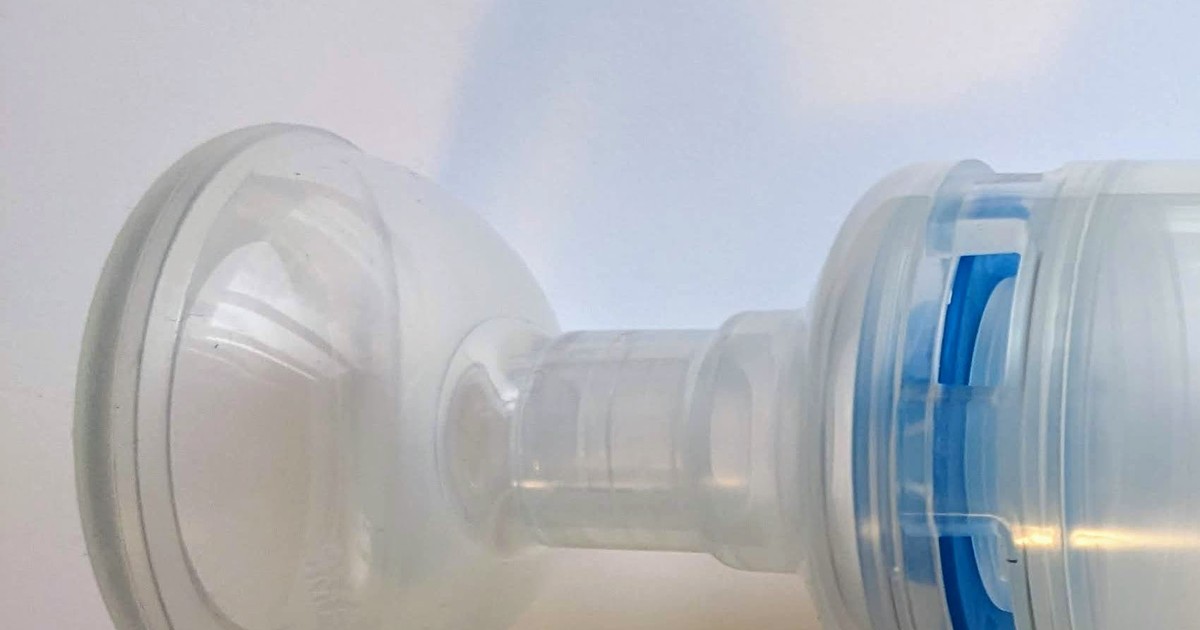
Table of contents
- Why an asthma attack is a reasoning problem
- The four new flowcharts for the attack
- Oxygen: lower limits and more caution
- The bronchodilator toxicity trap
- Anaphylaxis with bronchospasm: adrenaline first
- Corticosteroids during the exacerbation and at discharge
- What changed outside the crisis
- How NEXO helps train this reasoning
- Frequently asked questions
- Take-home messages
- References
A 24-year-old man arrives at the emergency department after two days of wheezing. He has already used the rescue bronchodilator many times at home and received three more rounds at triage. Oxygen saturation improved, the wheezing decreased, but his breathing remains rapid and deep. The team reads the picture as asthma that will not settle and prepares another nebulization.
The reading seems logical. But the blood gas shows acidosis with high lactate, and the breathing pattern may be metabolic compensation, not bronchospasm. This scenario, described in case reports and explicitly recalled in the new edition of the Global Initiative for Asthma, sums up the most practical change in GINA 2026: treat the attack with judgment, measure before repeating, and recognize when the treatment itself has become the problem.
This text goes through what changed in the 2026 report, with special attention to the acute attack, and shows where the interpretation pitfalls lie for those who treat asthma in the office, the emergency department or the ward.
Key points
- GINA 2026 created four new flowcharts for the attack, separated by age and by place of care (GINA, 2026).
- Supplemental oxygen is indicated only with saturation below 92, with a ceiling of 95 in adults and children aged 6 to 11 years (GINA, 2026).
- The amounts of short-acting bronchodilator became more conservative, because of the risk of toxicity, which includes lactic acidosis.
- In anaphylaxis with bronchospasm, adrenaline comes before the bronchodilator.
- The combination of inhaled corticosteroid with formoterol entered as an option in the mild attack, as a bridge to maintenance treatment.
- A single attack that required urgent care is a red flag for reviewing the treatment.
Summary
- Why an asthma attack is a reasoning problem
- The four new flowcharts for the attack
- Oxygen: lower limits and more care
- The bronchodilator toxicity trap
- Anaphylaxis with bronchospasm: adrenaline first
- Corticosteroids during the attack and at discharge
- What changed outside the attack
- How NEXO helps train this reasoning
- Frequently asked questions
- Take-home messages
Why an asthma attack is a reasoning problem
An asthma attack is usually treated as a protocol. Wheezing, bronchodilator, corticosteroid, reassessment. The protocol is useful, but GINA 2026 insists on a point that the protocol hides: each step depends on an assessment, and the assessment is where most mistakes happen (GINA, 2026).
The first mistake is one of classification. The same attack can be mild to one observer and moderate to another, and the decision to transfer, admit or discharge changes with that reading. That is why the report brought standardized criteria for mild, moderate, severe and life-threatening attacks, in each of the four flowcharts (GINA, 2026).
The second mistake is one of repetition. Patients are prescribed several administrations of bronchodilator without anyone reassessing the response between them. The report calls attention to this in an almost didactic way: if the patient improved a lot after the first administration in a mild attack, perhaps they do not need more (GINA, 2026).
The third mistake is one of attribution. Tachycardia, tremor, anxiety and rapid breathing are read as worsening asthma, when they may be an effect of the treatment. The guideline describes that these signs can lead to even more bronchodilator, in a cycle that makes the patient worse (GINA, 2026).
These three mistakes have something in common. In all of them, the course of action moves forward without a clinical question being asked. The 2026 edition tries to put that question back at every step, and that is the angle from which it is worth reading. Those who train differential diagnosis with clues recognize the pattern: the most obvious explanation ends the investigation too early.
The four new flowcharts for the attack
GINA's biggest initiative this year was to create four flowcharts for assessment, treatment and follow-up for those who arrive with an asthma attack (GINA, 2026). They separate two age groups and two care settings.
The first covers adults, adolescents and children aged 6 to 11 years in primary care. The second covers the same age range in an urgent care or emergency service. The third and fourth repeat this division for children aged 5 years or less (GINA, 2026).
Separation by setting is not bureaucratic. In primary care, the central question is whether the patient can be treated there or needs transfer. The report is clear: anyone who worsens or does not improve in primary care should be transferred immediately to a higher level of care (GINA, 2026). In the emergency department, the question becomes who needs admission or intensive care.
Severity with standardized criteria
Each flowchart provides criteria for mild, moderate, severe and life-threatening exacerbations, with guidance for initial treatment and follow-up (GINA, 2026). For children and adolescents up to 17 years, there is a strong recommendation to use a validated clinical score, with examples from the Pediatric Respiratory Assessment Measure, PRAM (GINA, 2026).
Using a score reduces variation between observers and gives a common language for reassessment. The logic is the same as for pediatric warning scores: the number alone decides little, but the trend between two measurements says a lot.
Lung function during the exacerbation itself
The report strongly recommends measuring lung function, with spirometry or, if unavailable, with peak flow, in all patients, except preschoolers and those with life-threatening presentations, and repeating the measurement before discharge (GINA, 2026). The exacerbation is also an opportunity to confirm the diagnosis of asthma, recording function before and after the bronchodilator (GINA, 2026).
This point seems small, but it solves an old problem. Many patients receive the asthma label with no record of airflow variability, and the diagnosis becomes harder to confirm once treatment controls the symptoms. To read these tests without stumbling, it is worth reviewing bronchodilator and flow-volume curve.
| What changes in GINA 2026 | What changes in practice | Interpretation pitfall |
|---|---|---|
| Four flowcharts by age and setting | The decision to transfer or admit becomes explicit | Using the adult flowchart in a small child |
| Validated score up to 17 years | Severity measured reproducibly | Relying on a single measurement instead of the trend |
| Oxygen only below 92, target of 92 to 95 | Less unnecessary oxygen | Pulse oximeter that overestimates saturation on dark skin |
| More conservative bronchodilator | Reassess before repeating | Reading tachypnea from lactic acidosis as worsening asthma |
| Adrenaline earlier in anaphylaxis | Treat the systemic cause first | Treating only the wheeze and missing shock |
| Inhaled corticosteroid with formoterol in mild exacerbation | Bridge to maintenance at discharge | Discharging with a short-acting bronchodilator only |
Oxygen: lower limits and more caution
GINA 2026 lowered the saturation thresholds and targets. Supplemental oxygen is no longer recommended unless saturation is below 92 (GINA, 2026). When oxygen is given to adults, adolescents and children aged 6 to 11 years, the target is a saturation between 92 and 95, as shown in the emergency department exacerbation flowchart, Box 9-6 of chapter 9, on page 186 (GINA, 2026). The same chapter, in the text on controlled oxygen on page 179, adds that the saturation of adults on oxygen should not exceed 96, a safety limit that comes from a general recommendation for acutely ill medical patients, not the asthma target (GINA, 2026). For children aged 5 years or younger with acute wheezing or severe exacerbation, the target, if oxygen is given, is 92 or above (GINA, 2026).
The report bases this change on evidence that, in patients admitted for asthma, controlled or titrated oxygen therapy is associated with lower mortality and better outcomes than high-concentration oxygen (GINA, 2026). It also recalls that oxygen should not be withheld when a pulse oximeter is unavailable, but that the patient must be monitored for drowsiness and fatigue, because of the risk of hypercapnia (GINA, 2026).
What supports lower targets in children
A systematic review of saturation targets in children with respiratory distress concluded that current thresholds, between 90 and 94, may be too high (Louman, 2023). Lower thresholds had equivalent safety and better effectiveness, and a threshold of 88 appeared potentially safe, although more research is needed (Louman, 2023). The authors note that the targets used in guidelines were largely based on expert opinion (Louman, 2023).
The pulse oximeter also gets it wrong
GINA 2026 includes an important warning: the pulse oximeter can overestimate saturation in people with dark skin (GINA, 2026). A multicenter study with 30,039 paired pulse oximeter and arterial blood gas measurements in patients admitted outside intensive care showed that Black patients were more likely to have occult hypoxemia, that is, arterial saturation below 88 despite a pulse oximeter reading at or above 92 (Valbuena, 2022).
For anyone applying a cutoff rule at 92, this finding carries direct weight. A pulse oximeter showing 93 in a person with dark skin may be hiding a lower arterial saturation, precisely in the range where the guideline says not to give oxygen. The rule still holds, but the device reading must be placed in the clinical context, with blood gas analysis when the picture does not match the number.
The bronchodilator toxicity trap
The recommended amounts of short-acting bronchodilator became more conservative in GINA 2026 (GINA, 2026). The reason is growing evidence of overtreatment during exacerbations, which increases the risk of significant toxicity, including lactic acidosis (GINA, 2026).
The report describes the mechanism of the trap precisely. Lactic acidosis can cause compensatory hyperventilation, which is interpreted as worsening asthma and leads to more bronchodilator (GINA, 2026). The chapter on exacerbations adds that high amounts of short-acting bronchodilator are associated with increased pulse, palpitations, anxiety, hypokalemia, arrhythmias, lactic acidosis and hyperventilation, and that some asthma deaths were associated with very high blood levels of salbutamol (GINA, 2026).
How the picture appears in practice
Case reports show the pattern. A man in his 70s with a COPD exacerbation arrived with progressive shortness of breath and increasing use of salbutamol, and the raised lactate was attributed, after investigation, to the bronchodilator itself (Baddam, 2025). The authors note that lactic acidosis is usually associated with tissue hypoxia or sepsis, which makes the attribution error easier (Baddam, 2025).
Another report describes lactic acidosis from excessive use of a long-acting beta agonist (Katsumata, 2024). The authors classify drug-induced acidosis as type B, of metabolic origin, and observe that it is often overlooked because clinicians are not very aware of it (Katsumata, 2024). A detailed clinical interview led to the diagnosis, and the patient improved with appropriate use of inhaled therapy (Katsumata, 2024).
What to ask before repeating
When breathing remains fast after several rounds of bronchodilator, three questions help. Did the wheezing and air entry worsen or improve? Is the tachypnea deep and regular, as in metabolic compensation, or short and with expiratory effort? Is there high lactate with adequate saturation and no sign of shock? If auscultation improved and lactate rose, the hypothesis of toxicity must be considered before any further administration.
The same logic applies to potassium. Beta agonist-induced hypokalemia can add to other losses and appear on the ECG, and reasoning about how potassium changes appear on the ECG helps avoid missing this sign.
Inhaler technique: the detail that changes the delivered amount
GINA 2026 gives unusual attention to technique with a pressurized inhaler and spacer. Each flowchart includes information on tidal breathing technique, because this is the most used route in exacerbations and the technique is often wrong (GINA, 2026).
There is a new detail that surprises many clinicians. The salbutamol inhaler must be shaken immediately before each actuation, to prevent a new inhaler from delivering very high amounts, or a nearly empty inhaler from delivering smaller amounts (GINA, 2026). Any inhaler formulated as a suspension must be shaken just before each actuation, and a delay of 30 seconds can already change a great deal of what is delivered (GINA, 2026).
This detail connects with toxicity. A team that triggers an inhaler several times in a row without shaking it can deliver far more medication than it realizes, and the patient receives a dose that nobody calculated.
Spacer or nebulizer
The report notes that, in mild to moderate exacerbations, a bronchodilator given by pressurized inhaler with a spacer produces lung function improvement similar to nebulization (GINA, 2026). In children, there were fewer adverse effects and less time in the emergency department with a spacer, and this route also avoids the risk of infection transmission associated with the nebulizer (GINA, 2026). The studies, however, excluded asthma at risk of death (GINA, 2026).
Anaphylaxis with bronchospasm: adrenaline first
One of the most objective changes in GINA 2026 is in the four flowcharts: if the patient has signs of anaphylaxis in addition to asthma, the recommendation is to give adrenaline first and then the bronchodilators (GINA, 2026). Adrenaline can be given intramuscularly or intranasally, and the intranasal route is not suitable for small children (GINA, 2026).
The guidance is consistent with the World Allergy Organization guideline. The document recommends, in the face of anaphylaxis, removing exposure to the trigger when possible, assessing airway, breathing, circulation, mental state and skin, calling for help and injecting adrenaline intramuscularly into the anterolateral aspect of the thigh (Cardona, 2020). The same guideline lists wheezing and shortness of breath among the symptoms that the written action plan should teach people to recognize (Cardona, 2020).
The error GINA wants to avoid is predictable. A person with asthma who arrives with wheezing after eating something or taking a medicine may be treated only with a bronchodilator while the systemic condition progresses. Skin, mucous membranes, blood pressure and digestive symptoms need to be part of the examination of anyone arriving with a sudden-onset exacerbation. The reasoning in managing anaphylaxis on board shows how this decision is organized in minutes.
Corticosteroids during the exacerbation and at discharge
Inhaled corticosteroid with formoterol
GINA 2026 included the combination of inhaled corticosteroid with formoterol as an option for mild exacerbations in primary care and in the emergency department, for adults, adolescents and children aged 6 to 11 years, as an alternative to a short-acting bronchodilator (GINA, 2026). The report explains that this creates an opportunity to start, before discharge, treatment with an anti-inflammatory reliever, preferably maintenance and reliever therapy with the same inhaler (GINA, 2026).
The chapter on exacerbations describes a trial in the emergency department in adults and adolescents with severely reduced lung function, which compared the combination with salbutamol. Lung function was similar over three hours, and pulse was higher in the short-acting bronchodilator group (GINA, 2026). The report acknowledges that studies are lacking and that there are no published data on the combination of corticosteroid with a short-acting bronchodilator in the emergency department (GINA, 2026).
Why discharge matters so much
For people with a history of severe exacerbations, maintenance and reliever therapy reduces the risk of a new severe exacerbation in the following 12 months, compared with the same amount of inhaled corticosteroid with a short-acting bronchodilator (GINA, 2026). A meta-analysis with data from 4863 patients with poorly controlled asthma showed that switching to this regimen prolonged the time to the first severe exacerbation, compared with stepping up or continuing the regimen with a short-acting bronchodilator (Beasley, 2022).
A systematic review on cost and benefit, with six studies and 8901 patients, concluded that inhaled corticosteroid with formoterol as a reliever or as maintenance and reliever therapy had a good cost-benefit ratio in mild to moderate asthma, compared with regimens based on a short-acting bronchodilator (Ndimande, 2026). The authors call for more data from African countries, because the thresholds for this ratio depend on each country's gross domestic product (Ndimande, 2026).
The report is direct about what not to do: treatment with a short-acting bronchodilator alone is no longer recommended, and discharge should include maintenance treatment with inhaled corticosteroid (GINA, 2026). The follow-up visit should be scheduled within 2 to 7 days for adults and within 2 to 5 days for children (GINA, 2026).
Oral corticosteroid: necessary in the crisis, dangerous in the accumulation
GINA 2026 treats the responsible use of oral corticosteroids as a priority, to reduce short- and long-term adverse effects (GINA, 2026). This includes optimizing inhaled therapy, using biologics when indicated, adjusting the amount and duration when oral corticosteroids are needed and monitoring cumulative use (GINA, 2026).
The report recommends giving oral corticosteroids promptly in moderate and severe crises (GINA, 2026). Courses of 5 and 7 days in adults were as effective as courses of 10 and 14 days, and in most children 3 to 5 days are usually enough (GINA, 2026). In adults, the risk of sepsis and thromboembolism increases after a short course (GINA, 2026).
Dexamethasone in children
A meta-analysis compared oral dexamethasone with prednisone or prednisolone in asthma crises in children. Relapse and readmission rates were similar, and dexamethasone had less vomiting (Wei, 2019). The authors warn that strong conclusions are not yet possible, given the scarcity of large trials (Wei, 2019). GINA adds that oral dexamethasone should not be maintained beyond 2 days, out of concern about metabolic effects (GINA, 2026).
The weight of accumulation
A review on the use of oral corticosteroids in severe asthma describes that it is associated with more adverse events, chronic diseases such as osteoporosis and diabetes, mortality and health spending (Canonica, 2025). The authors recall the risk of adrenal insufficiency when stopping the corticosteroid and argue for clear tapering algorithms within a responsible use program (Canonica, 2025). For this reason, GINA treats every crisis that required oral corticosteroids as a sign that the baseline treatment needs to be reviewed (GINA, 2026).
Magnesium and what was left out
Intravenous magnesium sulfate remains outside routine use, but it reduces admissions in adults and children who fail initial treatment and remain hypoxemic (GINA, 2026). A review of systematic reviews from 2026 reached the same conclusion: intravenous magnesium as adjuvant therapy in severe refractory cases, and nebulized magnesium with only a weak recommendation (Wang, 2026). Intravenous aminophylline and theophylline remain contraindicated, and sedatives should be strictly avoided in the crisis (GINA, 2026). Routine antibiotics are also left out, unless there is strong evidence of pulmonary infection (GINA, 2026).
What changed outside the crisis
The changes in GINA 2026 go beyond the emergency. In diagnosis, the flowchart was simplified, and the report discusses the response to bronchodilator (GINA, 2026). New data show that many adults with a positive response by the 2005 criterion would have a negative test by the criterion proposed in 2022, and these patients had a high respiratory burden, which suggests underdiagnosis, especially in young men (GINA, 2026).
In children aged 6 to 11 years, the CARE study showed that the combination of budesonide with formoterol used as needed nearly halved the risk of moderate to severe crises, compared with a short-acting bronchodilator alone, with no difference in growth velocity (GINA, 2026). In adults and adolescents, the anti-inflammatory reliever with corticosteroid and short-acting bronchodilator entered all steps of track 2, based on the BATURA study (GINA, 2026). Track 1, with inhaled corticosteroid and formoterol, remains preferred (GINA, 2026).
There is another safety change. The old idea of a maximum amount of the reliever was replaced by a warning to seek care when the patient needs more than a defined number of inhalations in 24 hours, and the same warning was created for the short-acting bronchodilator (GINA, 2026).
In severe asthma, the first anti-IgE biosimilar and depemokimab, a long-acting anti-IL5 given every 26 weeks, were added (GINA, 2026). The report also brings new tools, such as the Chronic Airways Assessment Test for adults and the Peds-AIRQ for children aged 5 to 11, plus updates on vaccination (GINA, 2026). Anyone who wants to see how type 2 inflammation guides biologics in another airway disease can read about eosinophils in COPD.
When the environment triggers the attack
Attacks that arrive in groups, after storms or days of smoke, test the same flowcharts at scale. The texts about who is at greater risk in thunderstorm asthma and about who decompensates first with smoke show how environmental context enters the reasoning.
Back to the patient from the opening
The 24-year-old man received many bronchodilator administrations at home and during triage. Auscultation improved, saturation is adequate, and breathing remains rapid and deep. According to GINA 2026, the first step is to reassess before repeating, and the second is to consider treatment toxicity as a hypothesis (GINA, 2026).
Blood gas with high lactate and increased anion gap, in a person without shock or hypoxia, supports the hypothesis of beta-agonist lactic acidosis, as in the reported cases (Baddam, 2025). Measuring peak flow at this moment helps separate obstruction from metabolic compensation, and recording the value before and after the bronchodilator also helps document the diagnosis (GINA, 2026).
At discharge, the report calls for maintenance treatment with inhaled corticosteroid, review of technique, a written action plan and follow-up within a few days (GINA, 2026). The attack that brought this patient to the emergency department is itself the sign that the baseline treatment needed to change.
Other diagnoses also enter the differential of those who arrive with shortness of breath and tachycardia. Pulmonary embolism is one of them, and the logic of clinical probability as the first step helps decide when to investigate.
How NEXO helps train this reasoning
In NEXO, the case of the day is fictional, with a real clinical presentation and up to six progressive clues, and you propose the diagnosis by searching for the ICD-10 code.
The limits of use of the game are described on the NEXO economy page. If you research teaching of clinical reasoning, the page for researchers explains how to get in touch. Professionals who write or review cases find information in curation and in creators, and institutions can learn about the proposal on the partnerships page. Searching for the right ICD-10 code completes this training.
Frequently asked questions
What else changed in GINA 2026?
The biggest change was the creation of four flowcharts for the attack, separated by age and by place of care, with standardized severity criteria (GINA, 2026). The report also revised oxygen targets, made bronchodilator amounts more conservative and placed adrenaline before the bronchodilator in anaphylaxis.
When to give oxygen in an asthma attack?
According to GINA 2026, oxygen is indicated when saturation is below 92, with a ceiling of 95 in adults and children aged 6 to 11 (GINA, 2026). In dark skin, the oximeter may overestimate saturation, and blood gas helps when the picture does not match the number (Valbuena, 2022).
How to recognize bronchodilator toxicity?
Tachycardia, tremor, anxiety, hypokalemia and rapid, deep breathing with high lactate, after many administrations, suggest toxicity (GINA, 2026). The most useful sign is dissociation: auscultation improves, but tachypnea continues.
Why adrenaline before the bronchodilator?
When there is anaphylaxis, bronchospasm is part of a systemic reaction, and only adrenaline treats the whole picture (Cardona, 2020). GINA 2026 included this order in the four attack flowcharts (GINA, 2026).
Does the combination of corticosteroid with formoterol work in the attack?
GINA 2026 included this combination as an option in mild attacks, as an alternative to short-acting bronchodilator, with the advantage of starting anti-inflammatory treatment before discharge (GINA, 2026). The report acknowledges that studies in the emergency department are still lacking.
Does a single attack already change the treatment?
Yes. A single exacerbation that required urgent care or oral corticosteroids is treated as a red flag to review the maintenance treatment (GINA, 2026). Discharge should include inhaled corticosteroids and a follow-up visit within a few days.
Take-home messages
- GINA 2026 brought four flowcharts for the exacerbation, separated by age and setting, with standardized severity.
- Oxygen only below 92 saturation, with a ceiling of 95 in adults and children aged 6 to 11 years, remembering that the pulse oximeter errs more on dark skin.
- Reassess before repeating the bronchodilator and consider lactic acidosis when auscultation improves and tachypnea persists.
- In anaphylaxis with bronchospasm, adrenaline first.
- The suspension inhaler must be shaken right before each actuation.
- Discharge with a short-acting bronchodilator alone is no longer acceptable; the exacerbation is a sign to review the maintenance treatment.
Want to train your reasoning when shortness of breath does not let up? Play the case of the day on NEXO.
References
- Global Initiative for Asthma. Global Strategy for Asthma Management and Prevention, 2026 update. GINA; 2026. [GINA 2026 Report](https://ginasthma.org/2026-gina-strategy-report/).
- Baddam S, Muttineni S. Recognising and managing albuterol-induced lactic acidosis. BMJ Case Rep. 2025. [PMID 40268707](https://pubmed.ncbi.nlm.nih.gov/40268707/). DOI 10.1136/bcr-2024-263495.
- Beasley R, Harrison T, Peterson S, et al. Evaluation of Budesonide-Formoterol for Maintenance and Reliever Therapy Among Patients With Poorly Controlled Asthma: A Systematic Review and Meta-analysis. JAMA Netw Open. 2022. [PMID 35230437](https://pubmed.ncbi.nlm.nih.gov/35230437/). DOI 10.1001/jamanetworkopen.2022.0615.
- Canonica GW, Porsbjerg C, Price DB, et al. Burden of Oral Corticosteroid Use in Severe Asthma: Challenges and Opportunities. Allergy. 2025. [PMID 40548588](https://pubmed.ncbi.nlm.nih.gov/40548588/). DOI 10.1111/all.16569.
- Cardona V, Ansotegui IJ, Ebisawa M, et al. World allergy organization anaphylaxis guidance 2020. World Allergy Organ J. 2020. [PMID 33204386](https://pubmed.ncbi.nlm.nih.gov/33204386/). DOI 10.1016/j.waojou.2020.100472.
- Katsumata S, Fujikawa H, Nakamura T, Suzuki S. Lactic Acidosis Induced by Excessive Use of a Long-Acting Beta Agonist. Cureus. 2024. [PMID 39070350](https://pubmed.ncbi.nlm.nih.gov/39070350/). DOI 10.7759/cureus.63339.
- Louman S, van Stralen KJ, Pijnenburg MWH, et al. Oxygen saturation targets for children with respiratory distress: a systematic review. ERJ Open Res. 2023. [PMID 37850213](https://pubmed.ncbi.nlm.nih.gov/37850213/). DOI 10.1183/23120541.00256-2023.
- Ndimande N, Mortimer K, Stolbrink M, et al. Cost-effectiveness of anti-inflammatory reliever (AIR) or maintenance and reliever therapy (MART) for mild to moderate asthma: a systematic review. BMJ Open Respir Res. 2026. [PMID 42850063](https://pubmed.ncbi.nlm.nih.gov/42850063/). DOI 10.1136/bmjresp-2026-004148.
- Valbuena VSM, Seelye S, Sjoding MW, et al. Racial bias and reproducibility in pulse oximetry among medical and surgical inpatients in general care in the Veterans Health Administration 2013-19: multicenter, retrospective cohort study. BMJ. 2022. [PMID 35793817](https://pubmed.ncbi.nlm.nih.gov/35793817/). DOI 10.1136/bmj-2021-069775.
- Wang Y, Wang Z, Cui S, et al. Comparative efficacy and safety of intravenous versus nebulized magnesium sulfate for acute asthma exacerbations: an overview of systematic reviews and meta-analyses. Front Med (Lausanne). 2026. [PMID 42666461](https://pubmed.ncbi.nlm.nih.gov/42666461/). DOI 10.3389/fmed.2026.1917060.
- Wei J, Lu Y, Han F, et al. Oral Dexamethasone vs. Oral Prednisone for Children With Acute Asthma Exacerbations: A Systematic Review and Meta-Analysis. Front Pediatr. 2019. [PMID 31921718](https://pubmed.ncbi.nlm.nih.gov/31921718/). DOI 10.3389/fped.2019.00503.