Fever in returning travelers: malaria until proven otherwise

Table of contents
- Why fever in the traveler is a reasoning scenario
- Geography changes the probability
- Time is also a clue
- Why falciparum malaria comes first
- Test and repeat
- The differential beyond malaria
- Who is at higher risk
- The bias of anchoring on the viral illness
- How NEXO helps train this reasoning
- Frequently asked questions
- Final checklist
- References
A thirty-five-year-old woman comes to the emergency department on a Friday night with a two-day fever, body aches and a headache. She is tired but converses well, and the physical exam shows little. The waiting room is full of people with similar symptoms, and the hypothesis of a viral illness seems obvious. Only at the end of the consultation, almost by chance, does she mention that she returned two weeks ago from a work trip to a country in sub-Saharan Africa. The scene is fictional and was written for teaching. This text uses that picture as a clinical reasoning scenario: how the trip changes the probability of each hypothesis, why falciparum malaria is the first to rule out and why a single negative test does not end the investigation.
NEXO is a daily medical diagnosis game: one clinical case a day, up to six progressive clues, and ICD-10 proximity feedback across five levels.
The text avoids being a protocol. Management of fever in the traveler follows national and international guidelines and depends on what each service has available. The interest here is the reasoning: how a simple question about travel reorganizes the differential diagnosis and how to keep the most common explanation from closing the case too early. If you play the case of the day in NEXO, you will recognize the move: a single clue can change the entire chapter of the diagnosis.
Key points
- The question about recent travel changes the probability of the hypotheses in fever, and the destination is one of the most informative clues.
- Malaria is among the most frequent causes of fever in those returning from travel, and falciparum malaria can worsen quickly.
- Delays in seeking care and in diagnosis are among the factors linked to deaths from imported malaria.
- A single negative test does not rule out malaria, and guidelines recommend repeating the test.
- Dengue, rickettsiae and other infections are part of the differential, and the weight of each depends on the region visited.
Why fever in the traveler is a reasoning scenario
Wilson and colleagues analyzed data from the GeoSentinel surveillance network and found fever in 6957 of 24920 ill travelers who sought care, that is, 28 in every 100 (Wilson and colleagues, 2007). Among travelers with fever, 26 in every 100 were hospitalized, versus 3 in every 100 among those without fever. Malaria was the most common specific diagnosis, present in 21 in every 100 travelers with fever.
Fever is one of the most common complaints in any health service. Most of the time it has a benign and transient cause. This fact, which helps in daily practice, becomes a trap when the patient has returned from a region where serious diseases that start in a similar way are circulating. The reasoning needs to recognize when the background probability has changed.
A question that changes everything
Guidance from the United States Centers for Disease Control and Prevention recommends asking every patient with fever about travel in the last twelve months and notes that one of the most common problems is the clinician simply forgetting to consider malaria (CDC, malaria diagnosis). Askling and colleagues, reviewing the management of imported malaria in Europe, state that a travel history is mandatory in every patient with fever (Askling and colleagues, 2012).
What the scene teaches
In the opening scene, the trip came up at the end of the consultation and on the patient's initiative. If she had not mentioned it, the hypothesis of a viral illness might have ended the visit. The post on signs, symptoms and history shows how active questions bring out clues that the patient does not always offer.
Geography changes the probability
Freedman and colleagues analyzed 17353 ill travelers seen at 30 centers on six continents and showed that the travel destination is associated with the probability of each diagnosis (Freedman and colleagues, 2006). Malaria was among the three most frequent causes of systemic febrile illness in travelers from all the regions studied.
The map of the differential
In the same study, dengue was more frequent than malaria in travelers coming from all regions except sub-Saharan Africa and Central America. Among those returning from sub-Saharan Africa, rickettsial infections were more frequent than typhoid fever and dengue (Freedman et al., 2006). For reasoning, this means the same fever points to different lists depending on the place visited.
Background probability
The post about baseline rate in diagnosis explains why the frequency of a disease in the patient's population of origin weighs so heavily in interpreting the clues. Fever in the traveler is a living example of this principle: travel changes the reference population. The city patient, with the same fever, belongs to a group with different probabilities from someone who has just returned from a region with malaria transmission.
Questions about exposure
Beyond the destination, other questions refine the probability: rural or urban area, length of stay, insect bites, contact with fresh water, food, contact with animals, use of repellent and malaria prophylaxis. The post about pretest probability shows how these answers change the value of a test even before it is ordered.
Time is also a clue
Wilson et al. observed that the time between return and the onset of symptoms helps guide the diagnosis in traveler's fever (Wilson et al., 2007). Each infection has a typical incubation period, and this interval helps make some hypotheses more or less likely.
How long afterward
The British malaria treatment guideline notes that falciparum malaria rarely presents more than six months after exposure, but that the other species can manifest after more than a year (Lalloo et al., 2016). Therefore, the question about travel should not be limited to the last few weeks. A trip taken months earlier can still be relevant.
The chronology of symptoms
Beyond the interval since return, the sequence of symptoms also tells a story. When the fever began, whether it comes and goes or is continuous, whether skin spots, joint pain, cough or diarrhea appeared, and in what order all of this appeared. Building this timeline with the patient takes a few minutes and organizes the consultation. It also helps to notice what has changed since the first contact with the health service, because many travelers have already been seen before and received a provisional diagnosis. A fever that persists beyond what is expected for the initial hypothesis is, in itself, a clue that calls for a review of the reasoning.
What the interval can do and what it leaves open
The time since travel helps to order the hypotheses, but rarely excludes them on its own. Too short an interval can make a disease unlikely, and a long interval can reduce the probability of others. Even so, the reasoning should treat time as a clue that adds to the others, not as a criterion that ends the investigation.
Why falciparum malaria comes first
Askling et al. describe malaria as rare in Europe, but as a medical emergency (Askling et al., 2012). Guidance from the Centers for Disease Control and Prevention states that delay in diagnosis and treatment is one of the main causes of death in patients with malaria in the United States (CDC, malaria diagnosis).
The nonspecific clinical picture
The British guideline highlights that malaria has no typical clinical features, that even fever may be absent at the time of consultation, and that the picture may begin with gastrointestinal symptoms, sore throat or respiratory symptoms (Lalloo et al., 2016). Askling et al. add that there are no specific signs and that migrants may have few symptoms (Askling et al., 2012). Therefore, the hypothesis must come from the exposure history, not from the expectation of a classic picture.
The weight of delay
Kain and colleagues, in a prospective analysis of imported malaria, found that the diagnosis was initially missed in 59 out of every 100 patients, and that the mean time to treatment was 7.6 days in falciparum malaria (Kain and colleagues, 1998). In a series of malaria deaths linked to travel to Canada, the same authors pointed to delays in seeking care, delays in diagnosis and the lack of intravenous treatment as risk factors (Kain and colleagues, 2001).
The logic of ruling out first
When a hypothesis is common in this group, can worsen quickly and has effective treatment, it makes sense to investigate it first, even if another hypothesis seems more likely at first glance. It is the "cannot miss" reasoning. The post on differential diagnosis with clues shows how to order hypotheses by severity, and not only by frequency.
Test and repeat
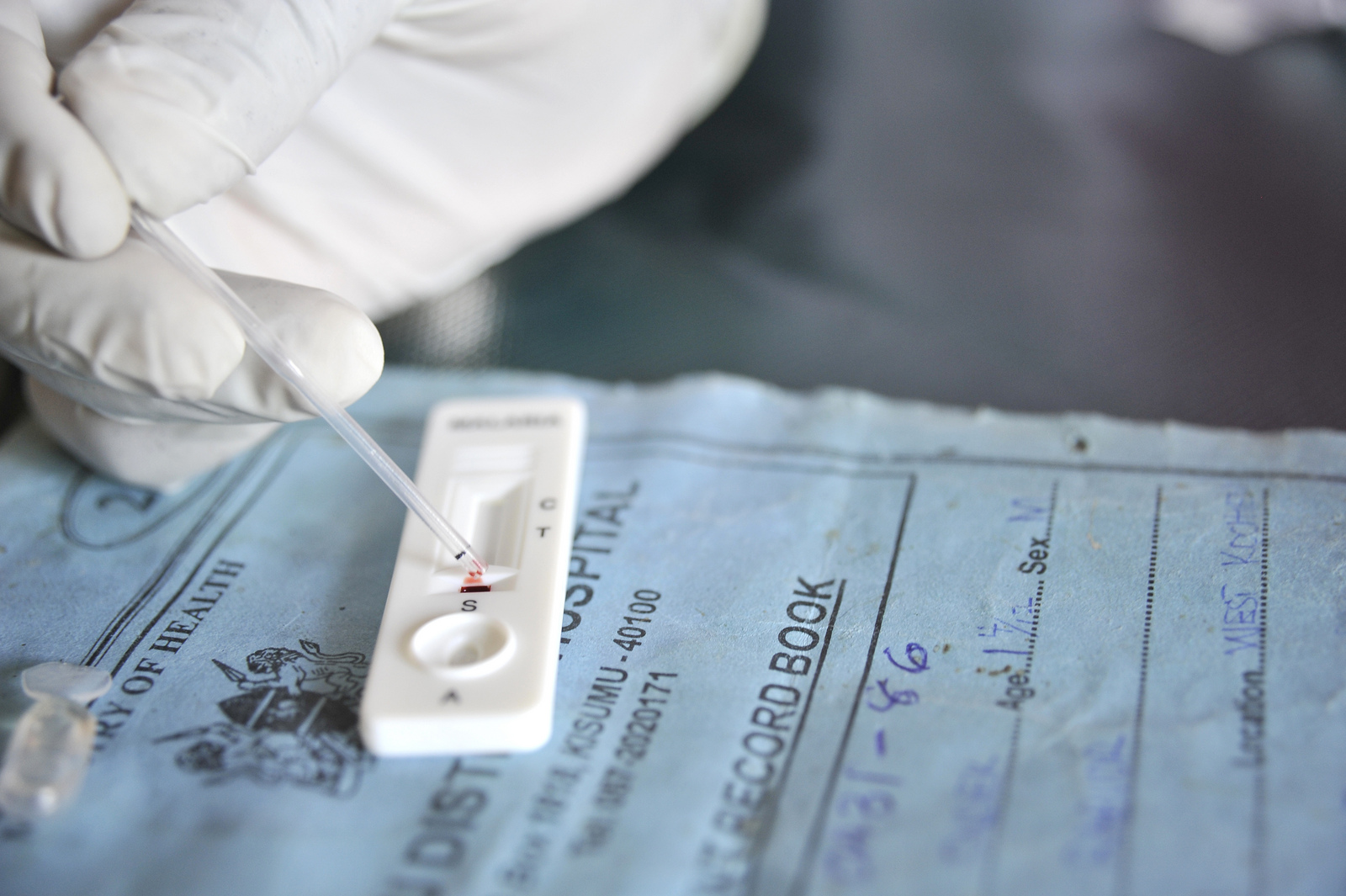
Askling and colleagues describe thick drop microscopy and thin smear as the reference standard for diagnosing malaria (Askling and colleagues, 2012). The rapid test can be used as screening, but it runs in parallel with urgent microscopy, without replacing it.


The table below summarizes, in a didactic way, the role of each test cited by the sources. It simplifies a complex field and should be read together with each service's guidelines.
| Test | What it offers | Point of attention |
|---|---|---|
| Thick drop | Greater chance of finding the parasite | Requires a trained microscopist |
| Thin smear | Species identification and parasite count | Requires a trained microscopist |
| Rapid test | Fast result, useful as screening | Should be followed by microscopy |
| Molecular biology | Confirmation and species identification | Often takes too long for the initial decision |
Why repeat
The British guideline states that malaria can only be ruled out after testing more than one sample (Lalloo and colleagues, 2016). The Centers for Disease Control and Prevention guidance recommends repeating smears every 12 to 24 hours, for a total of three sets, when the first is negative and suspicion continues, and notes that a positive or negative rapid test should be followed by microscopy (CDC, malaria diagnosis).
The negative test as a partial clue
For reasoning, a first negative test lowers the probability, but does not reduce it to zero. If the exposure history is strong and the patient still has fever, the hypothesis remains open. The post on diagnostic uncertainty discusses how to act when a result does not settle the doubt.

Do not wait for the lab to act
Askling and colleagues stress that the delay in microscopy should not delay the start of adequate treatment, and cite intravenous artesunate as the treatment for complicated malaria (Askling and colleagues, 2012). The British guideline recommends admitting most patients treated for falciparum malaria for at least 24 hours, because they can worsen suddenly (Lalloo and colleagues, 2016).
The differential beyond malaria
Ruling out malaria first does not mean forgetting the other hypotheses. Freedman and colleagues show that dengue, rickettsiae and typhoid fever appear with different frequencies depending on the traveler's region of origin (Freedman and colleagues, 2006).
Rickettsiae
Jensenius and colleagues analyzed 280 travelers with rickettsial diseases in the GeoSentinel network. Spotted fever was diagnosed in 231 of them, and 197 of these cases came from sub-Saharan Africa (Jensenius and colleagues, 2009). More than 90 out of every 100 patients received doxycycline, and 43 were admitted.
When the hypothesis is another one
Investigating malaria first does not stop the reasoning from moving forward in parallel. While the test result is pending, the team can review the exposure history, examine the skin carefully, ask about contact with fresh water, food and animals, and think about which tests help separate the other hypotheses. A negative result on the first test, in this scenario, is not the end of the road, it is the moment to look again at the whole list. Reasoning organized in parallel keeps the waiting time for the lab from being dead time.
Diseases that call for isolation
The British guideline notes that, depending on the region visited and the exposure, viral hemorrhagic fever should be considered (Lalloo et al., 2016). This hypothesis is rare, but it changes management immediately, because it requires infection control measures even before confirmation.
Diseases that can be prevented
Wilson et al. observed that more than 17 in every 100 travelers with fever had a vaccine-preventable infection or falciparum malaria (Wilson et al., 2007). For the reasoning, asking about vaccines and prophylaxis is part of the history, and the answer changes the probability of the hypotheses. The general approach to fever in the traveler is reviewed by Thwaites and Day in the NEJM.
Who is at higher risk
Checkley et al. analyzed 25054 patients with imported falciparum malaria in the United Kingdom over twenty years, with 184 deaths (Checkley et al., 2012). Mortality rose with age: among people over 65, there were 25 deaths among 548 patients.
Tourists and people visiting family
In the same study, there were 81 deaths among 2740 tourists, while among 8077 people who traveled to visit friends and relatives there were 26 deaths (Checkley et al., 2012). Mortality was also higher in regions where malaria is seen infrequently. The authors observed that much of the delay was in seeking care and that doctors do not always consider these groups high risk.
People visiting friends and relatives
Wilson et al. observed that travelers visiting friends and relatives were more likely to have fever (Wilson et al., 2007). For the reasoning, the reason for travel is a question as important as the destination, because it changes the type of exposure and the risk profile.
What the reason for travel reveals
Tourists, business travelers, students, humanitarian aid workers and people visiting family tend to have different itineraries, accommodations and habits. Asking what the person did during the trip, where they slept and who they spent time with adds details that the destination alone does not show. These answers also help decide which questions to ask next, and that is why they are worth the time of the consultation.
Migrants and the mild picture
Askling et al. note that migrants from areas with transmission may have few symptoms (Askling et al., 2012). A mild picture, in this group, deserves the same investigation as an intense one.
The bias of anchoring on the viral illness
Croskerry described how cognitive errors lead to diagnostic errors and proposed strategies to reduce them (Croskerry, 2003). Graber et al. showed that cognitive factors, such as premature closure, are present in much of the diagnostic error in internal medicine (Graber et al., 2005). In traveler fever, one bias stands out: anchoring on the most common explanation.
The pull of the frequent diagnosis
On a shift full of people with fever and body aches, the diagnosis of a viral illness comes fast and is almost always right. Anchoring happens when this first impression keeps new clues, such as the trip, from changing the reasoning. The post on heuristics in clinical reasoning shows how useful shortcuts can lead to errors in specific situations.


Pause before discharge
Before discharging a patient with fever, a brief pause with one simple question helps: has this person traveled in recent months? The post about diagnostic pause shows how a short moment of checking protects against premature closure.
Questions that protect
Some questions help keep the focus:
- Has the patient traveled in the last twelve months?
- Where to, for how long and for what reason?
- Did they take malaria prophylaxis and get the recommended vaccines?
- Was the malaria test done and, if negative, will it be repeated?
- Is there any clue that calls for isolation before confirmation?
How NEXO helps train this reasoning
In NEXO, the case of the day is fictional, with a real clinical presentation and up to six progressive clues. You propose a diagnosis by looking for the code in ICD-10 and get proximity feedback in five levels, which shows whether the guess landed on the exact code, the same category, the same group, the same chapter or a different chapter. This format speaks to the theme of this text: an exposure clue can move a guess from one chapter to another.
To use the case of the day as training, try three habits. Before each guess, ask whether any clue changes the patient's reference population. When the most common diagnosis seems obvious, ask which serious hypothesis you would need to rule out first. After the result, note which question would have brought the decisive clue earlier.
Three exercises with cases
Change the geography. Reread a case imagining that the patient returned from another region and see how the differential changes.
Order by severity. List the hypotheses by frequency and then by severity, and compare the two lists.
Treat the negative as partial. Faced with a negative test, ask how much it actually reduced the probability.
The post about clinical decision-making helps you think of tests and approaches as choices with risks and benefits.
The limits on using the game are described on the NEXO economy page. If you research the teaching of clinical reasoning, the page for researchers explains how to get in touch. Professionals who write or review cases find information under curation and under creators, and institutions can learn about the proposal on the partnerships page.
Frequently asked questions
Why ask about travel in every patient with fever?
Because travel changes the probability of the hypotheses. Serious diseases that start out looking like a common viral illness, such as malaria, only enter the reasoning when the exposure is known.
Why is malaria the first hypothesis to investigate?
Because it is among the most frequent causes of fever in people returning from regions with transmission, it can worsen quickly and it has effective treatment when diagnosed in time.
Does a negative malaria test end the investigation?
The investigation continues when the suspicion persists. Guidelines recommend repeating the test and examining more than one sample before ruling out the diagnosis.
How long after travel can malaria appear?
Falciparum malaria usually appears in the first months after exposure, and other species can show up more than a year later. That is why the travel question covers the last twelve months.
Which other diseases enter the differential?
Dengue, rickettsial infections and typhoid fever are frequent examples, and the weight of each depends on the region visited. In specific situations, viral hemorrhagic fever also enters the list.
Who is at higher risk of complications?
Older people and patients seen in regions of the United Kingdom where malaria is rarely seen by doctors had higher mortality in a large British study (Checkley and colleagues, 2012). Delay in seeking care also weighs in.
Final checklist
- I asked about travel in the last twelve months.
- I considered destination, duration, reason for travel and prophylaxis.
- I thought of malaria first when there was exposure.
- I ordered the malaria test and planned to repeat it if negative.
- I reviewed the differential according to the region visited.
- I asked whether the viral illness hypothesis actually explained all the clues.
Want to practice reasoning with progressive clues? Play the case of the day.
References
- Askling HH, Bruneel F, Burchard G, et al. Management of imported malaria in Europe. Malar J. 2012. PMID 22985344.
- Centers for Disease Control and Prevention. Clinical testing and diagnosis for malaria. CDC page.
- Checkley AM, Smith A, Smith V, et al. Risk factors for mortality from imported falciparum malaria in the United Kingdom over 20 years: an observational study. BMJ. 2012. PMID 22454091.
- Croskerry P. The importance of cognitive errors in diagnosis and strategies to minimize them. Acad Med. 2003. PMID 12915363.
- Freedman DO, Weld LH, Kozarsky PE, et al. Spectrum of disease and relation to place of exposure among ill returned travelers. N Engl J Med. 2006. PMID 16407507.
- Graber ML, Franklin N, Gordon R. Diagnostic error in internal medicine. Arch Intern Med. 2005. PMID 16009864.
- Jensenius M, Davis X, von Sonnenburg F, et al. Multicenter GeoSentinel analysis of rickettsial diseases in international travelers, 1996-2008. Emerg Infect Dis. 2009. PMID 19891867.
- Kain KC, Harrington MA, Tennyson S, et al. Imported malaria: prospective analysis of problems in diagnosis and management. Clin Infect Dis. 1998. PMID 9675468.
- Kain KC, MacPherson DW, Kelton T, et al. Malaria deaths in visitors to Canada and in Canadian travellers: a case series. CMAJ. 2001. PMID 11258214.
- Lalloo DG, Shingadia D, Bell DJ, et al. UK malaria treatment guidelines 2016. J Infect. 2016. PMID 26880088.
- Thwaites GE, Day NPJ. Approach to fever in the returning traveler. N Engl J Med. 2017. PMID 28467877.
- Wilson ME, Weld LH, Boggild A, et al. Fever in returned travelers: results from the GeoSentinel Surveillance Network. Clin Infect Dis. 2007. PMID 17516399.
- World Health Organization. WHO guidelines for malaria. Publication page.