Dyslipidemia 2026: LDL and Lp(a) targets return



Table of contents
- The targets are back: what changes compared with 2018
- Calculating risk: PREVENT in the United States, SCORE2 in Europe
- Reading the lipid panel beyond LDL
- Lipoprotein(a): one measurement in adulthood
- Zero coronary calcium: an argument to wait
- Incidental coronary calcium on chest CT
- Goals by category and the drugs beyond statin
- How NEXO helps train this reasoning
- Frequently asked questions
- Take-home messages
- References
A 52-year-old man with no known cardiovascular disease comes in with a lipid panel ordered at his work check-up. His LDL is high, he is a former smoker, his blood pressure is borderline, and his father had an early heart attack. Two years ago he had a chest CT because of a cough that took a while to clear, and the report ended with a line nobody commented on: mild coronary calcification. The old question would be whether he "deserves" a statin. The question in the 2026 guideline is more precise: what is his risk, what do lipoprotein(a) and coronary calcium add, and how far does LDL need to fall.
In 2026, the American College of Cardiology and the American Heart Association published a new dyslipidemia guideline that replaces the 2018 one (ACC/AHA, 2026). The most visible change is in the document's own first message: treatment targets for LDL and non-HDL cholesterol are back. Along with them came risk calculation with PREVENT, lipoprotein(a) measurement for every adult, and a larger role for the coronary calcium score, including calcium found incidentally on CT scans done for another reason.
On the other side of the Atlantic, the European Society of Cardiology and the European Atherosclerosis Society published a focused update in 2025 to the 2019 guideline (ESC/EAS, 2025). The two readings converge on much and diverge on points that matter to anyone practicing in any country. This text walks through the changes by way of clinical reasoning, without becoming a summary of every recommendation.
Key points
- LDL and non-HDL cholesterol targets are back in the American guideline, with values by risk category (ACC/AHA, 2026).
- Primary prevention risk is now calculated with PREVENT-ASCVD in the United States and with SCORE2 in Europe.
- Lipoprotein(a) should be measured at least once in adulthood, with no need for fasting (ACC/AHA, 2026).
- A coronary calcium score of zero makes it reasonable to postpone the statin in people at uncertain risk, with a new assessment after a few years.
- Coronary calcium found incidentally on a chest CT enters the decision to treat.
- Bempedoic acid earned a place in both guidelines for people who do not tolerate a statin.
Summary
- The targets are back: what changes compared with 2018
- Calculating risk: PREVENT in the United States, SCORE2 in Europe
- Reading the lipid panel beyond LDL
- Lipoprotein(a): one measurement in adulthood
- Coronary calcium of zero: an argument to postpone
- Incidental coronary calcium on chest CT
- Targets by category and drugs beyond statins
- How NEXO helps train this reasoning
- Frequently asked questions
- Take-home messages
The targets are back: what changes compared with 2018
The 2013 American guideline abandoned numerical LDL targets and began recommending statins by intensity, according to risk group. The 2018 one kept that logic and added thresholds for adding other drugs. The 2026 guideline reverses the movement and says, right in its main messages, that LDL and non-HDL cholesterol targets are back (ACC/AHA, 2026).
The reasoning behind it is direct. The statin remains the basis of treatment, but the person who lowers LDL only a little with it is left with a residual risk that the prescription alone does not show. The target works as a marker that treatment reached where it needed to, and it guides when to add ezetimibe or another drug. The guideline organizes care in a three-verb model: calculate the risk, personalize with factors that raise it, and reclassify or reassess when there is uncertainty (ACC/AHA, 2026).
What the ESC was already doing
European guidelines never stopped using targets. The 2025 update kept the targets from the 2019 version and changed how risk is calculated, the list of drugs, and the approach to acute coronary syndrome (ESC/EAS, 2025).
How many more people become eligible
The change has a population effect. A study with representative data from American adults aged 30 to 79 estimated that statin eligibility rises from about 40 in every 100 adults under the 2018 guideline to about 54 in every 100 under the 2026 one (Spitz et al., 2026). The largest relative increase occurred among adults under 50, and the gain came from the set of new criteria, not only from the change of calculator (Spitz et al., 2026).
Calculating risk: PREVENT in the United States, SCORE2 in Europe
The American guideline replaces the pooled cohort equations with PREVENT-ASCVD, which estimates the 10-year risk of atherosclerotic cardiovascular disease for adults aged 30 to 79 with LDL between 70 and 189 mg/dL, with a class 1 recommendation (ACC/AHA, 2026). The categories become low risk below 3 in 100, borderline from 3 to 5, intermediate from 5 to 10 and high from 10 in 100 (ACC/AHA, 2026). PREVENT includes kidney function and was developed to reduce the overestimation of the old equations.
The cutoffs are lower than those of the previous guideline, and that is one of the reasons for the broader eligibility. Anyone who meets the criteria must remember that the calculator estimates risk in a population, and the decision for the person in front of you depends on what the calculator does not see. This idea is the same one that guides the reading of any test by pretest probability: the starting number changes the meaning of everything that comes after.
SCORE2 and SCORE2-OP
The European update recommends SCORE2 for apparently healthy people under 70 and SCORE2-OP from 70 onward, both with class I (ESC/EAS, 2025). Both estimate fatal and nonfatal cardiovascular events over 10 years and are calibrated for four groups of countries, according to the cardiovascular mortality of each region (ESC/EAS, 2025).
Factors that increase risk
In the American guideline, high-sensitivity C-reactive protein at or above 2 mg/L on two occasions, in a person at borderline risk, makes high-intensity statin reasonable, with class 2a (ACC/AHA, 2026). Reproductive factors, such as preeclampsia, menopause before age 40 and gestational diabetes, also count as risk modifiers, with class 2a (ACC/AHA, 2026). Early cardiovascular disease in the family, chronic kidney disease and chronic inflammatory diseases remain part of the personalization.
Reading the lipid panel beyond LDL
The lipid panel looks simple, but the way LDL is calculated has changed. The American guideline prefers the Martin and Hopkins or the NIH Sampson equations to the Friedewald formula, with class 1, because they err less when triglycerides are high or LDL is low (ACC/AHA, 2026). For most people, collection without fasting is acceptable, which simplifies access to the test.
Non-HDL cholesterol gained the same importance as LDL, with its own targets in each category (ACC/AHA, 2026). It adds up the cholesterol of all particles that carry apolipoprotein B, including the triglyceride-rich remnants. In people with diabetes, obesity or high triglycerides, LDL can underestimate the number of atherogenic particles, and non-HDL corrects part of that error.
Apolipoprotein B after reaching the target
The American guideline considers it reasonable to measure apolipoprotein B when LDL and non-HDL are already at target, to identify those who still have excess particles, with class 2a (ACC/AHA, 2026). The European update notes that LDL and the other lipoproteins with apolipoprotein B are a direct cause of atherosclerotic disease (ESC/EAS, 2025).
When to repeat the test
After starting or adjusting treatment, the American guideline recommends repeating the lipid panel in 4 to 12 weeks and then every 6 to 12 months, to check response and adherence (ACC/AHA, 2026). The European one suggests checking LDL between 4 and 6 weeks after starting or intensifying therapy (ESC/EAS, 2025). Screening in adults without disease goes every 5 years from age 19, and in children between 9 and 11 years, per the American guideline (ACC/AHA, 2026). Heterozygous familial hypercholesterolemia affects about 1 in every 250 to 300 people (ACC/AHA, 2026).
Lipoprotein(a): one measurement in adulthood
Lipoprotein(a) is a particle similar to LDL, with one extra protein, apolipoprotein(a). Its level is determined mainly by genetics and changes little over a lifetime. The American guideline recommends measuring lipoprotein(a) at least once in all adults, with class 1, and collection can be done without fasting (ACC/AHA, 2026).
A value of 125 nmol/L or more, equivalent to 50 mg/dL, is considered raised and is associated with a risk about 1.4 times higher (ACC/AHA, 2026). Risk rises continuously: near 250 nmol/L it doubles, and near 430 nmol/L it is around four times higher, similar to that of familial hypercholesterolemia (ACC/AHA, 2026). This gradation is why the guideline treats lipoprotein(a) as a spectrum and not as a positive or negative result.
The European cutoff
The European update recommends considering lipoprotein(a) above 50 mg/dL, about 105 nmol/L, as a factor that raises risk in all adults, with class IIa (ESC/EAS, 2025). The document estimates that at least 20 in every 100 people have values above this cutoff and recommends measuring in molar units when possible, because of variation between laboratory methods (ESC/EAS, 2025). One practical point: a second measurement after menopause is reasonable, especially if the previous value was near the cutoff (ESC/EAS, 2025).
What to do with the result
So far, there are no approved drugs that selectively lower lipoprotein(a) with proven benefit in events. For this reason, both guidelines use the raised value to intensify everything else. The American one recommends early control of the other risk factors in people with high lipoprotein(a), with class 1, and adding an anti-PCSK9 monoclonal antibody in those with atherosclerotic disease who do not reach the LDL goal, also with class 1 (ACC/AHA, 2026). The European one speaks of early management of risk factors and more intensive LDL reduction, considering absolute risk and the lipoprotein(a) level (ESC/EAS, 2025).
After the heart attack
A 2026 review on lipoprotein(a) after heart attack gathers studies that associate it with plaque progression, high-risk plaques and new events, which makes it a candidate to explain part of the residual risk (Gogan et al., 2026). The same review recalls that the benefit of lowering only lipoprotein(a) remains undemonstrated (Gogan et al., 2026).
The drugs in testing
RNA therapies, such as the antisense oligonucleotide pelacarsen and the interference RNAs olpasiran, zerlasiran and lepodisiran, lower lipoprotein(a) by 79 to about 97 in every 100 in phase 2 studies, after subtracting placebo (Parcha and Bittner, 2026). The preliminary result of the phase 3 study with pelacarsen, released by the sponsor, showed a large drop in lipoprotein(a) without a significant reduction in events, and the full data have not yet been published with peer review (Parcha and Bittner, 2026). This result reinforces caution: lowering a causal marker does not by itself guarantee fewer heart attacks, and the size of the reduction needed, the timing and the chosen outcome are still under discussion (Gogan et al., 2026).
Zero coronary calcium: an argument to wait
The coronary calcium score, measured by non-contrast tomography, shows whether there is calcified atherosclerosis in the arteries of the heart. The American guideline recommends using it to decide when the calculated risk leaves doubt, with class 1 (ACC/AHA, 2026). The test works as a reclassifier: it moves the person up or down a category based on their own artery, and not on the population average.
When the score is zero, the guideline considers it reasonable to postpone the statin in those without other very strong risk factors and to repeat the test in 3 to 7 years, with class 2a (ACC/AHA, 2026). When it is greater than zero, it recommends starting treatment, especially with a score of 100 or more or above the 75th percentile for age and sex, with class 1 (ACC/AHA, 2026).
What zero means
Zero calcium indicates that, at that moment, calcified plaque is absent. It lowers the probability of events in the medium term, but it does not exclude non-calcified plaque, and for this reason it loses value in smokers, in people with diabetes and in those with a strong family history. The guideline treats zero as an argument to talk and wait, and not as a guarantee. The idea of quaternary prevention applies: a test ordered to resolve doubt can also trigger a cascade of other tests.
Where the guidelines disagree
A 2026 narrative review compared cardiovascular prevention guidelines and found disagreements precisely on the calcium score, on lipoprotein(a) measurement, on abdominal aortic aneurysm screening and on starting lipid-lowering therapy in older adults (Brotons et al., 2026). The biggest disagreements appeared when the recommendations relied on studies without randomization or on expert opinion (Brotons et al., 2026). In practice, the score is worth it when it changes the decision.
Incidental coronary calcium on chest CT
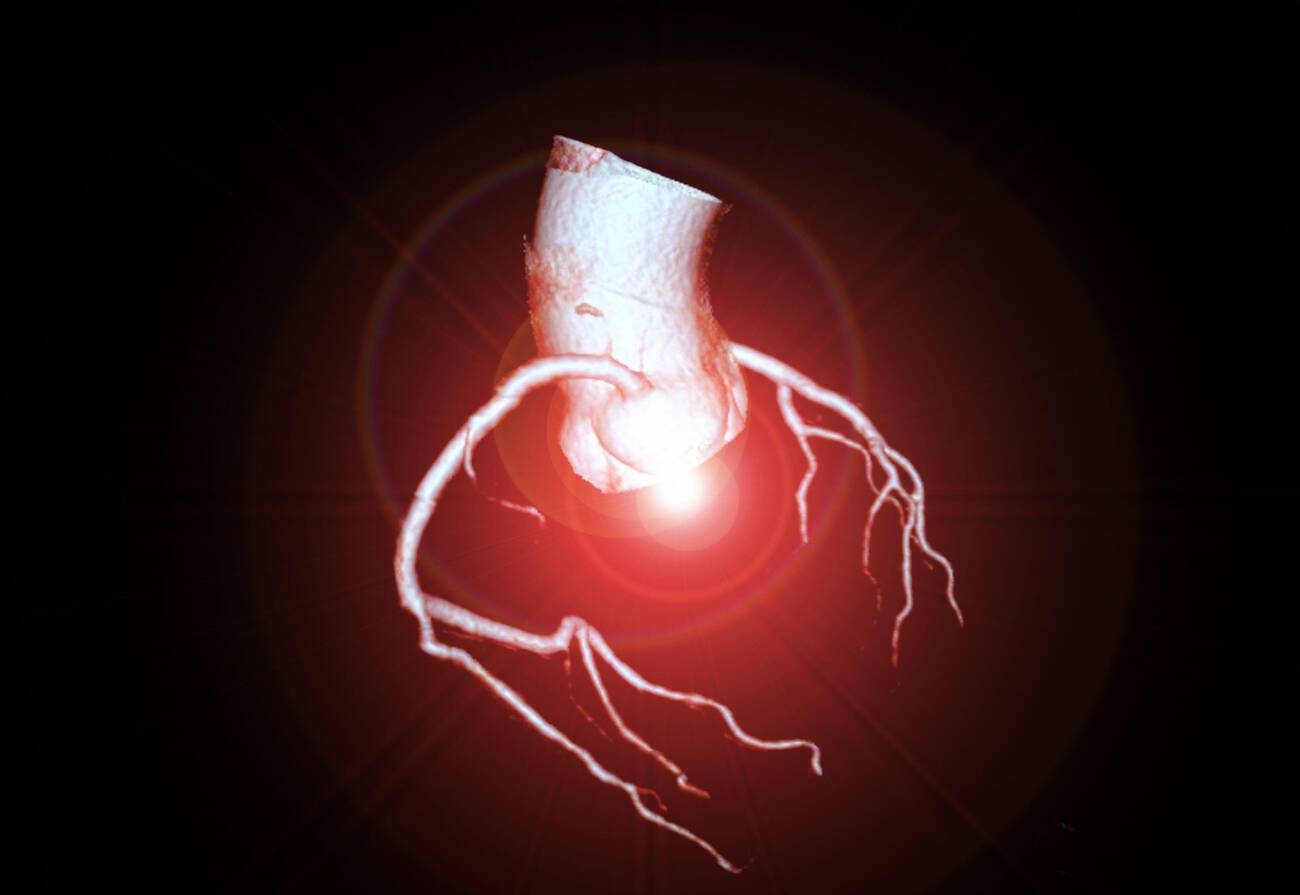
Coronary calcification shows up on chest CT scans done for many reasons: investigation of cough, lung cancer screening, cancer staging and even attenuation correction CT scans in nuclear imaging. The American guideline recommends considering this incidental finding in the decision to treat, including when it is identified by artificial intelligence, with class 1 (ACC/AHA, 2026).
When the incidental calcium is moderate or severe, the guideline considers high-intensity statin reasonable with an LDL goal below 70 mg/dL, with class 2a (ACC/AHA, 2026). When it is mild, the guidance is moderate-intensity statin with a goal below 100 mg/dL (ACC/AHA, 2026).
How reliable the ordinary CT scan is
A chest CT without electrocardiogram gating can miss or underestimate calcium because of motion and contrast. Even so, a meta-analysis of 15 studies found a correlation of 0.96 between the calcium measured on this CT and that measured on gated CT (Patel and Williams, 2026). Artificial intelligence models began to quantify calcium automatically, quickly and reproducibly, which makes it feasible to assess it on a large scale (Patel and Williams, 2026). The same review notes that randomized trials are still lacking showing that this opportunistic search reduces events.
The report needs to reach the person
Reporting the finding changes management. In a meta-analysis of 7 studies, informing the incidental calcium was associated with more statin prescriptions in 5 of them (Patel and Williams, 2026). In the NOTIFY-1 study, those informed of the finding were using a statin more often at 6 months, about 51 in every 100 versus 7 in every 100 (Patel and Williams, 2026).
The way of communicating also matters. A qualitative study with participants in the English lung cancer screening program showed that many people said they understood the finding but had mistaken ideas about their own risk (Fletcher et al., 2026). Trust in the professional who explains and information coming from social networks, family and friends influenced acceptance of the lipid-lowering drug (Fletcher et al., 2026). Explaining the risk clearly and scheduling a follow-up visit are part of the treatment.
Goals by category and the drugs beyond statin
The American guideline distributes the goals according to risk. In intermediate-risk primary prevention, it recommends at least a moderate-intensity statin, with class 1, and considers an LDL goal below 100 mg/dL and non-HDL below 130 mg/dL reasonable (ACC/AHA, 2026). In high risk, the recommendation is a high-intensity statin with a reduction of at least 50 in every 100 of LDL, with a goal below 70 mg/dL and non-HDL below 100 mg/dL, and ezetimibe if the goal is not reached (ACC/AHA, 2026).
In secondary prevention, the goal is LDL below 70 mg/dL and non-HDL below 100 mg/dL, with the reasonable option of aiming below 55 mg/dL (ACC/AHA, 2026). In those at very high risk, defined by two or more major events or one major event with two or more high-risk conditions, the goal becomes LDL below 55 mg/dL and non-HDL below 85 mg/dL (ACC/AHA, 2026).
Table: risk category and goal according to ACC/AHA 2026
| Situation | Initial treatment | LDL and non-HDL goal |
|---|---|---|
| Primary prevention, intermediate risk | Moderate-intensity statin or higher | Below 100 and 130 mg/dL (ACC/AHA, 2026) |
| Primary prevention, high risk | High-intensity statin | Below 70 and 100 mg/dL (ACC/AHA, 2026) |
| Moderate or severe incidental coronary calcium | High-intensity statin | LDL below 70 mg/dL (ACC/AHA, 2026) |
| Diabetes from 40 to 75 years | Moderate-intensity statin | Below 100 and 130 mg/dL (ACC/AHA, 2026) |
| Established atherosclerotic disease | High-intensity statin | Below 70 and 100 mg/dL, with an option of 55 (ACC/AHA, 2026) |
| Very high risk | Statin with ezetimibe or anti-PCSK9 | Below 55 and 85 mg/dL (ACC/AHA, 2026) |
The targets in the table are those of the American guideline; the European one keeps the 2019 targets, with LDL below 55 mg/dL in very high risk and below 70 mg/dL in high risk (ESC/EAS, 2025).
Bempedoic acid
Bempedoic acid gained ground in both guidelines. The European one recommends the drug, with class I, for those who cannot use a statin, and considers it reasonable to add it to a statin, with or without ezetimibe, in high or very high risk that does not reach the target (ESC/EAS, 2025). The basis is the CLEAR Outcomes study, with 13970 people who did not tolerate statin, followed for a median of 40.6 months, in which the drug reduced major cardiovascular events with a hazard ratio of 0.87 (ESC/EAS, 2025). The same study recorded more gout and more high uric acid in the treated group (ESC/EAS, 2025).
A later analysis of the same trial found less venous thromboembolism with bempedoic acid, with a hazard ratio of 0.58, a finding that still needs confirmation (Spiazzi et al., 2026). In phase 3 studies, efficacy and safety in people aged 75 or older were similar to those of younger groups, with or without an associated statin (Mancini et al., 2026).
Ezetimibe, anti-PCSK9 and inclisiran
Ezetimibe remains the first step after a statin, for its efficacy, access and tolerability. In severe hypercholesterolemia, with LDL of 190 mg/dL or more, the American guideline considers inclisiran reasonable, and evinacumab is left for homozygous familial hypercholesterolemia (ACC/AHA, 2026). The European one recommends evinacumab in this homozygous form from age 5, with class IIa (ESC/EAS, 2025).
In acute coronary syndrome
The European update brought two new recommendations for hospitalization for acute coronary syndrome. Those already using a lipid-lowering drug should have treatment intensified during the hospitalization, with class I (ESC/EAS, 2025). Those who never used one and probably will not reach the target with a statin alone can start with a statin and ezetimibe, with class IIa (ESC/EAS, 2025). Recognizing acute coronary syndrome in time is another skill, discussed in the text about the HEART score and in the text about heart attack in women.
Supplements
Both guidelines advise against supplements and vitamins to lower cholesterol. The American one gives class 3 to this use and cites the SPORT study, in which rosuvastatin lowered LDL by about 38 in every 100 and the supplements tested had no relevant effect (ACC/AHA, 2026). The European one also contraindicates supplements without documented safety and without significant LDL reduction, with class III (ESC/EAS, 2025).
How to apply it to the case of the 52-year-old man
Back to the man from the beginning. The first step is to calculate risk with PREVENT-ASCVD, since he is between 30 and 79 years old and has LDL below 190 mg/dL (ACC/AHA, 2026). Suppose he falls into intermediate risk. His father's heart attack at a young age and his previous smoking weigh upward, and lipoprotein(a), which he has never had measured, should be requested once.
The old CT report changes the conversation. The mild coronary calcification, found by chance, already shows atherosclerosis in his artery, and the guideline recommends taking this finding into account (ACC/AHA, 2026). By the rule of mild incidental calcium, the suggested approach is a moderate-intensity statin with an LDL target below 100 mg/dL (ACC/AHA, 2026). If lipoprotein(a) comes back very high, the argument for intensifying grows.
The reasoning behind it
The case shows the guideline's three verbs in practice. Calculate places the man in a band. Personalize adds what the calculator does not see, such as family and lipoprotein(a). Reclassify uses the image of the artery itself. In people with several conditions, this calculation mixes with other guidelines, as the text on multimorbidity discusses. Obesity and diabetes also come in, and the text on tirzepatide in obesity with sleep apnea shows how one condition changes the reading of another. Building the list of what may be happening, as in differential diagnosis training, helps avoid missing familial hypercholesterolemia when LDL comes back very high.
How NEXO helps train this reasoning
In NEXO, the case of the day is fictional, with a real clinical presentation and up to six progressive clues, and you propose the diagnosis by searching for the ICD-10 code.
The limits of using the game are described on the NEXO economy page. If you research clinical reasoning teaching, the page for researchers explains how to get in touch. Professionals who write or review cases find information under curation and under creators, and institutions can learn about the proposal on the partnerships page. Searching for the right ICD-10 code completes this training.
Frequently asked questions
Are LDL targets really back in the American guideline?
Yes. The 2026 ACC/AHA guideline says, among its key messages, that LDL and non-HDL cholesterol targets are back, with values by risk category (ACC/AHA, 2026). Statin remains the basis, and the target guides when to add another drug.
How many times do I need to measure lipoprotein(a)?
For most adults, once in a lifetime is enough, because the level is determined mainly by genetics (ACC/AHA, 2026). The European guideline considers it reasonable to repeat after menopause when the first value was near the cutoff (ESC/EAS, 2025).
Does a zero coronary calcium score rule out statin?
It makes it reasonable to postpone statin in people with uncertain risk and no very strong factors, with a new assessment in 3 to 7 years (ACC/AHA, 2026). In smokers, in people with diabetes and in those with a strong family history, zero weighs less.
What to do with coronary calcium seen on a chest CT?
The American guideline recommends considering this finding in the decision to treat, with high-intensity statin when calcium is moderate or severe (ACC/AHA, 2026). Communicating the finding clearly increases the chance that the person accepts treatment.
Do people who cannot tolerate statin have no option?
There are alternatives with proven benefit. The European guideline recommends non-statin therapies with benefit in events, such as bempedoic acid, ezetimibe and anti-PCSK9, for those who cannot use statin (ESC/EAS, 2025).
Do the new drugs against lipoprotein(a) already work?
They greatly reduce the blood level, but fewer cardiovascular events still need to be shown (Parcha and Bittner, 2026). For now, high lipoprotein(a) serves to intensify control of the other risk factors.
Take-home messages
- The 2026 ACC/AHA guideline brought back LDL and non-HDL cholesterol targets.
- Risk is calculated by PREVENT-ASCVD in the United States and by SCORE2 in Europe, and personalized with factors that increase it.
- LDL should be calculated by the Martin and Hopkins or the Sampson equations, and apolipoprotein B helps after reaching the target.
- Lipoprotein(a) should be measured once in adulthood and works as a risk spectrum.
- Zero coronary calcium makes it reasonable to postpone statin when risk is uncertain.
- Calcium found by chance on a chest CT enters the decision to treat.
- Bempedoic acid is an option with benefit in events for those who cannot tolerate statin.
- In acute coronary syndrome, ESC recommends intensifying treatment during hospitalization.
Want to train your reasoning before a person with added-up risk factors? Play the case of the day on NEXO.
References
- Blumenthal RS, Morris PB, et al. 2026 ACC/AHA Guideline on the Management of Dyslipidemia. Circulation. 2026;153(17):e1154. PMID 41824552. DOI 10.1161/CIR.0000000000001423.
- Mach F, Koskinas KC, Roeters van Lennep JE, et al. 2025 Focused Update of the 2019 ESC/EAS Guidelines for the management of dyslipidaemias. Eur Heart J. 2025;46(42):4359-4378. PMID 40878289. DOI 10.1093/eurheartj/ehaf190.
- Spitz JA, Metlock FE, Nriagu B, et al. Changes in statin therapy eligibility under the 2026 versus 2018 dyslipidemia guidelines. Am J Prev Cardiol. 2026;30:101719. PMID 42830764. DOI 10.1016/j.ajpc.2026.101719.
- Patel R, Williams MC. Coronary artery calcium score: emerging role for opportunistic screening on thoracic CT and novel applications. Br J Radiol. 2026;99:1925-1936. PMID 42033770. DOI 10.1093/bjr/tqag094.
- Parcha V, Bittner VA. RNA-Based Therapies for Lipoprotein(a) Reduction: Antisense Oligonucleotides, Small Interfering RNAs, and Emerging Platforms. Curr Atheroscler Rep. 2026;28:99. PMID 42873455. DOI 10.1007/s11883-026-01474-4.
- Gogan A, Ardelean S, Rus D, et al. Lipoprotein(a) After Myocardial Infarction: Residual Risk, Measurement, and the Unresolved Therapeutic Question. Biomedicines. 2026;14:2339. PMID 42940145. DOI 10.3390/biomedicines14102339.
- Mancini GBJ, Lincoff AM, Goldberg AC, et al. Efficacy and Safety of Bempedoic Acid in Patients Aged 75 Years or Older Stratified by Varying Statin Exposure. J Am Heart Assoc. 2026;15:e047897. PMID 42333640. DOI 10.1161/JAHA.125.047897.
- Spiazzi BF, Brennan D, Zingano CP, et al. Bempedoic Acid and Venous Thromboembolism Risk Among Statin-Intolerant Patients: A Post Hoc Analysis of the CLEAR Outcomes Randomized Clinical Trial. JAMA Cardiol. 2026;11:659-663. PMID 42201706. DOI 10.1001/jamacardio.2026.1208.
- Brotons C, Moral I, Axelrod T, et al. Discrepancies in low-value practices across cardiovascular disease prevention guidelines. A narrative review. Eur J Gen Pract. 2026;32:2729221. PMID 42765598. DOI 10.1080/13814788.2026.2729221.
- Fletcher AL, Bagnall A, Graham Y. Patient acceptability and preferences for communication of coronary artery calcification findings in the NHS targeted lung health checks: a qualitative study. BMJ Open. 2026;16:e115544. PMID 42711077. DOI 10.1136/bmjopen-2025-115544.