Spatial disorientation: vestibular and visual illusions
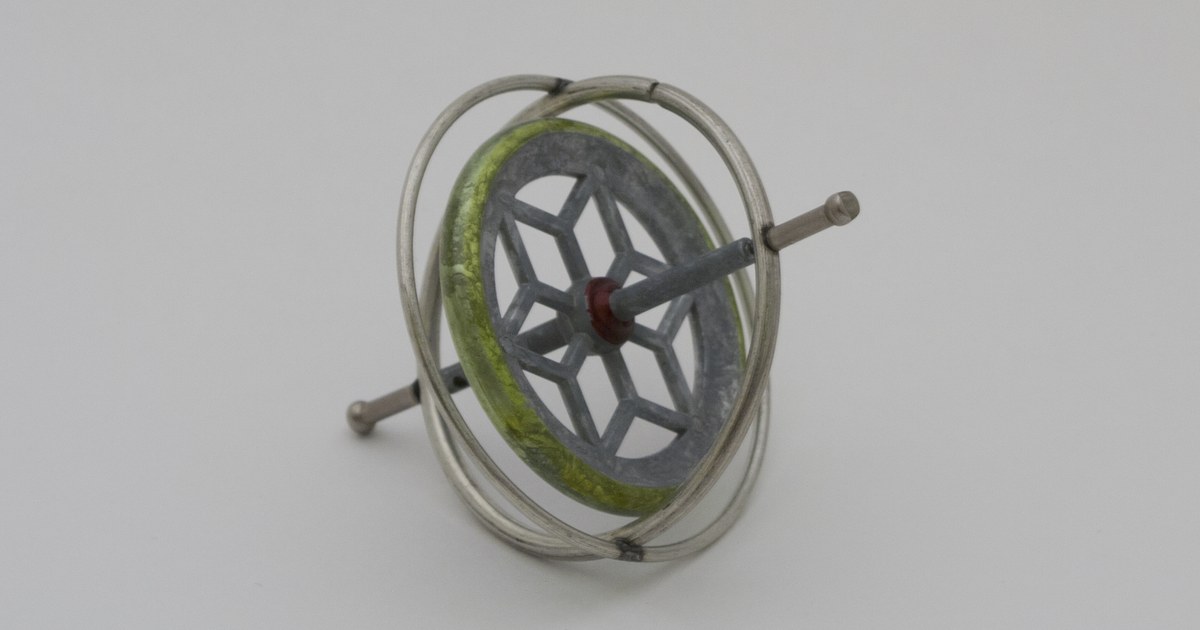
Table of contents
- Why spatial disorientation is a reasoning scenario
- Pathophysiology: semicircular canals and otoliths
- The most important vestibular illusions
- Visual illusions
- Three types of disorientation
- The differential diagnosis of dizziness after flight
- Assessment on the ground: what to examine
- Management: trust the instruments
- The sensation that deceives and clinical reasoning
- How NEXO helps train this reasoning
- Frequently asked questions
- Final checklist
- References
A 38-year-old private pilot with few instrument flight hours enters a cloud layer without planning. To return to clear sky, he starts a gentle, long left turn. After some time, he feels the plane is straight. When he levels the wings, he has a strong sensation of being tilted to the right and leans his body to the left to feel upright. The artificial horizon shows level wings, but he does not believe the instrument. Speed increases, altitude drops, and the engine sound changes. He forces himself to read the instruments, follows what they show, and exits the cloud. On the ground, he reports dizziness and nausea for an hour and asks if he has a problem with his ear. The scene is fictional and was written for teaching. This text uses this picture as a clinical reasoning scenario: what happens in the labyrinth during a prolonged turn, why the sensation overrides the instrument, what other causes of dizziness enter the differential, and what to assess after the flight.
The text is not an instrument flight manual. Training, rules, and procedures follow each country's aviation authority. The interest here is reasoning: a normal sensory system can produce a wrong perception, and the person trusts it. If you play the case of the day on NEXO, you will recognize the movement: a very convincing sensation can be a false clue.
Key points
- Spatial disorientation is a wrong perception of position and movement, caused by normal limits of the senses, not by disease.
- The semicircular canals do not detect very slow rotations and adapt to constant turns in about 20 seconds.
- The leans illusion, known in English as "the leans", is the most common, and the death spiral is one of the most dangerous.
- In-flight management is to trust the instruments; no medication corrects the illusion.
- Dizziness that persists after the flight calls for evaluation of vestibular, neurological, or other causes.
Why spatial disorientation is a reasoning scenario
Spatial orientation depends on three sources: vision, the vestibular system, and proprioception. On the ground, they usually agree. In flight, especially without external visual reference, the senses receive stimuli they were not made for and may disagree. The FAA pamphlet on spatial disorientation states that between 5 and 10 percent of general aviation accidents can be attributed to it, and that about 90 out of 100 of these accidents are fatal (Federal Aviation Administration, spatial disorientation pamphlet).
Gibb and colleagues reviewed decades of data and estimated that spatial disorientation contributes to about one third of accidents, almost always with death (Gibb and colleagues, 2011). Baumgartner and colleagues analyzed fatal accidents in general aviation and described a lethality of 94 out of 100 accidents due to disorientation, with a predominance of pilots with fewer than 500 flight hours and frequent involvement of the 60 to 69 age group (Baumgartner and colleagues, 2025).
What the scene teaches
The scene has five clues. The first is the unplanned entry into cloud, which removes visual reference. The second is the gentle, long turn. The third is the sensation of being straight during the turn. The fourth is the sensation of opposite tilt when leveling. The fifth is the conflict between what the pilot feels and what the instrument shows. For a physician, the pilot's final question, whether he has a problem with his ear, opens another part of the reasoning: what was normal illusion and what may be disease.
The post about signs, symptoms, and history shows how the context in which a symptom arises changes its interpretation.
Factors that increase risk
Some factors appear repeatedly in accident analyses. Little experience with instrument flight, night flight, unplanned entry into clouds, fatigue, task overload and use of alcohol or medication increase the chance that the illusion wins. The FAA leaflet adds that pilots rated only for visual flight should not insist on continuing when the weather worsens, because that is the situation in which external reference suddenly disappears. For the doctor seeing pilots, asking about these factors is part of prevention.
Pathophysiology: semicircular canals and otoliths
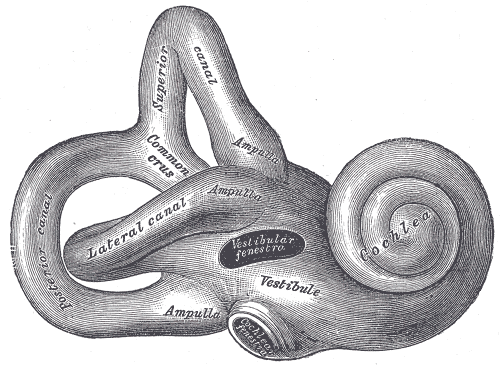
The vestibular system sits in the inner ear and has two parts. The semicircular canals detect angular acceleration, that is, rotation. The otolithic organs, utricle and saccule, detect linear acceleration and gravity. The FAA leaflet compares the three canals to three gyroscopes arranged on perpendicular axes, corresponding to the roll, pitch and yaw movements of the aircraft (Federal Aviation Administration, spatial disorientation leaflet).


The limit of the canals
Each canal has fluid, the endolymph, and a gelatinous sensor, the cupula, with hair cells. When the head turns, the canal turns with it, but the endolymph lags behind by inertia and bends the cupula. This tells the brain that there was rotation. The FAA leaflet explains two important limits. Rotations of 2 degrees per second or less fall below the detection threshold. And, in a constant turn of more than 20 seconds, friction makes the endolymph follow the canal wall, the cupula returns to the center and the brain receives the false information that the turn has ended.
When the pilot exits the turn, the endolymph keeps moving by inertia and bends the cupula in the opposite direction. The brain interprets this as a turn to the other side. That is exactly what happened in the scene.
The limit of the otoliths
The otoliths have a different problem. Kim and Kirollos recall that they cannot distinguish gravity from linear acceleration, because both produce the same force on the crystals (Kim and Kirollos, 2026). A forward acceleration can be felt as the nose of the aircraft rising. Correia Grácio and colleagues estimated that this illusion, called somatogravic, sets in with a time constant of about 2 seconds (Correia Grácio and colleagues, 2013).

The most important vestibular illusions
The FAA leaflet describes the illusions linked to the semicircular canals and to the otoliths. They share one point: they appear when reliable external visual reference is missing.
The somatogyral illusion
It is the most common illusion in flight. It arises when the pilot returns to level flight after a gradual, prolonged turn that went unnoticed. On leveling, the pilot feels tilted to the opposite side and tends to lean the body toward the side of the original turn. Eiken and colleagues measured this illusion in flight, with pilots deprived of visual reference, and found a very variable magnitude, with an average of 47 percent of the real roll perceived; prior centrifuge training did not change the result (Eiken and colleagues, 2026).
Graveyard spiral and graveyard spin
In the graveyard spiral, the pilot enters a prolonged turn, stops feeling the turn and, on leveling, feels an opposite turn. To correct this false sensation, the pilot returns to the original turn. The aircraft loses altitude, and pulling the stick without leveling the wings only tightens the turn. The graveyard spin follows the same logic, but in a spin situation. The FAA leaflet recalls that the spiral is more common than the spin.
Coriolis illusion
It happens when the pilot tilts his head during a turn, for example to look at a chart or a side instrument. Two canals are stimulated at the same time, and the sensation is of simultaneous roll, pitch and yaw, very unpleasant and disorienting. Ledegang and Groen showed in a simulator that disorientation changes the pilot's inputs even when he does not recognize it, and that the Coriolis illusion delayed the glance at the attitude indicator (Ledegang and Groen, 2018).
Otolith illusions
On takeoff or during strong acceleration, the backward force can be felt as a sharp nose-up, and the pilot tends to push the stick down. During deceleration, the opposite happens. There is also the inversion illusion, in which an abrupt change from climb to level flight can give the sensation of being upside down.
Visual illusions
Vision is the most reliable reference, but it also deceives. Sánchez-Tena and colleagues gathered the main optical illusions in aviation (Sánchez-Tena and colleagues, 2018).
| Type of illusion | How it arises | Main risk |
|---|---|---|
| Leans illusion | Leveling off after a slow, long turn, with no visual reference | Tilting the plane back toward the side of the turn |
| Graveyard spiral | Prolonged turn that stops being felt | Loss of altitude in a tight turn |
| Coriolis | Head movement during a turn | Intense disorientation and loss of control |
| Somatogravic | Strong linear acceleration or deceleration | Pushing or pulling the stick the wrong way near the ground |
| Inversion | Abrupt change from climb to level flight | Sensation of being upside down |
| False horizon | Slanted cloud layer or lines of lights on the ground | Aligning the plane with a wrong reference |
| Black hole approach | Night landing with no lights around the runway | Approach too low |
| Runway with unusual slope or width | Runway narrower, wider or more sloped than usual | Error of height and angle on approach |
One rule for all
The table shows that disorientation has many forms, but the answer is the same: when the sensation and the instrument disagree, the instrument wins. The FAA leaflet sums this up as trusting the instruments and not flying by what the body feels.
Three types of disorientation
The aerospace medicine literature usually separates three types. In type I, the pilot does not notice that he is disoriented. In type II, he notices and can correct it. In type III, he notices but becomes unable to act. Hao and colleagues recall that type I is the most dangerous and that there is still no validated method to detect it in real time (Hao and colleagues, 2022).
Where the scene fits
In the scene, the pilot started in type I, without noticing the turn, and moved to type II when he recognized the conflict and followed the instruments. The passage from one type to another depends on a cue: the conflict between what is felt and what is seen. Pennings and colleagues, in a survey with pilots, found an association between training and awareness of disorientation, and checking the instruments was the most cited way of resolving it (Pennings and colleagues, 2020).
The differential diagnosis of dizziness after flight
The pilot's question to the doctor is reasonable. Vestibular illusions in flight are normal, but dizziness and nausea after landing can have other causes. The first task is to separate an expected reaction, which improves within a short time, from something that needs investigation.
Motion sickness
Motion sickness, which the ICD-10 of the World Health Organization classifies as T75.3, is common on flights with turbulence or maneuvers. Nausea, pallor, cold sweat and malaise that improve after landing are the typical form. The FAA leaflet recalls that pilots in training usually adapt with repeated exposure.
Peripheral vestibular disease
A labyrinth disorder may have started before the flight and worsened during it. The American Academy of Otolaryngology-Head and Neck Surgery guideline defines benign paroxysmal positional vertigo as an inner ear disorder with repeated episodes of vertigo triggered by head position, and recommends that the clinician distinguish it from other causes of imbalance, dizziness and vertigo (Bhattacharyya et al., 2017). Kattah et al. note that acute vestibular syndrome, with vertigo, nystagmus, nausea or vomiting, intolerance to head movement and unsteady gait, is usually caused by vestibular neuritis (Kattah et al., 2009). The clue for the physician is persistence: vertigo that continues after landing is not explained by the somatogravic illusion, which the FAA pamphlet describes as linked to the in-flight maneuver.
Disease of the central nervous system
The same acute vestibular syndrome may result from a vertebrobasilar stroke, and Kattah et al. record that posterior fossa infarction is often misdiagnosed in emergency departments. In their study, all patients had at least one risk factor for stroke, and diffusion-weighted MRI performed in the first 48 hours was falsely normal in some of the stroke cases (Kattah et al., 2009). A normal early image, therefore, does not settle the question.
Other causes
Alcohol and other substances also enter the conversation. Baumgartner et al. found positive toxicology in about a quarter of the fatal disorientation accidents analyzed (Baumgartner et al., 2025).
The post about differential diagnosis shows how to order hypotheses by what is most likely and by what is most dangerous.
Assessment on the ground: what to examine
In the pilot in the scene, who improved within an hour and had no other symptoms, the picture is consistent with spatial disorientation and motion sickness. Even so, the assessment after the flight is an opportunity not to miss another cause.
Targeted history
Useful questions are: did the symptoms start in flight or before? Is there rotational vertigo outside the aircraft? Does it change with head position? Is there hearing loss, tinnitus or ear fullness? Was there recent flu or sinusitis? Is there use of alcohol, sedatives or antihistamines? Was there headache, visual change or weakness?
Examination
When the history suggests positional vertigo, the guideline recommends the Dix-Hallpike maneuver: the patient goes from sitting to lying down with the head turned 45 degrees to one side and the neck extended 20 degrees, with the affected ear down. Vertigo with torsional and upbeating nystagmus indicates benign positional vertigo of the posterior canal. If the Dix-Hallpike shows horizontal nystagmus or no nystagmus and the history is compatible, the guideline recommends the supine roll test for the lateral canal (Bhattacharyya et al., 2017).
When vertigo is continuous, the three-step examination called HINTS helps separate a peripheral from a central cause. It combines the horizontal head impulse test, observation of nystagmus in different gaze directions and the test of vertical eye deviation with alternate cover. In the study by Kattah et al., a normal head impulse, nystagmus that changes direction on lateral gaze or a vertical deviation identified stroke with greater sensitivity than early MRI (Kattah et al., 2009). The study included only patients with acute vestibular syndrome and a vascular risk factor, and the examination does not apply to dizziness that has already passed.
Additional tests
For benign positional vertigo that meets the diagnostic criteria, the guideline recommends not ordering imaging or vestibular tests, unless there are signs or symptoms that do not fit the picture. It also recommends not treating routinely with vestibular suppressants, such as antihistamines or benzodiazepines, and reassessing the patient within one month (Bhattacharyya et al., 2017). It is worth recording at what phase of the flight the symptoms appeared, how long they lasted and whether other occupants had similar complaints, because these data help separate an illusion from a problem with the cabin environment. The decision to fly again follows each country's aviation authority.
Management: trust the instruments
The response to a vestibular illusion in flight is behavioral and trained, and no medication replaces it. The FAA pamphlet lists preventive measures: experience the illusions in ground-based disorientation simulators, get training and maintain proficiency in instrument control of the aircraft before flying in low visibility, use the instruments at night or in reduced visibility, do not attempt visual flight when there is a risk of becoming trapped in bad weather and, if a vestibular illusion arises, trust the instruments and disregard the sensations (Federal Aviation Administration, spatial disorientation pamphlet).
Why is it so hard to follow the instrument
The vestibular sensation is fast, automatic and very convincing. Reading and interpreting instruments requires attention and time. When the pilot is tired, frightened or overloaded, the sensation tends to win. That is why training seeks to make instrument reading as automatic as possible.
Training and sensory countermeasures
Kim and Kirollos reviewed countermeasure training and argued that it should be adapted to new aircraft (Kim and Kirollos, 2026). Paillard and colleagues reviewed sensory countermeasures, such as auditory and tactile signals that indicate the aircraft's attitude without relying on vision (Paillard and colleagues, 2014). The result from Eiken and colleagues, in which centrifuge training did not reduce the somatogravic illusion, suggests that the goal of training is to recognize and react to the illusion, not to stop feeling it.
And the nausea?
For motion sickness in flight, the FAA pamphlet recommends opening the air vents, loosening clothing, using supplemental oxygen, fixing the gaze on a point outside the aircraft, resting the head against the headrest, avoiding unnecessary head movements, canceling the flight and landing as soon as possible. If nausea persists on the ground, supportive treatment follows the clinical assessment. This text does not detail medications for motion sickness, because they can cause drowsiness and have their own restrictions for those who fly, defined by the aviation authority.
The sensation that deceives and clinical reasoning
The scene has a direct parallel with diagnostic error. The pilot had a strong, automatic and wrong impression, and an objective datum that contradicted it. Croskerry described anchoring and premature closure as frequent errors, in which the first impression resists new data (Croskerry, 2003).
In the clinic, the feeling of recognizing a picture can be as convincing as the feeling of being level. The examination, the laboratory result or the evolution play the role of the instrument. When they disagree with the initial impression, they deserve attention, not dismissal.
Two systems, one decision
The post about dual process theory describes fast, intuitive thinking and slow, analytical thinking. Spatial disorientation is a physical example of this conflict. The post about examples of heuristics shows useful shortcuts that sometimes deceive, and the one about calibration of confidence discusses why subjective certainty does not guarantee being right. The post about diagnostic uncertainty helps decide when the data disagree.
One question before concluding
The pilot in the scene only saved himself because he paused and asked himself whether the instrument could be right. The post about diagnostic pause proposes the same move in the clinic: before closing the case, ask what else could explain the findings and which datum has not yet been taken seriously. In dizziness after a flight, that question is what separates an expected illusion from a disease that needs investigation.
How NEXO helps train this reasoning
To use the case of the day as training, try three habits. Before each guess, ask which objective clue contradicts your impression. When there is dizziness, separate what is a sensation of movement, imbalance or presyncope. After the result, note which piece of data you discarded too early.
Three exercises with cases
Look for the instrument. In each case, identify the objective data that confirms or contradicts the first impression.
Separate types of dizziness. Ask whether the patient describes rotation, unsteadiness or a feeling of faintness, because each has its own differential.
Note the persistence. Ask how long the symptom lasted and whether it continues, because persistence changes the hypothesis.
The post about learning based on clinical cases shows how cases help fix patterns that rarely appear in daily practice.
The limits on using the game are described on the NEXO economy page. If you research the teaching of clinical reasoning, the page for researchers explains how to get in touch. Professionals who write or review cases find information on the curation and creators pages, and institutions can learn about the proposal on the partnerships page.
Frequently asked questions
Can spatial disorientation happen with a normal inner ear?
Yes. It results from normal limits of the vestibular system, such as the threshold for detecting slow rotations and adaptation to constant turns.
Is the leans illusion the most common in flight?
Yes. The FAA pamphlet describes it as the most common illusion, typical of those who level off after a slow, prolonged turn.
Is trusting the instruments the main course of action?
Yes. When sensation and instruments disagree, the recommendation is to follow the instruments.
Can head movements during a turn cause disorientation?
Yes. It is the Coriolis illusion, which stimulates two semicircular canals at the same time.
Does dizziness that persists after the flight warrant medical evaluation?
Yes. Prolonged vertigo, hearing loss or neurological signs call for investigation of vestibular or central disease.
Does training help with disorientation?
Yes. Trained pilots tend to recognize disorientation better, even if they still feel the illusions.
Final checklist
- I asked whether there was an external visual reference at the time of the symptoms.
- I recognized slow, prolonged turns as a trigger for illusions.
- I remembered the 2 degrees per second threshold and adaptation in about 20 seconds.
- I differentiated the leans, spiral, Coriolis and otolith illusions.
- I considered visual illusions on night approaches.
- I separated motion sickness from peripheral vestibular disease.
- I looked for red flags for a central cause.
- I asked about alcohol and other substances.
- I used Dix-Hallpike in positional vertigo and HINTS in continuous vertigo.
- I reinforced the rule of trusting the instruments.
Want to practice reasoning with progressive clues? Play the case of the day.
References
- Baumgartner HM, Sigmon JB, Ciesielski AL, et al. Changing trends in fatal spatial disorientation accidents in general aviation. J Safety Res. 2025. PMID 41338802.
- Bhattacharyya N, Gubbels SP, Schwartz SR, et al. Clinical Practice Guideline: Benign Paroxysmal Positional Vertigo (Update). Otolaryngol Head Neck Surg. 2017. PMID 28248609.
- Correia Grácio BJ, de Winkel KN, Groen EL, et al. The time constant of the somatogravic illusion. Exp Brain Res. 2013. PMID 23124839.
- Croskerry P. The importance of cognitive errors in diagnosis and strategies to minimize them. Acad Med. 2003. PMID 12915363.
- Eiken O, Brink A, Bergsten E, et al. In-flight magnitude of "the leans" illusion in pilots deprived of visual cues: An exploratory study. Perception. 2026. PMID 42878424.
- Federal Aviation Administration, Antuñano MJ. Spatial Disorientation: Why You Shouldn't Fly By the Seat of Your Pants. Safety pamphlet for pilots AM-400-03/1. Document.
- Gibb R, Ercoline B, Scharff L. Spatial disorientation: decades of pilot fatalities. Aviat Space Environ Med. 2011. PMID 21748911.
- Hao C, Cheng L, Guo L, et al. Detection of unrecognized spatial disorientation: A theoretical perspective. Technol Health Care. 2022. PMID 35124621.
- Kattah JC, Talkad AV, Wang DZ, et al. HINTS to diagnose stroke in the acute vestibular syndrome: three-step bedside oculomotor examination more sensitive than early MRI diffusion-weighted imaging. Stroke. 2009. PMID 19762709.
- Kim JJ, Kirollos R. Spatial disorientation and countermeasure training for (...) aircraft: a review and recommendations. Front Physiol. 2026. PMID 42638992.
- Ledegang WD, Groen EL. Spatial Disorientation Influences on Pilots' Visual Scanning and Flight Performance. Aerosp Med Hum Perform. 2018. PMID 30219114.
- World Health Organization. International Statistical Classification of Diseases and Related Health Problems, 10th revision (ICD-10), 2019 version. Chapter XIX, T75. Document.
- Paillard AC, Quarck G, Denise P. Sensorial countermeasures for vestibular spatial disorientation. Aviat Space Environ Med. 2014. PMID 24834571.
- Pennings HJM, Oprins EAPB, Wittenberg H, et al. Spatial Disorientation Survey Among Military Pilots. Aerosp Med Hum Perform. 2020. PMID 31852567.
- Sánchez-Tena MÁ, Alvarez-Peregrina C, Valbuena-Iglesias MC, et al. Optical Illusions and Spatial Disorientation in Aviation Pilots. J Med Syst. 2018. PMID 29557053.