Can you fly? The medical assessment before boarding

Table of contents
- Why fitness to fly is a reasoning scenario
- The cabin air
- Who needs assessment before flying
- Oxygen on board
- Trapped gas in the body: pneumothorax and surgery
- Common situations: a table for the consultation
- When the flight is for treatment
- The biases that get in the way of the answer
- How NEXO helps train this reasoning
- Frequently asked questions
- Final checklist
- References
A sixty-seven-year-old woman with chronic obstructive pulmonary disease comes to the appointment with a simple question: can she fly in three weeks to meet her granddaughter? The trip lasts nine hours. She had a worsening of the disease two months ago, is already better and walks without stopping inside the house, but gets tired on the street. At the appointment, her resting oxygen saturation is a little lower than it used to be. The scene is fictional and was written for teaching. This text uses this picture as a clinical reasoning scenario: why cabin air can be a problem for some people, who needs assessment before flying, which tests help and when onboard oxygen enters the conversation.
NEXO is a daily medical diagnosis game: one clinical case a day, up to six progressive clues, and ICD-10 proximity feedback across five levels.
This text is not a guide to aerospace medicine. Flight clearance, oxygen prescription and airline rules follow their own guidelines and change over time. The interest here is the reasoning: how to turn the question "can I fly?" into an organized assessment, which clues call for caution and why the answer is rarely just yes or no. If you play the case of the day on NEXO, you will recognize the move: the environment where the patient will be is part of the picture.
Key points
- The cabin of commercial aircraft is not pressurized to sea level, and the oxygen available in the blood falls during the flight.
- Healthy people tolerate this drop well, but those with heart disease, lung disease or anemia may decompensate.
- An unstable medical condition is, as a rule, a reason to postpone the flight.
- Simple tests, such as resting saturation and a walking test, help decide who needs a more detailed assessment.
- Recent pneumothorax, recent thoracic or abdominal surgery and trapped gas in the body call for intervals before flying.
Why fitness to fly is a reasoning scenario
The Aerospace Medical Association guidance notes that not everyone is fit to travel by plane and that the doctor should advise the patient, reviewing the clinical condition, the doses and times of medications, the risk of contagion and the need for special assistance (Aerospace Medical Association, 2014). As a general rule, the association considers that a person with an unstable medical condition should not fly.
For the clinician, this question is a good scenario because it forces you to think about an environment you do not see. The patient is fine in the office, at ground level, sitting down. On the plane, they will be in air with less oxygen, for many hours, far from specialized help. The assessment, therefore, needs to predict how the body will react in a different place.
What the scene teaches
In the opening scene, the lung disease, the recent worsening, the tiredness on the street, the slightly lower saturation and the length of the flight form a pattern. No clue, on its own, defines the answer. The post on signs, symptoms and history shows how context changes the weight of each finding. Here, the question "how do you feel when you walk faster?" may be worth more than the resting examination.
One assessment, several questions
The association guidance lists common conditions that should be considered in an assessment before flying: heart disease, deep vein thrombosis, asthma and emphysema, surgical conditions, epilepsy, stroke, mental illness, diabetes and communicable diseases (Aerospace Medical Association, 2014). Each brings its own questions, but all start from the same question: is the condition stable?
The cabin air
The Aerospace Medical Association guidance explains that the cabins of commercial aircraft are not pressurized to sea level, but to an altitude equivalent to a mountain region, which reduces air pressure and oxygen pressure (Aerospace Medical Association, 2014). At the maximum permitted altitude, the oxygen saturation of a healthy person is around 90. Most people compensate for this drop, but patients with diseases of the heart, lungs or cerebral vessels, or with anemia, may reach the part of the curve where saturation falls sharply.
What flights show in practice
Humphreys and colleagues measured the oxygen saturation of ordinary passengers on the ground and during short and long flights (Humphreys and colleagues, 2005). Saturation fell in all groups, and about half of the passengers had values that, in a hospital, could lead to offering oxygen. Coker and colleagues note that the maximum cabin altitude was chosen because, up to that level, the saturation of an average healthy person stays above 90 (Coker and colleagues, 2022).
Walking in the aisle also counts
Akerø and colleagues measured blood gases in patients with chronic obstructive pulmonary disease during a commercial flight of a few hours (Akerø and colleagues, 2005). Oxygenation fell during the climb and then stayed stable, but fell further when the patients walked along the aisle. A good blood oxygen value before the flight did not guarantee an acceptable value during the flight, and exercise capacity was the factor most linked to oxygenation on board.
Other stresses of the flight
The association's guidance notes other stresses of the flight: carrying luggage and walking long distances at the airport, delays, vibration, noise, dry air, time zone changes and long periods sitting in a cramped space (Aerospace Medical Association, 2014). For someone with little reserve, the trip starts to tire them out before boarding. The association recommends keeping normal fluid intake, limiting alcohol and caffeine.
Who needs assessment before flying
Coker and colleagues, in the clinical statement of the British thoracic society, list patients who need assessment before the flight (Coker and colleagues, 2022). Among them are people with severe respiratory disease or who had a recent hospital stay, those who use non-invasive ventilation or home oxygen, those who had a pneumothorax in the last six weeks or have a higher risk of pneumothorax, those who had a recent pulmonary embolism or thrombosis and those who had significant symptoms on previous trips.

Simple tests first
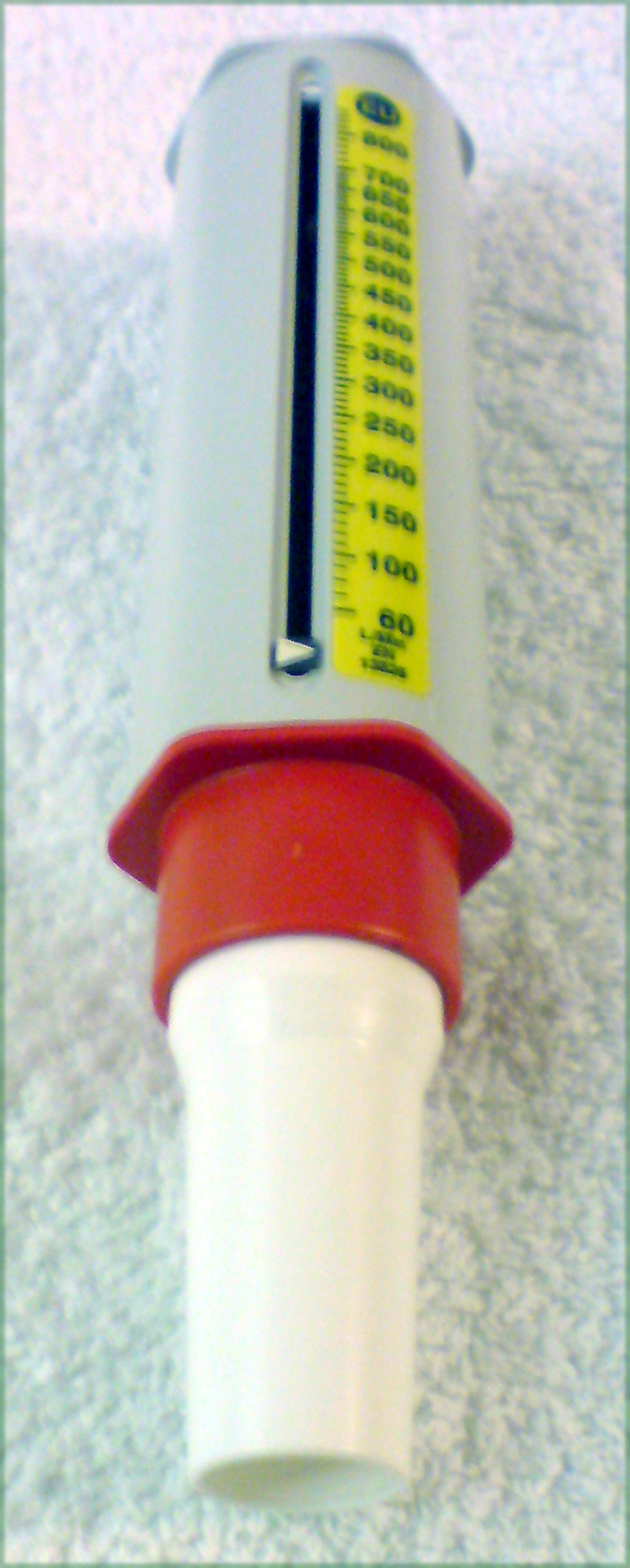
Coker and colleagues describe that patients with chronic obstructive pulmonary disease with resting saturation equal to or above 95, little breathlessness in daily life and no significant drop in saturation on the walk test should be able to travel without oxygen on board (Coker and colleagues, 2022). The authors note that spirometry and the walk test are usually faster and more available than the hypoxia test, and that the results often already exist in routine follow-up.
The hypoxia test
The hypoxia test simulates, in the laboratory, the lower-oxygen air of the cabin and observes how the patient's saturation responds. Coker and colleagues indicate considering the test in patients with lower resting saturation, significant breathlessness in daily life or a drop in saturation on walking, in people with severe asthma, in some interstitial diseases and in those who have or may have carbon dioxide retention (Coker and colleagues, 2022). In the scene, the recent worsening and the lower saturation place the patient in this group.
Carbon dioxide also matters
Coker and colleagues note that, in restrictive diseases and in people with weakness of the respiratory muscles, the main risk is respiratory failure from inadequate ventilation (Coker and colleagues, 2022). In these patients, giving oxygen without assessing carbon dioxide retention can be dangerous. For this reason, the decision about oxygen on board depends on understanding the underlying disease, and not only on looking at saturation.
Thrombosis and immobility
The guidance from the Aerospace Medical Association notes that sitting for long periods can worsen leg swelling, cramps and other circulation problems, and that immobility is a risk factor for deep vein thrombosis (Aerospace Medical Association, 2014). Coker and colleagues include pulmonary embolism or thrombosis in the last six weeks, and increased risk of thrombosis, among the situations that call for assessment before the flight (Coker and colleagues, 2022). The authors note that patients with chronic obstructive pulmonary disease have a higher risk of thrombosis, especially after a worsening.


Transmissible diseases
The association's guidance recommends that people with a significant transmissible disease postpone the trip until they are no longer contagious, and cites tuberculosis, measles and chickenpox as a special concern (Aerospace Medical Association, 2014). People with tuberculosis should have received or be receiving adequate treatment and no longer be contagious before flying. In the consultation, this widens the question: besides the risk to the patient, is there a risk to the other passengers?
Oxygen on board
Coker and colleagues describe that, with the use of portable concentrators approved for flight, the old oxygen flow limit is no longer an automatic impediment, and the maximum flow now depends on the equipment available (Coker and colleagues, 2022). The authors recall, however, that pulse systems can make it hard to know how much oxygen reaches the patient and that talking, sleeping and breathing through the mouth change the effect.
Planning with the airline
The Aerospace Medical Association guidance recommends that, when there is doubt about fitness to fly or requests for special assistance, the doctor seek the airline's information, since it often has its own medical service or a designated consultant (Aerospace Medical Association, 2014). Some airlines require a certificate that the passenger is stable and fit to fly. Oxygen on board, wheelchairs and assistance at the airport need to be arranged in advance.
The destination and the return
Coker and colleagues recall that the choice of stopovers and destination determines air quality, altitude and the medical services available, and that time away from home and the return trip also enter the assessment (Coker and colleagues, 2022). The authors suggest that patients with serious illness carry a copy of the care plan and the clinic's letters, including in digital format. The WHO gathers general guidance on its travel and health page.
Trapped gas in the body: pneumothorax and surgery
At cabin altitude, gas trapped inside the body expands. The Aerospace Medical Association guidance recalls that intestinal gas increases in volume at cabin altitude and that, after abdominal surgery, the bowel slows down for a few days, with a risk of sutures tearing, bleeding and perforation (Aerospace Medical Association, 2003). The association recommends advising against flying for one to two weeks after open abdominal surgery and recalls that keyhole surgery is less restrictive.
Pneumothorax
Coker and colleagues recommend that passengers with pneumothorax not fly until seven days after complete resolution confirmed on a chest X-ray (Coker and colleagues, 2022). People at higher risk of a new pneumothorax, such as those with cystic lung disease, should be advised about this risk. After thoracic surgery, the authors recommend listening to the surgeon and recall that the interval may be a few weeks, shorter when the trip is essential.
Other surgical situations
The Aerospace Medical Association guidance recalls that general anesthesia, by itself, does not contraindicate flying, but that postoperative patients consume more oxygen and may be anemic (Aerospace Medical Association, 2003). The association describes the combination of advanced age, anemia and coronary disease after surgery as especially risky, and suggests oxygen on board if the trip is necessary. Gas inside the skull, after trauma or a procedure, also calls for confirmation that it has been absorbed before the flight.
Common situations: a table for the consultation
The table below summarizes, in a teaching format, situations common in the consultation before the flight and what usually weighs on the decision. It simplifies a complex topic and does not replace current guidelines or an expert's assessment.
| Situation | What weighs on the decision | Frequent approach |
|---|---|---|
| Stable lung disease, good saturation and good walking | Little expected drop in oxygen | Trip without oxygen, with a care plan |
| Lung disease with lower saturation or recent worsening | Risk of hypoxia on board | Specialist assessment and hypoxia test |
| Recent pneumothorax | Expansion of air in the chest | Wait for confirmed resolution and the recommended interval |
| Recent open abdominal surgery | Gas expansion in the bowel | Postpone the flight for a few days or weeks |
| Recent thoracic surgery | Residual air, pain, infection | Listen to the surgeon before clearing the patient |
| Unstable disease of any kind | Risk of worsening far from help | Postpone until stable or plan medical transport |
When the flight is for treatment
The guidance from the Aerospace Medical Association notes that, in many cases, the passenger is flying precisely because of the illness, such as returning home after a problem abroad or seeking treatment elsewhere (Aerospace Medical Association, 2014). The association recommends treating these situations as medical transport, because the risk of complication is higher, with attention to ground transport, medications and, sometimes, a medical escort.
What happens when something goes wrong
Peterson and colleagues analyzed medical emergency calls made during flights to a medical center supporting airlines (Peterson and colleagues, 2013). The most common problems were fainting or near fainting, respiratory symptoms and nausea or vomiting. Few cases led to diversion of the aircraft or death, but about 1 in 4 passengers was taken to a hospital after the flight. A good assessment before boarding does not eliminate these events, but it helps prepare the patient and the plan.
Guidelines in flux
Somsen and colleagues argue for updating fitness-to-fly guidance in patients with cardiovascular disease and point out that different standards coexist today (Somsen and colleagues, 2026). For the clinician, this reinforces the importance of checking the most recent version of the guidance and the airline's rules before giving an answer. The post on clinical decision-making shows how to decide when the evidence is limited.
The biases that get in the way of the answer
The question "can I fly?" is rarely answered badly for lack of knowledge. It is usually answered badly because of predictable habits and biases:
- Assessing the patient only at rest, without thinking about the effort of the trip.
- Trusting a good oxygen value before the flight as a guarantee.
- Forgetting to ask about pneumothorax, surgery or recent thrombosis.
- Answering yes or no without planning oxygen, assistance and a care plan.
- Leaving aside the return trip and the destination.
Croskerry describes anchoring and premature closure among the most frequent cognitive errors in diagnosis (Croskerry, 2003). The post on the diagnostic pause shows how a short moment of checking helps to notice what was left out. The post on calibration of confidence helps to remember that an overly confident answer is also a risk.
What to ask before clearing the patient
Some questions organize the consultation and help prepare the trip:
- How long is the flight, are there stopovers and what is the destination?
- Is the disease stable, or has there been worsening, hospitalization or a recent change of medication?
- Has there been pneumothorax, surgery, thrombosis or embolism in recent weeks?
- How does the patient feel when walking faster or climbing stairs?
- Has the patient had problems on previous flights?
- Will the patient need oxygen, a wheelchair or assistance at the airport?
Back to the scene
In the opening scene, the doctor who turns the question into an organized assessment does not answer on the spot. She reviews the stability of the disease, measures saturation, does a walking test and, given the recent worsening and the lower saturation, requests a specialist evaluation and a hypoxia test. She talks about oxygen on board, assistance at the airport, a care plan for the destination and the return, and agrees on a date to decide. She also asks about thrombosis, advises the patient to move around and drink fluids during the flight and reminds her that, if there is further worsening before the trip, the assessment must be redone. The reasoning starts in the environment the patient is going to, not only in the office. The final answer is a travel plan, built together with the patient and reviewed before boarding.
How NEXO helps train this reasoning
In NEXO, the case of the day is fictional, with a real clinical presentation and up to six progressive clues. You propose a diagnosis by looking for the ICD-10 code and receive a proximity response at five levels, which shows whether your guess landed on the exact code, the same category, the same group, the same chapter or a different chapter. This format connects with the theme of this text: a clue about the environment can change the reading of a picture that seemed stable.
To use the case of the day as training, try three habits. Before each guess, ask where the patient was when the symptoms started. When an underlying disease appears, ask how it would react to a different environment. After the result, note which clue would have anticipated the diagnosis.
Three exercises with cases
Change the environment. In each case, imagine the same patient on a plane or in a high-altitude region and see what changes.
Look at the reserve. Reread a case asking how much reserve the patient had before the worsening.
Plan the aftermath. Faced with a diagnosis, ask what the patient needs to travel, return home or continue treatment.
The post about learning based on clinical cases shows how cases help fix patterns that rarely appear in daily practice.
The limits on using the game are described on the NEXO economy page. If you research the teaching of clinical reasoning, the page for researchers explains how to get in touch. Professionals who write or review cases find information on curation and on creators, and institutions can learn about the proposal on the partnerships page.
Frequently asked questions
Why can flying be a problem for people with lung disease?
Because the cabin has less oxygen than air at sea level, and those who already have little reserve can have a significant drop in saturation.
Who needs an assessment before flying?
People with severe respiratory or heart disease, recent worsening or hospitalization, home oxygen use, pneumothorax, recent surgery or thrombosis, or problems on previous flights.
What is the hypoxia test?
It is a test that simulates the lower-oxygen air of the cabin and shows how the patient's saturation responds, helping to decide about oxygen on board.
How long should you wait after a pneumothorax?
The clinical statement cited recommends waiting at least seven days after complete resolution confirmed on X-ray, with special guidance for those at risk of recurrence.
Can you fly after surgery?
It depends on the surgery. Open abdominal and thoracic surgeries require longer intervals, and the surgeon's opinion should be sought.
How can you get oxygen on board?
By arranging it in advance with the airline, which usually has a medical service and its own rules for portable concentrators.
Final checklist
- I checked whether the condition is stable.
- I asked about flight duration, stopovers, destination and return.
- I assessed saturation at rest and, when indicated, on exertion.
- I asked about recent pneumothorax, surgery and thrombosis.
- I indicated a hypoxia test or specialized assessment when necessary.
- I planned oxygen, assistance and a care plan in advance.
Want to practice reasoning with progressive clues? Play the case of the day.
References
- Aerospace Medical Association. Fitness to fly and medical clearances. Medical guidelines for airline travel. 2014. Document.
- Aerospace Medical Association. Stresses of flight. Medical guidelines for airline travel. 2014. Document.
- Aerospace Medical Association. Surgical conditions. Medical guidelines for airline travel. 2003. Document.
- Akerø A, Christensen CC, Edvardsen A, et al. Hypoxaemia in chronic obstructive pulmonary disease patients during a commercial flight. Eur Respir J. 2005. PMID 15802350.
- Coker RK, Armstrong A, Church AC, et al. BTS Clinical Statement on air travel for passengers with respiratory disease. Thorax. 2022. PMID 35228307.
- Croskerry P. The importance of cognitive errors in diagnosis and strategies to minimize them. Acad Med. 2003. PMID 12915363.
- Humphreys S, Deyermond R, Bali I, et al. The effect of high altitude commercial air travel on oxygen saturation. Anaesthesia. 2005. PMID 15819766.
- Peterson DC, Martin-Gill C, Guyette FX, et al. Outcomes of medical emergencies on commercial airline flights. N Engl J Med. 2013. PMID 23718164.
- Somsen YBO, Hodkinson PD, Nicol ED. One sky, many standards: a call to update the fitness to fly guideline for passengers with cardiovascular disease. Heart. 2026. PMID 41974562.
- World Health Organization. Travel and health. Information page.