Sudden death in sport: causes, incidence and prevention



Table of contents
- What is called sudden death in sports
- How frequent it is: the numbers and why they vary
- Causes change with age
- The athlete over 35 and the street runner
- Warning signs, screening and its limits
- The chain of survival at the scene of the event
- After the event: investigating and caring for the family
- How NEXO helps train this reasoning
- Frequently asked questions
- Take-home messages
- References
A 17-year-old soccer player collapses on the field in the middle of a training session, without colliding with anyone. The coach thinks he fainted from heat and turns him on his side. The young man makes some movements that look like a seizure and breathes irregularly. The minutes that follow decide whether he will survive, and the answer depends less on the hospital than on what happens there, at the edge of the field.
Sudden death is the leading cause of death in athletes during exercise (Asif, 2017). It is rare, and that is why it catches everyone by surprise: the coach, the teammates, the family and the doctor who only hears the story afterwards. At the same time, most of these events happen in front of witnesses, in places where the response can be trained in advance.
This text shows what causes cardiac arrest in sports at each age group, why incidence numbers vary so much and how the chain of survival at the scene changes the outcome.
Key points
- Incidence estimates in young athletes range from 1 in nearly a million to 1 in 3,000 athlete-years, and the difference comes mainly from the method of each study (Asif, 2017).
- In young athletes, cardiomyopathies, coronary artery anomalies and death with a normal autopsy predominate (Peterson, 2021).
- In marathon and half-marathon runners, coronary artery disease has become the most frequent cause among cases with a defined cause (Kim, 2025).
- Men have a risk several times higher than women at all ages (Pelliccia, 2020).
- Time to shock is the main determinant of survival, which falls with each minute of delay (Rothmier, 2009).
- A rehearsed emergency action plan, with an accessible defibrillator, is part of prevention as much as screening (Baggish, 2025).
Summary
- What is called sudden death in sports
- How frequent it is: the numbers and why they vary
- Causes change with age
- The athlete over 35 and the street runner
- Warning signs, screening and its limits
- The chain of survival at the event site
- After the event: investigating and caring for the family
- How NEXO helps train this reasoning
- Frequently asked questions
- Take-home messages
What is called sudden death in sports
Studies speak of sudden cardiac arrest and sudden cardiac death. Arrest is the unexpected collapse due to a cardiac cause in which resuscitation or defibrillation is performed, whatever the outcome; death is the subgroup in which resuscitation fails (Pelliccia, 2020). Counting only deaths hides the survivors, who today are a large part of cases.
This difference matters because the outcome depends heavily on the response. In a four-year American registry, almost half of the 331 confirmed arrest events in young athletes ended in survival (Peterson, 2021). If the study considers only deaths, a disease that is usually successfully resuscitated seems rarer than it is.
The event can also occur outside exertion. In a registry of cardiomyopathies in young athletes, the authors separated events during exercise from those that occurred at rest, during sleep or up to one hour after exertion (Petek, 2026). The underlying disease is present all the time; intense exercise acts as a trigger, and that is why sudden death is described as the result of intrinsic heart diseases triggered by the physiological demands of vigorous exertion (Asif, 2017).
Collapse in sports has a differential
Athletes collapse for many reasons: exhaustion, heat, hypoglycemia, hyponatremia, trauma and vasovagal fainting after the finish. Sudden collapse without trauma, with the athlete unresponsive, is cardiac arrest until proven otherwise, and care begins with that hypothesis (Rothmier, 2009). Other diagnoses are considered after the rhythm has been checked by the defibrillator.
The logic is the same as in differential diagnosis in any setting: the most dangerous and most treatable hypothesis comes first. Heat is a real and serious diagnosis, described in the text on extreme heat and heatstroke, but attributing a cardiac collapse to heat costs minutes that do not come back.
How frequent it is: the numbers and why they vary
Estimates of incidence in young athletes range from 1 in 917,000 to 1 in 3,000 athlete-years, depending on study design and population (Asif, 2017). The European sports cardiology guideline describes the same range, from nearly 1 in a million to 1 in 5,000 athletes per year, and attributes the difference to inconsistent methodology (Pelliccia, 2020).
Two factors explain much of the variation. The numerator depends on how cases are found: news searches miss events, and registries that cross several sources find more. The denominator depends on how many athletes are assumed to exist and how many hours they train (Asif, 2017). Studies with more rigorous methods arrive at about 1 in 50,000 athlete-years among university students and from 1 in 50,000 to 1 in 80,000 in high school (Asif, 2017).
Who is at higher risk
Risk is unequal. In the American registry, the rate in high school was 4.6 times higher in men than in women, and the highest annual rate was among Black basketball players in the first university division, about 1 in 2,087 athlete-years (Peterson, 2021). The European guideline describes a male-to-female ratio of 3 to 10 to 1 in young people and an even larger difference in older recreational athletes (Pelliccia, 2020).
In England, teenage football players followed after screening had an incidence of 1 sudden cardiac death in 14,794 person-years (Malhotra, 2018). The number is much higher than older estimates and shows how careful counting changes the perception of the problem.
These differences between groups are the starting point of the reasoning, and the pretest probability of heart disease in an athlete depends on age, sex, sport and family history. Skin color appears in the statistics as a group marker, and studies still debate how much of it reflects genetics, access to care or other factors.
Causes change with age
The most likely cause of a cardiac arrest in sport depends on who collapsed. In young people, diseases of the heart muscle, the coronary arteries and the electrical system predominate. After age 35, atherosclerotic coronary disease takes the lead (Pelliccia, 2020).
| Age group | Most cited causes | Source |
|---|---|---|
| Elementary school | Coronary artery anomalies with a larger role than expected | Peterson, 2021 |
| High school | Hypertrophic cardiomyopathy, idiopathic left ventricular hypertrophy, coronary anomalies, normal autopsy | Peterson, 2021 |
| University and professional | Cardiomyopathies in almost half of cases | Peterson, 2021 |
| Young people in general, autopsy series | Structurally normal heart, arrhythmic death with no cause found | Asif, 2017 |
| Football, adults and young people worldwide | Coronary disease among the most frequent causes; rare myocarditis | Ukaj, 2025 |
| Marathon and half marathon | Coronary artery disease ahead of hypertrophic cardiomyopathy | Kim, 2025 |
| Any age, contact sports | Commotio cordis, from a blow to the chest | Salzillo, 2025 |
Cardiomyopathies
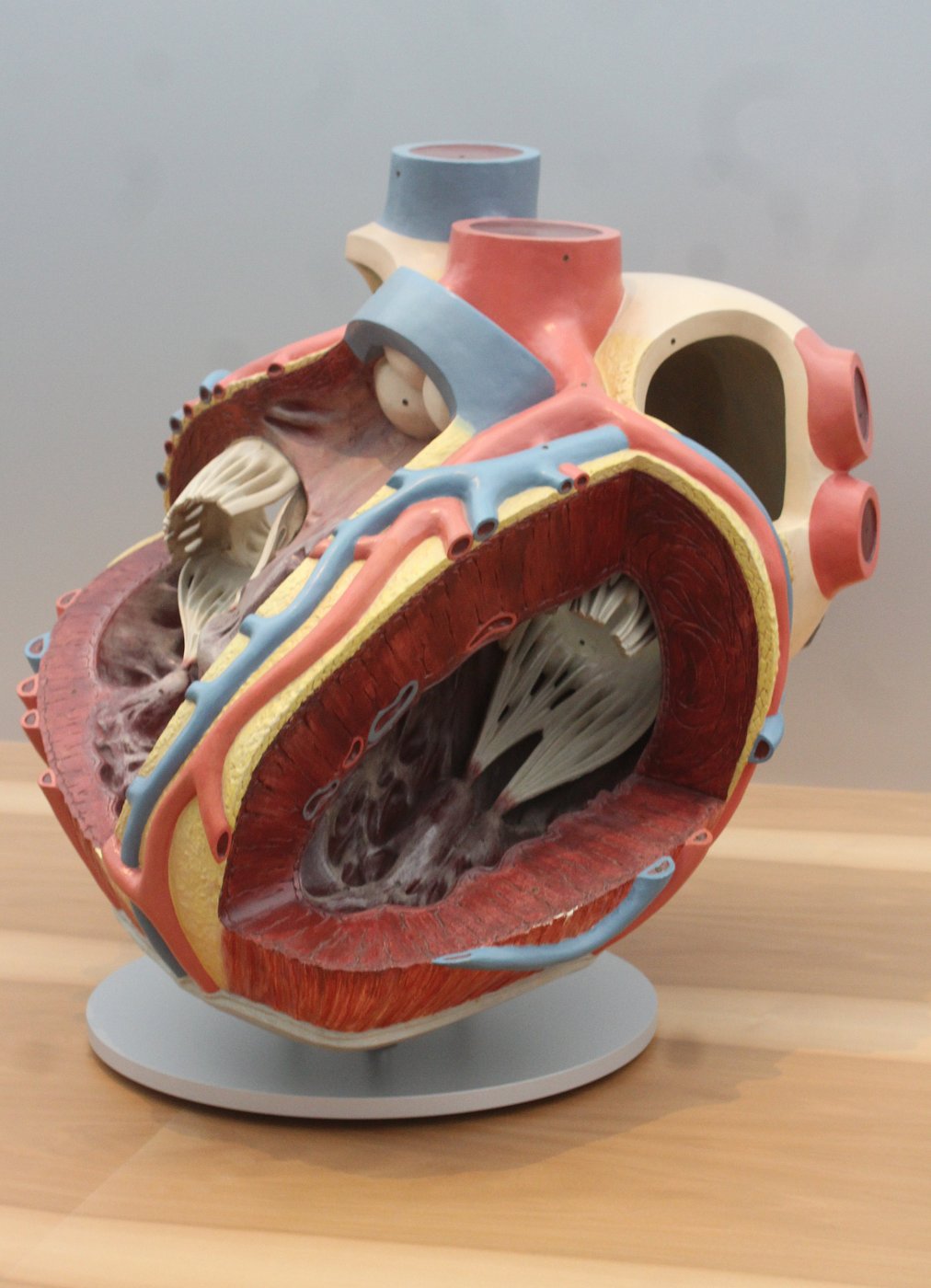
In the American registry, hypertrophic cardiomyopathy was the most common cause among diagnosed cases, followed by idiopathic left ventricular hypertrophy, whose boundary with athlete's heart is still debated (Peterson, 2021). In a study focused on cardiomyopathies, they accounted for 129 of 454 events with a defined cause, and most were hypertrophic; arrhythmogenic cardiomyopathy and other forms completed the group (Petek, 2026).
Events from cardiomyopathy occurred across a wide age range and in various sports settings, and about 35 of every 100 athletes survived (Petek, 2026). This finding supports the idea that the on-site response works for all causes, including structural ones.
Coronary anomalies and normal autopsy
Anomalies of coronary artery origin had a larger role than expected among younger athletes (Peterson, 2021). They usually show no change on resting ECG, which limits screening based only on the tracing; the FIFA consensus accepts echocardiography as a complement when there is image quality and experience to see the coronary origins (Baggish, 2025).
In more complete series of athletes, non-athletes and young military personnel, the most common autopsy finding was a structurally normal heart (Asif, 2017). In these cases, suspicion falls on inherited electrical diseases, and family evaluation becomes important.
Myocarditis and coronary disease
Myocarditis appears in the series as a possible cause, and the pandemic raised the question of an increase in cases. In the FIFA worldwide registry, the number of cardiac arrests in soccer players was similar between the pandemic period and an equivalent earlier period, 380 and 454 events, and myocarditis was rare in both (Ukaj, 2025). Coronary disease, on the other hand, accounted for a large share of diagnoses in the same registry (Ukaj, 2025).
The athlete over 35 and the street runner
Major running events bring together millions of amateurs, many over 35. In the United States, between 2010 and 2023, more than 29 million people finished marathons and half marathons, and there were 176 cardiac arrests during the races (Kim, 2025). The incidence was 0.54 per 100,000 participants, similar to that of the 2000 to 2009 period (Kim, 2025).
What changed was the outcome. Case fatality fell from 71 to 34 per 100 arrests, and mortality from arrest fell by half (Kim, 2025). The authors attribute the improvement to emergency planning at the races, with immediate access to defibrillation. The cause also changed: among cases with a defined cause, coronary artery disease surpassed hypertrophic cardiomyopathy (Kim, 2025).
In Paris, a ten-year registry with 1.2 million participants found 17 arrests, almost all in men, with survival of 88 per 100 thanks to medical teams positioned along the course (Chocron, 2026). The arrests clustered in the last kilometer of the shorter races, when men sped up more often than women (Chocron, 2026). For those organizing the race, this indicates where to position defibrillators and teams.
Evaluation before intense exertion
For people over 35, the European guideline proposes estimating cardiovascular risk before starting high-intensity exercise. Those at low to moderate risk can take part in recreational sports without further evaluation; sedentary people and those at high risk who plan intense training should be evaluated beforehand (Pelliccia, 2020). The approach to established coronary disease is individual and considers ischemia, ventricular function and arrhythmias.
The question is similar to the one aviation medicine asks about pilots: what is the risk of a sudden event at a critical moment, as in the one in one hundred per year rule. There too the small plaque can rupture during exertion, and the exercise test alone has limits.
Warning signs, screening and its limits
Screening starts with conversation: symptoms and family history guide who needs further tests.
Warning signs before the event
Some athletes have symptoms before the arrest. The FIFA consensus lists, in the personal history, unexplained sudden collapse, seizure or fainting outside the vasovagal pattern and collapse soon after exertion, as well as palpitations of sudden onset (Baggish, 2025). In the family history, unexplained sudden death or cardiac arrest in first-degree relatives before age 50 counts (Baggish, 2025).
Fainting during exertion is the most important sign. It is distinct from fainting soon after the finish, which is more common and usually benign, and the reasoning is the same as described in the text about signs that point to a cardiac cause in syncope. An athlete who faints while running needs a complete cardiology evaluation, even if young and well trained.
What screening finds and what it lets through
Pre-participation screening seeks to find the disease before the event. The FIFA consensus for young players recommends personal history, family history, physical examination and a 12-lead ECG, starting at age 12 and repeated every 2 to 4 years until age 18 (Baggish, 2025). The same document requires every program to have the structure to investigate and interpret abnormal findings.
Screening finds disease, but it has clear limits. In the English cohort of 11,168 adolescent soccer players screened with a questionnaire, physical exam, ECG and echocardiogram, there were 8 sudden cardiac deaths during follow-up, and 6 of those athletes had a normal screening (Malhotra, 2018). Nearly all the deaths were from cardiomyopathy, and the average time between screening and death was almost seven years (Malhotra, 2018).
These data explain why cardiomyopathies can appear after a normal exam in adolescence and why repeated screening is proposed. They also show that screening alone leaves cases out, and that the response to collapse must be ready even on the team where everyone was examined. The evaluation strategy and the reading of the ECG are the subject of other texts in this series.
Excess also has a cost. Borderline findings can trigger cascades of tests and unwarranted exclusion, and quaternary prevention reminds us that every extra test calls for a clear question.
The chain of survival at the scene of the event
The main determinant of survival in cardiac arrest is the time between collapse and defibrillation, and survival falls by 7 to 10 out of every 100 for each minute of delay (Rothmier, 2009). In locations with public access defibrillation, survival reaches 41 to 74 out of every 100 when there is resuscitation by a bystander and a shock within 3 to 5 minutes (Rothmier, 2009).
The sequence is simple to describe and hard to carry out under stress. Recognize the arrest, call for help, start chest compressions and apply the defibrillator as early as possible (Rothmier, 2009). An American coalition proposes three goals for school sports: a defibrillator within 1 to 3 minutes of every practice location, an emergency plan rehearsed and updated every year, and training of coaches in resuscitation and use of the defibrillator (Petek, 2026).
The emergency action plan
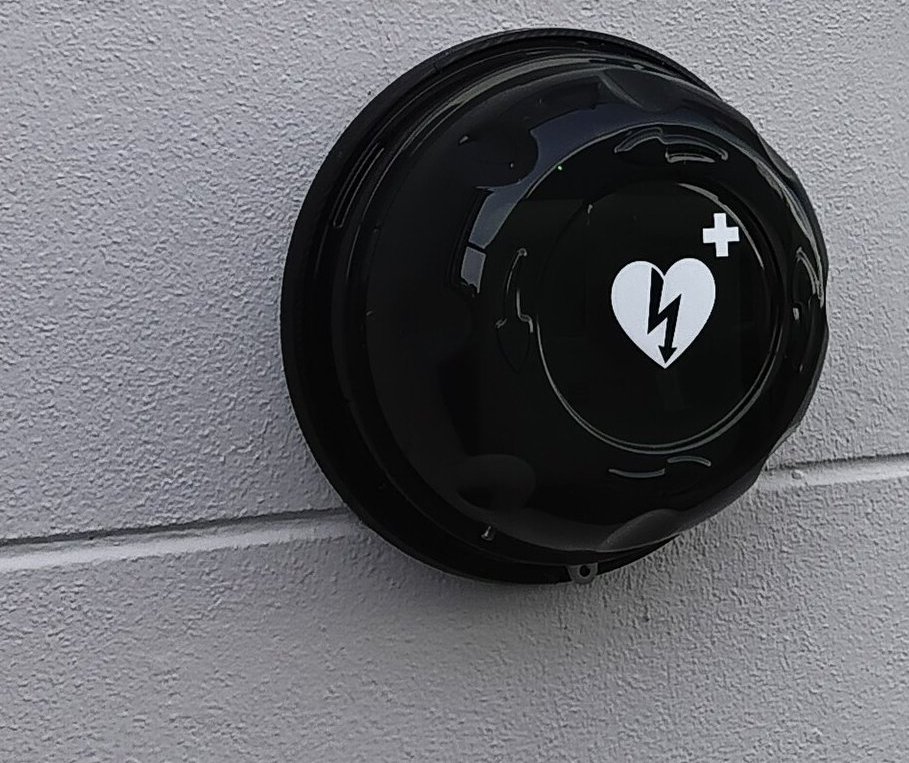
The FIFA consensus recommends that every team, club and organization with young players have and practice an emergency action plan, with training to recognize the arrest, early resuscitation and access to a defibrillator, and, ideally, advanced support and care after the arrest (Baggish, 2025). The plan defines who calls the ambulance, who fetches the device, where the team enters and where the defibrillator is kept.
Rehearsing the plan reveals problems that paper hides: the device locked in a room, the expired battery, the closed gate. The experience of marathons shows the effect of a well-built plan, with a fatality rate comparable to that of locations with public access defibrillators (Kim, 2025).
Why collapse is mistaken for a seizure
Right after the arrest, the athlete may have movements that look like a seizure and agonal breathing, irregular and gasping. These signs lead laypeople and professionals to believe the person is breathing and has a pulse, and they delay resuscitation (Rothmier, 2009). Training must teach that a fallen, unresponsive athlete with abnormal breathing is in arrest.
This bias, of framing the picture within the most familiar hypothesis, appears in other emergencies. In drowning and in lightning injuries, resuscitation also follows its own rules that go against intuition.
Commotio cordis: the impact that stops the heart
Commotio cordis is the arrest caused by a non-penetrating impact to the chest, with no prior heart disease. The blow, if it lands on the ascending phase of the T wave, triggers ventricular fibrillation (Salzillo, 2025). It is more common in male adolescents and in sports with a hard ball or contact, such as baseball, ice hockey, lacrosse and, increasingly, soccer and rugby (Salzillo, 2025).
The response is the same as for any arrest. Defibrillation within three minutes after the impact can bring survival to more than 70 out of every 100, according to the review (Salzillo, 2025). Chest protectors are mandatory in some risk positions, but their effectiveness is still debated (Salzillo, 2025).
The most common mistake is treating the athlete as a victim of simple chest trauma. A player who falls right after taking a ball to the chest and becomes unresponsive needs a defibrillator, not ice.
After the event: investigating and caring for the family
Survivors need a full investigation of the cause, and those who die need an autopsy performed by a pathologist with experience in the heart. First-degree relatives of young people who died suddenly have an increased risk of cardiomyopathy and ventricular arrhythmias, and their evaluation is part of care (Asif, 2017). Molecular autopsy, cited among the recent advances in the registries, helps clarify cases with a normal heart (Kim, 2025). The family is a population at risk from that moment on.
Return to sport for those who survived is decided case by case, with the athlete, after the cause and the treatment have been clarified. The European guideline supports shared decision-making, with detailed information about the risks (Pelliccia, 2020). In extreme scenarios, such as cardiac arrest in microgravity, the search for reversible causes follows the same logic.
A script for the case from the scene
Returning to the 17-year-old player, the script has clear steps. First, recognize the arrest: collapse without trauma, unresponsive, abnormal breathing. Second, call the emergency service and ask for the defibrillator. Third, start chest compressions without waiting. Fourth, apply the defibrillator as soon as it arrives and follow the device's instructions (Rothmier, 2009).
After resuscitation, the reasoning returns to the causes of that age: cardiomyopathy, coronary anomaly, channelopathy, myocarditis. The investigation, the conversation with the family and the decision about return to sport come with time, but survival was decided in the first minutes.
How NEXO helps train this reasoning
In NEXO, the case of the day is fictional, with a real clinical presentation and up to six progressive clues, and you propose the diagnosis by searching for the ICD-10 code. The format helps practice the order of hypotheses, starting with the most serious.
The limits of using the game are described on the NEXO Economy page. If you research the teaching of clinical reasoning, the page for Researchers explains how to get in touch. Professionals who write or review cases find information on Curator and on Creators, and institutions can learn about the proposal on the partnerships page. To practice finding the code, see how the ICD-10 code is put together.
Frequently asked questions
Is sudden death in sport common?
It is rare, with estimates between 1 in nearly a million and 1 in 3,000 athlete-years depending on the method and the population (Asif, 2017). Some groups, such as men and basketball players, have a higher risk (Peterson, 2021).
What is the most common cause in young athletes?
In the American registries, hypertrophic cardiomyopathy was the most cited, followed by idiopathic ventricular hypertrophy, coronary anomalies and death with a normal autopsy (Peterson, 2021).
And in older amateur runners?
In marathons and half marathons, coronary artery disease was the most frequent cause among cases with a defined cause (Kim, 2025).
Does a normal screening test guarantee safety?
It guarantees little. In the English cohort, 6 of the 8 players who died had had a normal screening (Malhotra, 2018), and that is why the emergency plan is part of prevention.
How much time is there to use the defibrillator?
Every minute counts, and survival falls by 7 to 10 out of every 100 with each minute of delay (Rothmier, 2009). The proposed goal is to have the device within 1 to 3 minutes of the location (Petek, 2026).
Do convulsion-like movements rule out cardiac arrest?
They rule it out very little. Brief movements and agonal breathing are frequent right after the arrest and delay resuscitation when they are mistaken for a seizure (Rothmier, 2009).
Can a blow to the chest stop the heart?
It can, in commotio cordis, when the impact coincides with a vulnerable phase of the cardiac cycle; rapid defibrillation is the treatment (Salzillo, 2025).
Take-home messages
- Sudden death is the leading cause of death in athletes during exercise, despite being rare.
- Incidence figures vary widely because studies count cases and athletes in different ways.
- In young people, cardiomyopathies, coronary anomalies and death with a normal autopsy predominate; above age 35, coronary disease.
- Men, basketball players and some groups of athletes have a higher risk.
- Fainting during exertion and a family history of sudden death call for evaluation before return.
- Screening finds disease, but leaves cases out; the emergency plan is part of prevention.
- A collapsed, unresponsive athlete with abnormal breathing is in cardiac arrest until proven otherwise: compressions and a defibrillator without delay.
Play the case of the day on NEXO.
References
- Peterson DF, Kucera K, Thomas LC, et al. Aetiology and incidence of sudden cardiac arrest and death in young competitive athletes in the USA: a 4-year prospective study. Br J Sports Med. 2021. PMID 33184114. DOI 10.1136/bjsports-2020-102666.
- Asif IM, Harmon KG. Incidence and Etiology of Sudden Cardiac Death: New Updates for Athletic Departments. Sports Health. 2017. PMID 28452637. DOI 10.1177/1941738117694153.
- Kim JH, Rim AJ, Miller JT, et al. Cardiac Arrest During Long-Distance Running Races. JAMA. 2025. PMID 40159341. DOI 10.1001/jama.2025.3026.
- Chocron R, Laurenceau T, Cezard P, et al. Characteristics of sudden cardiac arrest during endurance racing: a decade of the Paris registry. Europace. 2026. PMID 41662626. DOI 10.1093/europace/euaf313.
- Pelliccia A, Sharma S, Gati S, et al. 2020 ESC Guidelines on sports cardiology and exercise in patients with cardiovascular disease. Eur Heart J. 2021. PMID 32860412. DOI 10.1093/eurheartj/ehaa605.
- Baggish AL, Borjesson M, Pieles GE, et al. Recommendations for cardiac screening and emergency action planning in youth football: a FIFA consensus statement. Br J Sports Med. 2025. PMID 40180446. DOI 10.1136/bjsports-2025-109751.
- Rothmier JD, Drezner JA. The role of automated external defibrillators in athletics. Sports Health. 2009. PMID 23015850. DOI 10.1177/1941738108326979.
- Salzillo C, Marzullo A. Commotio Cordis in Sudden Cardiac Death in the Young: A State-of-the-Art Review. Rev Cardiovasc Med. 2025. PMID 41089808. DOI 10.31083/RCM43357.
- Petek BJ, Weller SL, Churchill TW, et al. Clinical Characteristics and Emergency Response to Sudden Cardiac Arrest/Death Secondary to Cardiomyopathies in Young Athletes. JACC Adv. 2026. PMID 42593395. DOI 10.1016/j.jacadv.2026.103093.
- Ukaj A, Meyer T, Egger F. Has COVID-19 led to more sudden cardiac deaths in football? Clin Res Cardiol. 2025. PMID 39585373. DOI 10.1007/s00392-024-02569-1.
- Malhotra A, Dhutia H, Finocchiaro G, et al. Outcomes of Cardiac Screening in Adolescent Soccer Players. N Engl J Med. 2018. PMID 30089062. DOI 10.1056/NEJMoa1714719.