The Flexner report and the history of medical education
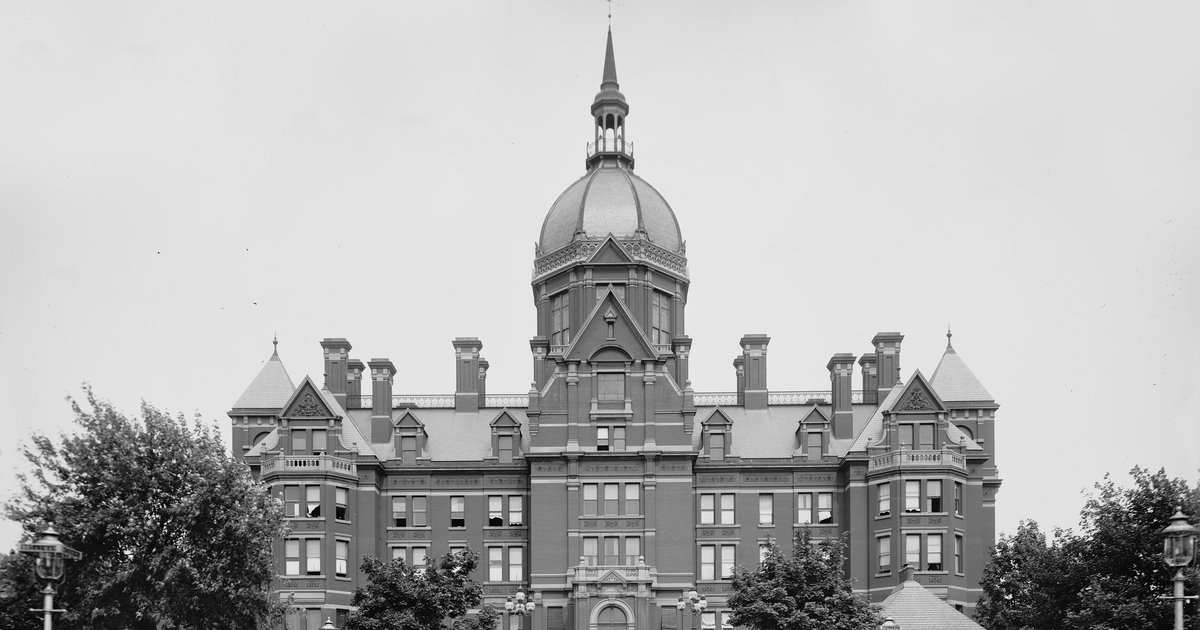
Table of contents
Basic cycle with anatomy, physiology and biochemistry in the first years. Laboratories. University hospital. Professors who also do research. A requirement of prior education to enter. Almost everything a medical student takes for granted in the course has a history, and much of it goes through a document published in 1910 in the United States: the report by Abraham Flexner.
NEXO is a daily medical diagnosis game: one clinical case a day, six progressive clues, and ICD-10 proximity feedback across five levels.
More than a century later, the report is still cited as a milestone and as a target of criticism. This guide covers what Flexner found in medical schools, what changed after the report, what criticism the model received, how it reached Brazil and what of it is still present in your course.
Key points
- Flexner visited 155 medical schools in the United States and Canada between 1908 and 1910.
- The number of schools had already been falling before the report and fell even further in the following decade.
- Flexner relied on standards created earlier by medical associations and state boards.
- The model was criticized for giving little weight to public health and the community, although the report itself addressed them.
- The medical course in Brazil, with six years and a basic cycle followed by a clinical cycle, carries this influence.
Before the report
Too many schools, too little training
At the end of the 19th century, the United States had many small medical schools, several of them private and for-profit, without laboratories, without their own hospital and with minimal entrance requirements. A historical review recalls that most physicians of the time were not prepared to adopt recent advances in medicine because of weak training (Barzansky, 2010).
The reform had already begun
Flexner did not start the reform alone. In the 20 years before the report, the Illinois state board of health, the American Medical Association and the association of medical colleges had already evaluated schools with defined standards and identified many of the deficiencies (Barzansky, 2010). The number of schools had already been falling, from 160 in 1905 to 133 in 1910 (Barzansky, 2010).
The Johns Hopkins model
The school of medicine at Johns Hopkins University, in Baltimore, was the reference for the movement: it required prior university education, integrated teaching, research and its own hospital, and had professors dedicated to academic life. It was this model that Flexner took as the standard for the others.
What Flexner did
An educator, not a physician
Abraham Flexner was an educator, not a physician. The Carnegie Foundation for the Advancement of Teaching tasked him with evaluating the medical schools of North America. The report was published in 1910 under the title "Medical Education in the United States and Canada".
The visits
Flexner visited 155 medical schools in the United States and Canada between December 1908 and April 1910 (Barzansky, 2010). He relied heavily, but not only, on the standards already developed by the other organizations (Barzansky, 2010).
What the report contained
The report had two parts: a conceptual model of how modern medical education should work and a description of each school, with explicit praise and criticism (Barzansky, 2010). The central points of the model were a requirement of prior scientific education, teaching of the basic sciences in the laboratory, clinical practice in a hospital linked to the university and professors who also did research.
A philosophy behind it
A recent analysis recalls that Flexner devoted a large part of the report to a theoretical explanation of the kind of medicine he advocated, based on the pragmatist philosophy of John Dewey (Heinbokel, 2024). In this view, the physician would be at the same time investigator and practitioner, in an experimental paradigm with a social, cultural and ethical identity (Heinbokel, 2024). This part of the report is often forgotten by commentaries that focus only on the administrative impact.
What changed afterwards
Fewer schools, more requirements
In the decade following the report, the number of medical schools fell from 133 to 85, and the decision by state boards not to recognize weak schools sealed their fate (Barzansky, 2010). The schools that remained faced higher admission requirements (Barzansky, 2010).
The course we know
From there, the design that is still familiar took shape: basic sciences first, then clinical work in a university hospital; full-time faculty; the laboratory as a place of learning; research as part of the school's mission. In many countries, this design became synonymous with good medical training.
A century later
On the eve of the centennial, a review in the New England Journal of Medicine examined what had changed and what had stayed the same in American medical education one hundred years after the report (Cooke et al., 2006). The overall conclusion of these analyses is that the model brought scientific rigor and standardization, and that the health needs of the 21st century call for adjustments Flexner could not have foreseen.

Criticisms of the model
Public health forgotten?
Because the report championed scientific rigor and standardization, it came to be seen as paying little attention to public health (Maeshiro et al., 2010). A rereading done at the centennial shows that Flexner himself defended at least three principles linked to public health (Maeshiro et al., 2010). They were: the training, quality and number of physicians should meet the needs of the population; physicians have social obligations to prevent disease and promote health; and collaboration between academic medicine and public health benefits both (Maeshiro et al., 2010).
Too much hospital, too little community
The most repeated criticism is that the model concentrated teaching in the hospital and on disease, with little room for primary care, the community and the social determinants of health. Another point is the rigid separation between the basic cycle and the clinical cycle, which leaves students for years without contact with patients.
A new generation of reforms
In 2010, an international commission published in The Lancet journal revisited the training of health professionals at the centennial of the report (Frenk et al., 2010). The commission described three generations of reforms: the scientific one, inaugurated by Flexner; the problem-based one; and a third, focused on health systems and the needs of the population, which it proposed adopting (Frenk et al., 2010).
Expansion without regulation
In other contexts, Flexner's lesson is read the other way around: the lack of standards. An analysis of South Asia described weak regulation, little public funding and explosive growth of private schools, with stagnant curricula and little clinical exposure (Amin et al., 2010). The authors call for stronger accreditation standards, exactly as Flexner advocated in 1910 (Amin et al., 2010).
Flexner in Brazil and around the world
The six-year course
An analysis of Brazilian medical education recalls that, as in most European countries and under the influence of the Flexner report, the medical course in Brazil lasts six years (Antunes dos Santos and Nunes, 2019). The authors describe the recent shift from teaching centered on the teacher and the hospital to teaching centered on the student and the community, with wide variation between schools (Antunes dos Santos and Nunes, 2019).
Expansion and accreditation in Brazil
The same article describes the rapid growth in the number of medical schools in the country and the warning from professors about the risks of opening courses without time to prepare faculty, curricula and infrastructure (Antunes dos Santos and Nunes, 2019). In response, an independent accreditation system recognized by the World Federation for Medical Education was created (Antunes dos Santos and Nunes, 2019). Flexner's question, about which standards a school must meet, remains current.
The example of Korea
In South Korea, the debate over expanding medical school places has revived interest in the report, whose influence shaped the curriculum, accreditation and academic emphasis of the country's schools (Yoon and Myung, 2024). The authors frame the dilemma in terms that sound familiar: train more doctors for practical care or keep the emphasis on academic medicine (Yoon and Myung, 2024).
What this has to do with your course
What comes from Flexner
The basic science cycle with labs, the university hospital, the value placed on research and the requirement of minimum standards for schools all have direct roots in the model. When a professor insists that you understand the mechanism before memorizing the management, they are following a tradition the report helped establish.
What came later
Early immersion in the community, problem-based learning, integration between cycles and competency-based assessment, including the entrustable professional activities that have their own guide in this series, are responses to the model's limitations. They do not erase Flexner; they build on him.
What is not written down
Part of what the course teaches comes from values and habits that no curriculum records, such as the hierarchy between specialties or the prestige of the hospital over primary care. This hidden curriculum has its own guide in this series, and part of it is a legacy of the hospital-centered model.
How to use this history
Knowing where the curriculum comes from helps you understand why it is the way it is and what can change. When discussing reforms at your school, in student organizations or academic centers, it is worth asking what should be preserved from scientific rigor and what needs to open up to the community and the health system.
Clinical reasoning in the 21st century with NEXO
Flexner wanted doctors who thought like scientists in front of each patient. The NEXO case of the day is fictional, with a real clinical presentation, and the diagnosis arrives in up to six clues, with ICD-10 proximity showing how far each guess was. Forming hypotheses, testing them with new information and revising them is the same exercise, in a short format.
The guide what NEXO is explains the whole game, and the release of modes is on the NEXO Economy page.
If you coordinate a medical school, a student organization or a residency program and want cases for the curriculum, see NEXO Closer. Researchers in medical education can propose studies through NEXO Researcher. Doctors who review cases take part through NEXO Curator, and those who create health content on social media can take part through NEXO Creators.
Frequently asked questions
What was the Flexner Report?
An evaluation of medical schools in the United States and Canada, published in 1910, which proposed a model of medical education based on science and described each school visited (Barzansky, 2010).
Was Flexner a doctor?
He was an educator, not a doctor. The work was commissioned by the Carnegie Foundation.
Did the report close schools?
It accelerated a decline that was already under way; state boards, by denying recognition to weak schools, sealed their fate (Barzansky, 2010).
Did Flexner ignore public health?
A rereading of the report found public health principles in the text itself (Maeshiro et al., 2010).
Does the Brazilian course follow Flexner?
The six-year course bears this influence, and recent reforms seek more focus on the student and the community (Antunes dos Santos and Nunes, 2019).
What came after Flexner?
Problem-based reforms and, more recently, reforms focused on health systems (Frenk et al., 2010).
Brief timeline
- Late 19th century: many small, private schools with weak training.
- 1905 to 1910: associations and boards evaluate schools; their number begins to fall.
- 1908 to 1910: Flexner visits schools in the United States and Canada.
- 1910: publication of the report by the Carnegie Foundation.
- The following decade: weak schools close and requirements rise.
- Second half of the 20th century: problem-based learning and community immersion.
- 2010: centenary and reform proposals focused on health systems.
Want to practice the reasoning Flexner defended? Play the case of the day on NEXO.
References
- Barzansky B. Abraham Flexner and the era of medical education reform. Acad Med. 2010. https://pubmed.ncbi.nlm.nih.gov/20736546/
- Heinbokel T. The Pragmatist roots of scientific medicine: Reassessing Abraham Flexner's report on medical education. Stud Hist Philos Sci. 2024. https://pubmed.ncbi.nlm.nih.gov/39029139/
- Cooke M, Irby DM, Sullivan W, Ludmerer KM. American medical education 100 years after the Flexner report. N Engl J Med. 2006. https://pubmed.ncbi.nlm.nih.gov/17005951/
- Maeshiro R, Johnson I, Koo D, Parboosingh J, Carney JK, Gesundheit N, et al. Medical education for a healthier population: reflections on the Flexner Report from a public health perspective. Acad Med. 2010. https://pubmed.ncbi.nlm.nih.gov/20107345/
- Frenk J, Chen L, Bhutta ZA, Cohen J, Crisp N, Evans T, et al. Health professionals for a new century: transforming education to strengthen health systems in an interdependent world. Lancet. 2010. https://pubmed.ncbi.nlm.nih.gov/21112623/
- Amin Z, Burdick WP, Supe A, Singh T. Relevance of the Flexner Report to contemporary medical education in South Asia. Acad Med. 2010. https://pubmed.ncbi.nlm.nih.gov/20107364/
- Antunes dos Santos R, Nunes MDPT. Medical education in Brazil. Med Teach. 2019. https://pubmed.ncbi.nlm.nih.gov/31282823/
- Yoon HB, Myung SJ. The Impact and Implications of the Flexner Report on Medical Education in Korea. J Korean Med Sci. 2024. https://pubmed.ncbi.nlm.nih.gov/38859740/