What NEXO is and how the diagnosis game works
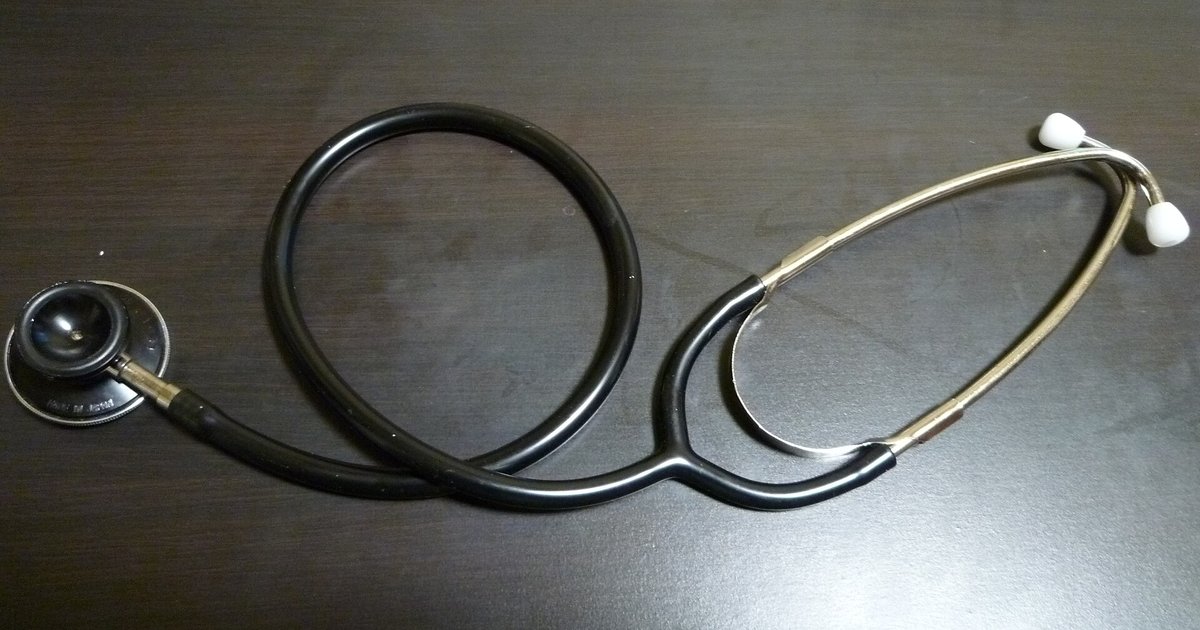
One clinical case a day, the same for everyone, up to six clues and an answer that shows how close you got in ICD-10. Anyone who plays Wordle understands the rule in a minute; what changes is what stays with you afterward. You open the case on the bus, read a complaint of chest pain, think of infarction, think of embolism, hold your answer for one more clue and only then write the diagnosis. The color that comes back tells you whether you got it right, whether you came close or whether you were thinking of another chapter of medicine.
NEXO is a daily medical diagnosis game: one clinical case a day, six progressive clues, and ICD-10 proximity feedback across five levels.
This text explains what NEXO is, how a round works, which modes exist today and how to start in the browser or on the iPhone. In each part where the game touches on a learning principle, such as testing memory, receiving feedback or mixing case types, the text shows what studies on that principle found, with a link to the source. The results cited are from studies on the methods, in the populations in which they were measured.
Key points
- In NEXO, you train diagnosis: you read up to six clues, one at a time, make a guess using ICD-10 and receive the proximity of your guess in five levels, from different chapter to exact ICD.
- The round follows the order of the investigation: the hypothesis is born early and is revised with each clue. The fewer clues you use, the more points you earn.
- Today there are five ways to play: Daily, Adrenaline, Archive, Continents and Multimedia. Streak, ranking and achievements follow your pace.
- The principles behind the format have their own studies: testing memory with feedback improves retention in health students and residents, and feedback pays off more when it carries information about the error.
- For research, to bring NEXO to your school, to review cases as a physician or to create content, there are open programs: NEXO Researcher, NEXO Closer, NEXO Curator and NEXO Creators.
Contents
- What NEXO is
- What a round is like
- Today's modes
- Streak, ranking and achievements
- How to start in the browser and on the iPhone
- Who it is for and how to go deeper
- Frequently asked questions
- Checklist for your first week
What NEXO is
Medical students, residents and physicians play NEXO to train diagnosis. Each clinical case arrives in clues, one at a time, and your task is to say what the diagnosis is. The answer is given using ICD-10, the International Classification of Diseases, and the game returns the distance between your guess and the diagnosis of the case. The game works on the site nexo.wiki.br and in the app for iPhone and iPad.


A diagnostic reasoning workout
Diagnosing is looking at a set of findings and giving it a name, which is one of the central tasks the clinical teacher tries to teach (Eva, 2005). The literature on clinical reasoning describes two ways of getting there: one analytical, conscious and controlled, and another non-analytical, fast and automatic, based on pattern recognition. The recommendation for those who teach is to train both, so that the student uses each flexibly, according to the context (Eva, 2005).
A review of 30 years of research on clinical reasoning reached a conclusion useful for those who study: expertise lies in having several representations of knowledge in memory, from causal mechanisms to examples already seen, and the most important element of learning may be deliberate practice with many examples, which adds solved problems to your repertoire (Norman, 2005). One case a day is a way to add examples to that repertoire regularly, alongside classes, books and clinical rotations.
Short cases with open answers
The short case format, with an open diagnostic answer, has already been used as a research instrument. In a study with 1,738 physicians, residents and students who solved simulated cases on an online platform, trained physicians had higher mean diagnostic accuracy than students, with a difference of 8.1 points, and the authors concluded that this type of case can be a valid measure of diagnostic performance (Chatterjee et al., 2019). It is a study about measurement, and it helps to understand why the short case with an open answer makes sense as an exercise: it asks for what care asks for, a name for the picture.
A few minutes a day
The daily case fits into a few minutes, which places NEXO close to what the literature calls microlearning: content in small units. A scoping review on microlearning in the health professions gathered 17 studies, all with sessions of less than 15 minutes, and found a positive effect on knowledge, confidence and retention (De Gagne et al., 2019). The same authors list points of attention, such as pedagogical discomfort and unequal access to technology, and call for studies with clinical practice outcomes, since 94% of the studies measured student reaction and none reached the highest level of evaluation (De Gagne et al., 2019). To study this type of outcome with NEXO, the NEXO Researcher program accepts proposals from researchers and institutions.
What a match looks like
The NEXO home page shows an example match that works well as a guide: a 67-year-old male patient; in the second clue, chest pain with a squeezing quality for two hours, radiating to the left arm; in the third, cold sweating and dyspnea. With these three clues on the screen, the game waits for your diagnosis.


The clues
The case arrives in up to six clues. The first one comes visible, and the others open as you advance. The case area appears in the third clue and the ICD band appears in the fifth, which narrows the search for those who are still far off. You can also skip to the next clue without making a guess, when you feel there is still not enough information to choose.
The way of playing that most resembles clinical investigation is to have a hypothesis right at the first clue and revise it with each new piece of data. The question worth asking at each clue is simple: does this finding raise one hypothesis, rule out another, or change nothing? In the home page example, age and sex open a broad list; the squeezing pain radiating to the left arm reorders the list; the sweating and dyspnea reinforce the hypothesis that was already at the top. If you want a method to avoid forgetting categories of cause when building that list, the post about VINDICATE in differential diagnosis shows one way to organize it.
The guess and proximity in ICD-10
To answer, you search for the diagnosis by name or by ICD-10 code and submit it. If the guess is the diagnosis of the case, the match ends. If it is another one, the next clue opens and the game shows the distance between your guess and the answer, in five levels:
| Level | What it means | In the home page example |
|---|---|---|
| Exact ICD | You got the diagnosis right. | I21.0, acute myocardial infarction |
| Same category | Very close to the correct ICD. | Another code within the same category |
| Same group | Good direction, but still broad. | I25.1, coronary artery disease |
| Same chapter | The area is similar, but distant. | Another disease of the circulatory system |
| Different chapter | The hypothesis is far from the answer. | J18.9, unspecified pneumonia |
The idea behind the table is to treat the error as information. Guessing coronary artery disease, when the case is infarction, says that you were in the right place in medicine. Guessing pneumonia says that your hypothesis left the circulatory system. The two errors receive different feedback because they mean different things. Within the game, a map of the ICD-10 chapters follows the guesses and shows where each one landed.
This design connects with what research on feedback has found. A meta-analysis with 435 studies and more than 61 thousand participants calculated an average effect of feedback on learning of d = 0.48, with large variation between studies, and the main factor in that variation was the amount of information the feedback brings (Wisniewski et al., 2019). The same work found a greater effect on cognitive and motor skills than on motivation and behavior (Wisniewski et al., 2019). Feedback that says where the error landed brings more information than a simple "wrong".
The end of the case
The match ends when you reach the diagnosis or when the six clues run out. The fewer clues you used, the more points you earn. On the result screen, you see the diagnosis, you can open the clinical explanation of the case and you can share how many clues you used. The Anki button on the result creates the card straight from NEXO and opens it in the Anki app, searches for the cards you already have and, when the case has an image, takes the image to the card. If something in the case seems wrong, a button on the result lets you report the problem in the clue, the diagnosis, the explanation, the media or the translation.
The moment of writing the diagnosis before seeing the answer is the same one that studies on learning by testing memory describe. In experiments with university students studying texts, rereading the material paid off more in a test taken five minutes later, but testing memory paid off much more in the tests taken two days and one week later (Roediger and Karpicke, 2006). In medical education, in a randomized trial with pediatrics and emergency residents, repeated tests with feedback gave scores of 39%, against 26% for repeated study, six months after the class (d = 0.91) (Larsen et al., 2009).
Two reviews broaden this picture. In the BEME systematic review no. 48, with 19 studies in the health professions, 21 of 23 retention outcomes and all seven transfer outcomes favored testing memory instead of restudying (Green et al., 2018). A meta-analysis of education research concluded that doing practice tests benefits learning more than restudying and more than all the other comparison conditions (Adesope et al., 2017). The practical advice is simple: write your diagnosis before opening the explanation, even when you are in doubt, and read the explanation even when you get it right.
Today's modes
NEXO has five ways to play today. All of them use the same rules of clues and proximity in ICD-10; what changes is the time, the origin of the cases and the type of clinical material.


Daily
The daily case is the same for all players and is renewed at midnight. It is the mode that counts toward the streak and the one that lets you compare your result with the class on the day.
Adrenaline
Adrenaline is a case against the clock. Before playing, you choose the dose: the higher it is, the less time and the greater the reward. There is one Adrenaline case per day. It is good training for reasoning under time pressure, after the daily case has become a habit.
Archive
The Archive is the collection of previous daily cases. It serves to train in volume, for example going back to a specialty in which you made more mistakes during the week. The usage limits of each mode are on the NEXO economy page.
Continents
The Continents mode gathers cases organized by regional epidemiology, in Africa, the Americas, Asia, Europe and Oceania, with endemic and prevalent diseases of each region, such as leprosy, histoplasmosis, talaromycosis, tularemia and crusted scabies in the examples on the home page. It is the mode for training diagnoses that change in probability according to the place where the patient lives or has been.
Multimedia
The Multimedia mode brings cases with image, audio and other exams: radiography, computed tomography, magnetic resonance, ultrasound, ECG, endoscopy, dermoscopy, fundoscopy, histopathology, smear, otoscopy, mammography, cardiac and respiratory auscultation, among others. How each mode is unlocked is explained on the NEXO economy page.


Why alternate modes and specialties
Switching problem types during study, instead of studying one type at a time, has a name in cognitive psychology: interleaved practice. A meta-analysis of 59 studies found a moderate effect of interleaved practice (g = 0.42), larger with visual material, such as paintings (g = 0.67), and with no significant effect with expository texts (Brunmair and Richter, 2019). The effect was larger when the categories were similar to each other and the material was more complex; with word lists, studying in blocks worked better (Brunmair and Richter, 2019). For those studying Medicine, the practical reading is to mix cases from different areas when the goal is to tell similar conditions apart, and to keep studying in blocks when the goal is to learn a new topic for the first time.
The side-by-side modes
| Mode | How it works | Where to play | Good for |
|---|---|---|---|
| Daily | One case per day, the same for everyone, renewed at midnight | Site and app | Building the habit and comparing with your class |
| Adrenaline | One case per day against the clock, with the dose chosen beforehand | Site and app | Reasoning under time pressure |
| Archive | Collection of previous daily cases | Site and app | Training in volume and reviewing specialties |
| Continents | Cases by regional epidemiology | Site and app | Diagnoses that depend on the place |
| Multimedia | Cases with images, audio and other exams | Site and app | Reading exams and auscultation as clues |
Streak, ranking and achievements
The game elements of NEXO follow your study pace. They are the visible part of the game, and what studies say about game elements in general helps you use them in your favor.

.jpg)
Streak
The streak counts the consecutive days on which you get the daily case right. A correct answer adds a day; a wrong one resets it. Freezes cover a day without playing or a daily case answered wrong, and new freezes arrive over time. The history appears as an activity calendar, and the home screen shows how many clues you usually need to reach the diagnosis.
Ranking
The ranking has three tabs: Global, Universities and Group. In the ranking by university, you choose your school in your profile, and it enters the dispute when someone from there, with a public profile, scores in the period. Groups are private rankings for your class, your league or your study group, with an invite code.
Achievements
Achievements recognize progress in diagnosis, specialties, streak and other parts of the game, such as getting the Daily and the Adrenaline right on the same day or getting cases right on different continents. You can choose one achievement to highlight on your public profile.
What studies say about game elements
A systematic review on gamification in the health professions included 44 studies and found that almost all used assessment elements (40 studies), usually combined with challenge or competition (27 studies); eight studies showed that this combination increased use of the study material, sometimes with improved learning (van Gaalen et al., 2021). The authors suggest that the elements that improve behavior and attitude toward studying are the most promising, and call for studies with better-defined control groups (van Gaalen et al., 2021).
On clinical reasoning, a 2026 meta-analysis gathered 26 studies, 10 of them in the quantitative analysis, and associated gamified learning with better clinical reasoning than traditional teaching (standardized difference of 1.11, adjusted to 0.75 after accounting for publication bias), with low certainty of evidence (Lee et al., 2026). A systematic review of 30 randomized trials, with 3,634 participants, concluded that serious games and gamification were at least as effective as controls, and in many studies more effective, for knowledge, skills and satisfaction, with low or very low quality of evidence (Gentry et al., 2019). The Cochrane review on educational games for health professionals, with a search up to January 2012, included two randomized trials and called for high-quality research on performance and patient outcomes (Akl et al., 2013).
The takeaway from the reviews for players is to use the streak and the ranking as a reminder to return to studying, and to keep the focus on what the case teaches: the clue where you changed your mind, the clinical explanation and the mistake worth reviewing. If you research medical education and want to study these elements in the game, the NEXO Researcher program accepts study proposals.
How to get started in the browser and on iPhone
Getting started takes a few minutes. The daily case is the same on the site and in the app, and your account keeps the streak, the points and the achievements in both.

.jpg)
In the browser
Go to nexo.wiki.br, create your account and play the case of the day. The full game works on large screens, with the same rules as the app. The game modes screen gives access to Adrenaline, Archive, Continents and Multimedia.
On iPhone and iPad
The NEXO app is on the App Store for iPhone and iPad, with the game in Portuguese, English, Spanish, French, German and Russian. On iPad, the game fills the whole screen, in portrait and landscape. To play, you need to be connected to the internet, because the diagnosis search runs on the server, over the ICD-10 catalog.
A possible routine for the first week
- Play the daily case at the same time, for example before the first class.
- Write your list of guesses at the first clue, before moving on.
- With each clue, reorder the list and note in one line what changed.
- When you finish, read the clinical explanation and note the clue where you should have changed your mind.
- Take the diagnosis to your review flashcards; the Anki button on the result creates the card straight from NEXO.
- At the end of the week, create a group with your class or your student league and compare how many clues each person used.
This script brings together two things that studies on learning support: writing the answer before seeing the correction (Green et al., 2018) and receiving feedback that says something about the mistake (Wisniewski et al., 2019). If you want to go deeper into studying with cases, the post on case-based learning in clinical practice shows how to study cases alone and in a group.
Who it is for and how to go deeper
NEXO was made for those who enjoy the challenge of diagnosis: medical students from the basic cycle to the internship, residents and physicians. What changes from one stage to another is the use.
From the basic cycle to the internship
In the basic cycle, the daily case is a first contact with the logic of diagnosis: linking the mechanism you studied to the sign that appears in the clue. In the clinical cycle, it becomes differential diagnosis training, with the list of guesses revised with each piece of data. In the internship, Adrenaline and Multimedia bring the game closer to the shift, with little time and an exam to interpret. For residents and physicians, Continents and the Archive are a way to review diagnoses that rarely appear in the routine.
As a study complement
The game works on the individual part of diagnostic investigation. It pays off most alongside what the school offers: classes and the textbook bring the basis, the case tests whether you can use it, and the preceptorship and case sessions discuss management, priority and communication. The educational methodology page explains the learning principles that guide the design of the game, and the Collection shows the specialties in which the cases are organized.
The NEXO programs
If you want to go beyond playing, there are four open programs:
- NEXO Researcher, for researchers and institutions that want to propose studies on learning and diagnostic reasoning with NEXO.
- NEXO Closer, for those who want to bring NEXO to their school, student league or residency.
- NEXO Curator, for physicians who review the cases in their specialty.
- NEXO Creators, for students, physicians and health content creators with an audience on social media.
Frequently asked questions
How does NEXO work, in a few words?
You read up to six clues of a clinical case, search for the diagnosis in ICD-10 and submit your guess. If you get it right, the round ends; if you get it wrong, the next clue opens and you see how close your guess was on five levels: Exact ICD, Same category, Same group, Same chapter or Different chapter. The fewer clues you use, the more points you earn.
How does access to the NEXO modes work?
You create an account and play the case of the day. The NEXO Economy page explains, always up to date, how each mode is unlocked and what the usage limits are.
Where can I play NEXO?
On the site nexo.wiki.br, in your computer or phone browser, and in the app for iPhone and iPad, on the App Store.
How can NEXO help with studying for college?
NEXO trains diagnostic investigation with one case per day: an early guess, a review at each clue and feedback based on the distance in ICD-10. The principles behind this format have their own studies, such as the effect of testing memory with feedback in residents (Larsen et al., 2009) and in health professions in general (Green et al., 2018). Use the case as a test of what you read, read the clinical explanation and take the diagnosis to your review cards. To research the effect of the game on students, learn about NEXO Researcher.
How can I make the most of a mistake in NEXO?
Start with the proximity: a guess in the same group calls for more precision, and a guess in another chapter calls for another line of reasoning. Then look for the clue where you should have changed your mind and write in one line the likely reason for the mistake: lack of knowledge, you knew it and did not remember, or you closed the guess too early. Feedback pays off more when it brings information about the mistake (Wisniewski et al., 2019), and returning to the topic with a new test helps retain what was corrected (Larsen et al., 2009). The Collection and your review cards are good places for that return.
How can I bring NEXO to my class, league or residency?
To start, create a group in the ranking and share the invite code with the class. To bring NEXO to college, the academic league or residency as part of teaching, learn about the NEXO Closer program.
Who reviews the NEXO cases?
Doctors from each specialty review the cases in their area through the NEXO Curator program, with supervision from NEXO's cofounder physician, who checks the proposed changes before they enter the game. If you are a doctor and want to take part, the program page explains how. If you find something that seems wrong in a case, use the report a problem button on the result screen.
Checklist for your first week
- Create your account on the site or in the app and play today's daily case.
- Write three guesses at the first clue, before moving on.
- Reorder the list at each clue and note what changed.
- Read the proximity of each guess: a different chapter calls for another line of reasoning; the same group calls for more precision.
- Read the clinical explanation even when you get it right.
- Take the diagnosis to review, in your notebook or in your Anki cards.
- Set up a group with your class or league and compare how many clues each person used.
- Try a new mode at the end of the week: Adrenaline, Continents or Multimedia.
Want to see how it works in practice? Play today's case on NEXO.
References
- Eva KW. What every teacher needs to know about clinical reasoning. Med Educ. 2005. https://pubmed.ncbi.nlm.nih.gov/15612906/
- Norman G. Research in clinical reasoning: past history and current trends. Med Educ. 2005. https://pubmed.ncbi.nlm.nih.gov/15813765/
- Chatterjee S, Desai S, Manesh R, et al. Assessment of a Simulated Case-Based Measurement of Physician Diagnostic Performance. JAMA Netw Open. 2019. https://pubmed.ncbi.nlm.nih.gov/30646211/
- De Gagne JC, Park HK, Hall K, et al. Microlearning in Health Professions Education: Scoping Review. JMIR Med Educ. 2019. https://pubmed.ncbi.nlm.nih.gov/31339105/
- Wisniewski B, Zierer K, Hattie J. The Power of Feedback Revisited: A Meta-Analysis of Educational Feedback Research. Front Psychol. 2019. https://pubmed.ncbi.nlm.nih.gov/32038429/
- Roediger HL, Karpicke JD. Test-enhanced learning: taking memory tests improves long-term retention. Psychol Sci. 2006. https://pubmed.ncbi.nlm.nih.gov/16507066/
- Larsen DP, Butler AC, Roediger HL. Repeated testing improves long-term retention relative to repeated study: a randomised controlled trial. Med Educ. 2009. https://pubmed.ncbi.nlm.nih.gov/19930508/
- Green ML, Moeller JJ, Spak JM. Test-enhanced learning in health professions education: A systematic review: BEME Guide No. 48. Med Teach. 2018. https://pubmed.ncbi.nlm.nih.gov/29390949/
- Adesope OO, Trevisan DA, Sundararajan N. Rethinking the Use of Tests: A Meta-Analysis of Practice Testing. Rev Educ Res. 2017. https://doi.org/10.3102/0034654316689306
- Brunmair M, Richter T. Similarity matters: A meta-analysis of interleaved learning and its moderators. Psychol Bull. 2019. https://pubmed.ncbi.nlm.nih.gov/31556629/
- van Gaalen AEJ, Brouwer J, Schönrock-Adema J, et al. Gamification of health professions education: a systematic review. Adv Health Sci Educ Theory Pract. 2021. https://pubmed.ncbi.nlm.nih.gov/33128662/
- Lee CY, Lee CH, Lai HY, et al. Do games work? A meta-analytic synthesis of gamified learning for clinical reasoning in medical and allied health education. Med Educ Online. 2026. https://pubmed.ncbi.nlm.nih.gov/41532745/
- Gentry SV, Gauthier A, L'Estrade Ehrstrom B, et al. Serious Gaming and Gamification Education in Health Professions: Systematic Review. J Med Internet Res. 2019. https://pubmed.ncbi.nlm.nih.gov/30920375/
- Akl EA, Kairouz VF, Sackett KM, et al. Educational games for health professionals. Cochrane Database Syst Rev. 2013. https://pubmed.ncbi.nlm.nih.gov/23543543/