Medical internship: priority and guess training
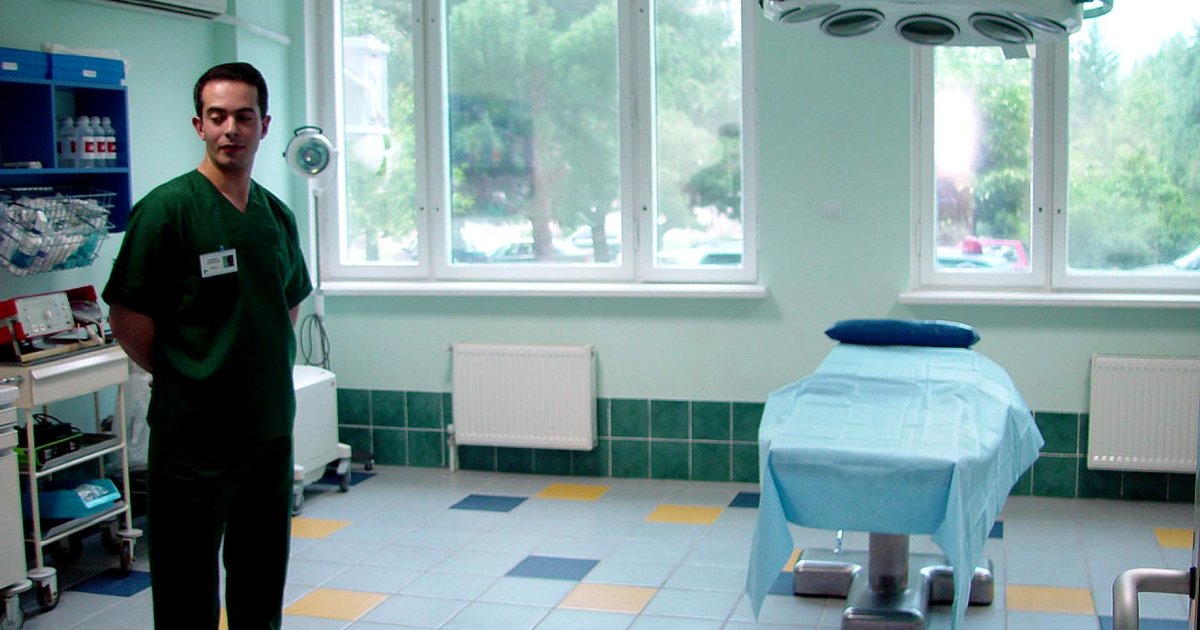
Putting on gloves by yourself in the procedure room is one thing; putting on gloves with the patient and the preceptor watching is another. The same happens with the diagnostic hypothesis.
NEXO is a daily medical diagnosis game: one clinical case a day, six progressive clues, and ICD-10 proximity feedback across five levels.
In the clerkship, clinical reasoning starts happening out loud, in front of the preceptor, and with consequences for the patient. This text is about how to train two parts of that reasoning: prioritizing hypotheses, weighing severity and probability, and presenting them to the preceptor in a way that shows what you thought. How to study with little time in the clerkship is in how to study in the clerkship, and the foundations of prioritization are in clinical reasoning.
Main points
- Clinical decisions weigh the probability of the disease along with the consequences of treating, testing or waiting.
- In an experiment with complex cases, those who got more right kept the list open, sought more data and changed hypotheses when faced with contrary information.
- Analyzing the initial hypothesis before closing the diagnosis improved the accuracy of residents and specialists.
- SNAPPS organizes the case presentation in six steps, and the one-minute preceptor organizes the preceptor's teaching in five.
- Reviews of the two models found more differential diagnoses and more expressed doubts, with low to moderate quality evidence.
- The game enters hypothesis training with each clue; bedside decisions are trained with the patient and the preceptor.
Summary
- Severity and probability together
- The dangerous differential and the open list
- Presenting to the preceptor
- Training the presentation
- Where the game fits into training
- Frequently asked questions
- Checklist for reasoning in the clerkship
Severity and probability together
The three prioritization questions, which hypothesis is the most probable, the most severe and the treatable one, are in the text about clinical reasoning. In the clerkship, they stop being an exercise and start guiding what you order, what you treat and what you observe.
The decision weighs probability and consequence
The threshold approach in clinical decision-making shows why probability alone does not decide (Pauker and Kassirer, 1980). The testing and treatment thresholds depend on the reliability and risks of the test and the benefits and risks of the treatment (Pauker and Kassirer, 1980). The details of the method are in the text about pretest probability.
In clerkship practice, this means that an unlikely hypothesis may deserve immediate action when letting it pass is costly and ruling it out is safe. This is what the expression "severity before probability" tries to summarize, and what becomes more precise as "severity together with probability".
Why the dangerous one weighs so much
A modeling estimate for the United States calculated that 795 thousand people per year are left with permanent disability or die from dangerous diseases that are misdiagnosed (Newman-Toker et al., 2024). The diseases that concentrate this harm and the alarm signs of common complaints are in the text about how to study in the clerkship.
Thinking about your own thinking
A review of cognitive errors in diagnosis describes several strategies to reduce them and highlights metacognition: stepping back from the immediate problem to examine and reflect on your own thought process (Croskerry, 2003). The catalog of biases is in the text about differential diagnosis. In the clerkship, metacognition fits into a short question before presenting the case: "why am I thinking about this, and what would I let slip if I were wrong?".
Saying both things out loud
In the clerkship, prioritization shows up in speech. As a practical suggestion, when presenting a case, state the most probable and the most severe hypothesis in separate sentences, with the reason for each: "I think first of X because of A and B; I need to rule out Y because of C". The preceptor sees, in one sentence, that you weighed both things, and can correct the weight you gave to each one.

The dangerous differential and the open list
Putting the severe hypothesis on the list is the first step. The second is keeping it there until it is ruled out, even when the favorite hypothesis seems confirmed. Anchoring and premature closure are in the text about differential diagnosis; here, the focus is what studies show about who manages to keep the list open.
Persist and accept the change
In an experiment with 75 participants, 25 third-year students, 25 internal medicine residents and 25 faculty members solved four complex cases (Krupat et al., 2017). In the first four rounds of information, the cases pointed to few possibilities; from the fifth on, the data contradicted what came before (Krupat et al., 2017).
Accuracy did not differ among the three levels of training (Krupat et al., 2017). At all levels, those who did best were the ones with longer differential lists, those who persisted by asking for more rounds of information and those who changed the main hypothesis when faced with contrary data (Krupat et al., 2017). The authors suggest teaching clinicians to overcome error-related tendencies (Krupat et al., 2017).
The study also measured certainty in the diagnosis and the tendency to change hypotheses, as well as the size of the differential and persistence in data collection (Krupat et al., 2017). Since faculty members certainly know more than students, and accuracy was similar, the authors point to cognitive factors, and not only knowledge, as a target for teaching (Krupat et al., 2017).
Analyze the first hypothesis
In a study with 9 nephrologists and 6 nephrology residents, participants gave an initial diagnosis based on the presentation of each case and then analyzed the remaining data (Bass et al., 2013). After analyzing the initial hypothesis, the accuracy of the nephrologists went from 31.1% to 65.6%, and that of the residents, from 40.0% to 70.0% (Bass et al., 2013). The study is small and from a single specialty, but it suggests that it is worth treating the first hypothesis as a starting point, to be analyzed.
What this changes in the internship
As a practical suggestion, use three habits with each patient:
- State the hypothesis early, but as a hypothesis: "my first idea is X".
- Look for the data that contradicts it: what would I expect to find if it were Y, the serious alternative?
- Accept changing: when a new piece of data does not fit, say so out loud and redo the list.
The weight of context
Reasoning during the internship also depends on who is on the other side. A scoping review on the assessment of clinical reasoning included the oral presentation of the case among workplace-based assessment methods, alongside direct observation and written notes (Daniel et al., 2019). The review included 377 articles and organized the methods into three groups: assessments outside the workplace, such as multiple-choice questions and script concordance tests; assessments in a simulated environment, such as practical exam stations; and workplace-based assessments (Daniel et al., 2019). The authors recommend combining complementary methods, because each one captures a different part of reasoning (Daniel et al., 2019). That is why it is worth taking care with the presentation: it is one of the places where reasoning shows up for those who assess.
Presenting to the preceptor
Two models organize this conversation. SNAPPS was created for the student to lead the presentation; the one-minute preceptor was created for the preceptor to lead the teaching. Both fit the pace of the internship.
SNAPPS: the student leads
SNAPPS was described for outpatient teaching as a model in which the case presentation becomes an active conversation between student and preceptor (Wolpaw et al., 2003). The authors started from the observation of a relatively passive student, who only reported the history and the exam to the preceptor (Wolpaw et al., 2003). The name is a mnemonic of six steps (Wolpaw et al., 2003):
| Step | In English | What to do |
|---|---|---|
| S | Summarize | Briefly summarize the history and findings |
| N | Narrow | Narrow the differential to two or three relevant possibilities |
| A | Analyze | Analyze the differential, comparing and contrasting the possibilities |
| P | Probe | Ask the preceptor about doubts, difficulties or alternative approaches |
| P | Plan | Plan the management of the patient's problems |
| S | Select | Choose a topic from the case to study on your own |
Steps translated from Wolpaw et al., 2003.
The model relies on Bordage's work on cognitive learning and on studies about reflective practice by educators (Wolpaw et al., 2003). The central idea is to give the student the initiative of the conversation, and the preceptor the role of guiding, in an exchange in which both have a defined function (Wolpaw et al., 2003).
In the pilot study, with third-year students and their preceptors, the feedback was enthusiastic and highlighted the importance of training both sides (Wolpaw et al., 2003).
Each step, in the clerkship
SNAPPS was born in the outpatient clinic, but the steps apply to other settings. As a practical suggestion, here is what each step asks of you in the clerkship:
- Summarize: one or two sentences, with the findings that change the list; the problem summary is in the text about clinical reasoning.
- Narrow: two or three hypotheses, including the serious one that must be ruled out.
- Analyze: for each hypothesis, what supports it and what weighs against it.
- Ask: the real doubt, not a question meant to please.
- Plan: a proposal, even if the preceptor changes it later.
- Choose: a topic small enough to study the same day.
What the SNAPPS trial showed
In a randomized trial with 64 third-year students in a family medicine rotation, one group received SNAPPS training, another received feedback training, and the third followed usual teaching (Wolpaw et al., 2009). The students recorded their case presentations in the last week of the rotation, and the SNAPPS group outperformed the other two in all categories of expressing reasoning and doubts (Wolpaw et al., 2009). The SNAPPS presentations were not longer than the usual ones, and were 1 minute longer than those of the feedback group (Wolpaw et al., 2009).
One-minute preceptor: the preceptor leads
The "microskills" model, known as the one-minute preceptor, was proposed for community family physicians who teach part-time and for early-career faculty (Neher et al., 1992). It has five steps (Neher et al., 1992):
- Get a commitment: ask the student to say what they think.
- Probe for evidence: ask what supports that idea.
- Teach general rules: draw from the case a lesson that applies to others.
- Reinforce what was done well.
- Correct the errors.
Steps translated from Neher et al., 1992.
In a study with 116 preceptors from seven universities who watched scripted videos, those who saw the one-minute preceptor model rated students' skills better and felt more confident rating them (Aagaard et al., 2004). The preceptors also judged the model more effective and more efficient than the traditional one (Aagaard et al., 2004). The study measures preceptors' assessment, not student learning.
What the reviews say
A systematic review with meta-analysis on the two models included 12 studies in the review and 10 in the meta-analysis (Teixeira Ferraz Grünewald et al., 2023). In the randomized trials, the models improved the duration of the presentation and discussion, the number of justified differential diagnoses and the number of doubts expressed, with better results for SNAPPS (Teixeira Ferraz Grünewald et al., 2023). The literature, as a whole, consisted mostly of low-quality quasi-experimental studies (Teixeira Ferraz Grünewald et al., 2023).
Another review, of randomized SNAPPS trials only, found 5 studies with students and residents (Flores-Cohaila et al., 2024). With low to moderate certainty, SNAPPS increased the duration of the presentation, and may increase the number of differential diagnoses and doubts expressed (Flores-Cohaila et al., 2024). No study measured effects on the service or on patients, and the model seemed more useful for residents than for students (Flores-Cohaila et al., 2024). If you research teaching of reasoning, NEXO Researcher is the program for researchers and institutions that want to propose studies on learning and diagnostic reasoning with NEXO.
What this evidence allows us to say
Both models change the shape of the presentation: more differential, more doubts said out loud, more discussion. This is consistent with their goal, which is to make reasoning visible. What is still missing is measuring whether this change leads to better diagnoses in the service and better outcomes for patients (Flores-Cohaila et al., 2024). Using the model as a conversation structure is a reasonable choice; expecting more than that from it still depends on new studies.
The two models side by side
| SNAPPS | One-minute preceptor | |
|---|---|---|
| Who leads | The student (Wolpaw et al., 2003) | The preceptor (Neher et al., 1992) |
| Number of steps | Six (Wolpaw et al., 2003) | Five (Neher et al., 1992) |
| Strength | Doubts and differential said out loud (Wolpaw et al., 2009) | Commitment to a guess and general rule |
| Evidence | Low to moderate certainty (Flores-Cohaila et al., 2024) | Mostly low-quality studies (Teixeira Ferraz Grünewald et al., 2023) |
Practice the presentation
Knowing the model is the start; using it at the pace of the service calls for practice. The suggestions below are practical suggestions from the Editorial.
An example presentation
An example of a SNAPPS presentation, in a case of chest pain, to show the structure:
- Summarize: "Man with chest pain on exertion, with cardiovascular risk factors, no pain at the moment."
- Narrow: "I think of coronary syndrome; I need to rule out aortic dissection and pulmonary embolism."
- Analyze: "The pain on exertion favors the first; the absence of back pain and shortness of breath weighs against the other two, but does not rule them out."
- Ask: "Which finding would you use to rule out dissection here?"
- Plan: "I propose an electrocardiogram and laboratory tests, and discussing the next step with the team."
- Choose: "I will study the findings that separate dissection from coronary syndrome."
The example serves to show the structure; the management of each case is up to the responsible team.
When time is short
Not every presentation fits the full six steps. On shift or on a rushed round, as a practical suggestion, keep three: the summary, the most likely guess with the serious one to rule out, and the question to the preceptor. The other steps can come later, in the case discussion or in the day's study.
Practice out loud beforehand
The hook of the text reminds us that the same task becomes harder with someone watching. Before presenting, say the SNAPPS quietly, alone, in the break between the patient examination and the discussion. With the group, take turns: one presents, another plays the role of the preceptor and uses the five steps of the one-minute preceptor.
Ask the commitment of yourself
The first step of the one-minute preceptor, getting a commitment (Neher et al., 1992), also works as self-training. Before hearing anyone's opinion, write down your guess and the reason. When the preceptor disagrees, you will know exactly where your reasoning parted from theirs.
Choose the study topic
The last step of SNAPPS, choosing a topic from the case to study (Wolpaw et al., 2003), links the presentation to the day's study. How to use that topic with little time is in how to study during the internship.

When the preceptor disagrees
Disagreement is the most useful part of the presentation, as long as you know where it lies. As a practical suggestion, when the preceptor proposes another guess or another plan, ask which piece of data weighed for them. If it is a piece of data you did not see, the problem was in the collection; if it is a piece of data you saw but weighed differently, the problem was in the interpretation. Both call for different studies, and noting which was the case helps choose the topic for the last step of SNAPPS.
The fifth step of the one-minute preceptor, correcting mistakes, and the fourth, reinforcing what was done well (Neher et al., 1992), also apply to you. After each discussion, note one thing that went right in your reasoning and one that needs to change.
Common mistakes in the presentation
- Reporting without concluding: telling the whole story without saying what you think; SNAPPS was created precisely to change that pattern (Wolpaw et al., 2003).
- Only one guess: without a differential, the preceptor does not see what you considered.
- Hiding the doubt: the doubt said out loud is what the preceptor can teach (Wolpaw et al., 2009).
- Forgetting the serious guess: it must appear, even if only to say how it was ruled out.
- Not choosing the study topic: the last step links the presentation to the day's study.
A week of practice
The plan below is a practical suggestion from the Editorial.
| Day | Focus |
|---|---|
| Monday | State the most likely guess and the serious one in every presentation |
| Tuesday | Look, in each case, for the piece of data that contradicts the favorite guess |
| Wednesday | Present a full case in SNAPPS |
| Thursday | Bring a real question to the preceptor in every case |
| Friday | Review a case from the Daily mode with the group, one presenting and another as preceptor |
Where the game fits into training
The reasoning of the internship has two parts that are trained in different places. The hypothesis with each new piece of data is trained well with cases in clues; the decision at the bedside, with the exam, the conversation and the management, is trained with the patient and the preceptor.
Hypothesis with each clue
In NEXO, each case arrives in up to six clues, and each clue is a new piece of data to test the hypothesis, as in the information rounds of the experiment on premature closure (Krupat et al., 2017). State the hypothesis before each guess, look for the serious alternative and switch when the clue contradicts it: these are the three habits from the previous section, in game format.
Proximity in ICD-10
Each guess shows the proximity in ICD-10 at five levels. A guess in the right group but the wrong disease shows that the direction was right and the detail that separates the neighbors was missing. In the third clue the area of the case appears and, in the fifth, the ICD range, which helps to reorganize the list along the way.
Train switching hypotheses
The clues also train the third habit, accepting to switch. When a new clue does not match the hypothesis you had, say so before the next guess and redo the list. At the end of the case, look at which clue you changed your mind on and whether the change came early or late: it is a portrait of your reasoning that can be compared from one case to another.
The Daily case with the group
The Daily mode brings one case per day, the same for everyone. With the internship group, the case becomes a presentation training: one person presents the case in SNAPPS, and the group plays the role of the preceptor. The Archive gathers the previous cases to train an area of the rotation. To understand the limits of each mode, see the NEXO economy page.
To bring this format to the medical school, the student league or the residency, get to know NEXO Closer. If you are a doctor and want to review the cases of your specialty, get to know NEXO Curator. If you create content for medical students and want to use NEXO cases, get to know NEXO Creators. Other case tools, such as virtual patients, are in the text about virtual patients.
Frequently asked questions
How to train clinical reasoning in the internship?
Train prioritization by saying out loud the most likely and the most serious hypothesis, keep the list open and present the cases with a model such as SNAPPS. In a randomized trial, students trained in SNAPPS expressed more reasoning and more doubts in the presentations (Wolpaw et al., 2009).
What is SNAPPS?
It is a six-step case presentation model: summarize, narrow the differential, analyze, ask the preceptor, plan and choose a study topic (Wolpaw et al., 2003).
What is the one-minute preceptor?
It is a teaching model for the preceptor, with five microskills: get a commitment, probe for evidence, teach general rules, reinforce what was done well and correct the errors (Neher et al., 1992).
Do SNAPPS and the one-minute preceptor work?
The reviews found more differential diagnoses and more doubts expressed in the presentations, with low to moderate quality evidence and no studies of effect on patients (Flores-Cohaila et al., 2024).
Does SNAPPS work outside the outpatient clinic?
The model was described for outpatient teaching (Wolpaw et al., 2003). The steps can be used in other settings as a conversation structure, but the review of the trials found no studies on effects in the service (Flores-Cohaila et al., 2024).
What to ask the preceptor?
The real doubt of the case: why one hypothesis and not the other, which piece of data would rule out the serious hypothesis, or what an alternative approach would be. Asking about doubts, difficulties or alternatives is the fourth step of SNAPPS (Wolpaw et al., 2003).
Why prioritize the serious hypothesis if it is unlikely?
Because the decision weighs the probability together with the risks and benefits of testing and treating (Pauker and Kassirer, 1980). When letting it pass is costly, the serious hypothesis deserves to be ruled out early.
How to avoid closing the diagnosis too early?
Keep the list open, seek more data and accept switching hypotheses. In an experiment with complex cases, these three behaviors were associated with accuracy at all levels of training (Krupat et al., 2017).
How many hypotheses to bring to the preceptor?
SNAPPS proposes narrowing the differential to two or three relevant possibilities (Wolpaw et al., 2003). It is worth including the serious hypothesis that must be ruled out, even when it is not the favorite.
How do you handle the pressure of presenting with the preceptor watching?
Practicing beforehand helps: say SNAPPS quietly, alone, and take turns with the class in the preceptor role. The trials show that practice on the model changes the shape of the presentation, with more reasoning and more doubts expressed (Wolpaw et al., 2009).
Is experience enough to avoid closing the diagnosis early?
In an experiment with complex cases, accuracy did not differ between students, residents and attending physicians; what mattered was keeping the list open, persisting and accepting to switch (Krupat et al., 2017).
How does NEXO help with reasoning during the internship?
Each case arrives in up to six clues, to train the hypothesis with every new piece of data, and the ICD-10 proximity shows whether you are in the right group. The Daily case, the same for everyone, serves to practice the presentation with the class.
Reasoning checklist during the internship
- Do you state the most likely hypothesis and the most serious one, with the reason for each?
- Does the serious hypothesis stay on the list until it is ruled out?
- Do you look for the data that contradicts the favorite hypothesis?
- Do you accept switching hypotheses when a new piece of data does not fit?
- Do you present the case with a structure, such as SNAPPS?
- Do you bring a question to the preceptor in each case?
- Do you write your hypothesis before hearing anyone's opinion?
- Do you choose a topic from the case to study the same day?
- Do you practice the presentation out loud beforehand, alone or with the class?
- Do you use cases in clues to train the hypothesis with every new piece of data?
Want to practice today? Play the case of the day on NEXO.
References
- Croskerry P. The importance of cognitive errors in diagnosis and strategies to minimize them. Acad Med. 2003. https://pubmed.ncbi.nlm.nih.gov/12915363/
- Pauker SG, Kassirer JP. The threshold approach to clinical decision making. N Engl J Med. 1980. https://pubmed.ncbi.nlm.nih.gov/7366635/
- Newman-Toker DE, Nassery N, Schaffer AC, et al. Burden of serious harms from diagnostic error in the USA. BMJ Qual Saf. 2024. https://pubmed.ncbi.nlm.nih.gov/37460118/
- Krupat E, Wormwood J, Schwartzstein RM, Richards JB. Avoiding premature closure and reaching diagnostic accuracy: some key predictive factors. Med Educ. 2017. https://pubmed.ncbi.nlm.nih.gov/28857266/
- Bass A, Geddes C, Wright B, Coderre S, Rikers R, McLaughlin K. Experienced physicians benefit from analyzing initial diagnostic hypotheses. Can Med Educ J. 2013. https://pubmed.ncbi.nlm.nih.gov/26451203/
- Daniel M, Rencic J, Durning SJ, et al. Clinical Reasoning Assessment Methods: A Scoping Review and Practical Guidance. Acad Med. 2019. https://pubmed.ncbi.nlm.nih.gov/30720527/
- Wolpaw TM, Wolpaw DR, Papp KK. SNAPPS: a learner-centered model for outpatient education. Acad Med. 2003. https://pubmed.ncbi.nlm.nih.gov/14507619/
- Wolpaw T, Papp KK, Bordage G. Randomized trial with comparison groups on SNAPPS and the expression of clinical reasoning and doubts (original title in English on PubMed). Acad Med. 2009;84(4):517-24. https://pubmed.ncbi.nlm.nih.gov/19318792/
- Neher JO, Gordon KC, Meyer B, Stevens N. A five-step "microskills" model of clinical teaching. J Am Board Fam Pract. 1992. https://pubmed.ncbi.nlm.nih.gov/1496899/
- Aagaard E, Teherani A, Irby DM. Effectiveness of the one-minute preceptor model for diagnosing the patient and the learner: proof of concept. Acad Med. 2004. https://pubmed.ncbi.nlm.nih.gov/14690996/
- Teixeira Ferraz Grünewald S, Grünewald T, Ezequiel OS, Lucchetti ALG, Lucchetti G. One-minute preceptor and SNAPPS for clinical reasoning: a systematic review and meta-analysis. Intern Med J. 2023. https://pubmed.ncbi.nlm.nih.gov/36625402/
- Flores-Cohaila JA, Vizcarra-Jiménez SF, Bermúdez-Peláez MF, et al. Effects of SNAPPS in clinical reasoning teaching: a systematic review with meta-analysis of randomized controlled trials. Diagnosis (Berl). 2024. https://pubmed.ncbi.nlm.nih.gov/38446132/