Narrative medicine: listening to the patient's story



 Alexei Peter dos Santos, Thiago Longo Moraes, and Caroline Wilhelmsen Martins
Table of contents
- What narrative medicine is
- Why the history matters for diagnosis
- The methods: reading and writing
- What the reviews show
- Narrative, biases and diagnostic error
- How to bring narrative medicine into training
- How the student can practice alone
- How NEXO uses the story in clues
- Frequently asked questions
- Narrative medicine checklist
- References
The patient sits down, settles her bag on her lap and begins: "doctor, ever since my husband died I haven't been sleeping well, and now this pain has appeared". The intern, with the history-taking script open in his head, interrupts at the second sentence: "where is the pain?". The consultation proceeds quickly and in an orderly way. The pain is described, examined and recorded. Only at the end, already standing, does the patient mention that she is afraid of having the same disease as her husband. That sentence, which would have changed the way everything was handled, almost stayed outside the room.
Narrative medicine was born so that sentences like this are not lost. It proposes that listening to, interpreting and responding to patients' stories is a clinical skill, as trainable as auscultating a heart. This guide explains what narrative medicine is, where it came from, which methods it uses, what the reviews found, how it relates to diagnostic reasoning and how to bring the practice into training and into your own study.
Key points
- Narrative medicine is clinical practice carried out with narrative competence: the ability to recognize, absorb, interpret and act on patients' stories.
- The clinical history remains the main source of data for diagnosis; in a classic study, it led to the final diagnosis in most patients.
- The core methods are close reading of texts and reflective writing, including the parallel chart.
- The reviews show effects on attitudes, knowledge and skills, but evidence of behavior change and impact on care is still lacking.
- Clear guidance and feedback on reflective writing are what most improve students' reflection.
- Listening without interrupting at the start of the consultation is the first concrete gesture of narrative medicine and costs only a few seconds.
Contents
- What narrative medicine is
- Why the story matters for diagnosis
- The methods: reading and writing
- What the reviews show
- Narrative, biases and diagnostic error
- How to bring narrative medicine into training
- How students can practice on their own
- How NEXO uses the story in clues
- Frequently asked questions
- Narrative medicine checklist
What narrative medicine is
The term was popularized by Rita Charon, an internist and PhD in literature, at Columbia University. In the article that became a reference, Charon defines narrative competence as the ability to recognize, absorb, interpret and act on the stories and troubles of others, and proposes medicine practiced with this competence as a model of humane and effective care. She describes four central narrative situations in medicine: doctor and patient, doctor and self, doctor and colleagues, doctor and society.
At the same time, in the United Kingdom, Greenhalgh and Hurwitz published a series in the BMJ arguing for narrative-based medicine as a complement to, not a replacement for, evidence-based medicine. The argument was that illness happens within a life, and that understanding that life helps interpret symptoms, choose approaches and negotiate treatment.
What narrative medicine is not
Narrative medicine is not a literature course for doctors with free time, nor a way to set clinical reasoning aside. It is also not a synonym for being nice. It is a form of attention: noticing what the patient says, how they say it, what they leave out and in what order they tell their story. This attention produces clinical data and, at the same time, relationship. That is why it matters both to those who want to welcome patients better and to those who want to make fewer diagnostic errors, and the two goals rarely conflict.
Narrative and empathy
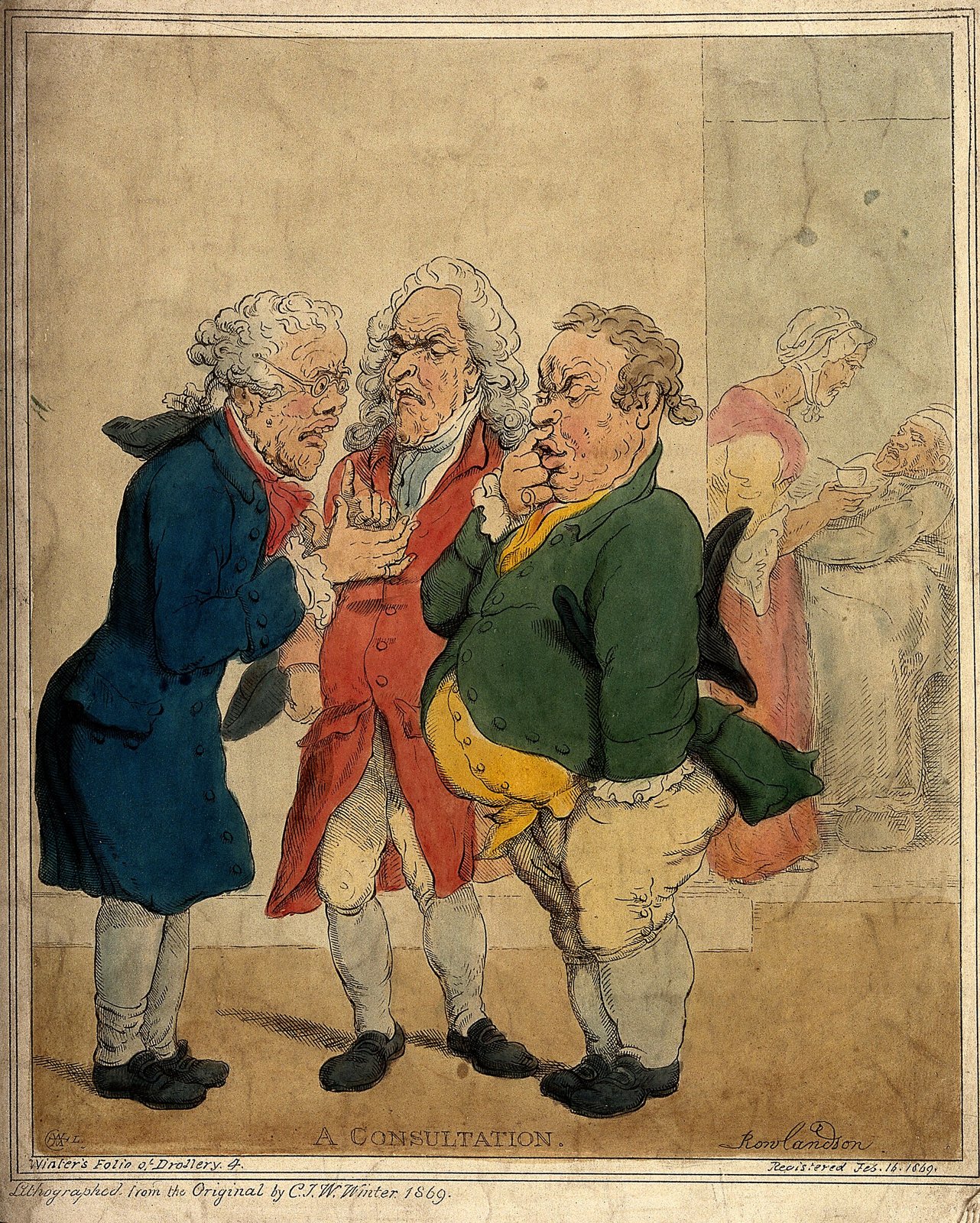
One reason to bring narrative medicine into undergraduate education is the decline in empathy over the course of study. In the longitudinal study by Hojat and colleagues, with students at an American school, empathy scores did not change in the first two years, but fell significantly at the end of the third year and stayed that way until graduation, precisely when students begin to spend more time with patients. Narrative medicine is one of the proposed responses to this erosion.

Why the history matters for diagnosis
It is common to treat narrative medicine as a humanities subject and diagnosis as a science subject. The data do not support the separation. The clinical history is the main diagnostic tool there is.
The history leads to the diagnosis
In a prospective study with eighty outpatients, Peterson and colleagues asked internists to record their hypotheses after the history, the physical examination and the complementary tests; the history led to the final diagnosis in 76% of patients, the physical examination in 12% and the tests in 11%. The guide on signs, symptoms and history details how to turn the account into hypotheses.
Interruption erases data
If the history is so important, the way it is taken is too. In the classic study by Beckman and Frankel, which recorded 74 consultations, the patient was able to complete the opening statement in only 23% of visits, and the physician interrupted the statement in 69% of them. Fifteen years later, Marvel and colleagues found that patients completed the opening statement in 28% of consultations and that the physician redirected the statement after an average of 23.1 seconds; those who could finish used, on average, only six seconds more. More recently, Singh Ospina and colleagues showed that the patient's agenda was solicited in 36% of consultations and that, when it was, the patient was interrupted in 67% of them, after a median of 11 seconds.
What gets lost
When the patient is interrupted early, concerns surface late, often with a hand already on the doorknob. In the study by Marvel and colleagues, late concerns were more common when the physician did not ask about the patient's concerns (34.9% versus 14.9%). For clinical reasoning, this means hypotheses built on half the history. The first lesson of narrative medicine is therefore also a lesson in diagnosis: let the patient finish.
The methods: reading and writing
Narrative medicine uses two main groups of methods: close reading (close reading) and reflective writing. Both train the same thing by different paths: noticing details, tolerating ambiguity and considering more than one point of view.
Close reading
In close reading, the group reads a short text slowly, a short story, a poem or an excerpt from a patient's memoir, and discusses not only what happens but how the text is built: who narrates, what stays implicit, how time passes, which words repeat. The exercise seems far from the clinic, but it trains exactly the attention that a history requires. Someone who learns to notice that a character changes the subject every time someone mentions the father starts to notice the same move in a patient.
A typical session lasts from forty minutes to an hour. The session leader chooses a text that fits a reading aloud, the group reads together, and each participant writes for a few minutes from an open question inspired by the text, such as "write about a time when someone did not say what they wanted to say". Then whoever wishes reads what they wrote, and the group comments on the colleague's text with the same attention given to the original text. No one is assessed on literary quality. What is trained is the eye: noticing the detail, accepting more than one interpretation and hearing the colleague out before responding, three gestures that are equally valuable at the bedside.
Reflective writing and the parallel chart
Reflective writing asks the student to write about a clinical experience, including what they felt and what they thought. A well-known form is the parallel chart: alongside the technical progress note, the student writes, in plain language, the patient's story and their own experience in care. Wald and Reis describe a model of interactive reflective writing with individual feedback from teachers in several fields and discuss how this kind of writing can develop reflective capacity, broaden empathy and support the professional's well-being.
Components of a good reflection activity
The BEME review by Uygur and colleagues analyzed studies on teaching reflection in undergraduate education and identified recurring components. The strongest evidence was for clear guidelines and feedback on the writing.
- Introduction: explain what reflection is and why it matters.
- Trigger: a clinical experience, a text or an image that prompts the writing.
- Writing: a short text, with agreed deadline and length.
- Guidance: questions or a script to guide reflection.
- Small group discussion: read and comment on the texts with colleagues.
- Tutor and feedback: someone who reads carefully and returns specific comments.


What the reviews show
Narrative medicine has grown faster than research about it. The available reviews show encouraging results at some levels and clear gaps at others.
| Study | What it assessed | Main finding | Limitation |
|---|---|---|---|
| Milota and colleagues, 2019 | Narrative medicine teaching programs | Effect on participation, attitudes, knowledge and skills | No clear evidence of change in behavior or in care |
| Uygur and colleagues, 2019 | Methods for teaching reflection | Guidance and feedback improve reflection | Heterogeneous studies |
| Chen and Forbes, 2014 | Reflective writing and empathy | All quantitative studies included reported change | Few studies and different measures |
| Franco and colleagues, 2022 | Reflective writing in communication teaching | Writing works combined with other strategies | Few correlations with communication skill |
| Arntfield and colleagues, 2013 | Narrative medicine elective in the internship | Students reported improvement in communication and collaboration | Small group and perception data |
| Shen and colleagues, 2026 | Eight-week course with reading, writing and discussion | Self-reported empathy higher than in the control group | Single center and short-term effect |
Effects on attitudes and skills
The systematic review by Milota, van Thiel and van Delden, with 36 articles, concluded that narrative medicine is a teaching tool with a clear and replicable structure and found a positive impact on participation and on changes in attitudes, knowledge and skills. According to the authors, unequivocal evidence of an effect on students' behavior with colleagues and patients is still missing. In a mixed methods study, Shen and colleagues observed higher self-reported empathy after an eight-week course with close reading, the parallel chart and group discussion, especially in the cognitive dimension.
Reflective writing and empathy
The review by Chen and Forbes found only eight studies with quantitative measures before and after reflective writing among more than a thousand publications, and all reported change in empathy; the authors themselves note that the lack of standardized measures limits the conclusions. In the review by Franco and colleagues on reflective writing in communication teaching, writing always appeared combined with other strategies, and few studies found a correlation between reflective capacity and communication skill.
Students' perception
In the one-month elective described by Arntfield and colleagues, final-year students reported improvement in specific communication skills, more ability to collaborate and to center care on the patient, and personal and professional growth through reflection. These are perception data from a small group, but they help explain why so many programs adopt the approach.

Narrative, biases and diagnostic error
Narrative medicine is usually defended for its human side, but it also has a technical side that directly interests anyone who studies clinical reasoning. The way a story is told and heard influences the hypotheses that come up and those that are left out.
The label that arrives before the patient
Often the patient's story reaches the doctor already summarized by someone else: the referral, the triage, the shift handover. This summary is useful, but it carries an interpretation. When the label comes ready-made, the tendency is to listen to the patient looking for confirmation, not for new information. A narrative stance asks for the opposite: hear the story again, in the voice of the person who lived it, before accepting the summary. It is in this second listening that the details that do not fit the inherited diagnosis appear.
The order of the story matters
Patients rarely tell their story in the order of the anamnesis script. They start with what bothers them most, what scares them most or what they think the doctor wants to hear. The complaint that matters most for the diagnosis may come in the middle, as a side comment. Anyone who interrupts early to "organize" the conversation risks organizing the story around the first complaint and losing the one that really mattered. Listening to the end and only then reorganizing is a simple way to protect the reasoning.
Emotion, context and hypothesis
The story also brings the context that changes the probability of the hypotheses: work, home, recent losses, the fear of a specific disease. This context is not decoration. It helps to understand why the patient sought care now, what they expect from the consultation and what may lie behind a vague symptom. At the same time, the emotion of the account affects whoever listens, for better and for worse. Recognizing this reaction, instead of ignoring it, is part of narrative competence and helps to separate what is clinical data from what is impression.
How to bring narrative medicine into training
You do not need to create an entire course to begin. Narrative medicine fits well into formats that already exist: clerkships, case discussion sessions and academic league activities.
In the clerkship and the internship
Ask the student to write half a page once a week about a patient they followed: who this person is beyond the diagnosis, what they said that did not make it into the progress note, what the student themselves felt. Read it and give back a short, specific comment. The review by Uygur and colleagues suggests that feedback is precisely what makes the difference. The text on feedback in clinical cases offers ideas on how to give useful comments.
In case discussion
When presenting a case, set aside a minute for the patient's story told from their point of view: what brought them in, what they fear, what they expect. This minute changes the discussion and often brings data that the technical summary had erased. It also teaches younger students that the story is part of the case, not a preamble to be cut. The presenter learns to choose the patient's sentences that are worth repeating, and the listener learns to look in them for clues to the diagnosis and the plan. The guide on case-based learning shows how to structure these sessions.
In reading groups
A monthly close reading group, with short texts and a session leader, is a low-cost way to train attention and to create space to talk about the experience of caring. It works well in leagues and in residency programs, and can be combined with active learning strategies.
How the student can practice alone
Even without a formal program, you can train narrative competence day to day. The secret is to choose a few gestures and repeat them in every consultation until they become a habit, instead of trying to change everything at once. The steps below start with the simplest and end with the most demanding.
- Let the patient finish their first statement. Count mentally until they stop. Most of the time, it takes less time than it seems.
- Ask what else. Before going deeper into the first complaint, ask whether there is anything else the person would like to address today.
- Write down the patient's words. Record one or two sentences the way they said them, in quotation marks.
- Write a parallel record. Once a week, half a page about a patient and about yourself.
- Read slowly. One short story or patient account per month, paying attention to who narrates and to what remains implicit.
- Reflect on the reasoning. After a case, ask which part of the story changed your hypothesis. The text on metacognition in medicine helps at this stage.
Writing the story well in the medical record
Narrative competence also shows in the way you record the case. A well-written history of the present illness has a beginning, a middle and an end, a clear chronological order and the patient's words where they matter. The guide on how to organize clinical reasoning in the medical record offers templates.

How NEXO uses the story in clues
In NEXO, the case of the day is told in up to six clues, and the order in which the story appears is part of the challenge. Each clue adds a piece of the account, and you decide whether to keep or change your hypothesis. With each guess, the proximity in ICD-10 across five levels shows how far you were from the diagnosis. The cases are fictional with a real clinical presentation, and training close reading of each clue is a good exercise in narrative competence applied to diagnosis.
The guide what NEXO is explains the whole game. How the modes are unlocked is on the NEXO economy page.
If you coordinate a medical school, a student league or a residency and want to use NEXO with a class, see NEXO Closer. Researchers in medical education can propose studies through NEXO Researcher. Doctors who review cases take part through NEXO Curator, and those who create health content on social media can take part through NEXO Creators.
Frequently asked questions
What is narrative medicine?
It is clinical practice carried out with narrative competence: recognizing, absorbing, interpreting and acting on patients' stories. The concept was popularized by Rita Charon, at Columbia University.
Is narrative medicine the same as humanization?
They are close, but narrative medicine has its own methods, such as close reading and reflective writing, and presents itself as a clinical competence that also improves data collection.
Is there evidence that narrative medicine works?
Reviews show effects on attitudes, knowledge and skills and on self-reported empathy. Solid evidence of behavior change and of impact on patient care is still lacking.
What is a parallel chart?
It is a text written by the student, in plain language, about the patient's story and about their own experience in care, kept separate from the technical progress notes.
Does letting the patient talk delay the consultation?
Studies show that patients who finish their opening statement take only a few extra seconds, and that interrupting increases the concerns that surface only at the end of the consultation.
How to start without a formal course?
With simple steps: let the patient finish the first statement, ask what else, note down their words and write one parallel chart per week.
Narrative medicine checklist
- Let the patient finish the opening statement before asking closed questions.
- Ask whether there are other concerns before going deeper into the first one.
- Record one or two sentences from the patient in their own words.
- Write one parallel chart per week and ask someone for feedback.
- Join a close reading group or read a short text each month.
- After each case, ask which part of the story changed your hypothesis.
- In case discussions, set aside a minute for the story from the patient's point of view.
Want to practice reading the story clue by clue? Play the case of the day on NEXO.
References
- Charon R. The patient-physician relationship. Narrative medicine: a model for empathy, reflection, profession, and trust. JAMA. 2001. PubMed 11597295
- Greenhalgh T, Hurwitz B. Narrative based medicine: why study narrative?. BMJ. 1999. PubMed 9872892
- Wald HS, Reis SP. Beyond the margins: reflective writing and development of reflective capacity in medical education. J Gen Intern Med. 2010. PubMed 20407840
- Milota MM, van Thiel GJMW, van Delden JJM. Narrative medicine as a medical education tool: A systematic review. Med Teach. 2019. PubMed 30983460
- Franco RS, Franco CAGDS, Severo M, Ferreira MA, Karnieli-Miller O. Reflective writing in the teaching of communication skills for medical students-A systematic review. Patient Educ Couns. 2022. PubMed 35063310
- Shen X, Bu R, Geng M, Chen Y. A mixed-methods evaluation of a narrative medicine course and its impact on empathy development among medical students. BMC Med Educ. 2026. PubMed 42231272
- Hojat M, Vergare MJ, Maxwell K, Brainard G, Herrine SK, Isenberg GA, et al. The devil is in the third year: a longitudinal study of erosion of empathy in medical school. Acad Med. 2009. PubMed 19707055
- Arntfield SL, Slesar K, Dickson J, Charon R. Narrative medicine as a means of training medical students toward residency competencies. Patient Educ Couns. 2013. PubMed 23462070
- Uygur J, Stuart E, De Paor M, Wallace E, Duffy S, O'Shea M, et al. A Best Evidence in Medical Education systematic review to determine the most effective teaching methods that develop reflection in medical students: BEME Guide No. 51. Med Teach. 2019. PubMed 30634872
- Chen I, Forbes C. Reflective writing and its impact on empathy in medical education: systematic review. J Educ Eval Health Prof. 2014. PubMed 25112448
- Marvel MK, Epstein RM, Flowers K, Beckman HB. Soliciting the patient's agenda: have we improved?. JAMA. 1999. PubMed 9918487
- Beckman HB, Frankel RM. The effect of physician behavior on the collection of data. Ann Intern Med. 1984. PubMed 6486600
- Peterson MC, Holbrook JH, Von Hales D, Smith NL, Staker LV. Contributions of the history, physical examination, and laboratory investigation in making medical diagnoses. West J Med. 1992. PubMed 1536065
- Singh Ospina N, Phillips KA, Rodriguez-Gutierrez R, Castaneda-Guarderas A, Gionfriddo MR, Branda ME, et al. Eliciting the Patient's Agenda- Secondary Analysis of Recorded Clinical Encounters. J Gen Intern Med. 2019. PubMed 29968051