Board and card games in medical education




Table of contents
- What counts as a tabletop game in medical education
- What the studies show
- Why a board game can teach
- How to choose a ready-made game
- How to create your own game
- How to run the match in class
- From the board to the case of the day with NEXO
- Frequently asked questions
- Checklist for the next class with a game
- References
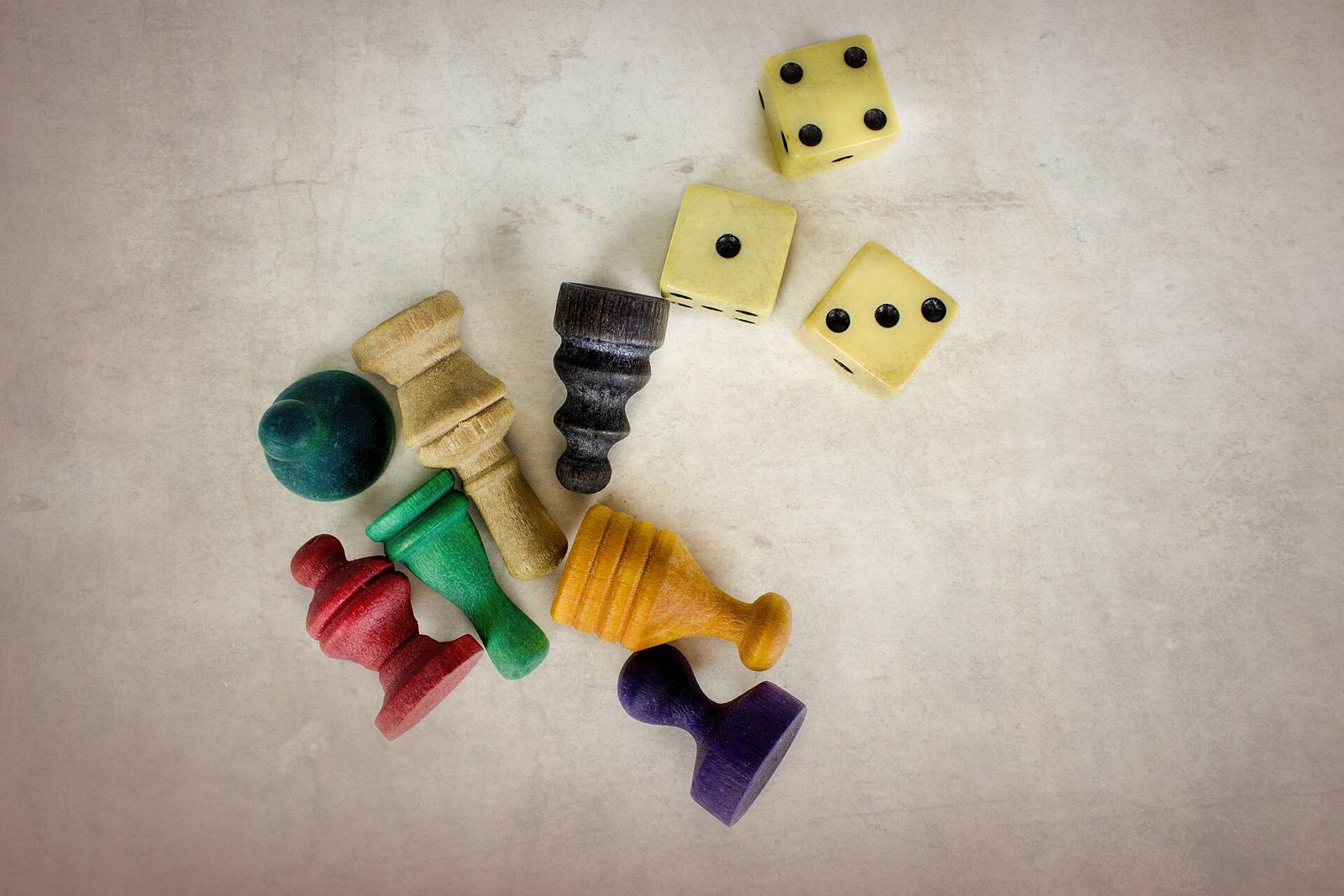
Friday, late afternoon, in the group room of the internal medicine interest group. Instead of the usual slides, the student tutor spreads out on the table a hand-drawn board, a deck of laminated cards and four pawns borrowed from an old game. Each card carries a finding: fever for ten days, a new murmur, pending blood cultures. The rule is simple. Whoever draws the card reads it aloud, and the group must decide, before moving one space, whether that finding brings the hypothesis on the table closer or pushes it away. In twenty minutes, the room that used to stay silent is discussing probability with the loud voices of people competing in a match.
The scene is common in interest groups, peer tutoring sessions and summer courses, and so is the question that follows: does this teach anything or is it just a fun break? This text gathers what studies on board and card games in medical education allow us to say, shows where the evidence is weak and offers a guide to choosing, creating and running a tabletop game without losing the learning goal. You will also find a table comparing the most used formats and a checklist for the next class.
Key points
- Board and card games are cheap, easy to produce and well accepted by students, but they appear little in the medical education literature and almost always in small studies (Cosimini and Collins, 2023).
- Systematic reviews on serious games conclude that they are at least as effective as traditional teaching for knowledge, with low or moderate quality evidence (Gentry et al., 2019; Gorbanev et al., 2018).
- The best documented gains are short term: knowledge right after the game, confidence and engagement. Long-term retention and change in practice were almost never measured.
- The game works best when the mechanics force the player to use the content, and not just answer questions to move spaces (Cosimini et al., 2026).
- Short, simple games for two to four players are the favorites; the barriers cited are lack of games on the desired topic, cost and doubt about the accuracy of the content (Cosimini and Collins, 2023).
- Discussion after the game and content reviewed by someone who knows the topic separate a teaching game from a pastime.
What counts as a tabletop game in medical education
A tabletop game is any game played on a physical surface, with pieces, cards, dice or a board, by people who are in the same place. In medical education, the term covers everything from a paper association card deck made on plain paper to tabletop simulations in which entire teams manage a disaster with miniature ambulances. What unites these formats is the physical presence of the players, the conversation during the match and the ease of production.
It is worth separating three families that the literature tends to mix.
Card games
These are the simplest to produce. The class receives a deck with terms, findings, mechanisms or drugs and must form pairs, sequences or combinations. One published example is a card game about neurological syndromes in which students associated signs with the location of the lesion (Yu et al., 2025). Another uses sudoku logic to organize cards of anatomy, symptoms and referred pain sites in a grid (Dunne et al., 2026).
Board games
They add a path, pawns and, often, a narrative. The most common version is the track: the team answers a question and moves spaces when it gets it right. This was the format of a game about diabetes for second-year students (Twist and Ragsdale, 2022) and of an immunology game applied to students in the basic cycle (Mckee et al., 2025). There are more elaborate versions, such as a narrative game about acid-base balance that mixes story, cards and board (Surapaneni, 2024) and an adaptation of Monopoly to teach bioethics with dilemmas in a situational judgment test format (Fatima et al., 2025).
Tabletop simulations
Here the board represents a setting, such as an emergency department or a city hit by a disaster, and the players make management decisions. A scoping review found 70 studies on tabletop simulations in medical emergencies, most of them about disasters and with participants from various professions (Frégeau et al., 2025). In this group, the board is a coordination tool rather than a race of pawns.
Table: formats and what each one trains
The table summarizes the most common formats, what each one usually trains and the published examples. Use it to match the format to the lesson objective, not the other way around.
| Format | What it usually trains | Typical duration | Published example |
|---|---|---|---|
| Association cards | Memory of terms, signs and mechanisms | 15 to 30 minutes | Neurological syndromes (Yu et al., 2025) |
| Grid cards | Organizing relationships between structures, symptoms and examination | 30 to 50 minutes | Anatomy of the gastrointestinal tract (Dunne et al., 2026) |
| Question trail | Content review and confidence | About 50 minutes | Diabetes (Twist and Ragsdale, 2022); immunology (Mckee et al., 2025) |
| Narrative board | Applying concepts in a sequence of decisions | A whole class | Acid-base (Surapaneni, 2024) |
| Board dilemmas | Ethical reasoning and argumentation | A whole class | Bioethics (Fatima et al., 2025) |
| Cards with scoring by decision | Choosing a course of action according to guidelines | One to two hour workshop | Antibiotic prescribing (Cosimini et al., 2025) |
| Tabletop simulation | Team coordination and resource management | Half a morning or more | Mass casualty incidents (Chou et al., 2025; Rashed et al., 2025) |
Note that the "what it usually trains" column describes the objective stated by the authors, not a demonstrated effect. For a broader view of digital and in-person formats, see games for medical students and clinical reasoning games and what each type trains.

What the studies show
The honest question is not whether students enjoy playing. They do, and almost all studies record high satisfaction. The question is whether they learn more, or differently, than they would with a traditional activity of the same duration. There the answer requires care.
The systematic reviews
The systematic review by the Digital Health Education Collaboration compared serious games and gamification with traditional teaching in the health professions. The games were at least as effective as the controls for knowledge and skills, and in many studies more so, but the quality of evidence was rated low or very low in all outcomes (Gentry et al., 2019). Another review, focused on medicine, concluded that the evidence on the effectiveness of games is moderate and that they work as a complement, not a substitute for traditional tools (Gorbanev et al., 2018).
A 2026 network meta-analysis compared game-based learning modalities in nursing and medicine. The credibility intervals were wide and included the absence of effect in most comparisons; the authors concluded that games can improve learning outcomes, but that certainty about which format is better is limited by the scarcity of data (Chen et al., 2026). For gamification in general, a review in the health professions noted that most studies had neither a well-defined control group nor an explicit theory (van Gaalen et al., 2021).
The studies of board games
The studies specific to board and card games are mostly single-group, with a test before and after the match. In the diabetes game, the mean knowledge score rose from 7.3 to 8.0 on a ten-point scale, and the students' confidence in pharmacology, diagnosis and management also increased (Twist and Ragsdale, 2022). In the immunology game, the mean knowledge gain was 27% among those who had not yet taken the course and 19% among those who were taking it (Mckee et al., 2025). In the acid-base game, the score went from 7.57 to 16.14 on the post-test (Surapaneni, 2024).
These numbers show that the class knew more right after playing. They do not show that the game was better than a review class of the same length, because there was no comparison group. The strongest design found was a randomized trial with 48 students, in which the group playing the card game about neurological syndromes had higher scores at one, three and six weeks and reported lower cognitive load than the lecture group (Yu et al., 2025). It is an encouraging result, but it comes from a small sample, a single center and a specific topic.
Beyond knowledge
Some studies measure other things. In a randomized trial on internal medicine wards, teams of residents who played a cooperative card game during rounds reported greater educational value of the rounds, more engagement and more comfort asking questions, with no increase in rounds time; burnout and loneliness did not change (Baig et al., 2026). In a study with emergency residents, tabletop simulation and in-person high-fidelity simulation had similar knowledge results, and the authors suggest combining the two, because the tabletop version does not reproduce real-time pressure (Rashed et al., 2025).
The overall conclusion is modest and useful: board games help review, engage and create a safe environment for making mistakes, and the evidence that they teach more than other active methods is still weak. Those who use games with that expectation in mind choose better and get less frustrated.
Why a board game can teach
If the evidence is still limited, it makes sense to ask why board games should work. There are at least four plausible mechanisms, and each one suggests how to design or choose the game.
Active retrieval
Almost every card game forces the player to pull information from memory: the name of the finding, the mechanism, the management. This retrieval effort is one of the most studied study strategies, and the blog has already covered it in reviewing by playing. A game that only asks you to recognize the right answer among options trains less than one that asks you to produce it.
Small group discussion
At the table, one player's answer is heard by the others, who agree, disagree or add to it. The authors of the diabetes game describe peer teaching and collaboration as intended effects (Twist and Ragsdale, 2022). This conversation is part of what is called active learning, and it is what an individual app does not reproduce.
Mechanics aligned with the content
An analysis of anatomy games observed that many are limited to rolling dice, moving spaces and answering multiple-choice questions. The authors argue that the mechanics, that is, the actions the player takes, should force them to work with the content, such as assembling a three-dimensional structure or following an anatomical pathway (Cosimini et al., 2026). When the mechanics are independent of the content, the game becomes a test with pawns.
Low-cost mistakes
Getting something wrong in a match costs a space, not a grade. The authors of the antibiotics game for continuing education describe board games as a way to learn guidelines in a psychologically safe environment (Cosimini et al., 2025). For many students, it is the first time they say an uncertain hypothesis out loud in front of colleagues.

How to choose a ready-made game
Many teaching games are available in supplementary material of articles, in medical education repositories or in printable versions. Before bringing one of them to the class, ask five questions.
Is the learning objective written down?
A good teaching game says what the player should know or do after the match. If the material does not say, write the objective yourself and check whether the game mechanics lead to it.
Has the content been reviewed?
Doubt about content accuracy is one of the barriers most cited by educators (Cosimini and Collins, 2023). Games validated by expert panels, such as the bioethics one (Fatima et al., 2025), offer more assurance. In any case, read all the cards before the class: a printed error on a card is repeated out loud by the whole class.
Does it fit the time and the size of the class?
Those who answered the questionnaire about card and board games preferred short, low-complexity matches for two to four players (Cosimini and Collins, 2023). In the immunology game, students liked the match but found the rules hard to understand (Mckee et al., 2025). If the rules take more than five minutes to explain, the game is probably too long for a regular class.
Does the mechanic use the content?
Prefer games in which the player's decision depends on what they know, such as choosing which card to play, where to place a piece or which approach to take, over games in which the content is only the question that unlocks the die (Cosimini et al., 2026).
Is there room for discussion?
A game that ends with the score and no conversation wastes the best part. Set aside time after the match to discuss the cards that raised the most doubt.

How to create your own game
Creating a game is hard work, but it has an advantage that is rarely mentioned: writing the cards forces whoever creates it to study the topic in depth. That is why creating a game is a good project for student leagues and peer tutoring programs. The script below summarizes what the authors of published games describe.
Start with the objective, not the board
Write in one sentence what the player should be able to do after playing. "Recognize brainstem syndromes by the combination of findings" is an objective that suggests a card-matching mechanic. "Review immunology" is too broad to guide the design.
Choose the mechanic that forces you to use the content
- Match: cards that only score when they form a coherent set, such as findings that point to the same hypothesis.
- Order: cards that must be placed in the right sequence, such as the steps of a physiological pathway.
- Place: pieces that must go in the right spot on a map, such as the location of a lesion (Cosimini et al., 2026).
- Decide under constraint: scoring that rewards the most appropriate choice, as in the antibiotics game that scores the narrowest spectrum and observation without antibiotics when appropriate (Cosimini et al., 2025).
- Cooperate: the whole table wins or loses together, which reduces the pressure on whoever makes a mistake (Baig et al., 2026).
Keep it simple
A deck of 30 to 60 cards and rules that fit on a card are usually enough. The antibiotics game went through five years of iterations until the version used in continuing education (Cosimini et al., 2025), which shows that refining with real tests is worth more than complicating things on paper.
Test with a small class
Before bringing the game to the whole room, play with three or four colleagues. Note where the rules raised doubt, which cards were too easy and which generated good discussion. The validation of the bioethics game included cognitive interviews with students to check whether the rules and cards were understood as the authors intended (Fatima et al., 2025).
Ask for a content review
Show the cards to a professor or preceptor in the field. A quick review keeps an outdated fact from becoming the class's most vivid memory of that topic.
How to run the match in class
The same game can produce an excellent class or a wasted afternoon. The difference lies in how it is run.
Before
Explain the learning objective before the rules. State the length of the match and how it ends. Form small groups of three to six people and, if possible, mix students of different levels. In the acid-base game, each group of six students had a moderator (Surapaneni, 2024).
During
Move between the tables. When a card sparks discussion, ask the group to explain their reasoning out loud. Avoid correcting right away: let the table reach an answer and note the doubts for the closing.
After
Set aside at least ten minutes to discuss the hardest cards, the most frequent mistakes and the link between the game and practice. Structured discussion after the experience is part of the simulation method, and tabletop simulations with good results included a structured debriefing (Rashed et al., 2025). If possible, ask a few questions weeks later to check what stuck.
Adapt to the time available
- 15 minutes: an association deck as a warm-up at the start of class or a wrap-up at the end.
- One hour: a board or card game with discussion.
- Half a morning: a tabletop simulation with teams, decisions in sequence and debriefing.
Limits and risks
Board games are not neutral. Some care prevents the game from getting in the way of learning.
Competition that embarrasses. Scoreboards and races motivate many people, and expose those who get it wrong. In new classes or with students who lack confidence, prefer teams or cooperative games. The cooperative ward-round game increased residents' comfort in asking questions (Baig et al., 2026), a sign that the mechanics influence the mood of the room.
Shallow content. Questions of isolated recall are easy to put on a card. Clinical reasoning is not. If the game only asks for definitions, it trains definitions, and it is good to know that before using it as a reasoning activity.
False sense of mastery. Winning a game is not knowing the subject. The gain measured right after the game can fade, and almost no study has measured retention after months. Combine the game with individual study and spaced review.
Tabletop simulation does not replace practice under pressure. In the comparison with high-fidelity simulation, the authors recall that tabletop simulation favors knowledge and that in-person simulation remains necessary to train real-time decisions (Rashed et al., 2025). The same applies to the patient exam: the game prepares reasoning, and clinical skill is trained at the bedside and in patient care simulation.
There is also the ethical care with game design, such as rewards that hold attention without teaching. This topic has its own text: ethics in educational game design.


From the board to the case of the day with NEXO
NEXO and board games complement each other: the board game brings the class together at a set time, and NEXO accompanies each student for the rest of the week with one clinical case per day. The NEXO case is fictional, with a real clinical presentation, and the diagnosis arrives in up to six clues, with proximity in ICD-10 showing how far each guess was. The logic is similar to that of a good game card: each clue changes the probability of the hypotheses, and the player decides when there is enough information.
A simple way to bring the two formats together is to ask the group to play the case of the day individually during the week and bring the hypotheses to the in-person meeting, where the discussion follows the same script as the debriefing of a board game. The guide what NEXO is explains the whole game, and the educational methodology page describes the principles used in designing the cases.
If you coordinate a medical school, a student league or a residency and want cases to use with your class, see NEXO Closer. Researchers who want to study diagnostic games in medical education can propose studies through NEXO Researcher. Physicians who review cases take part through NEXO Curator, and those who create health content on social media can take part through NEXO Creators.
Frequently asked questions
Do board games teach Medicine?
Small studies show knowledge gains right after the game and greater student confidence (Twist and Ragsdale, 2022; Mckee et al., 2025). A randomized trial with a card game found higher scores up to six weeks later (Yu et al., 2025). The reviews, however, rate the overall evidence on games as low to moderate quality (Gentry et al., 2019; Gorbanev et al., 2018).
Is a board game better than an app?
There is not enough direct comparison to say. The most recent network meta-analysis could not reliably rank the game modalities (Chen et al., 2026). The particular advantage of the board game is in-person discussion; that of the digital format is individual regularity.
How long should a game last in class?
Educators and students prefer short, simple games (Cosimini and Collins, 2023). For an ordinary class, games of 15 to 50 minutes, with at least ten minutes of discussion at the end, usually work.
Can I use board games in residency?
Yes. There are studies with residents in ward rounds (Baig et al., 2026), in disaster medicine (Rashed et al., 2025) and with physicians in continuing education (Cosimini et al., 2025).
How do I assess whether the game worked?
Ask a few questions before and after the session and, if possible, again weeks later. Also ask the class what they thought of the rules and which cards raised doubts. High satisfaction is a good sign, but it is not enough to say that learning took place.
Do I need a game designer?
Not to start. Many published games were created by teachers and students, with simple materials. A designer helps refine the mechanics when the game is going to be used at large scale.
Checklist for the next class with a game
- I wrote the learning objective of the session in one sentence.
- The mechanics require the player to use the content, not just answer to move spaces.
- I read all the cards and asked for a content review.
- The rules fit in five minutes of explanation.
- The groups have three to six people.
- I chose between competition and cooperation thinking about the class atmosphere.
- I set aside at least ten minutes for discussion at the end.
- I agreed on how I will check, weeks later, what stuck.
Want to train the reasoning that no single card teaches? Play the case of the day on NEXO.
References
- Gorbanev I, Agudelo-Londoño S, González RA, et al. A systematic review of serious games in medical education: quality of evidence and pedagogical strategy. Med Educ Online. 2018. https://pubmed.ncbi.nlm.nih.gov/29457760/
- Gentry SV, Gauthier A, L'Estrade Ehrstrom B, et al. Serious Gaming and Gamification Education in Health Professions: Systematic Review. J Med Internet Res. 2019. https://pubmed.ncbi.nlm.nih.gov/30920375/
- Chen YJ, Chang LF, Yin MF, et al. Comparative effectiveness of game-based learning modalities in nursing and medical education: a systematic review and Bayesian network meta-analysis. Nurse Educ Today. 2026. https://pubmed.ncbi.nlm.nih.gov/42424836/
- van Gaalen AEJ, Brouwer J, Schönrock-Adema J, et al. Gamification of health professions education: a systematic review. Adv Health Sci Educ Theory Pract. 2021. https://pubmed.ncbi.nlm.nih.gov/33128662/
- Cosimini MJ, Collins J. Card and board game design for medical education: length and complexity considerations. Korean J Med Educ. 2023. https://pubmed.ncbi.nlm.nih.gov/37670525/
- Cosimini M, Gaillard M, Edwards SL. More than roll, move and multiple-choice questions: Application of tabletop game mechanics in anatomy education. Anat Sci Educ. 2026. https://pubmed.ncbi.nlm.nih.gov/41025693/
- Twist KE, Ragsdale JW. Candy Gland: A Diabetes Board Game for Medical Students. MedEdPORTAL. 2022. https://pubmed.ncbi.nlm.nih.gov/36654983/
- Yu X, Wu J, Zhang Y, et al. Randomized trial on the impact of card Game-Based teaching on learning and memory retention of neurological syndromes. BMC Med Educ. 2025. https://pubmed.ncbi.nlm.nih.gov/40653496/
- Surapaneni KM. "Aquilibria: The battle to balance"-a narrative card and board game on acid-base regulation for first-year medical students. Adv Physiol Educ. 2024. https://pubmed.ncbi.nlm.nih.gov/38205518/
- Mckee C, Allowitz K, Boster S, et al. The Immunology Game: A Board Game to Enhance Medical Immunology Education. MedEdPORTAL. 2025. https://pubmed.ncbi.nlm.nih.gov/41141212/
- Fatima A, Mahboob U, Khan RA, et al. Development and validation of an ethical monopoly board game to teach bioethics to undergraduate medical students. BMC Med Educ. 2025. https://pubmed.ncbi.nlm.nih.gov/40597120/
- Baig SH, Dong MQ, Sirapu S, et al. Round34: Attending-Moderated Tabletop Gameplay to Enhance Resident Team Dynamics During Inpatient Rounds. J Grad Med Educ. 2026. https://pubmed.ncbi.nlm.nih.gov/41694777/
- Frégeau A, Vinette B, Lapierre A, et al. Tabletop Simulations in Medical Emergencies: A Scoping Review. Simul Healthc. 2025. https://pubmed.ncbi.nlm.nih.gov/39625695/
- Rashed AL, Cherukuri A, Seu R, et al. Comparing Tabletop and High-Fidelity Simulation for Disaster Medicine Training in Emergency Medicine Residents. Disaster Med Public Health Prep. 2025. https://pubmed.ncbi.nlm.nih.gov/41047872/
- Chou WK, Cheng MT, Lin CH. Teaching mass casualty incident management to senior medical students by three-dimensional tabletop exercise without lecture. BMC Med Educ. 2025. https://pubmed.ncbi.nlm.nih.gov/40474180/
- Cosimini M, Molina Ochoa D, Yu D, et al. Empiric: A Card Game for Guideline-Based Antibiotic Prescribing Used for Continuing Medical Education. MedEdPORTAL. 2025. https://pubmed.ncbi.nlm.nih.gov/40496495/
- Dunne H, Abbott Paterson S, Spear M. GrID (GastroIntestinal Disease): An interactive Sudoku-based clinical anatomy card game for first-year medical students. Anat Sci Educ. 2026. https://pubmed.ncbi.nlm.nih.gov/42130450/